
Rio Grande City, Texas
Want to see how Rio Grande City compares to other top cities in Texas? Explore all city regulations in Texas. →
Rio Grande City, TX
Generally Investor Friendly
STR Regulations for Rio Grande City, Texas
Overview: Are Short-Term Rentals Allowed in Rio Grande City?
Based on the provided sources, there is no explicit Rio Grande City–specific short‑term rental ordinance or permitting program identified. That means, at present, the city does not appear to regulate STRs through local registration, zoning restrictions, occupancy caps, or inspections. In Texas more broadly, municipalities and counties may adopt STR rules, but absent a local ordinance in Rio Grande City, operation is not prohibited by city‑specific rules provided all applicable state and county‑level requirements (most notably hotel occupancy tax collection and remittance) are met. The regulatory environment is evolving; investors should periodically check for newly adopted city or county rules. [THLA 2018 STR update]
What do Airbnb hosts actually earn in Rio Grande City?
Rio Grande City hosts earn a median $11,673/year with $92 ADR and 55% occupancy.
Top performers pull in $18,458+ per year.
See the full Rio Grande City market breakdownHow to Start a Short-Term Rental Business in This Market
- Confirm land use and zoning suitability with the City (e.g., residential vs. commercial zones; HOA/POA covenants if applicable).
- Set up compliant business operations: separate business entity (if desired), bank accounts, bookkeeping, and a system to track stays and collect occupancy taxes.
- Obtain a Texas Sales Tax Permit if you will remit hotel occupancy tax (HOT) directly; alternatively, many platforms remit on behalf of hosts under state law. [Comptroller HOT guidance]
- Prepare the property for safe operations: working smoke and carbon monoxide detectors, fire extinguishers, posted emergency exits, and visible house numbers (these are common local safety expectations in Texas cities that regulate STRs). [Brownsville STR FAQ]
- Consider liability insurance commensurate with occupancy and property type.
- Establish guest policies (quiet hours, occupancy limits, parking, trash, and local laws such as noise).
- If you engage an online marketplace (Airbnb, Vrbo, etc.), confirm and comply with tax collection/remittance settings and listing requirements. [Comptroller HOT guidance]
Required Documents, Permits, Licenses, and Guidelines
- Texas Sales Tax Permit (for HOT collection and remittance if you will remit directly rather than via a platform). Apply via the Texas Comptroller. [Comptroller HOT guidance]
- Local hotel occupancy tax registration and returns: If operating in Starr County jurisdictions that impose a local HOT, register with the applicable Tax Assessor‑Collector and file monthly HOT returns. The Texas Taxable Certificates reference includes Starr County, indicating potential local HOT requirements in some areas. [Texas Taxable Certificates list]
- Property proof (deed/lease) and identification.
- Liability insurance proof (recommended).
- Emergency contact information for guests and local responders (recommended as a best practice).
- If a homeowners’ association (HOA) or property owners’ association (POA) exists, obtain written approval and maintain compliance with its covenants and rules (strongly advised in Texas).
Specific Regulations (City, County, and State)
- City of Rio Grande City: No STR‑specific ordinance identified in the provided materials. Investors should confirm with the City Secretary or Planning/Zoning to ensure no new rules have been adopted. [THLA 2018 STR update]
- Starr County: No county‑wide STR ordinance identified in the provided materials. However, STAR TAX (local hotel occupancy tax) is present in Starr County. Some Texas counties assess local HOT and require registration and monthly reporting. You must determine whether any local HOT applies to your STR location and comply accordingly. [Texas Taxable Certificates list]
- State of Texas (Hotel Occupancy Tax):
- Definition: Rent for fewer than 30 consecutive days is generally subject to state HOT at 6% plus any applicable local HOT. [Comptroller HOT guidance]
- Collection/remittance: STR operators must collect HOT from guests and remit it either directly or through a marketplace platform. [Comptroller HOT guidance]
- Returns: File monthly HOT returns with the Texas Comptroller (if you remit directly) and with the local Tax Assessor‑Collector when local HOT applies. [Comptroller HOT guidance]
- If you sell, transfer, or discontinue operations, notify the Comptroller as required and settle all outstanding taxes. [Comptroller HOT guidance]
- Keep records: Guest lists, rent charged, taxes collected, and returns filed. Texas law requires you to keep records for the period specified by the Comptroller (commonly at least four years). [Comptroller HOT guidance]
- Safety expectations: Even absent a local STR inspection program, ensuring working smoke/CO detectors, fire extinguishers, posted exits, and visible house numbers is prudent and commonly expected where inspections exist. [Brownsville STR FAQ]
Contact Information (Phone, Email, Website)
- Texas Comptroller — Hotel Occupancy Tax (state HOT)
- Website: comptroller.texas.gov/taxes/hotel/
- Phone: Not specified in provided sources; general Comptroller contact is commonly available through the main website. Check the Comptroller HOT page for official contacts and eSystems access.
- Starr County Tax Assessor‑Collector
- Website: Not provided in the sources.
- Phone: Not provided in the sources.
- Practical approach: Contact the County Courthouse or Tax Office to ask for the Tax Assessor‑Collector and STAR TAX registration/return filing information.
- City of Rio Grande City
- Website: Not provided in the sources.
- Phone: Not provided in the sources.
- Practical approach: Contact City Hall and ask for the City Secretary or Planning/Zoning department to confirm whether any local STR regulations apply and to obtain any forms needed for local compliance.
- General industry and compliance resources:
- Texas Hotel & Lodging Association (THLA): thla@texaslodging.com; 512‑474‑2996; 1701 West Avenue, Austin, TX 78701. [THLA contact page]
- Texas State Law Library: 205 West 14th Street, Austin, TX 78701‑1614 (general legal resources and landlord‑tenant information). [Texas State Law Library]
Source Links (as provided)
- Texas Hotel & Lodging Association — Short‑Term Rental Update (2018): texaslodging.com/short-term-rental-str-update-2018/
- Texas State Law Library — Landlord/Tenant Law: guides.sll.texas.gov/landlord-tenant-law
- Visit Brownsville (Brownsville STR ordinance and permit guidance; cited for common STR permitting and safety expectations in Texas): visitbtx.com/short-term-rentals/
- Texas Comptroller — Hotel Occupancy Tax guidance: comptroller.texas.gov/taxes/hotel/
- Texas Taxable Certificates — County Hotel/Motel Tax Reference (includes Starr County): comptroller.texas.gov/taxes/certificates/ (note: confirm STAR TAX applicability for Starr County locations and whether Rio Grande City imposes any additional local HOT)
Practical Notes for Rio Grande City Investors
- Because Rio Grande City’s sources do not present a specific local STR ordinance, proceed under state and county requirements and best practices.
- If your STR is located within a municipal area that later adopts an STR ordinance, expect future requirements such as registration, inspection, and HOT remittance directly to that municipality. The Brownsville STR program offers a clear model of how a Texas city commonly structures registration and monthly HOT remittance. [Brownsville STR program]
- Maintain a compliance calendar with monthly HOT due dates and keep detailed records to avoid penalties and interest. [Comptroller HOT guidance]
- Confirm HOA/POA restrictions before investing, as private covenants may limit or prohibit STRs even where the city does not.
Next step
Found a property in Rio Grande City?
Paste any address and get estimated revenue, cash-on-cash return, and comparable STR performance in under 5 minutes. 3 free analyses per day.
Free brief
Get the free Rio Grande City STR Investment Brief
Revenue data, top neighborhoods, seasonal trends, and the key regulations for Rio Grande City, Texas in one email.
Rio Grande City
Market Saturation Score
Photos of Rio Grande City



Overview of Rio Grande City
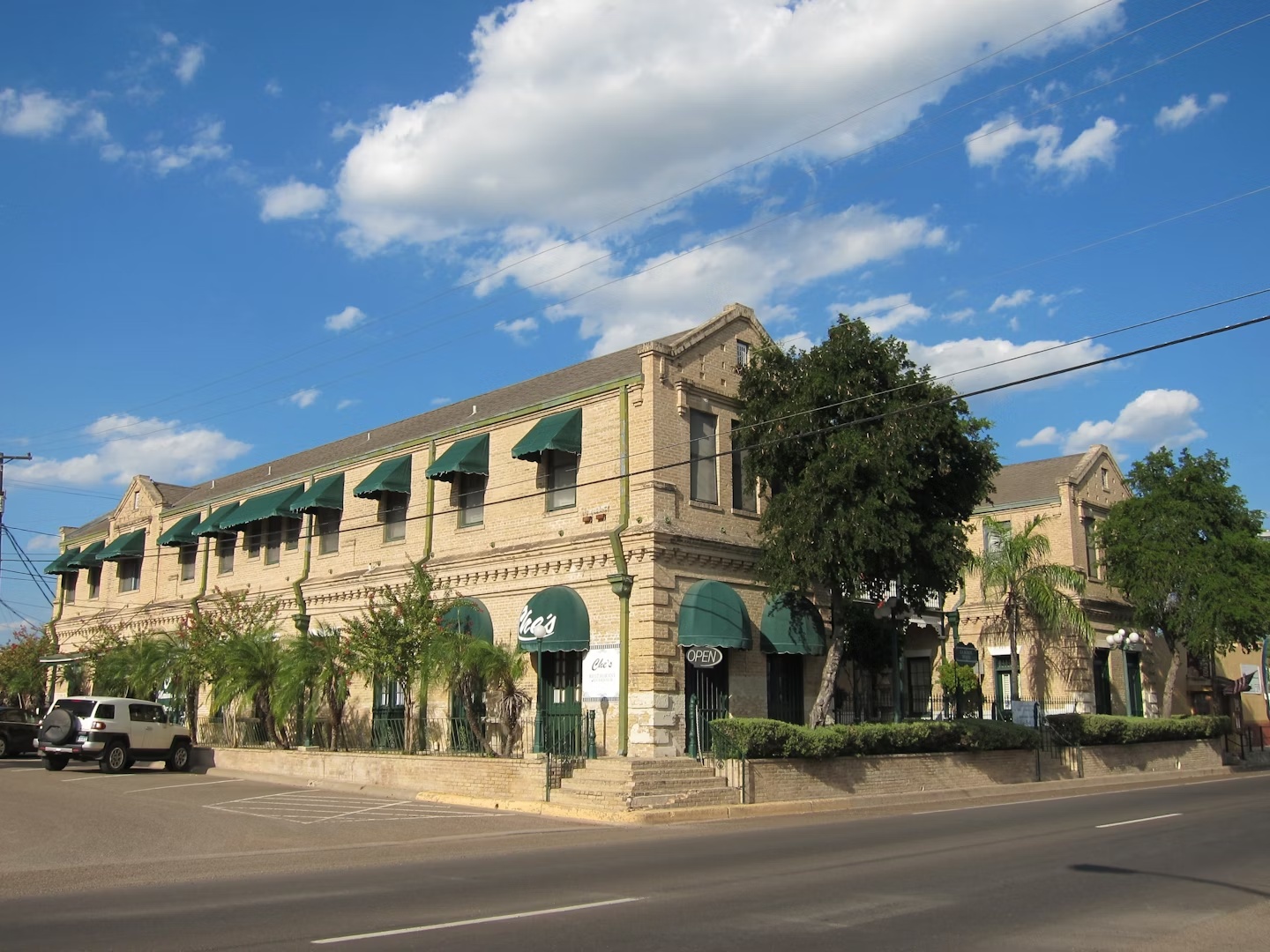
Rio Grande City sits in the lower Rio Grande Valley of deep South Texas, serving as the county seat of Starr County and anchoring a stretch of the borderland along the Rio Grande. With a population of roughly 14,000 residents, the city has the unhurried pace of a small South Texas county seat, with a historic downtown plaza, ranching heritage, and a cultural blend shaped by generations of life along the international river. The town is best known as a jumping-off point for Falcon Lake country and for travelers crossing between the United States and Mexico. It lies approximately 45 miles northwest of McAllen, the largest city in the Valley, and around 150 miles south of Laredo, putting it within easy reach of the region's larger hubs while retaining a distinctly rural character.
About 30 miles northwest of town, Falcon State Park wraps around the southern shore of Falcon International Reservoir, a sprawling impoundment of the Rio Grande that draws anglers after largemouth bass and catfish and boaters drawn to its open water. The park offers shaded campsites, a swimming beach, and short trails that overlook the Mexican shoreline just across the water, making it the area's marquee outdoor destination and a natural day trip or overnight excursion for visitors based in Rio Grande City.
In town, the Fort Ringgold Historic Site preserves the story of a nineteenth-century U.S. Army post that once watched over the Rio Grande. The remaining brick buildings and interpretive exhibits offer a quiet window into the frontier era of the border, and the riverside setting gives the grounds a calm, open feel that pairs well with a walk through the surrounding neighborhood of older homes.
A short drive west, the neighboring town of Roma is home to one of the most photographed landmarks in the region, the Roma–Ciudad Miguel Alemán International Bridge, a hand-operated suspension span built in 1928 that is part of the Roma Historic District, a National Historic Landmark. Strolling the streets around the plaza and the riverfront offers a glimpse of preserved nineteenth-century storefronts and the old customs house, all within roughly twenty minutes of Rio Grande City.
Together, the river setting, the proximity to Falcon Lake, and the layered borderland history make Rio Grande City a quietly distinctive base for short-term rentals, appealing to travelers interested in birding, fishing, and the cultural crosscurrents of the South Texas–Mexico frontier.
Want to know if a property in Rio Grande City is a good investment?
Enter an address to get instant revenue potential and comps.