
Clemson, South Carolina
Want to see how Clemson compares to other top cities in South Carolina? Explore all city regulations in South Carolina. →
Clemson, SC
Challenging To Investors
STR Regulations for Clemson, South Carolina
Short-term rentals are allowed in Clemson, South Carolina, but they are heavily regulated. Clemson has a dedicated "Short Term Residential Rental" ordinance, and properties must be registered and inspected annually. A key restriction is that a property may be rented for a total of only 25 days per calendar year. Additionally, properties must meet the maximum occupancy standards of the zoning district in which they are located.
To begin operating a short-term rental in Clemson, you must:
- Schedule an appointment with the Planning & Development department to create a rental record.
- Schedule and pass an annual inspection of the property.
- Pay a permitting fee of $125, at which point the permit is issued.
- Complete and submit the Short Term Rental Registration Form.
The primary documents, permits, and guidelines required are:
- Short Term Rental Registration Form (PDF): This form is mandatory and collects the property and owner/manager information. It also requires the owner to acknowledge that they will abide by the Short Term Rental Housing Ordinance.
- Rental Housing Program Permit Application (PDF): This is the standard application for all rental properties in Clemson.
- Short Term Rental Guest Log (PDF): This log must be maintained and kept for each rental period.
- Inspection Checklist: A list of items to be checked during the annual inspection, including specific requirements for non-compliant windows.
- Code of Ordinances: The legal framework for the regulations, including the full text of the Short Term Rental Ordinance (Chapter 13, Article IV) and the rental housing requirements.
Specific city regulations for short-term rentals in Clemson include:
- Annual Registration and Inspection: Both are required every calendar year from April 15 to April 14.
- Day Limitation: Properties may be rented for a total of 25 days per calendar year.
- Signage: A city-provided sign must be posted at the property while it is being rented.
- Occupancy Limits:
- Owner-Occupied Properties: Maximum of 2 people per bedroom, plus 2 additional people, for a total of 10 people.
- Non-Owner-Occupied Properties: Must adhere to the zoning district's occupancy limit, which in most neighborhoods in Clemson is 2 unrelated people.
- Parking: All guest parking must be on private property and on improved surfaces.
- Violations: The first litter, noise, parking, or nuisance violation in a calendar year will result in a warning and possible fines. The second violation will trigger a revocation hearing before City Council to determine if the property can continue participating in the short-term rental program. Any occupancy violation will also result in a revocation hearing.
For state-level regulations, the state imposes the South Carolina Accommodations Tax, which must be collected from guests and remitted. Additionally, Clemson is located in Pickens County, which has a Local Accommodations Fee that applies to short-term rentals. This fee must be registered for and remitted to the county.
The primary contact for short-term rental regulations in Clemson is the Planning & Development department.
- Planning & Development Department
- Physical Address: 1250 Tiger Boulevard, Suite 4, Clemson, SC 29631
- Phone: (864) 653-2050
- Specific Contacts:
- Hunnicutt Lindsay - Code Enforcement Officer: Email Hunnicutt
- Jacob Peabody - Zoning and Codes Administrator: Email Jacob
- Rebekah Wilbanks - Office Manager: Email Rebekah
Links to Source Pages
- City of Clemson - Rental Housing
- Code of Ordinances - Sec. 13-79. Requirements.
- Short Term Rental Registration Form (PDF)
- Pickens County - Short-Term Rentals
What do Airbnb hosts actually earn in Clemson?
Clemson hosts earn a median $22,367/year with $285 ADR and 29% occupancy.
Top performers pull in $31,095+ per year.
See the full Clemson market breakdownNext step
Found a property in Clemson?
Paste any address and get estimated revenue, cash-on-cash return, and comparable STR performance in under 5 minutes. 3 free analyses per day.
Free brief
Get the free Clemson STR Investment Brief
Revenue data, top neighborhoods, seasonal trends, and the key regulations for Clemson, South Carolina in one email.
Clemson
Market Saturation Score
Photos of Clemson


Overview of Clemson
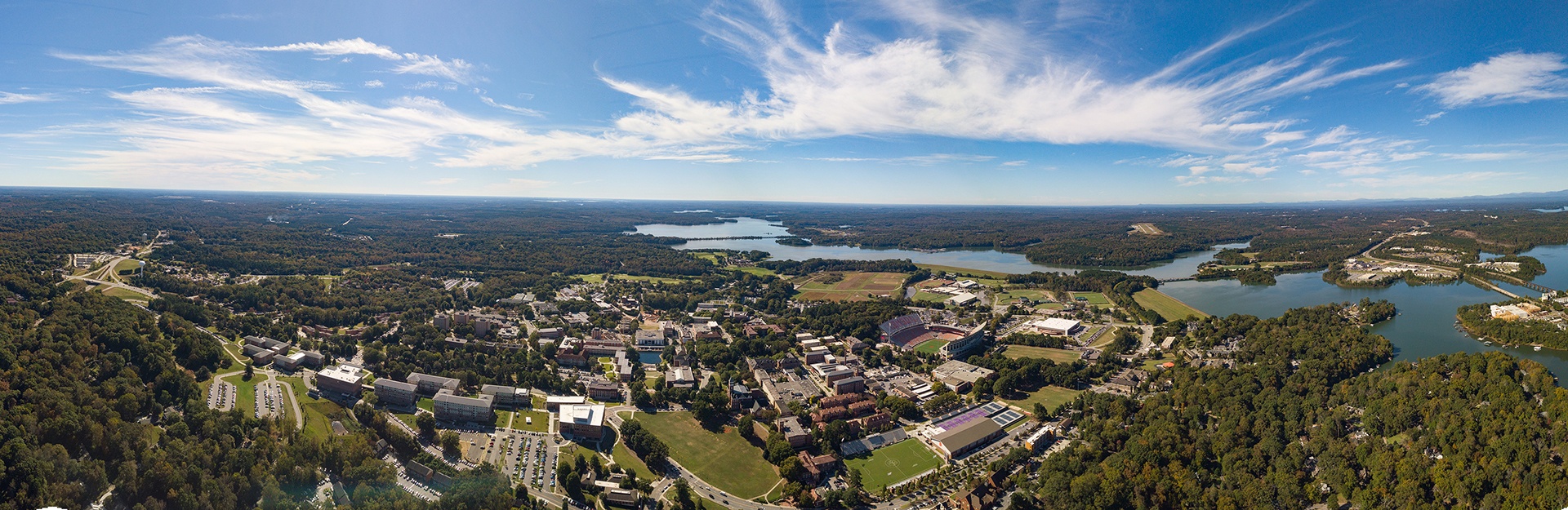
Clemson sits in the northwestern corner of South Carolina in Pickens County, at the southern edge of the Blue Ridge Mountains. The town itself has a population of roughly 16,000 to 17,000 residents, but its identity is shaped by Clemson University, a large land-grant research institution that brings tens of thousands of students, faculty, and visitors to the area each year. Best known as a college town and a destination for autumn football weekends, Clemson also serves as a gateway to the lakes, forests, and mountain trails of the upstate region. The town is located about 30 miles west of Greenville, South Carolina, and roughly 125 miles northeast of Atlanta, Georgia, placing it within easy weekend-trip distance of both larger metro areas.
Lake Hartwell is one of the defining geographic features of the area and a major recreational anchor. The reservoir stretches across more than 55,000 acres along the South Carolina–Georgia border, with numerous public boat ramps, marinas, and swimming areas within a short drive of the Clemson campus. The lake supports year-round boating, fishing, kayaking, and lakeside camping, and it tends to fill with visitors on home-game weekends, when demand for waterfront rental homes spikes noticeably. It is one of the largest recreational lakes in the Southeast and a centerpiece of the local tourism economy.
About 30 to 40 minutes north of town, Table Rock State Park offers a more rugged outdoor experience in the Blue Ridge Mountains. The park features miles of marked hiking trails, including a strenuous climb to the granite summit of Table Rock Mountain, where visitors are rewarded with broad views of the surrounding ridges and valleys. A small lake, rental cabins, and campgrounds make it a natural day-trip or overnight companion to a Clemson stay, particularly for guests who want to combine a campus visit with longer mountain time.
For visitors looking for urban amenities, downtown Greenville lies roughly 35 to 40 minutes east, with a revitalized Main Street, Falls Park on the Reedy, and a dense concentration of restaurants and shops that have made it one of the most-visited small cities in the Southeast. Closer to campus, the South Carolina Botanical Garden and the historic Fort Hill plantation house, once home to John C. Calhoun, provide quieter, more reflective stops for guests with time to wander.
Clemson is a compelling base for short-term rentals because it layers several demand drivers on top of one another. The university brand and football schedule produce reliable fall occupancy, Lake Hartwell supports steady warm-weather traffic, the Blue Ridge attracts year-round outdoor travelers, and nearby Greenville extends the appeal to guests who want a mix of nature and city amenities in a single trip. That combination of sports tourism, lake recreation, mountain day-trippers, and university visitors helps smooth demand across multiple seasons rather than concentrating it into a single narrow window.
Want to know if a property in Clemson is a good investment?
Enter an address to get instant revenue potential and comps.