
Highlands, North Carolina
Want to see how Highlands compares to other top cities in North Carolina? Explore all city regulations in North Carolina. →
Highlands, NC
Unfriendly To Investors
STR Regulations for Highlands, North Carolina
Overview: Are Short-Term Rentals Allowed in Highlands, NC?
Short-term rentals are explicitly prohibited in Highlands, North Carolina, with a complete ban scheduled to take effect on September 19, 2027. This represents one of the most restrictive regulatory environments for short-term rentals in the United States. The Town of Highlands Board of Commissioners voted 4-1 on September 19, 2024, to implement what is known as "amortization" – a legal mechanism that phases out existing short-term rental operations over a specified period.
Critical Timeline for STR Investors:
- September 15, 2022: New short-term rentals became prohibited in R-1 and R-2 residential zoning districts
- September 19, 2024: Board voted for complete amortization of existing STRs
- September 19, 2027: All existing short-term rentals must cease operations in R-1 and R-2 zones
This regulatory approach is unprecedented in North Carolina, making Highlands the first municipality in the state to eliminate short-term rentals through amortization. The decision affects the vast majority of residential properties in Highlands, as R-1 and R-2 districts comprise the majority of residential zoning in the town.
What do Airbnb hosts actually earn in Highlands?
Highlands hosts earn a median $48,035/year with $371 ADR and 50% occupancy.
Top performers pull in $69,985+ per year.
See the full Highlands market breakdownHow to Start a Short-Term Rental Business in Highlands, NC
Starting a new short-term rental business in Highlands is extremely limited and not recommended without extensive legal consultation. The regulatory environment is actively hostile to new STR operations, with severe restrictions and an impending total ban.
Current (Extremely Limited) Opportunities:
Tourist Homes in R-2 Zones Only:
- Only permitted in R-2 zoning districts with a Special Use Permit
- Maximum 4 bedrooms per property
- Must be rental of a portion of one's primary residence, inns, or bed & breakfasts
- Requires approval from the Town Board of Commissioners
- Subject to strict operational requirements
Investment Risk Assessment:
High-Risk Factors:
- No new STRs permitted in R-1 and R-2 zones since September 2022
- Existing grandfathered STRs face complete phase-out by September 2027
- Active legal challenges create regulatory uncertainty
- Political momentum strongly favors residential neighborhood preservation
- High probability of investment loss due to impending restrictions
Due Diligence Requirements:
- Comprehensive legal consultation with land use specialists
- Monitoring of ongoing litigation between Save Highlands and the Town
- Analysis of potential zoning changes and their impact
- Assessment of alternative investment markets with favorable STR regulations
Required Documents, Permits, Licenses, and Guidelines
For Tourist Homes (R-2 Zones Only):
Essential Documentation:
- Special Use Permit from the Town of Highlands Board of Commissioners
- Compliance certification with R-2 zoning regulations
- Property deed or lease agreement proving ownership/right to use
- Site plan showing property boundaries and improvements
- Building and safety code compliance certificates
- Insurance documentation
- Maximum occupancy verification (4 bedrooms limit)
Operational Requirements:
- Adherence to all local building and safety codes
- Compliance with Americans with Disabilities Act (ADA) if applicable
- Fire safety equipment installation and certification
- Health department approvals if required
For Existing STRs (Until 2027):
Regulatory Compliance:
- STR Contract Addendum (mandatory for all rental agreements as of 2022)
- Compliance with Unified Development Ordinance (UDO) Section 6.5.18
- Proof of continuous operation since September 15, 2022
- Registration with the Town (if applicable during transition period)
Operational Standards:
- Strict occupancy limits: 2 persons per bedroom plus 2 additional persons maximum
- Noise ordinance compliance (Chapter 8, Article II of Town Code)
- Parking regulation adherence
- Trash management protocol compliance
- No special events exceeding occupancy limits
Standard Business Requirements (All STR Types):
State and County Requirements:
- North Carolina business license
- Sales tax registration and collection
- Occupancy tax collection and remittance
- Workers' compensation insurance (if employees)
- Professional liability insurance
Local Requirements:
- Business privilege license from Macon County
- Fire department permits (if applicable)
- Health department permits (if applicable)
Specific Regulations for Short-Term Rentals
Town of Highlands Regulations:
Comprehensive Zoning Restrictions:
R-1 Residential Districts:
- Complete prohibition of short-term rentals (new since September 2022)
- Existing STRs must cease operations by September 19, 2027
- No exceptions for any type of accommodation
R-2 Residential Districts:
- New STRs prohibited since September 15, 2022
- Only "Tourist Homes" permitted with Special Use Permit approval
- Maximum 4 bedrooms per property
- Must be owner-occupied or part of primary residence
- Existing STRs grandfathered until September 19, 2027
Commercial Districts:
- Regulations vary by specific zoning classification
- Requires consultation with Town Planning Department
- Potential for continued operations depending on specific zone
Amortization Implementation:
The amortization process provides a transition period for existing operators while completely eliminating the use by a specified date. This approach:
- Allows existing operators to recover investments over time
- Eliminates the use permanently after the transition period
- Applies to all STRs in R-1 and R-2 zones regardless of current operations
- Does not require removal of structures, only cessation of the rental use
Operational Standards (UDO Section 6.5.18):
- Occupancy Limits: Strictly enforced maximum of 2 persons per bedroom plus 2 additional persons
- Event Restrictions: No special events or gatherings exceeding overnight occupancy limits
- Parking Requirements: All vehicles must park in designated areas only
- Waste Management: Proper trash disposal in provided receptacles on designated pickup days
- Noise Compliance: Adherence to Town's Noise Ordinance with quiet hours enforcement
- Property Maintenance: Standards for property appearance and upkeep
Macon County Regulations:
No specific county-level short-term rental regulations were identified beyond standard state requirements. The county follows state guidelines for:
- Business licensing
- Tax collection
- Building code enforcement
- Health and safety standards
North Carolina State Regulations:
Current State Framework:
- No statewide prohibition on local STR regulation
- Municipalities retain authority to regulate STRs through zoning
- Standard business licensing requirements apply
- State sales tax and occupancy tax obligations
- No mandatory state registration system for STRs
Legislative Activity:
- Multiple bills introduced to limit local government STR regulation authority
- No comprehensive state-level STR legislation passed as of 2024
- Local governments actively lobbying to preserve zoning authority
- Legislative outcomes remain uncertain
Contact Information for Local Authorities
Town of Highlands Planning Department
Primary Contact for STR Regulations and Permits:
- Phone: (828) 526-2118
- Website: https://highlandsnc.org
- Address: P.O. Box 460, Highlands, NC 28741
- Services: Zoning inquiries, permit applications, regulatory compliance guidance, Special Use Permit applications
- Hours: Monday-Friday, 8:30 AM - 5:00 PM
Town of Highlands Town Hall
General Administrative Services:
- Phone: (828) 526-2118
- Address: P.O. Box 460, Highlands, NC 28741
- Website: https://highlandsnc.org
Macon County Government
County-Level Business Services:
- Phone: (828) 349-2000
- Website: https://maconnc.org
- Address: 5 W. Main Street, Franklin, NC 28734
Save Highlands Organization
Pro-STR Advocacy Group and Legal Challenge Updates:
- Email: info@savehighlands.com
- Website: https://www.savehighlands.net
- Legal Fund: https://www.gofundme.com/f/save-highlands-shortterm-rentals
- Services: Legal challenge updates, investor advocacy, regulatory monitoring
Highlands Neighborhood Coalition
Anti-STR Advocacy Group:
- Website: https://www.highlandsneighborhoodcoalition.com
- Email: Available through website contact form
- Services: Community organizing, regulatory advocacy, legal analysis
Links to Source Pages
Official Town Resources:
Advocacy Group Websites:
Third-Party Analysis:
News Coverage:
Investment Recommendation
Investing in short-term rentals in Highlands, NC is extremely high-risk and categorically not recommended for new investors. The regulatory environment represents a worst-case scenario for STR operators, characterized by:
Critical Risk Factors:
- Regulatory Hostility: Clear political mandate to eliminate all STRs in residential areas
- Phased Elimination: Grandfathered operations will be terminated by September 2027
- Legal Uncertainty: Ongoing litigation creates unpredictable investment climate
- Economic Impact: Restrictions expected to negatively affect local economy and property values
- Political Momentum: Strong community support for residential neighborhood preservation
Strategic Considerations:
- Market Exit: Existing operators should develop exit strategies well before 2027
- Alternative Markets: Consider more favorable STR jurisdictions with supportive regulatory environments
- Property Conversion: Assess feasibility of converting STR properties to long-term rentals
- Legal Consultation: Engage specialized land use attorneys for asset protection strategies
Due Diligence Requirements:
- Comprehensive legal analysis of current restrictions
- Assessment of litigation outcomes and their impact on investment
- Evaluation of alternative STR markets with favorable regulations
- Financial modeling of potential losses under current regulatory trajectory
The situation in Highlands serves as a cautionary case study demonstrating how rapidly local regulations can eliminate previously viable STR investments. The regulatory framework is fundamentally incompatible with sustainable short-term rental operations, making Highlands unsuitable for STR investment at any scale.
Investors should monitor ongoing litigation between Save Highlands and the Town of Highlands, as favorable court decisions could potentially modify or eliminate the amortization timeline. However, the current political and regulatory environment suggests that any modifications would likely be limited in scope and duration.
For current STR operators, the priority should be maximizing remaining revenue while developing transition strategies. For potential investors, the recommendation is unambiguous: avoid Highlands and seek opportunities in jurisdictions with supportive or stable STR regulatory frameworks.
Next step
Found a property in Highlands?
Paste any address and get estimated revenue, cash-on-cash return, and comparable STR performance in under 5 minutes. 3 free analyses per day.
Free brief
Get the free Highlands STR Investment Brief
Revenue data, top neighborhoods, seasonal trends, and the key regulations for Highlands, North Carolina in one email.
Highlands
Market Saturation Score
Photos of Highlands


Overview of Highlands
Highlands is a small, well-heeled mountain town tucked into the Blue Ridge Mountains of western North Carolina, in Macon County near the state's southern tip where the borders with Georgia and South Carolina converge. The town sits on a high plateau at roughly 4,000 feet of elevation, giving it a noticeably cooler climate than the surrounding lowlands, and it has a year-round population of about 1,000 residents that swells considerably with seasonal visitors. Long popular as a refined summer escape, Highlands is best known for its crisp mountain air, dense forests, and abundance of waterfalls, and it serves as a gateway to both the Nantahala National Forest and the southern Blue Ridge highlands. It lies about 110 miles northeast of Atlanta, the nearest major city, roughly a two-and-a-half-hour drive, and about 80 miles southwest of Asheville, around a two-hour drive.
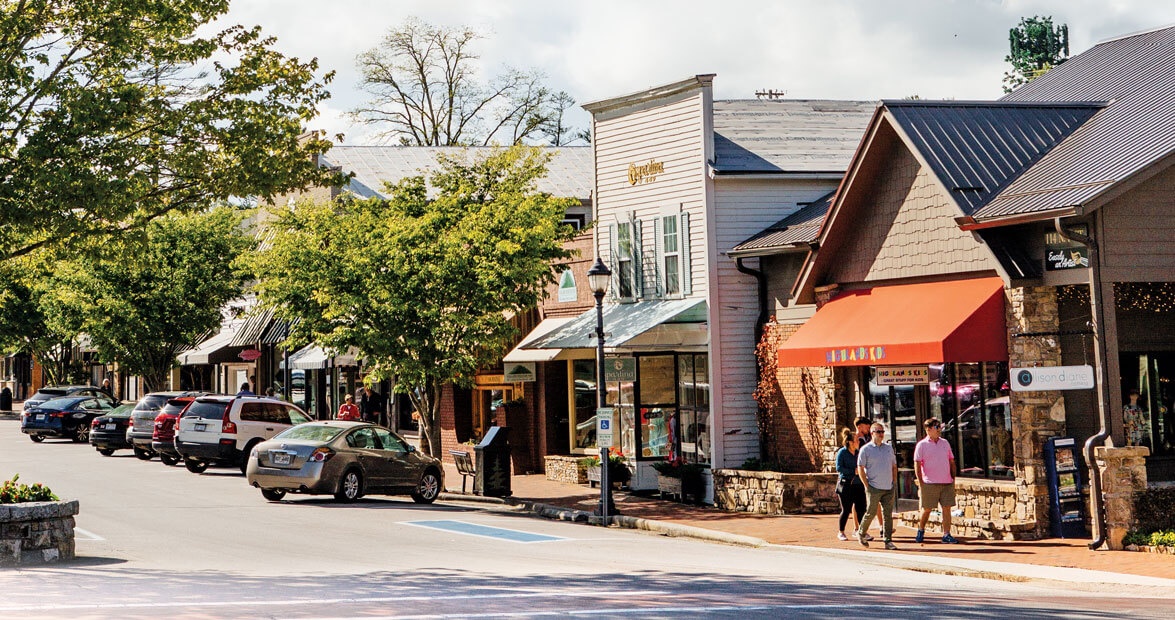
Downtown Highlands centers on a compact, walkable main street lined with independent boutiques, art galleries, and restaurants, giving the town a polished but unhurried feel. The streets are easily explored on foot, and the small scale of the commercial core makes it a popular gathering point for visitors after a day of hiking or waterfall hunting. It sits within a few minutes' drive of virtually every place guests stay in the area.
Just outside town, Gorges State Park delivers some of the most dramatic scenery in the region, with steep gorges, tumbling creeks, and the thundering Rainbow Falls and Turtleback Falls. It is roughly 25 to 30 minutes east of Highlands, near the community of Sapphire, and offers a wilder, less crowded experience than many of North Carolina's more heavily visited parks. The surrounding Nantahala National Forest blankets much of the plateau around town and adds hundreds of miles of trails, rivers, and backcountry for hiking, fly fishing, and scenic drives along the Mountain Waters Scenic Byway.
A short drive west of town, Dry Falls — also called Upper Cullasaja Falls — lives up to its name, allowing visitors to walk behind the curtain of water without getting wet. The falls lie along U.S. 64 between Highlands and Franklin, about ten minutes from the center of town, and pair well with nearby Bridal Veil Falls and Cullasaja Gorge as part of a half-day waterfall loop. Closer in, Satulah Mountain and the trails off Horse Cove Road offer shorter hikes with sweeping views back over the town and across the Georgia line.
Highlands is a natural base for short-term rentals because it blends small-town sophistication with quick access to some of the most dramatic natural features in the southern Appalachians. Guests arrive for the cool summer weather, the foliage in fall, and the easy reach of waterfalls, gorges, and national forest, and they stay in a community that feels both curated and genuinely connected to the mountains around it.
Want to know if a property in Highlands is a good investment?
Enter an address to get instant revenue potential and comps.