
Williamstown, Massachusetts
Want to see how Williamstown compares to other top cities in Massachusetts? Explore all city regulations in Massachusetts. →
Williamstown, MA
Challenging To Investors
STR Regulations for Williamstown, Massachusetts
Overview: Are short‑term rentals currently allowed in Williamstown, MA?
- Current status (as of late 2025): Short‑term rentals (STRs) exist in practice in Williamstown and appear to be tolerated, but they are not clearly codified in the town’s zoning. There is no explicit prohibition or enabling bylaw at present, and enforcement has largely been complaint‑driven. If a property is marketed as an STR, it should be evaluated against the town’s use tables; absent a specific allowance, operation may be at risk of zoning enforcement if challenged.
- Pending regulatory framework: The Planning Board has developed a draft zoning amendment that would explicitly regulate STRs. If adopted at Town Meeting, it would:
- Allow unlimited short‑term rentals of individual bedrooms when the owner resides in the dwelling unit during the rental.
- Allow unlimited STR use of an accessory dwelling unit (ADU) when the owner resides in the associated primary dwelling during the rental.
- Allow unlimited STR use of a primary dwelling unit when the owner resides in an associated ADU during the rental.
- Impose a 90‑day cumulative cap per calendar year for rentals of an entire principal dwelling unit in residential districts when none of the above owner‑residence conditions are met.
- Impose no day limits on STRs in nonresidential districts where dwelling units are allowed (for example, units above a first‑floor nonresidential use).
- Enforcement mechanism: The draft includes a penalty schedule for violations—first offense warning; second offense $100; third $200; fourth and subsequent $300—with each additional day of an ongoing violation constituting a separate offense. The process is tied to M.G.L. c. 40 § 21D.
Bottom line for investors: Until the bylaw change is adopted and fully effective, assume STR operation is in a gray area and review the property’s zoning and current use table. If you move forward now, plan to comply with the 90‑day cap and owner‑residence allowances once the bylaw passes and to meet all applicable state requirements.
How to start a short‑term rental business in Williamstown
- Site selection and zoning assessment
- Confirm the property’s zoning district and permitted uses under §70‑2.1. If the bylaw passes, map your operating model to the allowances:
- Residential districts:
- Entire home: only if the property qualifies for an unlimited allowance (owner‑resides in an associated ADU) or accept the 90‑day cap for an entire principal dwelling without owner‑residence on site.
- Single room or ADU: unlimited if owner resides on site during the rental.
- Nonresidential districts (where dwelling units are allowed): no day limits.
- Residential districts:
- Health and safety compliance (state requirements regardless of local licensing)
- Coordinate with the Board of Health for inspections consistent with Massachusetts State Sanitary Code (105 CMR 410.000). The Town’s planning discussions anticipate using Chapter II inspections for STR units on a recurring cycle similar to long‑term rentals, to ensure safety standards.
- Registration and monitoring plan
- Monitor whether the town implements any registration, monitoring, or inspection program tied to the new STR bylaw. If so, register the STR and comply with any periodic inspections or reporting. Even without a local registry, document property conditions and guest policies for internal compliance.
- Tax registration and collection
- Register with the Massachusetts Department of Revenue (DOR) to collect and remit the state’s room occupancy tax. Williamstown does not appear to have a local room tax, so the 6.25% state rate likely applies. File returns per DOR instructions and remit applicable local taxes if any are enacted.
- Insurance and guest policies
- Maintain appropriate general liability and property coverage; consider coverage limits commensurate with expected occupancy and property values. Publish house rules addressing occupancy, noise, parking, and events to reduce risk and align with the town’s enforcement posture if complaints arise.
- Marketing and operations
- List properties only after confirming zoning compliance and completing tax registration. Maintain accurate calendar logs to track the 90‑day cap where applicable. Provide guests with contact information for local issues and emergency procedures.
Required documents, permits, licenses, and guidelines State‑level (Massachusetts)
- Massachusetts room occupancy tax registration: Required to collect and remit room occupancy tax. There is no state‑level “STR license,” but the tax registration is mandatory.
- 105 CMR 410.000 (State Sanitary Code): Apply the standards to STR units (e.g., safe egress, sanitary conditions). Coordinate with the Williamstown Board of Health for inspection scheduling and compliance.
- Massachusetts Building Code (780 CMR): Ensure properties meet code standards (e.g., smoke/CO detectors, egress). If installing geothermal wells in Water Resource Districts (WRD), the draft bylaw includes special permit and aquifer‑protection provisions.
Local (Williamstown)
- Zoning compliance review: Confirm allowed use status and, if the bylaw passes, comply with day limits or owner‑residence conditions.
- Board of Health inspection: Schedule inspections consistent with state sanitary code requirements. The town expects to align STR inspections with the same framework used for long‑term rentals under Chapter II.
- Registration (if implemented): Once the bylaw passes, watch for any town‑level registry or monitoring program; the draft emphasizes a zoning rule but does not detail a mandatory registry yet.
- Penalty schedule: The draft bylaw ties enforcement to M.G.L. c. 40 § 21D with the graduated fines noted above.
County‑level
- No Berkshire County–specific STR rules beyond state law were identified. The county itself does not issue STR licenses.
Specific regulations for STRs in Williamstown (town), Berkshire County, and Massachusetts Town of Williamstown
- Current zoning: STRs are not explicitly addressed in the existing use table, leaving operation in a gray area that can be enforced as zoning violations if a use is not listed as permitted.
- Draft STR bylaw (pending Town Meeting approval):
- Residential districts: Entire principal dwelling units may be used as STRs for up to 90 cumulative days per calendar year; unlimited days apply to (i) individual bedrooms when the owner resides in the dwelling during the rental, (ii) ADUs when the owner resides in the associated primary dwelling during the rental, and (iii) primary dwellings when the owner resides in an associated ADU during the rental.
- Nonresidential districts: No day limits where dwelling units are allowed.
- Penalties: Warning, then $100/$200/$300 for subsequent offenses; ongoing violations accrue per day.
- Definitions: STR is defined as the rental of a whole or portion of a dwelling unit for residential accommodations for not more than thirty consecutive days, excluding boardinghouses, rooming houses, tourist homes, hotels, or motels as defined in the zoning bylaw.
Berkshire County
- No county‑level STR regulations were identified. Compliance is at the state level and any town bylaws that may be adopted.
Massachusetts
- Room occupancy tax (6.25%): Registration with DOR is required to collect and remit. The state also administers meals, sales, and use taxes; business entity filings may be needed depending on structure.
- Sanitary code (105 CMR 410.000): STR units should meet standards for health and safety; inspection and enforcement are through the Board of Health.
- Short‑Term Rental tax changes (effective April 1, 2024):
- Statewide tax increase on short‑term rentals from 5.7% to 6.25% (aligning with the room occupancy tax).
- DOR now administers these taxes directly for STRs (previously partly through platforms), tightening filing and audit controls.
Note: Statewide STR registration and platform penalties that were originally scheduled to take effect in 2023 were paused by the Legislature. The most recent statutory changes focus on taxation and administrative modernization rather than a permanent registration framework.
Contact information Town of Williamstown
- Community Development Department (Zoning): (413) 458‑5700
- Board of Health: (413) 458‑5700
- Select Board and Town Clerk: (413) 458‑9341
- Town Hall: 31 North Street, Williamstown, MA 01267
- Town website: williamstownma.gov
Massachusetts (State agencies)
- Department of Revenue (room occupancy tax): mass.gov/dor; (617) 887‑6367
- Department of Public Health (sanitary code): mass.gov/dph; (617) 624‑6000
- Division of Occupational Licensure (housing inspections framework): mass.gov/dol; (617) 879‑5600
- Office of the Attorney General (consumer protection): mass.gov/ago; (617) 727‑2200
Regulatory timeline and what to watch
- Planning Board has prepared a draft STR zoning amendment, including specific allowances and a 90‑day cap for entire dwellings in residential districts, with penalties tied to state law. The Select Board and Planning Board support moving this forward at Town Meeting. The bylaw includes a definition of STR (≤30 consecutive days) and WRD aquifer‑protection provisions for geothermal systems as part of broader zoning updates.
- Investors should monitor Town Meeting outcomes and subsequent implementation guidance, including any Board of Health inspection requirements and potential registration or monitoring processes.
Key takeaways for STR investors
- Market risk: The 90‑day cap limits income from entire‑home rentals in residential districts unless owner‑residence conditions apply. Unit design (e.g., separate ADU) or property selection (nonresidential districts) can materially affect capacity and income.
- Compliance strategy: Treat tax registration and sanitary code inspections as non‑negotiable. Do not rely on “gray area” status; structure operations to fit the likely bylaw framework.
- Ongoing monitoring: Watch for Town Meeting action, Board of Health directives, and any local registry or inspection fees once the bylaw is adopted.
Links to source pages
- iBerkshires coverage of Town Meeting STR bylaw proposal: www.iberkshires.com/story/78609/Williamstown-Town-Meeting-Gets-Short-Term-Rental-Bylaw.html
- Planning Board discussion of draft STR regulations: williamstown.com/story/76416/Williamstown-Planning-Board-Again-Takes-Up-Short-Term-Rentals.html
- Draft bylaw amendment proposals (Planning Board, 2025) including STR rules and penalties: williamstownma.gov/wp-content/uploads/2025/02/Planning-Board-Draft-Bylaw-Amendment-Proposals-2025-.pdf
- STRisker bulletin summarizing STR rules up for vote and 90‑day cap context: writing.strisker.com/strisker-bulletin-williamstown-ma/
What do Airbnb hosts actually earn in Williamstown?
Williamstown hosts earn a median $31,041/year with $209 ADR and 57% occupancy.
Top performers pull in $46,691+ per year.
See the full Williamstown market breakdownNext step
Found a property in Williamstown?
Paste any address and get estimated revenue, cash-on-cash return, and comparable STR performance in under 5 minutes. 3 free analyses per day.
Free brief
Get the free Williamstown STR Investment Brief
Revenue data, top neighborhoods, seasonal trends, and the key regulations for Williamstown, Massachusetts in one email.
Williamstown
Market Saturation Score
Photos of Williamstown


Overview of Williamstown
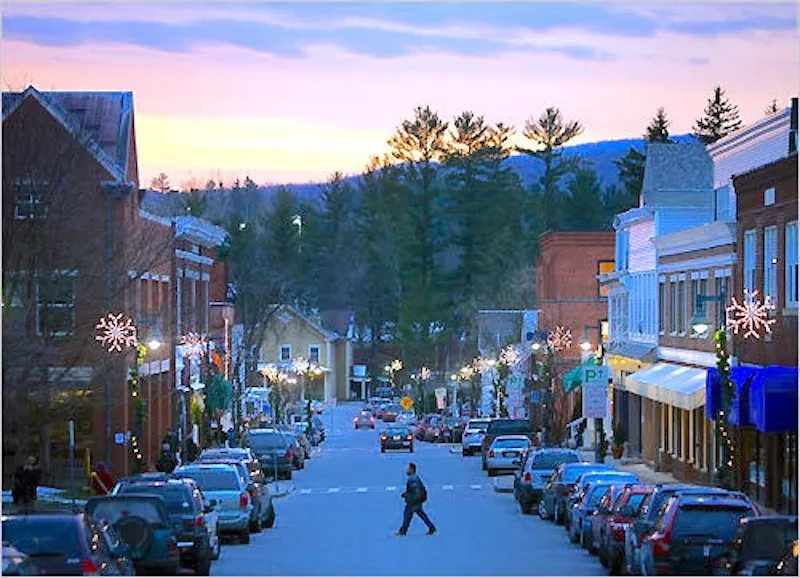
Williamstown is a small town in Berkshire County in the far northwestern corner of Massachusetts, with an approximate population of around 7,700 residents. Set in the Hoosic River valley at the eastern foot of the Taconic Range, it has long been associated with Williams College, one of the most selective liberal arts colleges in the country, and it serves as a cultural gateway to the broader Berkshires region. The town sits roughly 45 miles east of Albany, New York, the nearest major city, and lies within easy driving distance of both the New York and Vermont borders. Its compact, walkable downtown, tree-lined streets, and quiet New England atmosphere give it a small-college-town feel that draws both visitors and seasonal residents.
At the heart of the town is Williams College, founded in 1793 and consistently ranked among the top liberal arts institutions in the United States. The campus is open to the public and features handsome 18th- and 19th-century architecture, including the Chapin Library of Rare Books, as well as the Williams College Museum of Art, which holds a significant collection of American and modern art. The college's lectures, concerts, and athletic events often welcome visitors, particularly during the academic year, and the surrounding village of shops, cafés, and inns has grown up largely to serve the campus community.
Just a short walk or drive south of the campus, The Clark Art Institute is one of Williamstown's signature attractions. Founded by the Sterling and Francine Clark family and opened in 1955, the institute houses a renowned collection of European and American paintings, along with extensive grounds, walking trails, and reflecting pools. A major expansion designed by the architect Tadao Ando, completed in 2014, added new galleries and visitor amenities, making the Clark a destination in its own right for art lovers from across the Northeast.
For outdoor enthusiasts, Mount Greylock State Reservation, the highest point in Massachusetts at 3,489 feet, lies about a 20-minute drive south of town. Its summit offers panoramic views that on clear days stretch across parts of up to five states, and it is reached via the scenic Notch Road out of nearby North Adams. The reservation includes miles of hiking trails, the historic Bascom Lodge, and the Veterans War Memorial Tower at the top.
A few miles to the east, in the neighboring town of North Adams, Mass MoCA, the Massachusetts Museum of Contemporary Art, is housed in a converted 19th-century factory complex and is easily reached by car in roughly ten minutes. Together, the combination of a major college, two world-class museums, the natural beauty of the Berkshires, and the town's proximity to Albany and southern New England makes Williamstown a particularly compelling base for short-term rentals, with a steady year-round calendar of college events, fall foliage, winter sports, and summer arts programming to support a strong rental market.
Want to know if a property in Williamstown is a good investment?
Enter an address to get instant revenue potential and comps.