
Boston, Massachusetts
Want to see how Boston compares to other top cities in Massachusetts? Explore all city regulations in Massachusetts. →
Boston, MA
Challenging To Investors
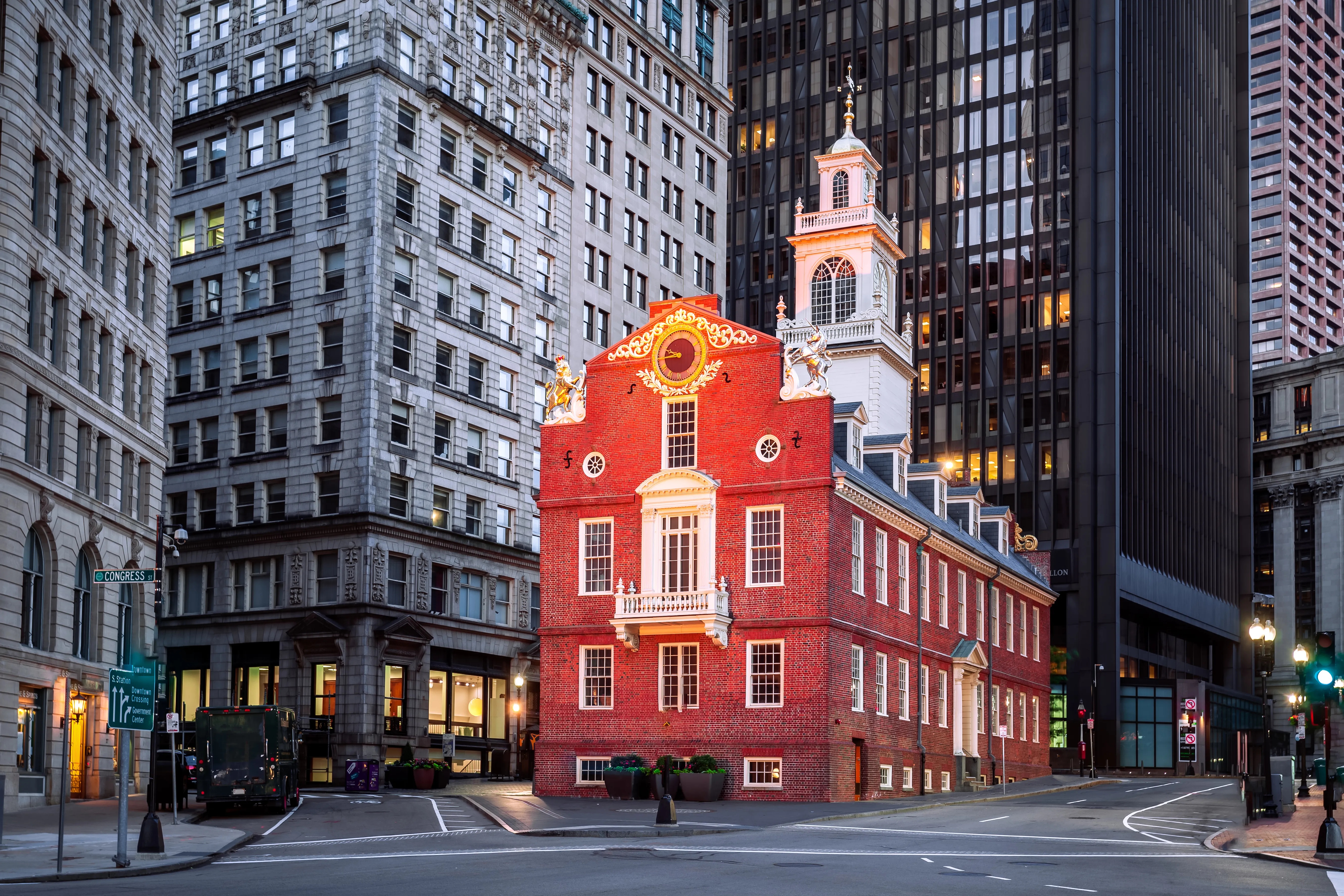
STR Regulations for Boston, Massachusetts
Executive Summary: Are Short-Term Rentals Allowed in Boston, MA?
Yes, short-term rentals are explicitly allowed in Boston, MA, but under strict regulatory conditions. Boston's Short-Term Rental (STR) program permits the renting of residential units for fewer than 28 consecutive days for a fee, but only within a defined framework designed to balance economic opportunities for residents with housing preservation goals. The city has established a comprehensive registration and licensing system that requires owner-occupancy, limits certain rental activities, and enforces compliance through penalties and monitoring.
Key Points for Investors:
- STRs are permitted only in owner-occupied properties (condominiums, single-family, two-family, and three-family buildings)
- Three distinct unit types with different requirements and fees
- Annual registration mandatory with different fees per unit type
- Strong emphasis on primary residence requirement and community impact mitigation
What do Airbnb hosts actually earn in Boston?
Boston hosts earn a median $45,901/year with $263 ADR and 69% occupancy.
Top performers pull in $67,098+ per year.
See the full Boston market breakdownHow to Start a Short-Term Rental Business in Boston
Step 1: Determine Eligibility and Unit Type
Before proceeding with registration, property owners must first determine if their property qualifies and what category of STR it represents:
Limited Share Unit: You plan to rent part of your primary residence while present during the rental. One bedroom must remain available for your use. You can rent up to three guest bedrooms or six guests total.
Home Share Unit: You plan to rent your entire primary residence while you're away. Occupancy limited to five bedrooms or 10 guests.
Owner-Adjacent Unit: You own and occupy one unit in a two or three-family building and want to rent an additional entire unit in the same property. You must own all units in the building.
Step 2: Complete Primary Residence Verification
To prove primary residence status, you must demonstrate that you live at the property for at least nine months out of any 12-month period. This requires providing at least two of the following documents:
- Proof of residential exemption
- Utility bill (gas, electric, oil, or water) showing service and mailing addresses
- Voter registration certificate from Elections Department
- Motor vehicle registration
- Deed
- Driver's license or state-issued identification
Step 3: Verify Property Compliance
Before applying, ensure your property:
- Is not subject to affordability covenants or income restrictions
- Has no outstanding building, sanitary, zoning, or fire code violations
- Is not located within a "Problem Property" designation
- Complies with all applicable federal, state, and local laws
- Meets rental registry requirements if applicable
Step 4: Submit Registration Application
Register through the city's official online portal or submit paper applications to Inspectional Services. Applications must include:
- Completed registration form
- Required documentation proving primary residence
- Operator contact information and local emergency contact details
- Certification of compliance with governing documents (condominium bylaws, HOA rules)
Step 5: Pay Registration Fees
Fees vary by unit type:
- Limited Share Unit: $25 annually
- Home Share Unit: $200 annually
- Owner-Adjacent Unit: $200 annually
Step 6: Obtain Business Certificate
After successful registration and fee payment, apply for a business certificate through the City Clerk's office. This requires:
- Business certificate application form
- $35 application fee (Massachusetts residents) or $65 (non-residents)
- Registration number form from Inspectional Services
- Business certificates must be renewed every four years
Step 7: Notify Abutters
Within 30 days of receiving your registration number, you must notify all residential dwellings within 300 feet of your property about the STR registration.
Step 8: Display Required Information
Include your registration number on all listings and post safety information inside the unit showing locations of fire extinguishers, fire exits, and pull fire alarms.
Required Documents, Permits, Licenses, and Guidelines
Primary Registration Documents
-
Proof of Primary Residence (minimum two documents):
- Residential exemption certificate
- Recent utility bill with matching service and mailing addresses
- Voter registration certificate
- Motor vehicle registration
- Property deed
- Government-issued photo identification
-
Property Documentation:
- Property ownership verification
- Compliance certification with governing documents
- Evidence of absence of affordability restrictions
-
Operator Information:
- Personal contact details
- Emergency contact information (must respond within 2 hours)
- 24-hour telephone number for public safety agencies
Permits and Licenses Required
-
Short-Term Rental Registration (renewed annually):
- Unique registration number for each unit
- Associated with specific unit and operator
- Required on all advertisements and listings
-
Business Certificate (renewed every four years):
- Filed through City Clerk's office
- Required for conducting rental operations
- Separate fee structure for Massachusetts vs. non-resident applicants
-
Compliance with Existing Requirements:
- Rental registry registration (for properties with long-term rental units)
- Building, fire, and safety code compliance
- Zoning compliance verification
Safety and Operational Guidelines
-
Fire Safety Requirements:
- Posted information about fire extinguisher locations
- Posted fire exit location information
- Posted pull fire alarm location information (where applicable)
-
Occupancy Limitations:
- Limited Share: Maximum 3 bedrooms or 6 guests
- Home Share: Maximum 5 bedrooms or 10 guests
- Owner-Adjacent: Single unit rental (occupancy limits per building codes)
-
Operational Restrictions:
- Only one whole unit may be offered at a time
- Cannot operate home share and owner-adjacent units simultaneously when away
- Must maintain local contact who can respond within 2 hours
Specific Regulations for Short-Term Rentals in Boston, MA
Municipal Regulations (City of Boston)
Definitions and Scope:
- Short-term rental defined as residential occupancy fewer than 28 consecutive days for fee
- Only permitted in owner-occupied residential properties
- Three unit types: Limited Share, Home Share, and Owner-Adjacent
Eligibility Restrictions:
- Properties cannot be subject to affordability covenants or income restrictions
- Cannot be designated "Problem Properties" under city ordinances
- Must comply with all applicable housing codes and regulations
- Property must be residential use (excludes hotels, motels, executive suites)
Operational Limitations:
- Must be owner-occupied primary residence (minimum 9 months annually)
- For Owner-Adjacent units: must own all units in two or three-family building
- Only one owner-occupant may register as operator per unit
- Cannot have outstanding violations of housing, noise, trash, or conduct codes
Registration and Renewal Requirements:
- Annual registration required (January 1 - December 31)
- Registration numbers transfer only with specific transfer procedures
- Must maintain current contact information and local emergency response capability
- Business certificate required and renewed every four years
Notification Requirements:
- 30-day abutter notification after registration approval
- Registration number displayed on all advertisements and listings
- Safety information posted inside units
County Regulations
Note: Boston operates as both a city and county entity. No separate county-level short-term rental regulations were found in the provided sources.
State Regulations (Massachusetts)
Room Occupancy Excise Tax:
- Massachusetts General Laws Chapter 64G applies to all short-term rentals
- Must collect and remit room occupancy excise tax
- Tax rates and collection methods may vary
- Certain intermediaries (like Airbnb) may collect and remit taxes on behalf of hosts
State Registration Requirements:
- Registration with Massachusetts Department of Revenue required
- Tax registration necessary for collecting and remitting occupancy taxes
- Compliance with state building and safety codes required
Additional State Considerations:
- Business registration may be required depending on rental income levels
- Income tax implications for rental revenue
- Compliance with Massachusetts Fair Housing laws and regulations
Enforcement and Penalties:
Municipal Penalties:
- Offering ineligible unit: $300 per violation per day
- Failure to register: $100 per violation per day
- Failure to comply with violation notice: $100 per violation per day
- Continued violations can result in registration suspension or revocation
Compliance Requirements:
- Must remedy violations within specified timeframes
- Right to hearing for alleged violations (14-day request period)
- Judicial appeal rights for final decisions
- Booking agents face separate penalties and enforcement requirements
Monitoring and Reporting:
- Booking agents required to provide monthly reports to city
- Booking agents must remove non-compliant listings
- City maintains public registry of registered STR units
- Annual reporting on STR impact on housing market required
Contact Information for Local Authority
Primary Contact: Inspectional Services Department (ISD)
- Phone: (617) 635-5300
- Email: shorttermrentals@boston.gov
- Mailing Address:
- ISD Housing Division
- 1010 Massachusetts Ave
- Boston, MA 02118
Registration Portal:
- Online Registration: onlinepermitsandlicenses.boston.gov/isd/ShortTermRental/
- Eligibility Tool: data.boston.gov/dataset/short-term-rental-eligibility/resource/83621b97-9a00-4aa7-bf43-28cae04969d4
City Clerk's Office (Business Certificates):
- Phone: Contact through main ISD number or city directory
- Application Process: Available online through city website
- Requirements: Must have STR registration number before applying
Additional City Departments:
Housing Division:
- Phone: (617) 635-3880
- Role: Housing code compliance and problem property enforcement
Innovation and Technology:
- Phone: (617) 635-4783
- Role: Data management and online system support
Licensing Board (for Lodging Houses):
- Role: Licensing for lodging houses and bed and breakfast operations
- Contact: Through city website or main city directory
311 Boston (Non-Emergency Services):
- Phone: 311 or (617) 635-4500
- Website: www.boston.gov/departments/boston-311
- Role: General inquiries, complaint reporting, and service requests
Links to Source Pages
Official City of Boston Sources:
- Boston STR Program Main Page: www.boston.gov/departments/inspectional-services/short-term-rentals
- Registration Portal: onlinepermitsandlicenses.boston.gov/isd/ShortTermRental/
- STR Eligibility Tool: data.boston.gov/dataset/short-term-rental-eligibility/resource/83621b97-9a00-4aa7-bf43-28cae04969d4
- Official STR Ordinance: www.boston.gov/sites/default/files/document-file-08-2018/short-term_rental_ordinance.pdf
- Rental Registry Information: www.boston.gov/departments/inspectional-services/how-register-rental-property
- Business Certificate Application: www.boston.gov/departments/city-clerk/how-apply-business-certificate
Legal and Analysis Sources: 7. MEEB Law Firm Analysis: www.meeb.com/marcus-errico-emmer-brooks-pc-3/legal-alets/boston-adds-to-growing-body-of-restrictions-on-short-term-rentals 8. Steadily STR Guide: www.steadily.com/blog/airbnb-short-term-rental-laws-regulations-boston
Platform-Specific Resources: 9. Airbnb Boston Host Information: www.airbnb.com/help/article/859
State Resources: 10. Massachusetts Room Occupancy Tax Information: www.mass.gov/info-details/room-occupancy-excise-tax 11. Massachusetts Department of Revenue: mtc.dor.state.ma.us/mtc/_/#2
Additional Contact Resources: 12. Boston 311 Services: www.boston.gov/departments/boston-311 13. City Directory: Available through main city website
Important Note for Investors: This guide provides comprehensive information based on the provided sources, but investors should regularly verify current requirements with official city sources as regulations may evolve. The city maintains updated information on its official website, and compliance with the most current regulations is essential for successful STR operations in Boston.
Next step
Found a property in Boston?
Paste any address and get estimated revenue, cash-on-cash return, and comparable STR performance in under 5 minutes. 3 free analyses per day.
Free brief
Get the free Boston STR Investment Brief
Revenue data, top neighborhoods, seasonal trends, and the key regulations for Boston, Massachusetts in one email.
Boston
Market Saturation Score
Photos of Boston



Overview of Boston
Boston, the capital of Massachusetts and seat of Suffolk County, is one of the oldest and most historically rich cities in the United States, with a city population of roughly 675,000. Founded by English Puritans in 1630, it carries the unmistakable character of a place where colonial-era cobblestones sit alongside glass-walled research labs and waterfront skyscrapers. The city is best known as a cradle of the American Revolution, a hub of higher learning through its neighboring universities, and a gateway to the broader New England region, from Cape Cod and the islands of Massachusetts Bay to the White Mountains of New Hampshire. It sits roughly 215 miles northeast of New York City, easily reached by car or by frequent rail service along the Northeast Corridor.
The Freedom Trail is the city's signature attraction, a 2.5-mile walking route marked by a red brick line that connects sixteen sites tied to the founding of the nation, including the Massachusetts State House, Paul Revere's House, the Old North Church, and the Bunker Hill Monument across the harbor in Charlestown. Beginning in Boston Common and ending at the USS Constitution, it draws visitors who want to experience Revolutionary-era history in a compact, walkable setting just minutes from downtown hotels and short-term rentals.
Just steps from the trail's start lies Boston Common, the oldest public park in the United States, established in 1634. Together with the adjoining Public Garden, the green space offers a leafy escape in the heart of the city, with swan boats on the lagoon, walking paths, and a front-row view of the gold-domed State House. For travelers seeking a quieter pace in an otherwise dense urban environment, the Common functions as both a gathering place and a launching point for exploring the surrounding Back Bay and Beacon Hill neighborhoods.
A short ride on the MBTA Green Line brings visitors to Fenway Park, the oldest operating Major League Baseball stadium in the country and home to the Boston Red Sox. The surrounding Fenway-Kenmore neighborhood has grown into one of the city's most energetic districts, packed with restaurants, music venues, and game-day crowds from spring through fall.
On the downtown waterfront, the New England Aquarium anchors a revitalized harbor district that includes the wharves, ferries to the Boston Harbor Islands, and a lively mix of shops and seafood spots. Its central feature, a four-story Caribbean coral reef exhibit, is one of the largest of its kind in the world, and the aquarium serves as a family-friendly counterpoint to the city's many historic and academic draws.
Boston's appeal as a short-term rental market rests on the density of its attractions and the ease with which visitors can reach them on foot, by subway, or by a short drive. Its compact downtown, world-class universities, walkable historic core, and proximity to coastal Massachusetts and the wider New England region give owners a year-round audience of leisure travelers, college visitors, business travelers, and medical tourists, while neighborhoods like Back Bay, the Seaport, Beacon Hill, and Cambridge just across the Charles River offer distinct settings for almost any traveler profile.
Want to know if a property in Boston is a good investment?
Enter an address to get instant revenue potential and comps.