
Half Moon Bay, California
Want to see how Half Moon Bay compares to other top cities in California? Explore all city regulations in California. →
Half Moon Bay, CA
Challenging To Investors

STR Regulations for Half Moon Bay, California
Overview: Are Short-Term Rentals Allowed?
Yes. Short-term rentals (STRs) are explicitly allowed in Half Moon Bay, CA, but they are strictly regulated. STRs are permitted in all residential zoning districts and in mixed-use development within Commercial-Downtown, Commercial-General, and Commercial-Visitor Serving districts. STRs are not permitted in accessory dwelling units (ADUs). All STR operations must be registered with the City prior to commencement and must follow the City’s Short-Term Rental Ordinance (Half Moon Bay Municipal Code Chapter 18.06.025).
Unhosted STRs (where the primary resident is not present during guest stays) are limited to 60 nights per calendar year. Hosted STRs (where a resident/host is present) have no annual night cap.
Note: The California Coastal Commission reviewed and certified the City’s STR ordinance and associated Local Coastal Program amendment in 2023. The ordinance’s central policy requires STRs to be incidental to the principal residential use of the property.
Sources:
- Half Moon Bay regulations overview and registration requirements — www.airbnb.ca/help/article/3539
- Municipal Code STR provisions — www.codepublishing.com/CA/HalfMoonBay/#!/HalfMoonBay18/HalfMoonBay1806.html#18.06
- City STR page (programmatic information) — www.half-moon-bay.ca.us/931/Short-Term-Rentals
- News summary: unhosted 60-night cap; registration deadlines — www.coastsidenews.com/news/city-closes-door-on-short-term-rental-ordinance/article_88c2a8e6-83da-5b6c-9cee-629e82bc4850.html
- Coastal Commission correspondence (certification context) — documents.coastal.ca.gov/reports/2023/3/W14b/W14b-3-2023-corresp2.pdf
What do Airbnb hosts actually earn in Half Moon Bay?
Half Moon Bay hosts earn a median $62,460/year with $301 ADR and 69% occupancy.
Top performers pull in $92,216+ per year.
See the full Half Moon Bay market breakdownHow to Start a Short-Term Rental Business in Half Moon Bay
Complete the steps below before listing or hosting any guest:
- Pre-application diligence
- Confirm zoning eligibility: Your property must be in an eligible residential district or a qualifying mixed-use district (Commercial-Downtown, Commercial-General, Commercial-Visitor Serving).
- Confirm dwelling type: STRs are not permitted in ADUs.
- Review the City’s STR application checklist and requirements.
- Obtain a Business License
- Apply through the City’s Business License Portal.
- Submit a new business license application.
- Keep your license current and renewed as required.
- Register for Transient Occupancy Tax (TOT)
- Register via the City’s TOT portal.
- Important: Airbnb collects and remits TOT on behalf of hosts in Half Moon Bay. If you do not use a platform that collects TOT, you must collect and remit TOT yourself.
- Submit the STR Application/Permit
- Once you have your business license and TOT registration, complete the City’s Short-Term Rental Application/Permit.
- The City will verify compliance with the ordinance (primary residence, zoning, occupancy/parking, and other performance standards) as part of the review.
- Ongoing compliance
- Retain documentation and maintain compliance with all City requirements (e.g., occupancy, parking, neighborhood standards).
- If your circumstances change (e.g., you are no longer the primary resident), contact the City immediately.
Source links:
- Business License Portal — halfmoonbay.hdlgov.com/Home/Home/BusinessLicense
- New business license application — halfmoonbay.hdlgov.com/Apply/GettingStarted/BusinessLicense
- TOT portal — halfmoonbay.hdlgov.com/Home/Index/TOT
- STR application and checklist — www.half-moon-bay.ca.us/DocumentCenter/View/6058/Short-Term-Rental-Application-and-Registration-Checklist-PDF?bidId=
- STR rules overview — www.airbnb.ca/help/article/3539
Required Documents, Permits, Licenses, and Guidelines
Before operating, you must obtain and maintain all of the following:
- Business License (City of Half Moon Bay)
- Transient Occupancy Tax (TOT) registration certificate
- Short-Term Rental (STR) Permit (issued under Chapter 18.06.025)
- Proof of primary residence (for new STRs; see specific regulations below)
- Compliance with performance standards (occupancy, parking, noise, trash, property management)
- Evidence of compliance with any additional contracts or rules that bind your property (e.g., lease terms, HOA/condo board rules, landlord consent)
Note: The City requires a complete STR application and registration prior to operation. Use the City’s application checklist and FAQ as your procedural guide.
Source links:
- STR application and checklist — www.half-moon-bay.ca.us/DocumentCenter/View/6058/Short-Term-Rental-Application-and-Registration-Checklist-PDF?bidId=
- STR FAQ — www.half-moon-bay.ca.us/Faq.aspx?TID=36
- Municipal Code STR provisions — www.codepublishing.com/CA/HalfMoonBay/#!/HalfMoonBay18/HalfMoonBay1806.html#18.06
Specific Regulations for Short-Term Rentals in Half Moon Bay
The following rules are central to legal operation:
Zoning and Location
- STRs are permitted in all residential zoning districts and in mixed-use development within the Commercial-Downtown, Commercial-General, and Commercial-Visitor Serving districts.
- STRs are not permitted in accessory dwelling units (ADUs).
Primary Residence Requirement
- New STRs must be the operator’s primary residence. A “primary residence” is the domicile where the operator habitually resides and which is used as the principal address for voter registration, tax, mail, and other core civic and financial purposes. This requirement is central to the City’s approach to protecting housing stock.
Hosted vs. Unhosted Operation
- Unhosted STRs (where the host is not present during guest stays) are capped at 60 nights per calendar year.
- Hosted STRs (where a resident/host is present during guest stays) have no annual night cap.
Occupancy and Parking
- STR occupancy must be scaled to the number of bedrooms; the City’s standards tie permissible occupancy to bedroom count and require that off-street parking be provided consistent with occupancy.
Operational and Neighborhood Standards
- STRs must operate as incidental to the principal residential use of the property (consistent with Coastal Commission certification and the City’s Local Coastal Program).
- Hosts must comply with property management, traffic, noise, and trash standards designed to protect coastal resources and neighborhood character.
- Advertising must not conflict with performance standards (e.g., do not advertise occupancy beyond approved limits or features that violate City standards).
Continuance Provisions for Existing Non-Primary-Residence Operators
- Existing operators who do not meet the primary residence requirement may be considered for “continuance” if they were previously paying TOT and register under the new ordinance, remain in good standing, and otherwise comply with City requirements. Specific terms and conditions of continuance are set by the City.
Enforcement and Tax
- All STRs must pay Transient Occupancy Tax (TOT). If you operate through Airbnb, TOT is collected and remitted on your behalf. If you operate off-platform, you must collect and remit TOT directly.
Coastal Commission Alignment
- The City’s STR ordinance was reviewed and certified by the California Coastal Commission in 2023. The Commission confirmed STRs must be subordinate to the primary residential use and directed the City to implement appropriate performance standards.
Source links:
- STR rules overview and zoning — www.airbnb.ca/help/article/3539
- News report on unhosted cap and program rollout — www.coastsidenews.com/news/city-closes-door-on-short-term-rental-ordinance/article_88c2a8e6-83da-5b6c-9cee-629e82bc4850.html
- Coastal Commission correspondence — documents.coastal.ca.gov/reports/2023/3/W14b/W14b-3-2023-corresp2.pdf
- Municipal Code STR provisions — www.codepublishing.com/CA/HalfMoonBay/#!/HalfMoonBay18/HalfMoonBay1806.html#18.06
- City STR FAQ — www.half-moon-bay.ca.us/Faq.aspx?TID=36
Contact Information (Local Authority for STRs)
- Email: HalfMoonBay@hdlgov.com
- Phone: (650) 443-9050
- STR-related questions can also be directed to the City’s contact above; additional information is available via the City’s STR page and FAQ.
Source link:
- Contact email, phone, and City STR page — www.airbnb.ca/help/article/3539
County and State Context
The rules summarized above are city-specific and apply within Half Moon Bay municipal boundaries. San Mateo County and the State of California may impose additional requirements (e.g., state-level TOT rules, county health and safety regulations, and local zoning if your property lies outside the City). Always verify the jurisdictional status of your property (City vs. County) and consult the City for any county or state references that may apply to your specific situation.
Links to Source Pages
- Airbnb Half Moon Bay rules and registration guidance — www.airbnb.ca/help/article/3539
- Half Moon Bay Municipal Code Chapter 18.06 (STR regulations) — www.codepublishing.com/CA/HalfMoonBay/#!/HalfMoonBay18/HalfMoonBay1806.html#18.06
- City of Half Moon Bay Short-Term Rentals page — www.half-moon-bay.ca.us/931/Short-Term-Rentals
- Business License Portal — halfmoonbay.hdlgov.com/Home/Home/BusinessLicense
- New business license application — halfmoonbay.hdlgov.com/Apply/GettingStarted/BusinessLicense
- Transient Occupancy Tax (TOT) portal — halfmoonbay.hdlgov.com/Home/Index/TOT
- STR application and registration checklist (PDF) — www.half-moon-bay.ca.us/DocumentCenter/View/6058/Short-Term-Rental-Application-and-Registration-Checklist-PDF?bidId=
- City STR FAQ — www.half-moon-bay.ca.us/Faq.aspx?TID=36
- News coverage of STR ordinance (unhosted 60-night cap) — www.coastsidenews.com/news/city-closes-door-on-short-term-rental-ordinance/article_88c2a8e6-83da-5b6c-9cee-629e82bc4850.html
- California Coastal Commission correspondence (LCP amendment and certification context) — documents.coastal.ca.gov/reports/2023/3/W14b/W14b-3-2023-corresp2.pdf
Key takeaways for investors:
- Verify eligibility early (zoning; not an ADU).
- Plan your path: Business License → TOT registration → STR Permit.
- Confirm you can satisfy the primary residence requirement.
- If you plan to operate unhosted, budget for a 60-night cap.
- Maintain compliance with occupancy, parking, and neighborhood standards to protect your operating license.
Next step
Found a property in Half Moon Bay?
Paste any address and get estimated revenue, cash-on-cash return, and comparable STR performance in under 5 minutes. 3 free analyses per day.
Free brief
Get the free Half Moon Bay STR Investment Brief
Revenue data, top neighborhoods, seasonal trends, and the key regulations for Half Moon Bay, California in one email.
Half Moon Bay
Market Saturation Score
Photos of Half Moon Bay

Overview of Half Moon Bay
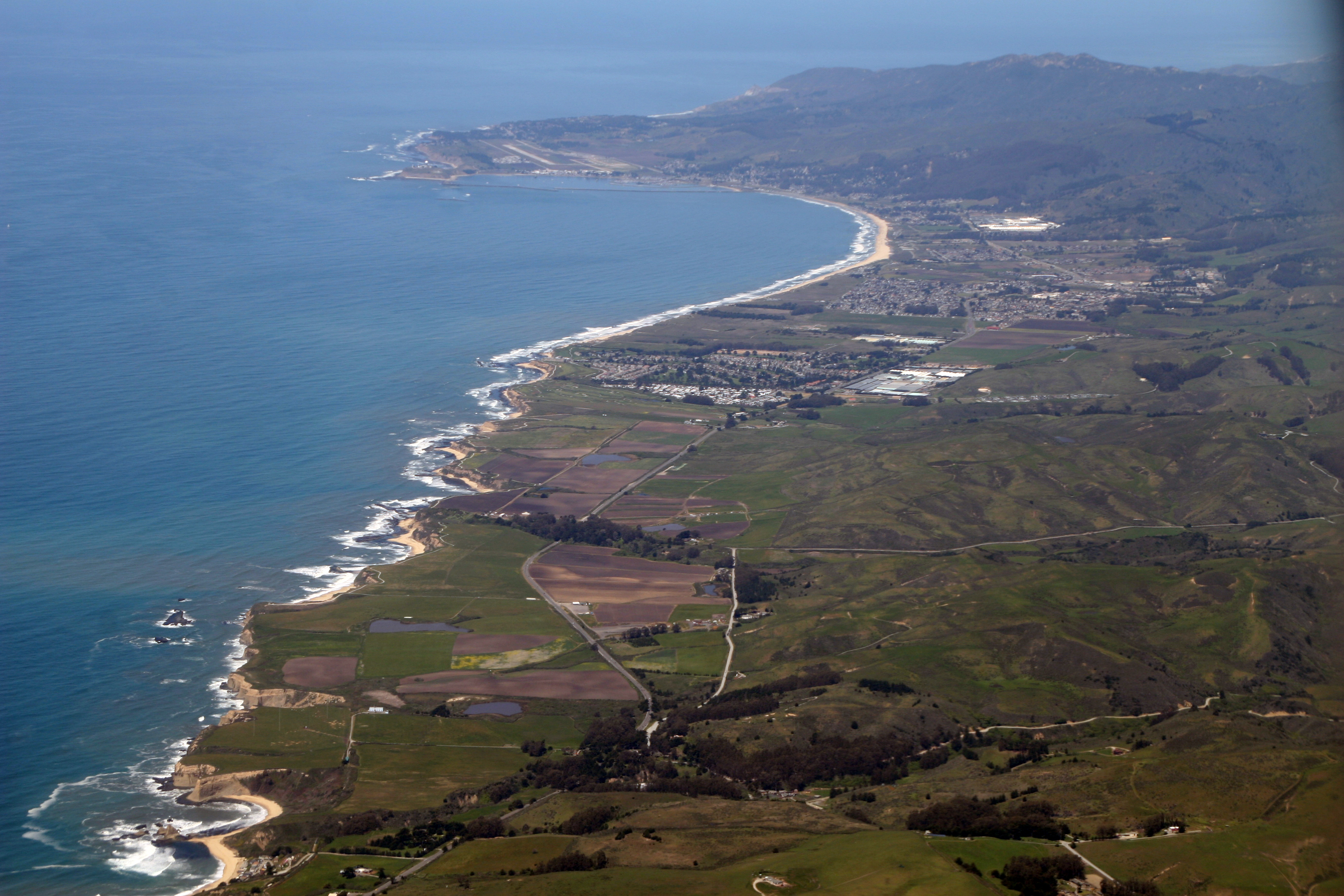
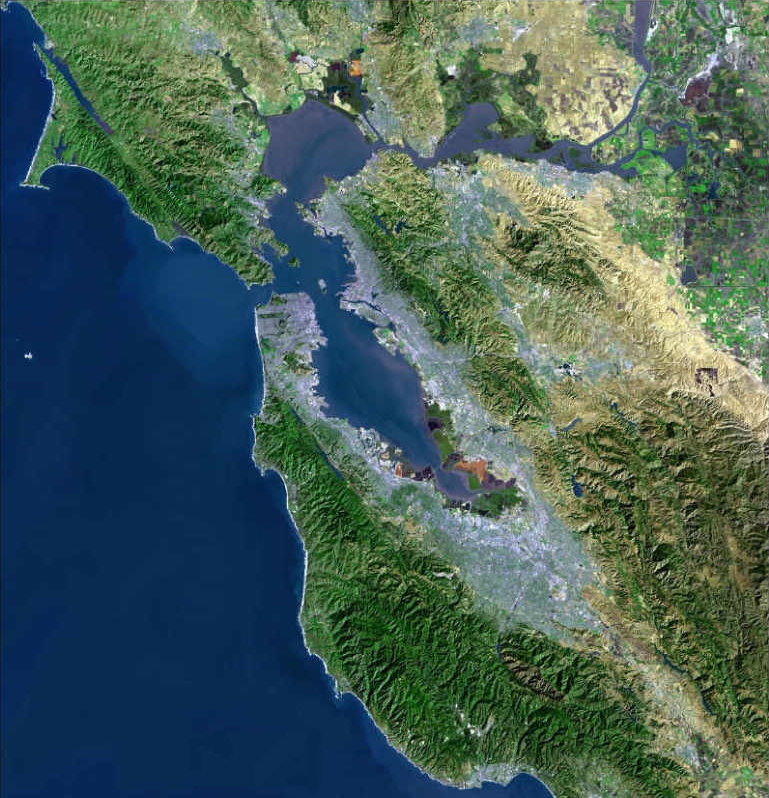
Half Moon Bay sits along the Pacific coast of San Mateo County, California, about 30 miles south of San Francisco. The small city has a population of roughly 11,000 to 12,000 and carries the laid-back atmosphere of a working coastal town, with a fishing harbor, agricultural fields, and windswept beaches framing a compact historic downtown. The community is best known for its pumpkin farms and the annual Art & Pumpkin Festival held each October, as well as for the scenic stretch of Highway 1 that runs through it as part of the Pacific Coast Highway. It serves as a popular weekend escape for Bay Area residents and a quieter alternative to busier coastal destinations farther south.
Half Moon Bay State Beach wraps several miles of the shoreline immediately west and south of the city center, encompassing Francis Beach, Venice Beach, and the Dunes Beach. The California state park offers campgrounds, beach access, bluff-top walking trails, and a particular appeal for families thanks to its protected coves. From downtown, the various entrances are reachable within about five to ten minutes by car.
Pillar Point Harbor, just a couple of miles north of downtown in the unincorporated community of Princeton-by-the-Sea, is one of the older small-craft harbors on the California coast. The working marina supports a commercial fishing fleet, sportfishing charters, and a row of seafood restaurants and markets along its breakwater. The harbor is also the takeoff point for boats heading out to the famous Mavericks surf break, which draws big-wave surfers during the largest winter swells.
A short drive farther north along the coast, Fitzgerald Marine Reserve protects a stretch of intertidal reef that becomes a tidepool habitat at low tide, with crabs, sea stars, anemones, and other marine life exposed along the rocks. It is roughly a 15-minute drive from the city center and is managed by San Mateo County Parks. Inland, the Purisima Creek Redwoods Open Space Preserve offers a contrasting experience, with miles of shaded hiking and equestrian trails through second- and old-growth coast redwood forest, about a 20- to 25-minute drive from downtown over the hills.
Downtown Half Moon Bay itself, clustered around Main Street and Correas Street, holds a small but well-preserved collection of Victorian-era buildings that now house independent restaurants, bakeries, antique stores, and farm stands. Visitors come for the slow pace and the proximity to surrounding pumpkin farms, nurseries, and vineyards of the San Mateo Coast.
The combination of direct ocean access, a charming historic core, and easy reach from both San Francisco and the South Bay makes Half Moon Bay a steady year-round destination for short-term rentals. Coastal scenery and outdoor recreation draw visitors in every season, while major events such as the autumn pumpkin festival and the seasonal abundance of local farms and seafood give the city a rhythm that rewards both weekend getaways and longer coastal stays.
Want to know if a property in Half Moon Bay is a good investment?
Enter an address to get instant revenue potential and comps.