
Platteville, Wisconsin
Want to see how Platteville compares to other top cities in Wisconsin? Explore all city regulations in Wisconsin. →
Platteville, WI
Generally Investor Friendly
STR Regulations for Platteville, Wisconsin
Note on sources and scope: This guide is based exclusively on the City of Platteville Chapter 33 Rental Code (as of 10/17/12) and the 2024 Crawford County Housing Study. The rental code document is the primary city-level source for residential rental property; it does not expressly define or regulate “short-term rentals” as a separate category. State-level Wisconsin statutes on transient renters are included for context where applicable.
Is STR activity allowed in Platteville, WI?
- Allowed. The City’s rental code applies to non-owner-occupied residential rental property, including dwellings, dwelling units, and rooming houses. The code does not contain a prohibition on short-term stays. As long as the property meets licensing, inspection, safety, and occupancy requirements, STR use appears permissible under City ordinances.
- Important: No city-specific ordinance, license, registration, or tax for “short-term rentals” as a distinct use was found in the provided code. Investors should confirm whether any newer ordinances or state-level transient rental taxes (e.g., Wisconsin Room Tax) apply at the time of operation. See state rules below.
What do Airbnb hosts actually earn in Platteville?
Platteville hosts earn a median $22,660/year with $167 ADR and 50% occupancy.
Top performers pull in $28,713+ per year.
See the full Platteville market breakdownHow to start an STR business in Platteville (step-by-step)
- Confirm zoning and any overlays
- Verify zoning district and any overlay provisions (e.g., Limited Occupancy Residential Overlay district) with the City. Some overlay areas impose stricter occupancy limits (see occupancy section below).
- Confirm STR use is allowed by your lease and HOA rules
- If the property is part of a condo/HOA or has lease covenants, ensure STR is permitted.
- Obtain City Rental License (mandatory for non-owner-occupied units)
- Complete and submit a Rental License application to the Building Inspector.
- Include: property address; owner mailing address; type of housing; contact person details (name, two phone numbers); and designated authorized representative for repairs and emergencies.
- Schedule and pass inspection
- The Building Inspector will inspect units and classify them (Class A, A-1, or B).
- Provide tenants with a copy of the license at the beginning of tenancy.
- Comply with ongoing obligations
- Maintain minimum standards (see compliance checklist).
- Monitor occupancy to remain within legal limits.
- Keep property management and emergency contacts current.
- Stay updated
- Fees, schedules, and requirements may be updated by the Common Council. Confirm current fees and inspection timelines with the City before applying.
Required documents, permits, and license requirements
- City Rental License Application:
- Owner name and mailing address; property address; type of housing.
- Two phone numbers for owner/agent contact.
- Name and contact of designated authorized representative with authority to authorize repairs.
- Address where correspondence may be mailed (owner’s choice).
- License issuance:
- Unit inspection and classification are prerequisites.
- New construction: exempt from rental inspection/fee for three years after initial occupancy; Class A license issued with occupancy permit.
- License classes and terms:
- Class A: complies with minimum standards; 3-year license.
- Class A-1: minor infractions not practical to correct; 3-year license.
- Class B: repairs pending due to weather or extended time; 1-year license. Class B for the same deficiency cannot be reissued beyond one year.
- Fees:
- Set by Common Council; pay prior to issuance. Additional fees apply for extra re-inspections, missed inspections, license transfers, and late renewals.
- Transfer of ownership:
- New owner must apply within 7 days of acquisition; transfer fee applies.
- Tenant copy:
- Provide tenant with a copy of the license at the start of tenancy.
Key STR-related regulations and requirements
Licensing and enforcement
- Licensing: No non-owner-occupied residential rental property may be used without a valid City license.
- Enforcement: Building Inspector enforces with Police Department support; Board of Zoning Appeals hears appeals and variances; emergency license suspension allowed when conditions present immediate danger.
Occupancy limits
- General rule: Unless it is an approved rooming house, a unit may be occupied by no more than four unrelated persons or fewer depending on size/bedrooms.
- Overlay rule: Units in a Limited Occupancy Residential Overlay district may be limited to no more than two unrelated persons.
- Over-occupancy: Correct within 10 days of City notice or face violations.
Minimum standards (selected highlights for STR readiness)
- Exterior property: sanitation; grading/drainage; sidewalks/driveways free of hazards; pest control; signage; structural integrity; weather resistance; safe egress features (handrails/guards).
- Interior structure: safe condition of stairs/walking surfaces; interior doors; interior surfaces maintained in clean, sanitary condition.
- Light and ventilation: minimum natural light and openable window area; mechanical ventilation allowed in lieu of openable windows; bathrooms/toilet rooms ventilation requirements.
- Room size: bedroom area, ceiling height (minimum 7 ft), and access/egress constraints; efficiency unit standards.
- Plumbing and water: functioning fixtures, hot/cold water to kitchens/laundries; contamination safeguards; water heater temperature and combustion air standards.
- Electrical: minimum service; required receptacles (including GFCI in bathrooms and near kitchen sinks); lighting in halls/stairways/bathrooms/laundry/mechanical rooms.
- Fire safety: unobstructed egress; two exits per floor with sleeping rooms; egress windows; emergency escape window specifications; fire-resistance and door protections; smoke detectors (hardwired or battery); carbon monoxide detectors on each habitable level if fuel-burning appliances are present.
- Pest control and extermination: owner responsibility prior to rental; shared/public areas; occupant responsibility if infestation caused by occupant.
- Rubbish and garbage: proper storage and disposal; approved recycling containers.
Sanctions for problem properties
- Accumulating three or more citations/violations (nuisance parties, over-occupancy, refuse/junk, etc.) can trigger sanctions, including a required Property Management Plan, license suspension (first: up to six months; subsequent within five years: up to 12 months), license revocation after persistent violations, and emergency suspension for unsafe conditions.
- Penalties: $100–$500 per violation plus costs; each day of continued violation constitutes a separate offense; unlicensed rentals pay double the normal fee when finally licensed, plus penalties.
State-level context (Wisconsin)
- Room Tax: Wisconsin municipalities may levy a “room tax” (transient rental tax) on accommodations provided for less than one month; common examples include short-term rentals and lodging providers. Platteville’s participation in the state room tax program was not evidenced in the provided documents; confirm with the City Treasurer/Finance Department.
- Smoke detectors and carbon monoxide detectors: State law aligns with local standards; ensure devices are operational at turnover and maintained per statute and code.
- Building/fire codes: Wisconsin Administrative Codes (e.g., SPS 320–325, SPS 366–369) govern residential structures and life safety. While not included in the provided code excerpt, STRs should meet or exceed these requirements where applicable.
County-level considerations
- The 2024 Crawford County Housing Study recommends exploring restrictions on short-term rentals in Crawford County. That recommendation does not automatically bind the City of Platteville, which is in Grant County. Investors should confirm with Grant County whether any county-level STR rules apply.
Who to contact (Platteville and region)
-
City of Platteville — Building Inspector / Code Enforcement
- Phone: 608-348-9741 (from code: “For more information, contact the City at 608-348-9741.”)
- Email/Website: Not provided in the code excerpt. See City website or directory for current contacts.
-
City of Platteville — Department of Community Planning & Development
- Role: Rental licensing, violation tracking, sanctions process.
- Email/Website: Not provided in the code excerpt.
-
City of Platteville — City Clerk / Finance (Room Tax, if applicable)
- Phone/Email/Website: Not provided in the code excerpt.
-
Grant County (state context, confirm county rules if any)
- Contacts not provided in the documents.
Links to source pages
- Chapter 33 – Rental Code (City of Platteville): www.platteville.org/sites/default/files/fileattachments/municipalcode/10501/chapter_33_-_rental_code_10-17-12.pdf
- 2024 Crawford County Housing Study (context for county-level recommendations): www.crawfordcountywi.gov/media/departments/Health/Housing/2024-Crawford-County-Housing-Study.pdf
Practical checklist for opening a compliant STR in Platteville
- Zoning check (including any overlay).
- License application and authorized representative designation.
- Pass inspection; obtain Class A (preferred) or address Class A-1/B conditions.
- Provide tenant copy of license at move-in.
- Install/maintain smoke and CO detectors; confirm egress windows and exit routes.
- Enforce occupancy limits (≤4 unrelated; ≤2 in overlay districts).
- Maintain property to minimum standards (exterior/interior, sanitation, plumbing, electrical, mechanical).
- Monitor for violations; maintain a property management plan to avoid sanctions.
- Verify room tax obligations with the City.
- Keep inspection/license current; pay fees on time; respond to notices within deadlines.
Bottom line
- STRs are allowed in Platteville as a form of non-owner-occupied residential rental, subject to licensing, inspection, safety, and occupancy rules. No separate “STR” permits were found in the provided code, but investors should confirm any newer city ordinances and state tax requirements at the time of operation.
Next step
Found a property in Platteville?
Paste any address and get estimated revenue, cash-on-cash return, and comparable STR performance in under 5 minutes. 3 free analyses per day.
Free brief
Get the free Platteville STR Investment Brief
Revenue data, top neighborhoods, seasonal trends, and the key regulations for Platteville, Wisconsin in one email.
Platteville
Market Saturation Score
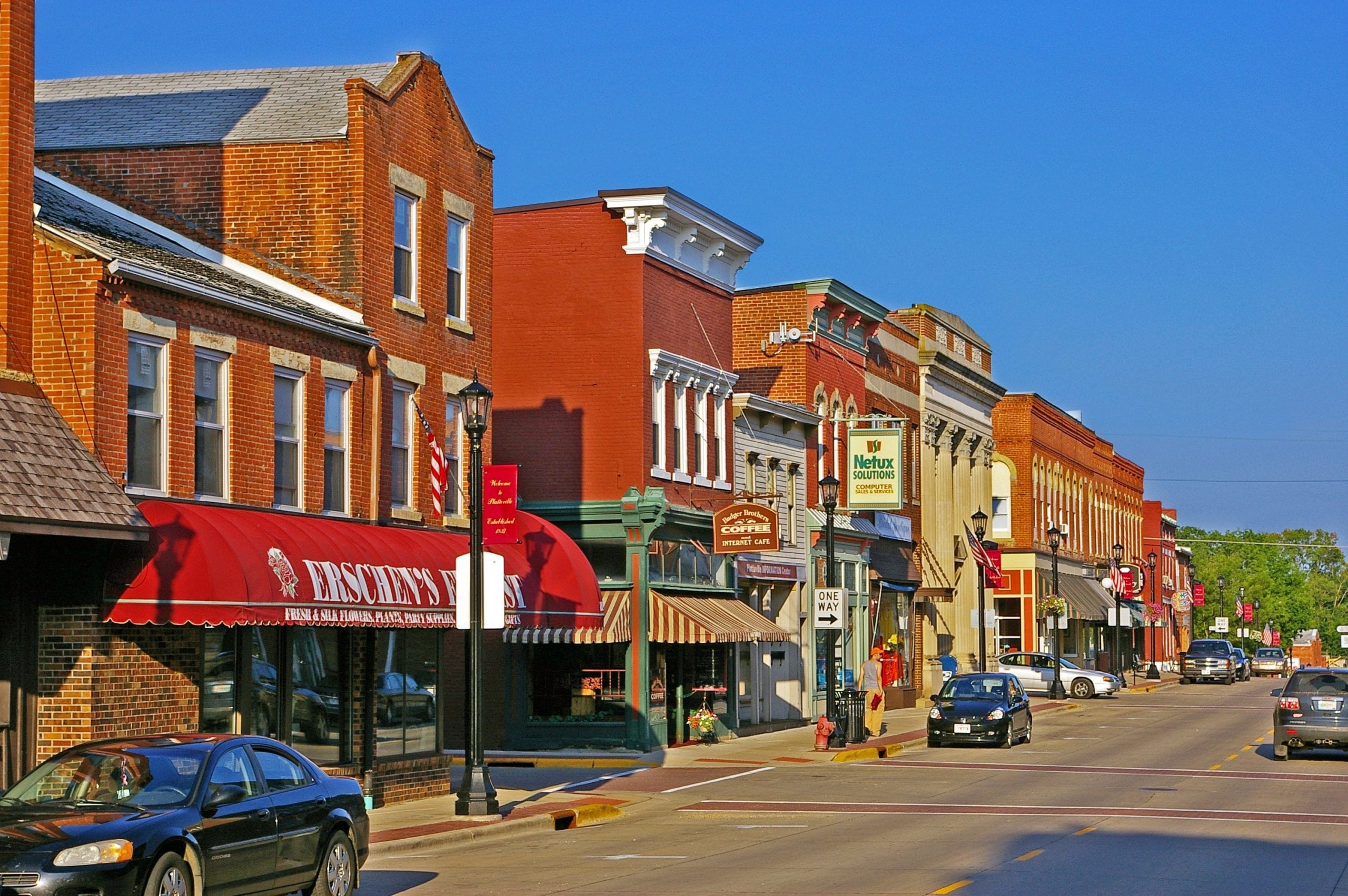
Photos of Platteville


Overview of Platteville
Platteville sits in the rolling hills of southwestern Wisconsin's Grant County, in the scenic Driftless Area, an unglaciated region of coulees, ridges, and river valleys. The city has a population of approximately 11,500 residents and is best known as the home of the University of Wisconsin-Platteville, a public university that gives the town a lively, college-town feel for much of the year. Platteville also carries a deep mining heritage, having grown in the nineteenth century around one of the nation's most productive lead-mining districts. It lies about 75 miles west of Madison, the state capital and nearest major metropolitan center, and roughly 25 miles east of Dubuque, Iowa, across the Mississippi River.
A natural starting point for any visit is the Mining & Rollo Jamison Museums, located in downtown Platteville. The complex preserves the local lead-mining story through underground mine tours, period buildings, and a sizable collection of mining equipment and regional artifacts, offering an unusually hands-on look at a chapter of Wisconsin history that most travelers never see. It is within walking distance of the city's Main Street and the UW-Platteville campus.
Roughly 25 miles east of Platteville, Governor Dodge State Park is one of the largest state parks in Wisconsin, covering more than 5,000 acres of forested ridges, bluffs, and two sizeable lakes. Visitors come for hiking, horseback riding, mountain biking, swimming, and paddling, and the park is a popular four-season destination for families and outdoor enthusiasts traveling from the Platteville area.
Just south of town, the Dickeyville Grotto is a folk-art religious shrine tucked into the small community of Dickeyville, about a 15-minute drive from Platteville. Built by Father Mathias Wernerus in the early twentieth century, the Grotto is decorated entirely from colored stone, glass, and found objects, and it draws curious visitors interested in religious art and roadside history.
To the south, the village of Potosi, about a 20-minute drive, is home to the restored Potosi Brewing Company and the National Brewery Museum, set along the Great River Road. The brewery's taproom and museum make it a popular stop for travelers pairing a Platteville stay with a scenic drive along the Upper Mississippi.
Platteville's mix of small-town charm, a four-year university, distinctive mining history, and easy access to Driftless Area scenery, the Mississippi River, and outdoor recreation make it a quietly compelling base for a short-term rental. Visitors can enjoy the walkable downtown and campus atmosphere while using the city as a hub for day trips to state parks, river towns, and the broader lead-mining region.
Want to know if a property in Platteville is a good investment?
Enter an address to get instant revenue potential and comps.