
Gate City, Virginia
Want to see how Gate City compares to other top cities in Virginia? Explore all city regulations in Virginia. →
Gate City, VA
Generally Investor Friendly
STR Regulations for Gate City, Virginia
This guide is written for STR investors and operators planning to launch or run a short‑term rental in Gate City, Virginia. Because Gate City and Scott County do not publish explicit, standalone short‑term rental rules in the provided content, this guide combines Virginia statewide statutes and general county/township requirements that typically govern STRs in Virginia. Where local STR‑specific requirements are unknown, we flag them for you to verify directly with the town.
1) Executive Overview and Direct Answer
- Are short‑term rentals allowed in Gate City, VA?
- Yes, at the state level Virginia permits STRs and allows localities to regulate them. The provided content does not include any explicit Gate City or Scott County STR bans or prohibitions. Therefore, STRs appear to be allowed subject to the same general requirements that apply throughout Virginia and any rules your property’s zoning and the town may impose (business licensing, building/HICP compliance, taxes, and—if applicable—county or HOA restrictions). Confirm with the Town of Gate City before operation.
- Bottom line: STRs are likely allowed in Gate City subject to Virginia rules and local compliance; no specific prohibition was found in the provided content. Verify with the Town and your parcel’s zoning.
What you must do at a minimum in Virginia:
- Obtain any required business license/tax registration (often via your Commissioner of the Revenue or city/town license official). This typically applies for all rental businesses, including STRs.
- Comply with state housing and safety rules for transient lodging, including the Virginia Uniform Statewide Building Code (VUSBC), Life Safety Code, and Health (HICP) regulations for lodging facilities. HICP requires plan review and inspection for lodging with fewer than five sleeping rooms; units with five or more rooms require a state lodging facility license.
- Collect and remit Virginia sales and transient occupancy taxes (typically via the Virginia Department of Taxation).
- Verify that the property’s zoning allows the use and that you meet all setbacks, occupancy, and parking standards.
- Confirm if the town or county requires any local business, zoning, or nuisance permits specific to STRs.
- If your property is part of a homeowners’ association, review HOA covenants for STR prohibitions.
Important gaps to verify with the Town of Gate City:
- Whether the town requires a local business license (and if so, application steps and fees).
- Whether the town has an STR registration/permit program or local STR fees/taxes beyond state taxes.
- Any local limits on STRs (e.g., caps on duration, required owner presence, cap on number of STR permits).
- Zoning compliance confirmation for your specific parcel.
- Noise, parking, trash, and signage requirements specific to STRs.
If Gate City does not have additional regulations, Virginia’s statewide rules and general Scott County processes apply.
What do Airbnb hosts actually earn in Gate City?
Gate City hosts earn a median $18,438/year with $115 ADR and 58% occupancy.
Top performers pull in $25,416+ per year.
See the full Gate City market breakdown2) How to Start an STR Business in this Market
Step 1 — Predevelopment and due diligence
- Confirm zoning and land use
- Identify whether your property is inside Gate City limits and in what zoning district it sits.
- If in an incorporated area, Gate City’s zoning authority applies; if outside town limits, Scott County zoning applies. If the provided content shows a county zoning page or link for Scott County, use it (otherwise rely on the statewide rules and confirm with the town/county).
- STRs are typically treated as lodging uses. Even if allowed, you may need a special or conditional use permit if the unit is a separate structure on the property. For multi‑unit properties or a “boarding house” configuration, county/state lodging facility licensing may be triggered.
- Check restrictive covenants
- If an HOA governs the property, obtain and review covenants and rules for STR prohibitions or prior approval requirements.
- Confirm infrastructure
- Public water/sewer versus private well/septic can influence HICP requirements and occupancy; verify adequacy and any capacity limits.
Step 2 — Building, life safety, and health compliance
- Understand state standards that apply to STRs in Virginia
- Virginia Uniform Statewide Building Code (VUSBC), including the Life Safety Code (NFPA 101) as adopted.
- Health regulations for lodging (HICP) apply to lodging facilities. The provided rules:
- Lodging with fewer than five sleeping rooms: HICP plan review and inspection required (no state license); see “Links to source pages” for HICP guidance.
- Lodging with five or more sleeping rooms: state lodging facility license required (administered by Virginia Department of Health). The content does not include the state lodging facility form, but it is a requirement for five or more rooms.
- Important: Confirm how your property is classified (e.g., a single-family dwelling with one guest room for rent vs. a boarding house with multiple guest rooms). If you intend to host separate guests from multiple units or rooms, the county and health department may reclassify the use.
- Plan submittals (fewer than five rooms, lodging classification)
- Prepare and submit plans to the appropriate building and health authorities per HICP guidance. Expect review for fire/life safety, exits, smoke detectors, bathroom fixtures, kitchen facilities (if any), sanitation, and accessibility as applicable to the code edition in effect.
- Schedule inspections
- Obtain approvals and inspections before opening. For ongoing operations, maintain compliance and address any follow‑up inspections.
Step 3 — Business licensing and taxes
- Business license/tax registration
- In Virginia cities and towns, a business license is typically required from the Commissioner of the Revenue or the city license official. If Gate City does not publish its own STR‑specific process, use the statewide county/town mechanism for business licensing and local business taxes.
- State tax registrations
- Register with Virginia Department of Taxation for sales and use tax and transient occupancy tax (TOT). File returns and remit taxes on schedule.
- Occupancy and other state taxes
- Confirm whether any county transient occupancy taxes are collected on your rentals (some counties/towns in Virginia collect an additional TOT beyond the state). If none are published for Scott County or Gate City in the provided content, default to state filings and confirm with the town.
- Keep records
- Maintain guest logs, registrations (if applicable), tax filings, inspection certificates, and all license documents.
Step 4 — Operational readiness and signage/parking/noise
- Finalize housekeeping, maintenance, and guest communications
- Establish check‑in procedures, safety and emergency information, and local rules (trash, recycling, quiet hours, parking).
- Comply with local nuisance and public health rules
- While the provided content does not include Gate City‑specific rules, typical requirements apply: limit occupancy, ensure safe egress and emergency access, avoid excessive noise, and manage refuse.
- Signage
- If Gate City or Scott County regulates signage for STRs, obtain permits and install signage in compliance. If not otherwise specified, keep signage modest and non‑obstructive and confirm with the town.
3) Required Documents, Permits, Licenses, and Guidelines
Minimum statewide requirements (for confirmation with local authorities):
- Zoning compliance confirmation
- Evidence that the property is allowed to operate as transient lodging or lodging in its zoning district (or a special/conditional use permit if required).
- Building and life safety approvals
- VUSBC compliance; Life Safety Code requirements; any structural, electrical, mechanical, and plumbing approvals/permits as applicable.
- Health approvals (HICP)
- For lodging with fewer than five rooms: HICP plan review and inspection (no state lodging facility license).
- For lodging with five or more rooms: state lodging facility license from Virginia Department of Health. (Form not included in provided content; obtain from state health department or local health district.)
- Business license/tax registration
- Business license/tax certificate from Gate City or Scott County (as applicable) and any required local business taxes.
- Tax registrations
- Virginia sales and use tax and transient occupancy tax registrations via Virginia Department of Taxation; comply with filing/remittance.
- Local tax registrations (if applicable)
- Any county or town TOT beyond the state-level TOT (none were provided in the content for Gate City/Scott County; confirm).
- Documentation of owner authorization
- Property deed or lease evidencing legal authority to operate a STR; if a condo or HOA, association approval or documentation that no approval is needed.
- Guest management documentation
- Occupancy limits, safety procedures, trash/recycling rules, and local contact information.
Note: Some Virginia localities also require STR registration, host education, a maximum number of STR permits, or a minimum dwell time (e.g., 30 days or more). The provided content does not list any such Gate City/Scott County requirements; verify directly.
4) Specific Regulations for STRs (City, County, State)
Because the provided content does not include city‑ or county‑specific STR statutes for Gate City/Scott County, the following statewide Virginia provisions and typical local frameworks apply. Use this as your baseline and confirm local rules:
- Statewide allowances and local regulatory authority
- Virginia allows localities to regulate STRs and transient lodging within their boundaries. Gate City may adopt additional requirements (e.g., registration, caps, caps on rental duration). None were found in the provided content; confirm.
- Health and lodging facility licensing (HICP)
- Fewer than five sleeping rooms: HICP plan review and inspection are required (no state lodging facility license required for these small lodging facilities). The provided content includes HICP guidance—see “Links.”
- Five or more sleeping rooms: state lodging facility license from Virginia Department of Health is required. The content does not include the license form; obtain from the Department of Health.
- Building and life safety
- All lodging must comply with the Virginia Uniform Statewide Building Code (VUSBC) and Life Safety Code (NFPA 101) as adopted. These include requirements for egress, fire safety, accessibility, and sanitation.
- Zoning and land use
- STRs are commonly permitted as lodging uses in certain zoning districts. Where STRs are a distinct use, they may be permitted, conditional, or require a special use permit. Confirm zoning with the Town of Gate City Planning and Zoning Department or Scott County Planning and Zoning.
- Taxes and business licenses
- Register for Virginia sales tax and transient occupancy tax (TOT) through the Virginia Department of Taxation.
- Obtain a local business license/tax certificate (Commissioner of the Revenue or license official) and pay any local business taxes.
- Some counties/towns levy an additional TOT beyond the state; none were specified for Gate City/Scott County in the content—confirm.
- Operational requirements (typical)
- Occupancy limits (often tied to number of sleeping rooms and life safety capacity).
- Parking compliance, signage limits, and noise/quiet hour restrictions are typically enforced at the local level (verify with Gate City).
- Trash, recycling, and refuse storage/separation rules apply (local compliance).
- Short‑term rentals are often required to display a local contact number for complaints.
Because the content does not list Scott County zoning text or permits for STRs, the following general planning guidance may apply:
- Check the Scott County Planning and Zoning site for zoning districts and permitted uses. If your STR will be in a separate structure (detached), a special/conditional use permit may be required.
- If your STR is part of a multi‑unit property or resembles a boarding house, you may need state lodging facility licensing (five or more rooms) and stronger safety/life safety compliance.
- Verify setback, lot coverage, and parking standards with the county.
5) Contact Information
Town of Gate City (municipality)
- Town Hall
- Phone: (276) 386‑6501
- Email: townclerk@gatecityva.org
- Address: 332 East Main Street, Gate City, VA 24251
- Website: www.gatecityva.org
- If you need a local business license or have zoning questions, contact the Town Clerk or Town Administrator.
Scott County (if the property is outside town limits or for county zoning matters)
- Planning and Zoning (website listed in provided content: “Scott County – Zoning”)
- Site: www.scottcountyva.com/ArchiveCenter/ViewFile/Item/68
- Phone: Contact information not provided in the content.
- Commissioner of the Revenue (for local business license/tax certificate)
- Contact information not provided in the content.
State of Virginia
- Virginia Department of Health – Lodging Facility Licensing (for facilities with five or more sleeping rooms)
- Licensing page and contact details were not included in the provided content; obtain the correct form and contact information from the Department of Health or your local health district.
- Virginia Department of Taxation
- General information: tax.virginia.gov
- Sales and transient occupancy tax registration and filings; obtain authority and instructions from the Department of Taxation.
Because the provided content does not list Scott County’s phone/email, use the Town of Gate City as your first point of contact for zoning, business licensing, and STR questions. If your property is outside town limits, follow up with the Scott County Planning and Zoning site to determine the county office and process.
6) Links to Source Pages
The provided content includes the following relevant links. Use them to verify the most current rules, contacts, and procedures:
-
Scott County Zoning (Scott County, VA)
-
Town of Gate City, VA – Official Website
-
Zoning Ordinance (various statewide counties and towns)
- County links are compiled in the provided content’s extensive list; the Scott County link above is the key reference for county zoning. If your property is within Gate City, the town’s own zoning applies; confirm via Town Hall.
-
Virginia Department of Health – Lodging Facility Licensing
- The provided content does not include a direct link to the lodging facility license form. Obtain the licensing page and contact information from the Virginia Department of Health or your local health district.
-
Virginia Department of Taxation (for sales and transient occupancy taxes)
- The provided content does not include a direct link. Visit tax.virginia.gov for registration and filing instructions.
If any of these links change, verify the current contact information and processes with the Town of Gate City (primary local authority) or Scott County.
How to proceed
- Start with the Town of Gate City for zoning confirmation and any town business license requirements. Ask whether the town requires STR registration or has local rules not listed here (noise, parking, signage, cap on STR permits, minimum stay).
- If the property sits outside Gate City limits, confirm zoning and any county permits with Scott County. Because no specific STR rules or permit forms were provided for Scott County, ask the Planning and Zoning department directly how they classify STRs (attached accessory apartment vs. separate lodging) and whether special use permits are required for detached STRs.
- For statewide compliance, follow the HICP requirements, VUSBC/Life Safety Code, and complete sales and TOT registrations with the Department of Taxation.
- For
Next step
Found a property in Gate City?
Paste any address and get estimated revenue, cash-on-cash return, and comparable STR performance in under 5 minutes. 3 free analyses per day.
Free brief
Get the free Gate City STR Investment Brief
Revenue data, top neighborhoods, seasonal trends, and the key regulations for Gate City, Virginia in one email.
Gate City
Market Saturation Score
Photos of Gate City


Overview of Gate City
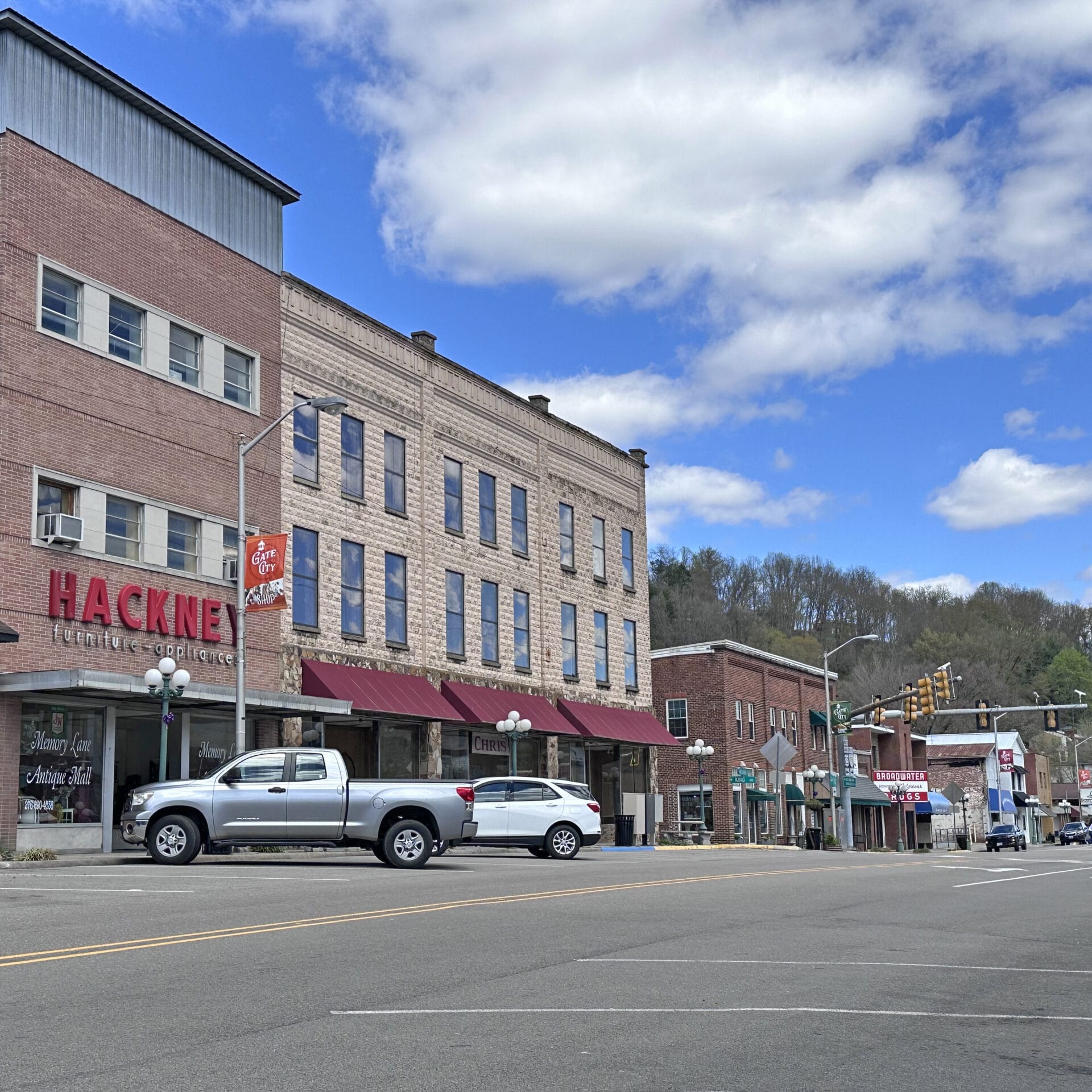
Gate City is a small Appalachian town of roughly two thousand residents, serving as the seat of Scott County in the far southwestern corner of Virginia, just a few miles from the Tennessee state line. Tucked into the rolling foothills of the Appalachian Mountains and situated along the Clinch River, the town has a quiet, walkable small-town character anchored by a compact historic downtown and a traditional county courthouse square. It earns its name from its position as a historic gateway between Virginia and the Tennessee Valley, and today it functions as a similar gateway for visitors heading toward some of the region's most distinctive natural and historical attractions. Knoxville, Tennessee, lies approximately one hundred miles to the southwest, while the Tri-Cities area of Kingsport, Bristol, and Johnson City is only a short drive south.
The marquee draw in the area is Natural Tunnel State Park, located about ten miles north of town in Duffield. Often called the "Eighth Wonder of the World," the park is built around a massive limestone tunnel carved by Stock Creek through a ridge over the course of millions of years, a passageway so large that an active rail line still runs through it. The park offers hiking trails, a chairlift ride down into the gorge, picnicking areas, a swimming pool, campground, and a visitor center, making it a multi-day draw for families and outdoor enthusiasts. Because it sits so close to Gate City, it is the single most common reason visitors spend the night in the area.
A short drive west, straddling the Virginia-Kentucky-Tennessee border, lies Cumberland Gap National Historical Park, roughly an hour from Gate City. The gap is the famed passage through the Cumberland Mountains that pioneers like Daniel Boone used to reach the western frontier, and the park preserves that history through its visitor center, restored Hensley Settlement, and miles of hiking trails, including a segment of the longer Cumberland Trail. The combination of sweeping mountain views and frontier-era history gives the area a layered appeal that extends well beyond a single day trip.
Back near Gate City, the Clinch River and the surrounding Scott County countryside offer quieter forms of recreation, including smallmouth bass fishing, paddling, and scenic drives through the rural Appalachian landscape. Local roads wind past farms, covered bridges, and small country stores that give the region its unhurried, traditional feel. Visitors using Gate City as a base can easily combine a day at Natural Tunnel with an afternoon exploring the historic downtown, an evening listening to live bluegrass at a local venue, or a longer excursion to Cumberland Gap.
For short-term rental owners, Gate City offers a compelling combination of an underserved lodging market and a steady stream of visitors drawn to a handful of genuinely distinctive regional attractions. Its proximity to Natural Tunnel, the Cumberland Gap, and the broader Tri-Cities area, paired with its affordable setting and authentic Appalachian character, makes it an attractive base for travelers who want to experience southwest Virginia without the crowds or costs of larger tourist destinations.
Want to know if a property in Gate City is a good investment?
Enter an address to get instant revenue potential and comps.