
Smithfield, Utah
Want to see how Smithfield compares to other top cities in Utah? Explore all city regulations in Utah. →
Smithfield, UT
Very Investor Friendly
STR Regulations for Smithfield, Utah
Overview: Short-Term Rentals in Smithfield, UT
Yes, short-term rentals (such as those listed on Airbnb, VRBO, etc.) are explicitly allowed in Smithfield, UT. The Planning Commission has acknowledged the existence of STRs in the city (noting 9 listings on VRBO in 2017 and receiving tax revenue from an Airbnb) and discussed the need for regulations. However, as of the provided documents (latest from 2018), Smithfield City has not enacted any specific local ordinances, permits, licenses, or regulations governing short-term rentals. Operators must comply with state and county requirements.
1. How to Start a Short-Term Rental Business in Smithfield, UT
Operating an STR in Smithfield involves navigating state-level requirements while adhering to general city zoning and business codes:
- Verify Zoning Compliance: Confirm your property is located in a zone where residential rentals are a permitted or conditionally permitted use. Refer to the Smithfield City Municipal Code (Title 17 - Zoning). The provided minutes mention reviewing land use matrices and zones like R-1-10 (Single-Family Residential).
- Understand State & County Requirements: Utah does not require a state-level STR permit. Compliance primarily centers on State Tax Obligations (see Section 4) and general County Health/Safety Standards (see Section 4).
- Business License (Potentially Required): While no specific STR license exists, Smithfield requires businesses operating within the city to obtain a General Business License from the City Recorder's office (Contact: [email protected], 435-792-7989). It is crucial to verify if this license is required specifically for STR operations and what the process entails.
- Record Keeping & Compliance: Maintain meticulous records of rental nights, income, and expenses. Comply with state tax filing requirements (monthly or quarterly). Ensure the property meets health and safety standards (smoke detectors, egress, etc.) typical of rental properties.
- Monitor for City Regulations: Smithfield was actively discussing STR regulation in 2017-2018. Stay informed by attending Planning Commission and City Council meetings or checking city agendas/minutes for any updates to ordinances. Regulations could be introduced at any time.
2. Required Documents, Permits, Licenses, and Guidelines
Based on the provided information, the explicitly required items for operating an STR in Smithfield are STATE TAX OBLIGATIONS. There is no evidence of specific city or county STR permits, licenses, or guidelines in the provided documents.
- Utah State Tax Commission Registration & Filings: If the platform (Airbnb/VRBO) does not handle sales tax and transient room tax collection for you, you must:
- Register with the Utah State Tax Commission for applicable taxes (Sales Tax & Transient Room Tax - see details in Section 4).
- Collect the taxes from guests.
- File returns (monthly or quarterly based on revenue) and remit the taxes.
- General Business License (Potential Requirement): Verify with the City Recorder if a general business license is required to operate an STR. See contact information below.
- Compliance with Zoning & General Codes: Ensure the STR use complies with the underlying zoning of the property and any applicable Smithfield City Municipal Codes (e.g., noise, parking, property maintenance).
3. Specific Regulations for Short-Term Rentals in Smithfield, UT
City of Smithfield: No Specific STR Regulations Enacted. The Planning Commission discussed the issue in October 2017 and February 2018, acknowledging concerns from residents and the need for potential rules. However, the documents provided do not show any ordinances passed. Operators should adhere to general zoning codes and monitor for future local regulations.
Cache County: No specific county-level STR regulations are mentioned in the provided documents. County regulations typically relate to health and safety (septic, well water, building codes) rather than operating rules like permits.
State of Utah (General Guidelines):
- Zoning Autonomy: Utah State law generally allows municipalities significant autonomy in regulating land use, including STRs. Cities can impose restrictions, permit requirements, and zoning limitations.
- Taxation: Utah State law requires the collection and remittance of Sales Tax and Transient Room Tax (if not handled by the platform). Rates and filing requirements vary (see Section 4).
- Non-Conforming Use: A property operating before any potential future STR regulations are enacted might be considered a non-conforming use and be allowed to continue under certain conditions ("grandfathered"), though specifics would be determined by any future city ordinance.
4. Utah State-Level Short-Term Rental Tax Requirements
Utah manages STR taxes at the state level. The specific rates and filing requirements depend on the jurisdiction, but the general framework applies:
- State Sales Tax: Applies to the rental transaction. Utah's base state sales tax rate is 4.85%. Local option sales taxes may apply, potentially bringing the combined rate above 7% in some areas.
- Transient Room Tax (TRT): Many counties or municipalities impose an additional tax on transient lodging (short-term rentals). This tax is separate from sales tax and is specifically aimed at lodging.
- It is critical to verify if Cache County or Smithfield City imposes a TRT and the specific rate. The provided documents mention the city receiving tax money from an Airbnb, indicating some form of lodging tax applies, but the exact rate is not specified here.
- Platform Collection: Major platforms like Airbnb and Vrbo often handle the collection of these taxes. If they do not, the STR operator is solely responsible for registration, collection, and remittance.
- Registration: Operators must register with the Utah State Tax Commission for the applicable taxes (Sales Tax and/or Transient Room Tax) if the platform does not handle it.
- Filing & Payment: File returns (monthly or quarterly based on revenue volume) and remit the collected taxes to the Utah State Tax Commission.
- Tax Deductions: Potential federal tax deductions may apply (mortgage interest, property taxes, utilities, insurance, depreciation) for rental days. Consult IRS rules and a tax professional.
Action Required: Contact the Utah State Tax Commission (Taxpayer Resources) or your local tax advisor to determine the exact Sales Tax and Transient Room Tax rates for Smithfield/Cache County and to understand your specific registration and filing obligations.
5. Contact Information for Local Authority in Charge of STRs
As of the provided documents, Smithfield City has not designated a specific department or official solely "in charge of STRs." Regulations and zoning are handled through Planning and Zoning, while licensing falls under the City Recorder's office. Contact points are:
- Planning & Zoning Department:
- Contact: Brian Boudrero (Contact email listed on public notice)
- Email: bboudrero@smithfieldutah.gov
- Phone: (435) 792-7989
- Role: Handles land use, zoning compliance, and was actively discussing STR regulations in 2017-2018. The primary contact for monitoring potential STR ordinance development.
- City Recorder's Office:
- Contact: Charlene Izatt (Deputy Recorder - listed in minutes)
- Email: [Email address needed - check city website; address from minutes shows she manages recording]
- Phone: (435) 792-7989
- Role: Handles business licensing (verify if a general license is required for STRs), city records, and ordinances. Critical point of contact for licensing questions.
Note: For state tax questions, contact the Utah State Tax Commission:
- Website: https://tax.utah.gov/
- Phone: Contact via main number listed on their website.
6. Links to Source Pages
- Smithfield City Planning Commission Minutes (Oct 18, 2017): https://smithfieldutah.gov/sites/default/files/fileattachments/planning_commission/meeting/4511/smithfield_minutes_10-18-17.pdf (Contains the primary discussion on STRs in Smithfield, including resident concerns and the commission's acknowledgment of the issue and state law constraints)
- Utah.gov Public Notice - Smithfield Planning Commission Meeting (Feb 21, 2018): https://www.utah.gov/pmn/sitemap/notice/447465.html (Agenda includes "Continued review and discussion on short-term rentals-Airbnb and VRBO")
- Utah STR Regulations Overview (State-Level Guide - RedAwning): https://www.redawning.com/pm/post/utah-short-term-rental-laws (Provides context on Utah's state-level tax framework and general local regulatory autonomy)
- STRProfitMap - Utah Cities STR Regulations Listing: https://www.strprofitmap.com/regulations/UT (Lists Smithfield with 60 listings and links to regulations, though city-specific details aren't provided in the main document; useful as a market indicator and link to potential regulation pages)
Important Disclaimer: This guide is based solely on the provided documents. The landscape for STR regulations is fluid. Smithfield City may have enacted specific ordinances or licensing requirements after 2018. Always verify current regulations and requirements directly with the City of Smithfield (Planning & Zoning and City Recorder) and the Utah State Tax Commission before making investment or operational decisions. Attend city meetings or monitor agendas/minutes for the latest information.
What do Airbnb hosts actually earn in Smithfield?
Smithfield hosts earn a median $28,321/year with $124 ADR and 59% occupancy.
Top performers pull in $39,591+ per year.
See the full Smithfield market breakdownNext step
Found a property in Smithfield?
Paste any address and get estimated revenue, cash-on-cash return, and comparable STR performance in under 5 minutes. 3 free analyses per day.
Free brief
Get the free Smithfield STR Investment Brief
Revenue data, top neighborhoods, seasonal trends, and the key regulations for Smithfield, Utah in one email.
Smithfield
Market Saturation Score
Photos of Smithfield
Overview of Smithfield
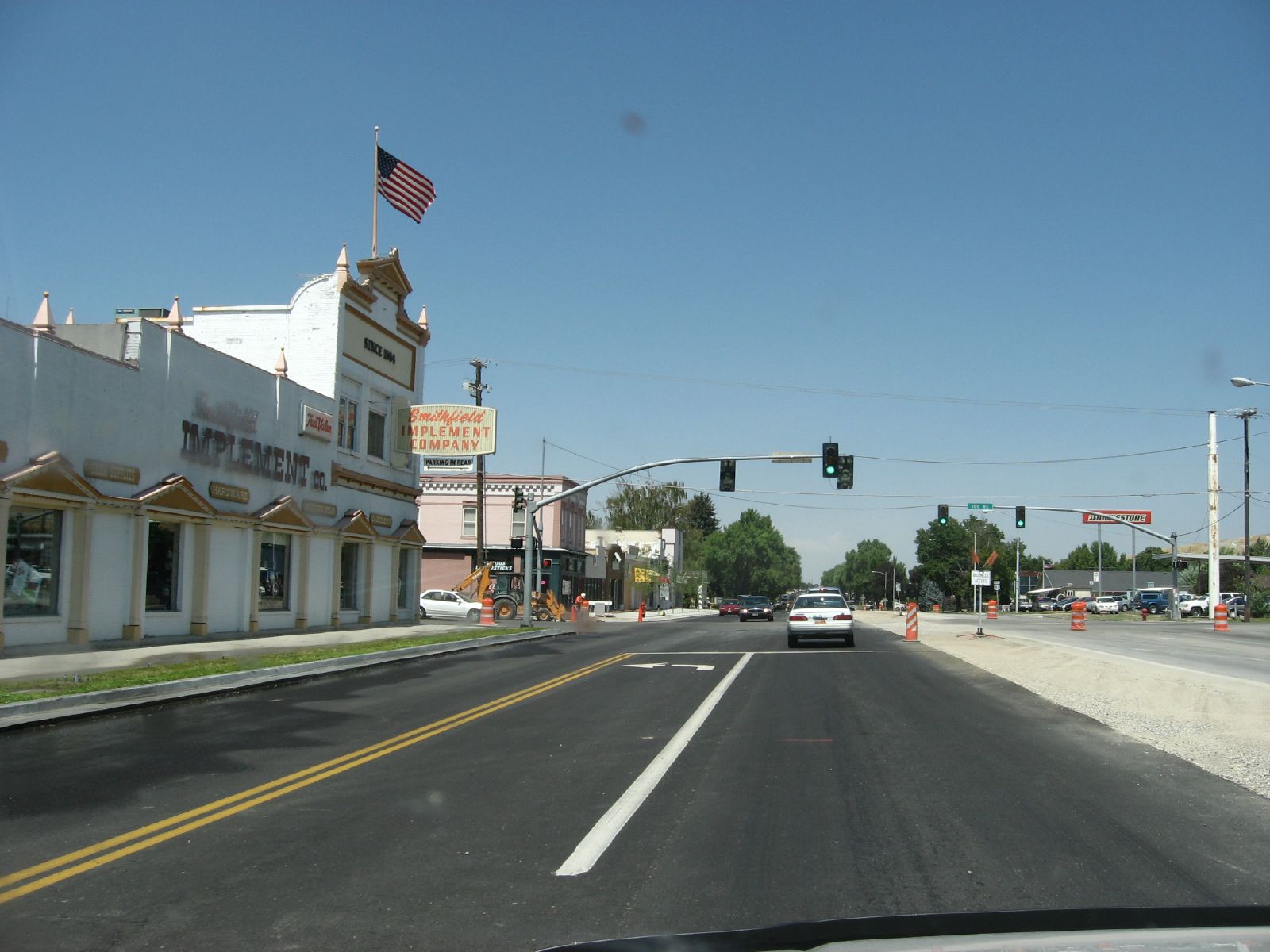
Smithfield is a small city in Cache County in northern Utah, with a population of roughly 13,000 residents. Tucked into the fertile Cache Valley, it carries a quiet, family-oriented character shaped by farming traditions, modest residential neighborhoods, and wide-open views of the surrounding mountains. The town is best known locally as a comfortable, low-key base from which travelers explore Cache Valley, the Bear River Range, and the recreational areas clustered around nearby Logan. Smithfield sits about eight miles north of Logan and roughly eighty-five miles north of Salt Lake City, putting it within easy reach of the Wasatch Front while feeling a world apart from it.
A short drive east of town, the Wasatch-Cache National Forest opens up across the Bear River Range, offering hiking, camping, and backcountry access within about twenty minutes. The forest is the region’s defining outdoor draw, with trails ranging from gentle creekside walks to high-alpine routes that climb toward ridgelines overlooking the valley. In winter, the same mountains draw skiers to Beaver Mountain in nearby Logan Canyon, a family-run resort that has been operating for decades and is roughly a thirty-minute drive from Smithfield. It is widely regarded as a locals’ hill, which gives it an unpretentious, community feel that contrasts with the larger destination resorts further south.
To the south of Smithfield, Hardware Ranch Wildlife Management Area draws visitors during the winter months for its guided elk sleigh rides, a popular outing for families staying in the valley. The site, managed by the Utah Division of Wildlife Resources, sits at the edge of the forest and offers a chance to see large herds of Rocky Mountain elk up close. Closer to town, the American West Heritage Center in Wellsville preserves and interprets Cache Valley’s pioneer and ranching past through living-history events, farm animals, and seasonal festivals, and it is roughly a fifteen-minute drive from Smithfield.
Smithfield is a compelling base for short-term rentals because it pairs small-town affordability and quiet with quick access to a surprisingly varied set of regional attractions. Visitors can spend mornings exploring historic Cache Valley, afternoons hiking or skiing in the Wasatch-Cache National Forest, and evenings returning to a calm residential setting away from the busier lodging markets in Logan. Its proximity to Utah State University, year-round outdoor recreation, and the scenic drives toward Bear Lake make it a practical and appealing anchor for travelers looking to experience northern Utah beyond the usual Salt Lake City itinerary.
Want to know if a property in Smithfield is a good investment?
Enter an address to get instant revenue potential and comps.