
Manila, Utah
Want to see how Manila compares to other top cities in Utah? Explore all city regulations in Utah. →
Manila, UT
Generally Investor Friendly
STR Regulations for Manila, Utah
Overview: Are short‑term rentals allowed?
- Short‑term rentals (rentals of fewer than 30 days) are allowed in Manila, subject to zoning, building, occupancy, and compliance with local ordinances. There is no city‑wide prohibition against rentals of less than 30 days, provided all requirements are met.
- Important restrictions:
- Guest rooms located outside of the main dwelling are not allowed in the Town of Manila. An applicant must obtain a conditional use permit (CUP) for such use. Practically, this means you cannot have separate guest rooms or accessory buildings rented as STR units without a CUP. See Section 31 (Guest Room) and Section 33 (Home Occupation).
- Boarding houses are not permitted in the zoning districts where STRs are typically operated.
- Definitions that affect STRs:
- Bed and Breakfast: residence offering rooms and breakfast on a short‑term basis; appearance must remain residential.
- Guest Room: room for sleeping without cooking facilities; separate guest rooms outside the main dwelling are not allowed without a CUP.
- Hotel: lodging for more than 20 persons with interior lobby access; generally not permitted in residential zones.
- Motel: lodging primarily for automobile transients; generally not permitted in residential zones.
- Enforcement is through the Building Inspector, and violations are misdemeanor offenses. See Sections 602–603 (administration/enforcement), 701–702 (violations/penalties), and 612 (occupancy permits).
How to start an STR business in Manila, UT
-
Pre‑development feasibility
- Confirm the property’s zoning (e.g., R‑R‑½, R‑R‑1, R‑1‑10, R‑1‑8, R‑M‑7/15/30; Commercial C‑N/C‑S/C‑H/C‑G/C‑D; Planned P) and permitted uses. STRs are typically compatible with residential districts as a primary dwelling use. If you intend to operate from accessory structures or separate guest rooms, apply for a conditional use permit (CUP).
- If you propose any change of use, confirm with the Building Inspector (Section 613) and obtain any required permits before listing.
-
Design and preparation
- Plan for safety and sanitation per the most current International Residential Code (IRC) (Section 526) and any health requirements (Section 515).
- Ensure adequate parking and access per site plan requirements (Section 605).
- Prepare plans/drawings sufficient for building and occupancy permit applications.
-
Permitting process
- Building permit (if applicable): Required for construction, alterations, or improvements. Submit detailed plans (Section 609) and site plan (Section 605) to the Building Inspector. Follow “home‑first” requirements (Section 603(4)–(10)). No building permit will be accepted for accessory structures without the primary dwelling placement; comply with construction timelines and completion requirements (Section 603(5)–(7)).
- Conditional Use Permit (CUP): If you intend to rent out guest rooms outside the main dwelling or otherwise qualify under “Home Occupation,” a CUP is required (Section 33). For temporary uses or special events, CUPs have specific time limits (Section 521).
- Occupancy permit: Required before leasing or changing use (Section 612). The Building Inspector must inspect and determine compliance with zoning and building codes.
-
Utilities, taxes, and taxes
- Obtain utility service only after receiving a copy of the Building Permit (Section 611). Utility providers may be penalised for connecting without this evidence.
- Determine any transient room tax or sales/use tax obligations with the State of Utah Tax Commission; this is not detailed in the zoning documents provided.
-
Operations and compliance
- Maintain property to prevent nuisances (weeds, junk, unsafe structures) and ensure fire safety (Section 523).
- Manage travel trailers/RVs and temporary structures: not permitted for permanent living/sleeping (Section 522).
- Observe rules for temporary buildings and uses if your STR concept involves time‑limited operations (Section 521).
-
Ongoing obligations
- Maintain permits, follow occupancy limits set by zoning, and respond to enforcement notices (Sections 701–703).
- Keep records of permits and inspections; notify the Building Inspector of the start of work at least 24 hours in advance when required (Section 609(10)).
Required documents, permits, licenses, and guidelines
- Building permit application (owner/lessee/agent affidavit; plans in duplicate per Section 609(3)).
- Detailed site plan showing scale, north arrow, lot lines, utilities, parking/circulation, existing/proposed structures, signage locations, and builder/applicant details (Section 605).
- Conditional Use Permit application for guest rooms outside the main dwelling or any home‑occupation‑type activity (Sections 31, 33, 521).
- Occupancy permit application and inspection (Section 612).
- Plans must comply with the most current IRC and local codes (Section 526).
- Utilities coordination and proof of Building Permit before service connection (Section 611).
- If on septic/well, obtain Utah State Department of Health Certificate of Approval (Section 515).
- Address state‑level requirements: business registration, transient room tax and sales/use tax filings with the Utah State Tax Commission; follow any Utah Uniform Building Code updates and local health/sanitation rules.
Specific regulations: zoning, occupancy, safety, and enforcement
- Zoning districts and uses:
- STR use typically aligns with primary dwelling uses in residential districts (R‑R‑½, R‑R‑1, R‑1‑10, R‑1‑8, R‑M‑7/15/30). Commercial districts (C‑N/C‑S/C‑H/C‑G) and Planned (P) may also be considered based on permitted/conditional uses and site plan review.
- Guest rooms outside the main dwelling are prohibited without a CUP (Section 31).
- Boarding houses are generally not permitted in residential STR contexts.
- Height and setbacks:
- Height limits and yard dimensions vary by district; e.g., Rural Residential districts typically allow a maximum height of 25 feet/2.5 stories with minimum yard setbacks.
- Building and occupancy:
- No permit is valid for accessory buildings without a primary dwelling in place; construction must begin within 180 days of permit issuance and be completed within one year (Sections 603(5)–(7), 609).
- Property maintenance:
- Owners must control weeds and junk, maintain safe structures, and avoid conditions that create fire/safety hazards (Section 523).
- RVs/trailers:
- Not allowed for permanent living/sleeping; temporary use subject to sanitation and local ordinances (Section 522).
- Excavation:
- Any excavation in public places requires permits, bonding, restoration, and traffic/safety protections (Section 524).
- Enforcement and penalties:
- Violations are misdemeanors; fines up to $1,000 and/or up to six months imprisonment; daily penalties for ongoing violations (Section 702).
Contact information: local authority in charge of STRs
- Primary local authority:
- Town of Manila Building Inspector
- Mailing/Physical: 50 N 100 E, Manila, UT 84046
- Phone: Contact via Daggett County dispatch or general information at (435) 784‑3218 (Manila Town Office)
- Email/Website: Not provided in the source documents
- Advisory bodies (for zoning and permits):
- Manila Planning and Zoning Commission
- Manila Board of Adjustment (for appeals and variances)
- County health and records:
- Daggett County offices (general contact: (435) 784‑3218)
Links to source pages
- Manila, Utah 2019 Zoning Ordinance (PDF): manilautah.com/wp-content/uploads/2022/11/2019_Zoning_Ordinance.pdf
Notes on state‑level obligations (Utah)
- State health, building, and tax requirements apply in addition to local ordinances. Consult the Utah State Tax Commission for transient room tax and sales/use tax, and the Utah Department of Health for sanitation approvals where applicable.
This guide focuses on Manila‑specific zoning and operational requirements. If the property is in Daggett County (unincorporated), additional county rules may apply; consult the county for any extraterritorial requirements.
What do Airbnb hosts actually earn in Manila?
Manila hosts earn a median $45,115/year with $273 ADR and 58% occupancy.
Top performers pull in $51,839+ per year.
See the full Manila market breakdownNext step
Found a property in Manila?
Paste any address and get estimated revenue, cash-on-cash return, and comparable STR performance in under 5 minutes. 3 free analyses per day.
Free brief
Get the free Manila STR Investment Brief
Revenue data, top neighborhoods, seasonal trends, and the key regulations for Manila, Utah in one email.
Manila
Market Saturation Score
Photos of Manila

Overview of Manila
Manila is a small town in northeastern Utah, serving as the seat of Daggett County, the state's least-populated county. With a population of only a few hundred residents, Manila has the feel of a quiet high-desert and high-country community, set among sagebrush flats and the forested ridges that rise toward the Wyoming border. The town is best known as the principal gateway to Flaming Gorge National Recreation Area, one of the most popular outdoor destinations in the Rocky Mountain region, and visitors passing through often stop for fuel, food, and supplies before continuing on to the reservoir. Manila sits roughly 200 miles northeast of Salt Lake City, and about 60 to 70 miles north of Vernal, the nearest city of any real size, while Rock Springs, Wyoming lies about 80 miles to the north across the state line.
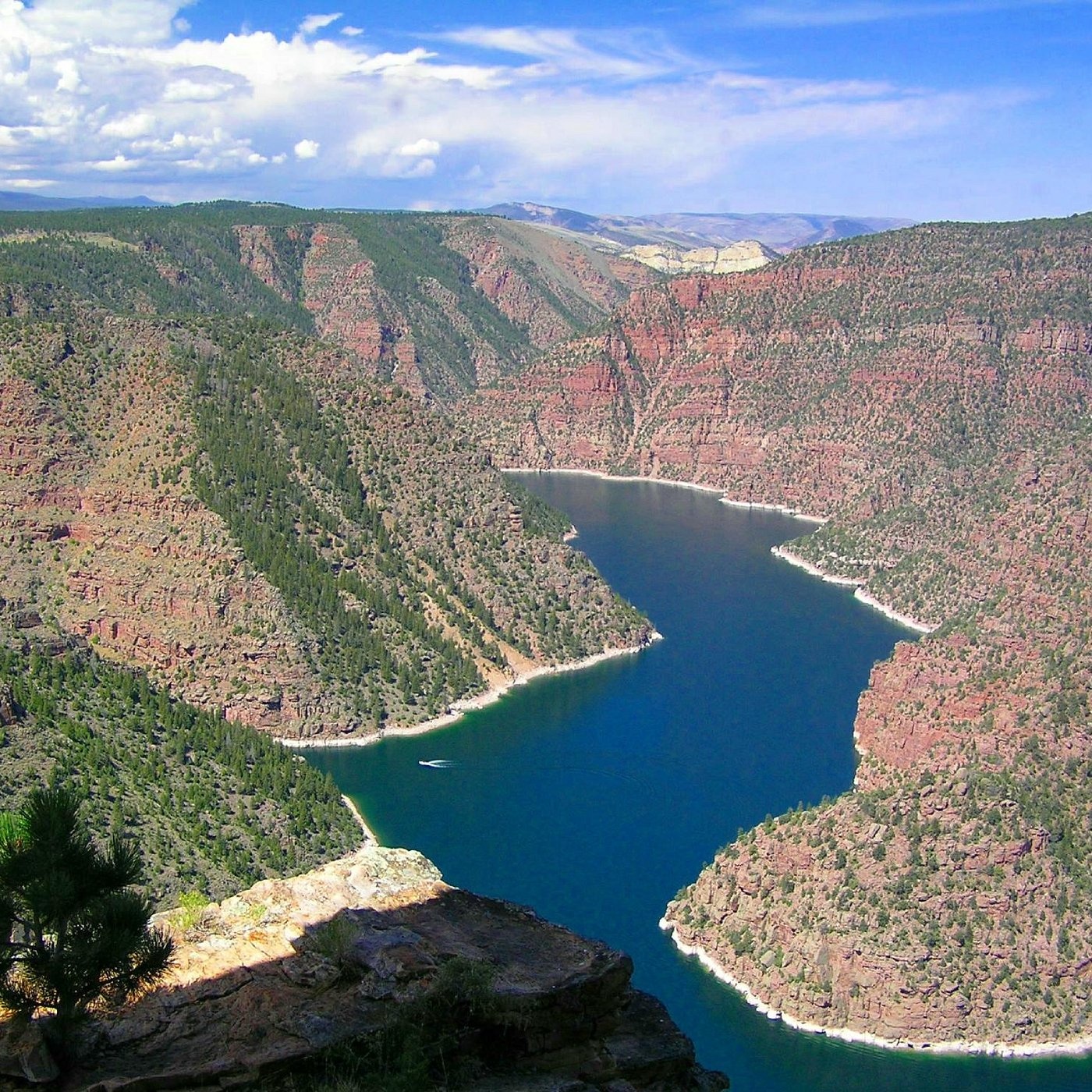
The biggest draw in the area is Flaming Gorge National Recreation Area, which sprawls across the Utah-Wyoming border and is anchored by Flaming Gorge Reservoir on the Green River. The recreation area is a year-round playground, drawing visitors for trophy trout and kokanee salmon fishing, houseboating, kayaking, and sailing in warmer months and for ice fishing and snowmobiling when winter settles in. The visitor center at the south end of the recreation area is just a short drive from Manila, putting the town within easy reach of marinas, campgrounds, and cliff-side viewpoints.
A central feature of the recreation area is Flaming Gorge Dam, completed in 1964 on the Green River. The dam created the long, deep blue reservoir that defines the region and offers a striking contrast with the red sandstone cliffs that give the gorge its name. Visitors come to walk across the top of the dam, learn about its history and hydroelectric operation at the adjacent visitor center, and take in views that stretch across the canyon and into Wyoming.
The surrounding landscape is part of the Ashley National Forest, which manages much of the terrain around Manila and the reservoir. The forest offers dispersed camping, hiking trails, and scenic byways, and it provides the tree-covered backdrop that distinguishes this corner of Utah from the bare red rock country farther south. Pull-outs along U.S. Route 191 through nearby Red Canyon, just south of Manila, are a favorite stop for first-time visitors who want to see the namesake crimson cliffs up close.
Manila makes a compelling base for short-term rentals because of its position right at the entrance to Flaming Gorge. Guests can spend the day on the water, exploring the dam, or driving scenic backroads through the national forest, then return to a quiet small-town setting in the evening. With limited lodging options in the immediate area, well-located vacation rentals can appeal to anglers, boaters, snowmobilers, and families looking for a relaxed base camp in one of Utah's most scenic corners.
Want to know if a property in Manila is a good investment?
Enter an address to get instant revenue potential and comps.