
Helper, Utah
Want to see how Helper compares to other top cities in Utah? Explore all city regulations in Utah. →
Helper, UT
Generally Investor Friendly
STR Regulations for Helper, Utah
Executive Overview
Short-term rentals ARE allowed in Helper, UT. The city maintains an active short-term rental program evidenced by the availability of a specific "Short-Term Rental Application" form on the city's official website. Helper City welcomes STR investors and operators, with clear pathways for licensing and regulation compliance.
Helper, located in Carbon County, has positioned itself as a STR-friendly community within the Carbon Corridor tourism region. The city actively promotes vacation rental opportunities through the Carbon County tourism website, showcasing existing Airbnb listings and encouraging STR development as part of the broader tourism infrastructure.
What do Airbnb hosts actually earn in Helper?
Helper hosts earn a median $17,889/year with $101 ADR and 66% occupancy.
Top performers pull in $26,902+ per year.
See the full Helper market breakdownMarket Entry Strategy for Short-Term Rentals
Step 1: Initial Assessment and Planning
- Property Evaluation: Assess your target property for STR suitability, considering Helper's residential character and tourism draw
- Zoning Verification: Confirm the property's zoning allows for short-term rental use (typically residential zones permit STRs with proper licensing)
- Market Research: Leverage Carbon County's tourism promotion efforts and existing STR listings to understand demand patterns
Step 2: Pre-Application Preparation
- Document Gathering: Assemble ownership documentation, property insurance, and basic property details
- Safety Assessment: Prepare for potential building inspections (common STR requirement)
- Insurance Review: Ensure adequate liability coverage for rental operations
Step 3: Application and Licensing Process
- Submit Application: Complete Helper's Short-Term Rental Application form
- Fee Payment: Pay applicable application and licensing fees
- Inspection Coordination: Schedule required safety inspections if mandated
- License Activation: Upon approval, activate your STR license and begin operations
Step 4: Ongoing Compliance Management
- Tax Collection: Implement transient lodging tax collection and remittance systems
- Renewal Management: Track annual license renewal requirements
- Compliance Monitoring: Maintain adherence to all city regulations and respond to any compliance issues
Required Documents, Permits, and Licenses
Primary Licensing Requirements
- Short-Term Rental Business License: Obtained through Helper City
- Conditional Use Permit: May be required depending on zoning
- Building Safety Inspection: Verification of property safety standards
Required Documentation Package
Based on standard municipal STR requirements, applicants typically need:
- Completed Short-Term Rental Application form
- Proof of property ownership
- Certificate of insurance (liability coverage)
- Site plan and floor plan drawings
- Emergency contact information for property manager/owner
- Utah State Tax Commission account for tax remittance
Additional Compliance Documents
- Guest registration logs (maintained for law enforcement access)
- Property management agreement (if using third-party management)
- Safety equipment documentation (smoke detectors, fire extinguishers, etc.)
Important Note: Specific document requirements should be confirmed directly with Helper City, as the exact application package may vary based on property type and current city regulations.
Regulatory Framework and Requirements
Helper City Regulations
Licensing Structure:
- Annual STR licenses with renewal requirements
- Application through City Treasurer's office
- Potential conditional use permit requirements in certain zones
Operational Standards:
- Property must maintain residential appearance and character
- Compliance with building safety codes and standards
- Guest conduct regulations and noise ordinances apply
- Parking requirements typically mandate off-street parking for guests
Tax Obligations:
- Collection and remittance of transient lodging taxes
- State of Utah sales tax compliance
- Local transient room tax requirements
Carbon County Context
While Helper handles direct STR regulation, Carbon County provides broader infrastructure support:
- County-level tourism promotion benefiting STR operators
- Building department oversight for safety standards
- Sheriff's office for public safety and noise enforcement
- County tax collection systems for lodging taxes
State of Utah Requirements
Tax Registration:
- Utah State Tax Commission business registration
- Transient room tax collection and remittance
- Sales tax compliance for rental income
Building and Safety:
- Compliance with International Building Code standards
- Smoke detector and carbon monoxide detector requirements
- Fire safety equipment standards for rental properties
Contact Information and Authority Contacts
Helper City Municipal Contact
Primary Municipal Office:
- Address: 58 South Main Street, Helper, UT 84526
- Phone: (435) 472-5391
- Website: www.helpercity.gov
Key Departments:
-
City Treasurer: Handles business license applications and renewals
- Email: treasurer@helpercity.gov
- Contact for: License applications, fee payments, compliance questions
-
City Recorder: Administrative coordination
- Email: cstapley@helpercity.gov
- Contact for: General inquiries, permit status updates
-
Community Administrator: Operational oversight
- Contact for: Zoning questions, code compliance issues
Carbon County Contacts
County Administration:
- Address: 751 E 100 N, Price, UT 84501
- Phone: (435) 636-3200
- Hours: Mon-Fri, 8:00 AM to 5:00 PM
Building Department (for safety inspections):
- Part of Carbon County Planning, Zoning & Public Lands
- Phone: (435) 636-3200
- Contact for: Building safety requirements, inspection scheduling
Tourism Department (market development support):
- Address: 751 E 100 N, Suite 2600, Price, UT 84501
- Phone: (435) 636-3701
- Hours: Mon-Fri, 8:00 AM to 5:00 PM
- Contact for: Tourism marketing, regional visitor information
Additional Resources and Support
Carbon County Tourism Support
Carbon County actively promotes vacation rentals and provides marketing support through:
- Online visitor guides featuring local accommodations
- Social media promotion of tourist attractions
- Event calendar coordination with lodging providers
- Regional tourism partnership opportunities
Professional Networks
Consider connecting with:
- Local property management companies familiar with STR regulations
- Carbon County tourism board for promotional opportunities
- Regional STR operator groups for best practice sharing
Legal and Compliance Resources
- Utah State Tax Commission: tax.utah.gov
- International Association of Safety Professionals (for building code guidance)
- Local legal counsel specializing in municipal regulations
Source Documentation
Official City Resources
-
Helper City Documents Portal: www.helpercity.gov/documents
- Access to Short-Term Rental Application form
- Municipal code and building permit information
- Contact directory and official forms
-
Helper City Website: www.helpercity.gov
- General municipal information
- Contact details and office hours
- Online permit applications (where available)
County-Level Resources
- Carbon County Government: www.carbon.utah.gov
- Building department regulations
- Tax collection systems
- Tourism development resources
Tourism and Marketing Resources
- Carbon County Tourism: www.carbon.utah.gov/explore-the-corridor/stay/lodging-index/
- Featured STR listings and promotion
- Regional tourism data and visitor information
- Marketing partnership opportunities
Disclaimer: This guide provides general information based on available public sources. Specific regulatory requirements, fees, and procedures should be confirmed directly with Helper City before investment decisions or property modifications. Municipal regulations can change, and investors should verify current requirements with official city sources.
Next step
Found a property in Helper?
Paste any address and get estimated revenue, cash-on-cash return, and comparable STR performance in under 5 minutes. 3 free analyses per day.
Free brief
Get the free Helper STR Investment Brief
Revenue data, top neighborhoods, seasonal trends, and the key regulations for Helper, Utah in one email.
Helper
Market Saturation Score
Photos of Helper

Overview of Helper
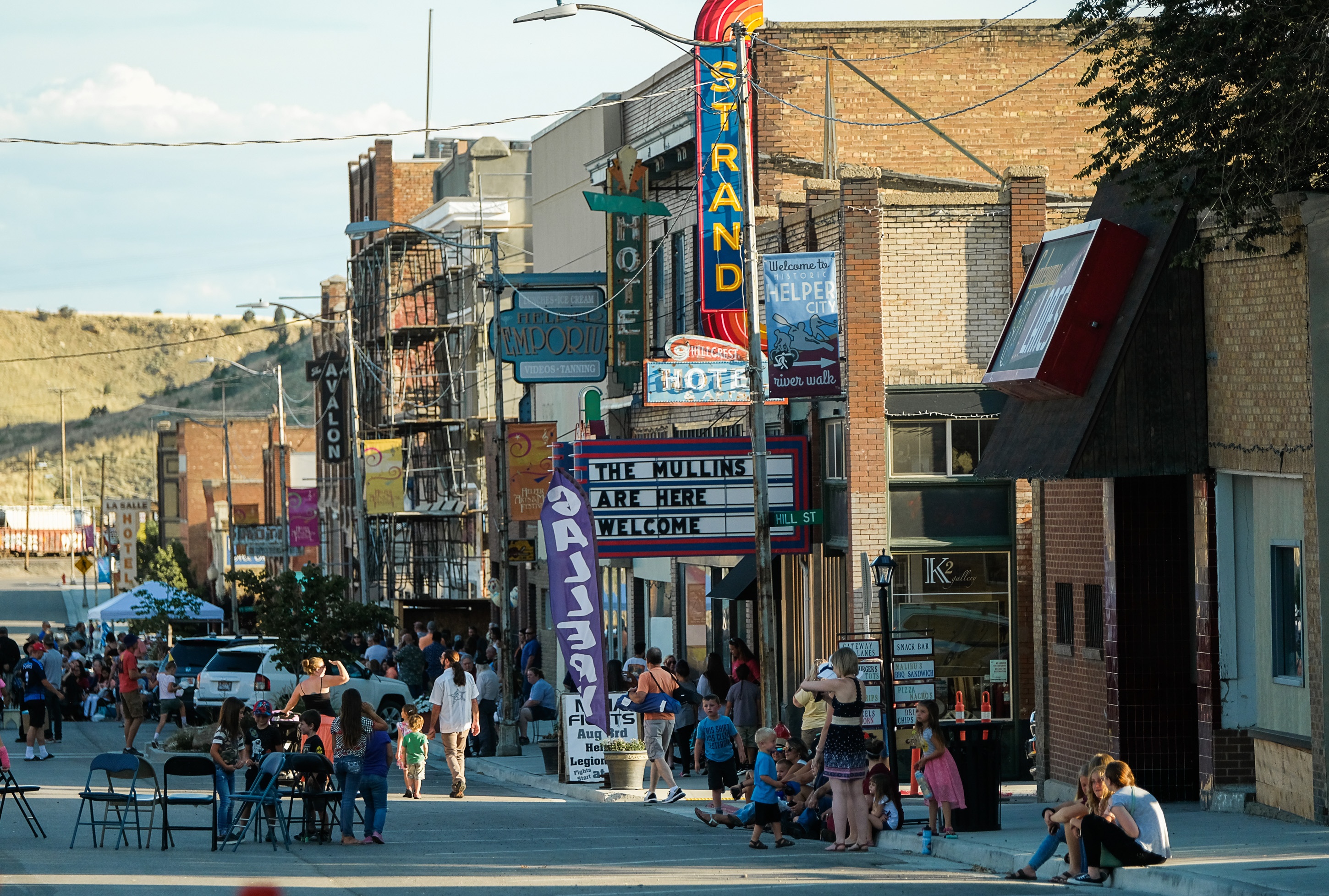
Helper sits in the narrow Price River canyon of Carbon County in central Utah, a small railroad town of roughly 2,000 residents whose brick storefronts and painted murals hint at a century of working-class heritage. Once a strategic helper-engine stop where crews pushed freight trains over the steep Soldier Summit grade, the city today serves as a friendly waypoint for travelers heading toward the canyons, reservoirs, and national parks of eastern Utah, and as a quiet base for guests who want a small-town feel with big outdoor access. It lies approximately 120 miles southeast of Salt Lake City, reached in about two hours by way of US-6 through Spanish Fork Canyon and the long, scenic climb into the Book Cliffs.
The heart of the city is its historic Main Street, where more than two dozen large-scale murals cover the brick facades of long-occupied buildings. The artwork depicts everything from mining life and railroad crews to classical scenes, and the area has become known for its place in Utah's public-art scene, with the annual Helper Arts, Music and Film Festival drawing visitors each summer.
A short walk from downtown, the Utah Railroad Museum preserves the story of the locomotives that put Helper on the map. Visitors can step inside a former depot, see restored engines and rolling stock, and learn how helper crews, switchbacks, and high-desert grades shaped life in Carbon County for generations.
About 20 minutes north along State Route 96, Scofield State Park wraps around a high-elevation reservoir in the Manti-La Sal National Forest. The lake is known for trout fishing, summer boating, and a quieter alternative to busier Utah reservoirs, with campsites and cabins tucked among the aspens and conifers of the surrounding hillside.
To the south and west of Helper, the long and remote Nine Mile Canyon is famous for one of the densest collections of Fremont and Ute rock art in the American West, along with dinosaur tracks and the remains of historic ranches. The drive from Helper to the canyon takes roughly 45 to 60 minutes and rewards visitors with petroglyph panels, pictographs, and a true sense of open canyon country.
Helper's appeal as a short-term rental base comes from its blend of small-town character, railroad heritage, painted murals, and easy access to the reservoirs, forests, rock-art canyons, and national parks of the Colorado Plateau. It is close enough to Salt Lake City for a long weekend yet far enough off the interstate to feel like a genuine getaway, and the surrounding drive through the Book Cliffs and Price Canyon is itself part of the experience.
Want to know if a property in Helper is a good investment?
Enter an address to get instant revenue potential and comps.