
Delta, Utah
Want to see how Delta compares to other top cities in Utah? Explore all city regulations in Utah. →
Delta, UT
Challenging To Investors
STR Regulations for Delta, Utah
Overview and bottom line: Based on the Delta City Code excerpt provided, short‑term rentals appear to be allowed if the use qualifies as a “hotel” (defined as lodging for 15 or more individuals) or a “bed and breakfast” (defined as lodging for 5–15 persons). However, no explicit “short‑term rental” provision, zoning allowance table, or separate permitting process was found in the excerpt. As a practical starting point, operators should (1) confirm zoning/district compliance for their property (residential vs. commercial districts), (2) obtain a Delta City business license, (3) comply with Delta County Health Department requirements for transient lodging as referenced in the Code, and (4) adhere to all citywide ordinances (nuisance, garbage, noise, sidewalks, etc.). Direct the questions below to the City Recorder (business licensing) and the Planning/Zoning Department.
Note: The “Provided Content” above is a partial PDF extract; it includes definitions and many citywide regulations but does not contain a complete zoning district use table or a dedicated STR ordinance section. Use the contacts and source links provided to obtain the latest, complete rules.
1) Whether short‑term rentals are allowed in Delta, UT (explicit)
- Allowed as “hotel” or “bed and breakfast”: The City Code defines “hotel” as a building designed or occupied as the temporary abiding place of fifteen (15) or more individuals who, for compensation, are lodged, with or without meals. The City Code also defines “bed and breakfast” as a building where, for compensation, meals and lodging are provided for at least five (5) but not more than fifteen (15) persons.
- No explicit “short‑term rental” section: The excerpt does not include a standalone “short‑term rental” provision or a zone‑district use table. STR‑like uses are covered in practice by these lodging definitions. Operators should confirm which zoning districts allow these uses and any conditions (e.g., owner‑occupied vs. non‑owner‑occupied).
- Key implications:
- 1–4 guests typically treated as a single‑family residential use (not commercial lodging).
- 5–15 guests may meet the “bed and breakfast” definition and will likely require licensing and health compliance.
- 15+ guests likely meet the “hotel” definition and will likely require more robust licensing and health compliance.
- Enforcement: Violations are enforceable as infractions or misdemeanors and may be abated as public nuisances under Delta City Code (see Enforcement and Nuisance sections).
Source: Delta City Code – Definitions (see “BED AND BREAKFAST” and “HOTEL”), Enforcement and Nuisance provisions.
What do Airbnb hosts actually earn in Delta?
Delta hosts earn a median $28,134/year with $169 ADR and 57% occupancy.
Top performers pull in $33,922+ per year.
See the full Delta market breakdown2) How to start a short‑term rental business in this market
A practical, stepwise approach:
-
Confirm property zoning and use classification:
- Determine your zoning district (R‑1, R‑2, C‑1, etc.).
- Confirm whether your intended lodging operation is allowed (e.g., “bed and breakfast” or “hotel”).
- If the property is in a residential district, confirm occupancy limits (1–4 guests typically residential; 5–15 aligns with bed and breakfast; 15+ aligns with hotel).
- Identify any required approvals (e.g., conditional use permit or site plan) from Planning/Zoning.
-
Secure business licensing:
- Apply for a Delta City business license (City Recorder’s Office).
- Ensure any required state business registrations and sales/use tax obligations are satisfied.
-
Comply with health and safety requirements:
- Follow Delta County Health Department requirements for transient lodging as referenced in the Code.
- Implement garbage and refuse handling per City standards (e.g., 30‑gallon container cap, lids/closed containers, weight limits, set‑out timing).
-
Align operations with city ordinances:
- Nuisances: Avoid conditions or activities constituting a nuisance (noise, trash accumulation, obstruction of public ways, etc.).
- Garbage and refuse: Use approved containers; follow collection timing; no open burning without fire chief approval; proper disposal.
- Sidewalks and public ways: Maintain safe passage; remove debris/snow/ice; avoid obstructions; obtain permits for driveway cuts or sidewalk work.
- Litter/handbills: Comply with posting/distribution rules; do not deposit commercial handbills in public places.
-
Ongoing compliance:
- Maintain records of guest logs (if required by health/County), licenses, inspections, and waste handling.
- Monitor for code updates and renew licenses/permits as required.
3) Required documents, permits, licenses, and guidelines
Based on the excerpt, operators should prepare to obtain and maintain the following:
-
Business license (Delta City business license)
- Applied for through the City Recorder (see contacts).
- Business licensing typically requires applicant identification, property information, and may include application fees per the City’s consolidated fee schedule.
-
Zoning/planning approvals (if applicable)
- Conditional use permits or site plan approvals may be necessary depending on the zoning district and lodging definition used.
- Obtain approvals before operating in districts where lodging uses require such review.
-
Health compliance (Delta County Health Department)
- Health requirements for transient lodging are referenced in the Code; contact the Health Department for specifics on sanitation, inspections, and recordkeeping.
- If food service is provided, additional health permits may be required.
-
Operational compliance documents
- Guest policies and rules aligned with city nuisance, noise, and public‑way regulations.
- Garbage plan showing container use, capacity, and set‑out timing aligned with City Code (e.g., 30‑gallon max, closed/lidded, weight limits).
- Snow/debris removal plan for contiguous sidewalks (City‑mandated property owner/occupant duty).
-
Construction/alteration permits (if applicable)
- Permits required for permanent sidewalk construction, driveway cuts, or changes to sidewalks/curbs/gutters via Public Works.
-
Fire and safety compliance (if applicable)
- Fire inspections may be required for certain lodging operations (e.g., fireworks sales stands and temporary events show the Code uses fire inspections; lodging may be subject to similar requirements).
-
Source material (for reference)
- Delta City zoning/land use code (definitions and general provisions), nuisance and public‑way ordinances, garbage/refuse rules, and handbill/litter rules.
4) Specific regulations for STRs in this city, county, and state
City of Delta (from the excerpt):
-
Lodging definitions:
- Bed and breakfast: Building where, for compensation, meals and lodging are provided for 5–15 persons.
- Hotel: Building where 15 or more individuals are lodged for compensation.
- Short‑term rental: Not explicitly defined; likely framed within these lodging categories.
-
Nuisances (Title 4, Ch. 2):
- Any violation is a public nuisance; City may bring civil actions to enforce or abate.
- “Author of nuisance” includes the landlord or agent, tenant or agent, and persons controlling the property.
- Examples of nuisance activities include unsanitary conditions, garbage accumulation, junk storage visible from public streets, obstructions of public ways, offensive odors/noise, hazardous conditions, and allowing stagnant water or decaying substances.
-
Garbage and refuse (Title 4, Ch. 3):
- Containers: Use suitable receptacles with tight‑fitting lids or weather‑resistant bags; max 30‑gallon capacity; max 75 pounds total weight including receptacle; metal receptacles must have handles.
- Collection timing: Set out no earlier than the evening before collection; remove empty receptacles the same day as emptied.
- Burning refuse: Unlawful without prior approval from the fire chief or designees.
- Dumping: Prohibited except at City‑designated locations under Council rules.
-
Litter and handbills (Title 4, Ch. 4):
- No littering in public places; keep sidewalks free of litter.
- Commercial handbill distribution in public places is prohibited; non‑commercial distribution allowed with acceptance.
- Posting notices on public structures/poles is prohibited without authorization.
-
Sidewalks and public ways (Title 7):
- Sidewalks required for new primary structures in most zones; minimum 4‑foot width or matching adjoining sidewalks.
- Property owners/tenants must remove debris, snow, or ice; civil liability assigned to owner/tenant/lessee.
- Obstructing streets/sidewalks, placing goods for sale beyond 2 feet without City Council approval, and placing goods on sidewalks longer than 2 hours is unlawful.
- Permits required for sidewalk construction or driveway cuts; City may revoke permits for noncompliance.
-
Enforcement (Title 1, Ch. 4):
- Criminal penalties up to Class B misdemeanor (fine and/or up to 6 months imprisonment) and civil penalties; infractions may be fined.
- City may enforce compliance via civil proceedings and abate violations as public nuisances.
-
Subdivision and zoning references (Title 9):
- Comprehensive definitions inform lodging uses; full zoning use tables/district rules are not included in the excerpt.
- Operators must consult Planning/Zoning for district allowances and any conditions for lodging uses.
County and state (from the excerpt):
-
Delta County Health Department: Health requirements for transient lodging are referenced; exact local health permitting rules not provided here—contact the Health Department directly.
-
State‑level context (Utah):
- The excerpt includes Utah Code references for fines/penalties but does not provide state licensing statutes for short‑term rentals. For complete state requirements (e.g., taxation, lodging classifications, county health rules), consult the Utah Department of Commerce, Utah State Tax Commission, and county health resources.
5) Contact information (phone, email, website)
Note: Websites, emails, and phone numbers were not included in the provided excerpt. Use the City Recorder’s Office and the listed City offices for business licensing and zoning questions. For health compliance, contact Delta County Health Department directly.
-
City Recorder (business licensing)
- Phone: Not provided in the excerpt.
- Email: Not provided in the excerpt.
- Website: www.delta.utah.gov (City’s official site).
-
Public Works Department (streets, sidewalks, driveway permits)
- Phone: Not provided in the excerpt.
- Address/Website: Public Works Department, Delta City; see City website for contact details.
-
Planning/Zoning Department
- Phone: Not provided in the excerpt.
- Address/Website: Planning/Zoning Department, Delta City; see City website for contact details.
-
Delta County Health Department (transient lodging health requirements)
- Phone: Not provided in the excerpt.
- Address/Website: Not provided in the excerpt; consult county website for contact details.
6) Links to source pages
- Delta City Code (Zoning/Land Use and related ordinances)
Guidance to obtain full rules:
- Visit the City website (www.delta.utah.gov) and contact the City Recorder for the complete business licensing requirements, the Planning/Zoning Department for zoning district allowances and lodging use standards, and the Public Works Department for public‑way and sidewalk compliance.
- Contact the Delta County Health Department for transient lodging health rules and inspection processes.
Next step
Found a property in Delta?
Paste any address and get estimated revenue, cash-on-cash return, and comparable STR performance in under 5 minutes. 3 free analyses per day.
Free brief
Get the free Delta STR Investment Brief
Revenue data, top neighborhoods, seasonal trends, and the key regulations for Delta, Utah in one email.
Delta
Market Saturation Score
Photos of Delta


Overview of Delta
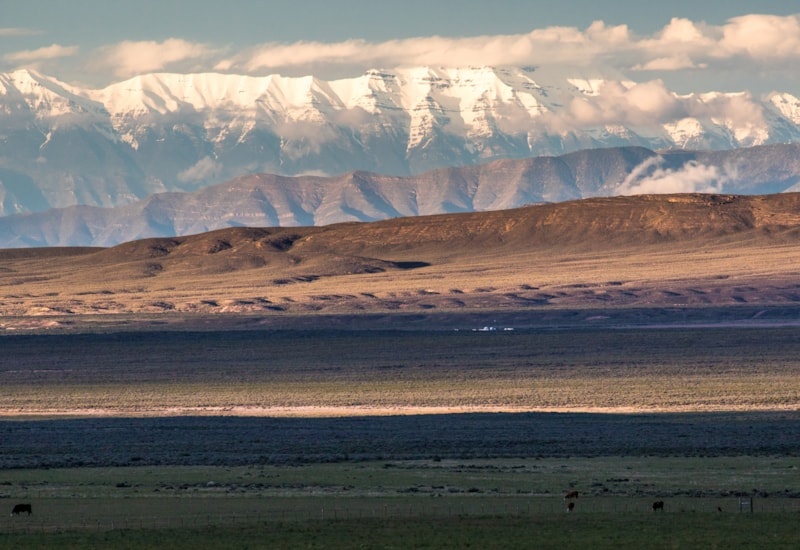
Delta is a small city in Millard County, Utah, home to roughly 3,500 residents. It functions as the commercial and administrative hub of one of Utah's largest counties by area, sitting amid the broad agricultural flats of the Sevier Desert in the state's west-central region. The town carries a quiet, wide-open character, with views in every direction and a pace shaped by ranching, farming, and the steady flow of travelers crossing the basin. Delta is best known as a gateway to some of central Utah's most striking desert and mountain landscapes, and it lies approximately 130 miles south of Salt Lake City along a well-traveled corridor that connects the Wasatch Front with the southwestern part of the state.
To the east, the biggest draw is Great Basin National Park, a remote park known for its ancient bristlecone pine groves, the limestone passages of Lehman Caves, and the soaring 13,000-foot summit of Wheeler Peak. The drive from Delta is roughly 120 miles and takes about two and a half hours, much of it across open high desert before climbing into the Snake Range. Because the park sees far fewer visitors than Utah's marquee destinations, it appeals to travelers looking for quieter hiking and stargazing.
A few miles west of town, the Topaz Museum and War Relocation Center site mark the location of one of ten camps where Japanese Americans were incarcerated during World War II. The site includes a small but thoughtful museum that preserves artifacts, photographs, and oral histories from internees, and the surrounding landscape has been shaped into a memorial space. It is an easy ten-minute drive from central Delta, offering a reflective stop that pairs naturally with broader regional travel.
A little farther afield, the House Range rises west of Delta and contains Notch Peak, one of the tallest limestone cliffs in North America. The drive to the trailhead covers roughly 50 miles of remote road, usually about an hour and a half, and is most commonly visited by hikers, climbers, and photographers drawn to its sheer western face. Closer to town, the Sevier Lake bed and the surrounding playa attract visitors interested in the stark beauty of the Great Basin and, in certain years, a brief season of seasonal water.
Delta works well as a short-term-rental base for travelers who want to spread out across central Utah rather than compete for lodging in busier gateway towns. Its central location, affordable setting, and access to Great Basin National Park, the Topaz Museum, and the surrounding desert and mountain scenery give guests a sense of room to roam, while the town itself provides the services and small-town hospitality that make a multi-stop itinerary feel grounded.
Want to know if a property in Delta is a good investment?
Enter an address to get instant revenue potential and comps.