
Clearfield, Utah
Want to see how Clearfield compares to other top cities in Utah? Explore all city regulations in Utah. →
Clearfield, UT
Unfriendly To Investors
STR Regulations for Clearfield, Utah
Clearfield City prohibits nightly/short-term rentals (STRs) in residential areas. The city’s regulatory framework focuses on owner‑occupied accessory dwelling units (ADUs) and does not provide a dedicated STR licensing program for residential zones. While ADUs are permitted as conditional uses, they are intended for owner‑occupied housing and are not designed for STR operation. Investors should pursue long‑term rental strategies within Clearfield or consider STR opportunities in nearby municipalities that allow them.
Source: Clearfield STR/ADU market overview and discussion documents [RedAwning market overview; Clearfield City Council agenda materials].
How to Start a Short-Term Rental Business in This Market
Given Clearfield’s prohibition on STRs in residential areas, an STR investor’s viable pathway in the immediate market is to pivot to long‑term rental strategies or evaluate adjacent cities that explicitly permit STRs. If pursuing an ADU in Clearfield, it must be owner‑occupied and cannot operate as an STR.
Step-by-step guidance:
- Confirm that the subject property is within Clearfield City limits and zoned for residential use; STRs are not permitted in these zones.
- Explore nearby jurisdictions (e.g., Layton, Syracuse, Ogden) for STR-friendly areas if an STR strategy is non-negotiable.
- If continuing with Clearfield:
- For ADU development: Apply for a Conditional Use Permit (CUP) with the Planning Commission, adhering to strict owner‑occupancy and development standards.
- For long‑term rentals: Prepare the property for stable tenancy, ensuring compliance with building, life safety, and zoning standards.
- If operating outside Clearfield in a municipality that allows STRs:
- Secure any required local license or permit.
- Designate a local contact within a one-hour drive.
- Implement safety measures and occupancy controls per state requirements.
- Register for and remit Utah Transient Room Tax.
What do Airbnb hosts actually earn in Clearfield?
Clearfield hosts earn a median $27,427/year with $122 ADR and 77% occupancy.
Top performers pull in $36,293+ per year.
See the full Clearfield market breakdownRequired Documents, Permits, Licenses, and Guidelines
Clearfield ADU Requirements (for long-term occupancy and owner‑occupied scenarios)
- Conditional Use Permit (CUP) approval from the Planning Commission (Chapter 17.78).
- Building permit approvals, with inspections and a Certificate of Occupancy prior to use.
- Owner‑occupancy affidavit recorded against the property; reauthorization required upon sale ($50 fee).
- Compliance with the Building, Plumbing, Electrical, Mechanical, Fire, and Health codes.
- Off‑street parking: minimum two additional spaces for the ADU (four total spaces on-site).
- Design and placement constraints:
- Separate entrance must be side or rear (not front/corner side).
- ADU floor area < 40% of primary residence and ≤ 1,000 sq ft.
- Maximum two bedrooms; occupancy capped at two adults and their children.
- Detached ADU allowed only on lots ≥ 12,000 sq ft.
- Height limit: one story and ≤ 20 ft (or height of principal structure, whichever is less).
- Utilities: no separate meters or addresses for the ADU.
- Termination conditions if owner occupancy ends (immediate vacation of the unit and steps to revert to single‑family status).
Statewide Requirements (Utah) Applicable When Operating STRs Outside Clearfield
- Transient Room Tax (TRT) registration and monthly remittance.
- Local contact requirement:
- A responsible individual within one-hour drive of the STR property.
- A single contact may represent up to 20 properties.
- Occupancy standards:
- General baseline of four occupants for the initial unit; one additional occupant permitted per additional bedroom.
- Property-specific caps may apply based on local standards.
- Safety equipment:
- Smoke detectors on every level; carbon monoxide detectors where applicable; at least one fire extinguisher.
- Advertising:
- Include any required permit/registration number in listings and ads.
- Training:
- Owner and designated local contact must complete an approved training course (college, university, or professional organization approved by the municipality/county).
Note: Clearfield does not provide an STR-specific licensing program in residential zones; any STR licensing information above applies to Utah STRs generally and when operating in municipalities that allow STRs.
Sources: Clearfield Municipal Code Chapter 17.78 (Sterling Codifiers); Utah ADU Survey (Salt Lake County, 2020); STR regulations overview [RedAwning market overview].
Specific Regulations: City, County, and State
City of Clearfield (Davis County)
- STRs: Prohibited in residential areas; Clearfield’s focus is on owner‑occupied ADUs within single‑family residential zones.
- ADUs (Chapter 17.78):
- Allowed only in single‑family zones via CUP.
- Owner occupancy required; rent cannot be collected from the owner‑occupied unit.
- Development standards: size limits, parking, entrance location, height, and lot size constraints.
- Recording of owner‑occupancy affidavit; reauthorization upon sale.
- Immediate termination/vacation required if owner occupancy ends.
- Enforcement:
- Code enforcement by the Community and Economic Development Department.
- Inspections required; noncompliance can lead to revocation of CUP and reversion to single‑family use.
County Level (Davis County)
- The provided documents reference regional ADU practices and statewide STR frameworks; no Davis County-specific STR regulations are detailed in the source materials.
- Practical implication: When operating in unincorporated Davis County or neighboring cities, confirm county-level requirements separately.
State of Utah (General STR Requirements)
- Transient Room Tax (TRT) must be collected and remitted on all bookings.
- Local contact within one-hour drive; single contact may represent a maximum of 20 properties.
- Owner and local contact must complete an approved training course.
- Safety compliance: smoke/CO detectors and fire extinguisher requirements.
- Occupancy limits generally follow the “four occupants plus one per bedroom” baseline; local caps may vary.
- Advertising standards: include the permit or registration number in listings.
Sources: Utah ADU Survey; STR regulations overview [RedAwning].
Contact Information (Phone, Email, Website)
-
Clearfield City Community & Economic Development Department
- Location: City Building, 55 South State Street, Clearfield, UT
- Phone: 801‑525‑2714
- Accessible accommodations requests: Contact Nancy Dean at 801‑525‑2714 (48-hour notice recommended)
-
Clearfield City Council
- Location: City Building, 55 South State Street, Multi‑Purpose Room (Second Floor), Clearfield, UT
- Meetings: Electronic means permitted per Utah Code Ann. § 52‑4‑207
Website references for municipal code and STR/ADU context are included in the source list below.
Source: Clearfield City Council meeting documents (October 6, 2020).
Links to Source Pages
-
RedAwning market overview and STR regulations summary for Clearfield, Utah:
-
Clearfield City Council Agenda and Summary Report (October 6, 2020), including ADU discussion and General Plan update materials:
-
Clearfield Municipal Code, Chapter 17.78 – Accessory Dwelling Units (ADUs):
Practical Guidance for STR Investors
- For Clearfield specifically, shift to long‑term rental models or explore ADU development under owner‑occupancy constraints; STR operation is not permissible in residential zones.
- If investing in nearby cities/municipalities that allow STRs, follow the statewide STR requirements:
- Register for TRT, appoint a local contact, enforce occupancy caps, equip life safety devices, and complete required training.
- Maintain detailed records of all permits, inspections, tax remittances, and compliance activities to mitigate enforcement risks.
This guide is based solely on the provided materials and focuses on Clearfield and the applicable state-level framework. Where city-specific STR licensing details are absent in Clearfield, statewide requirements are used as the operative guidance for STR operations in Utah.
Next step
Found a property in Clearfield?
Paste any address and get estimated revenue, cash-on-cash return, and comparable STR performance in under 5 minutes. 3 free analyses per day.
Free brief
Get the free Clearfield STR Investment Brief
Revenue data, top neighborhoods, seasonal trends, and the key regulations for Clearfield, Utah in one email.
Clearfield
Market Saturation Score
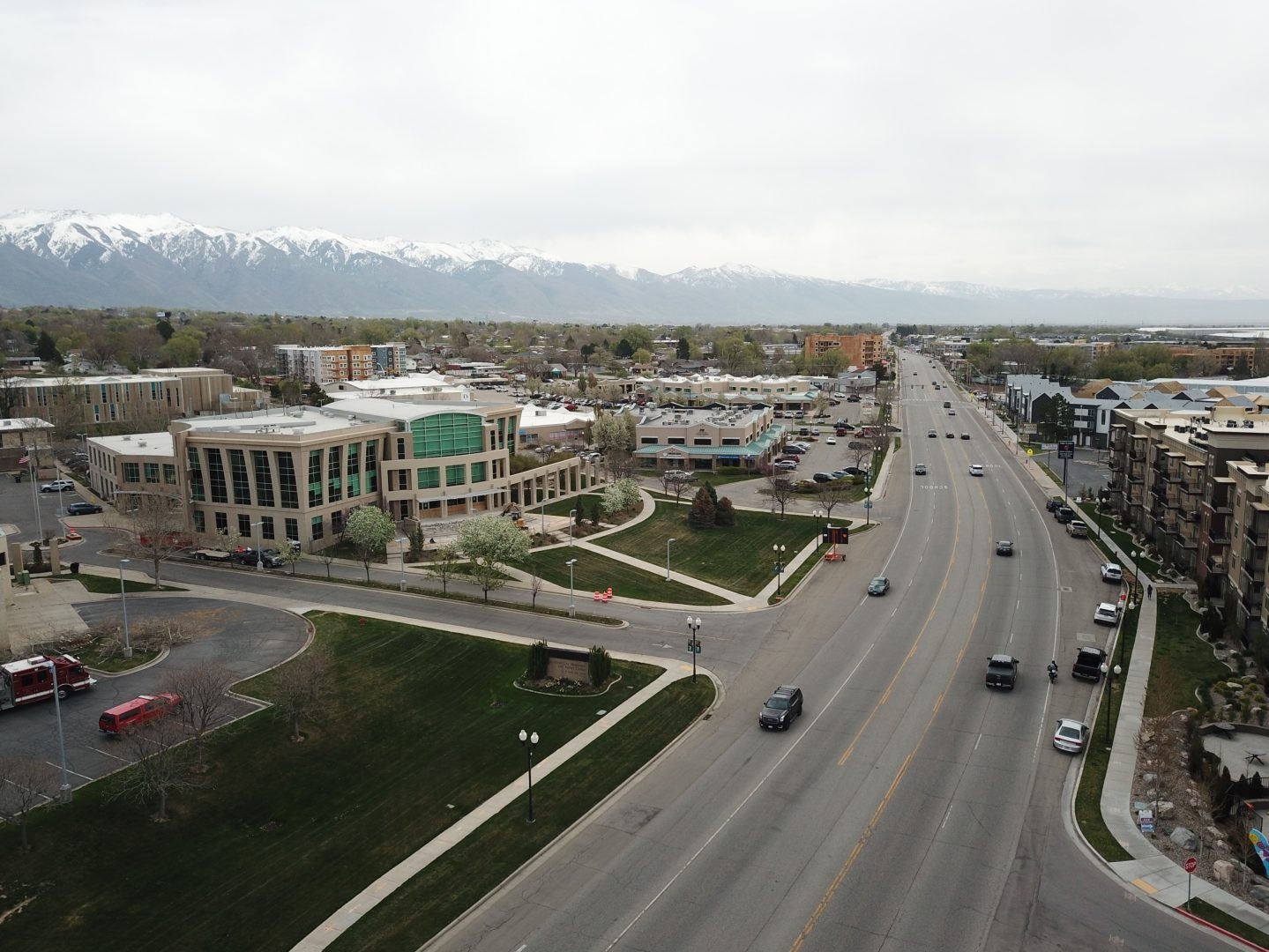
Photos of Clearfield


Overview of Clearfield
Clearfield is a city in Davis County, Utah, situated along the Wasatch Front between Salt Lake City and Ogden. With an approximate population of around 32,000 residents, it has the feel of a working-class suburban community, anchored by Hill Air Force Base, which is one of the largest employers in the region and a defining presence in the local economy and culture. The city offers a quieter, more affordable alternative to the busier metros that bracket it, while still placing visitors within easy reach of northern Utah's major outdoor and cultural draws. Clearfield sits roughly 25 miles north of Salt Lake City, with Ogden only about 10 miles further to the north, making it a convenient crossroads for travelers exploring the Wasatch Front.
One of the most distinctive nearby attractions is the Hill Aerospace Museum, located on the grounds of Hill Air Force Base just minutes from central Clearfield. The museum houses one of the largest collections of historic military aircraft in the western United States, with more than 90 planes on display spanning decades of aviation history, along with thousands of artifacts ranging from flight gear to missiles. Admission is free, and it draws aviation enthusiasts, school groups, and families year-round.
Just a short drive west of Clearfield lies Antelope Island State Park, reached in roughly 25 to 30 minutes via a causeway across the Great Salt Lake. The park is famous for its free-roaming bison herd, mule deer, and pronghorn, as well as its sweeping views of the lake, the Wasatch Range, and the distant Oquirrh Mountains. Visitors come for wildlife viewing, hiking, beachcombing along salty shorelines, and stargazing under famously dark skies.
Families and thrill-seekers will find Lagoon Amusement Park in neighboring Farmington, less than ten minutes from Clearfield. Operating since 1886, Lagoon is one of the oldest amusement parks in the country and combines classic wooden roller coasters, a water park, and a pioneer-themed village. It remains a regional summer staple and a major draw for visitors staying along the Wasatch Front.
For those drawn to the outdoors, the Uinta-Wasatch-Cache National Forest rises just east of the I-15 corridor, with trailheads, ski resorts, and alpine lakes accessible within a 30 to 45 minute drive. Snowbasin, Powder Mountain, and other Wasatch destinations all sit within a reasonable day trip from Clearfield, giving short-term rental guests a remarkable range of options from desert lake to alpine peak.
Clearfield's appeal as a short-term rental base lies in this balance: affordable, quiet accommodations paired with immediate access to military heritage sites, a national-caliber amusement park, one of the country's most unique state parks, and some of the best mountain recreation in the West, all within an easy drive of both Salt Lake City and Ogden.
Want to know if a property in Clearfield is a good investment?
Enter an address to get instant revenue potential and comps.