
Sugar Land, Texas
Want to see how Sugar Land compares to other top cities in Texas? Explore all city regulations in Texas. →
Sugar Land, TX
Challenging To Investors
STR Regulations for Sugar Land, Texas
OVERVIEW: Are Short-Term Rentals Allowed in Sugar Land, TX?
Short-term rentals (STRs) are strictly regulated in Sugar Land, TX. They are not permitted as a matter of right in any residential district. Operation as an STR is only permissible within specific zoning districts (R-2, R-3, R-4) and only after obtaining a Conditional Use Permit (CUP) from the City. Operating an STR without this permit is a direct violation of the city's zoning regulations and can result in significant fines.
I. How to Start a Short-Term Rental Business in Sugar Land, TX
- Zoning Compliance is Paramount: The most critical step is confirming your property is in an eligible zoning district. STRs are a Conditional Use (C) in R-2, R-3, and R-4 districts. Properties in other residential districts (e.g., R-1E, R-1, R-1R, R-1Z) are not eligible for an STR CUP.
- Obtain a Conditional Use Permit (CUP): Applying for and receiving approval for a CUP is mandatory before operating an STR in an eligible district. The unapproved use of a property as an STR is a violation. This process involves submitting an application to the City's Planning Department and adhering to specific criteria aimed at mitigating negative impacts on neighborhoods.
- Ensure HOA Compliance: Even if you secure a city CUP, your Homeowners Association (HOA) may have stricter rules prohibiting short-term rentals. You must review and comply with your HOA's governing documents (CC&Rs, Bylaws, Rules & Regulations). Violations of HOA rules can lead to fines and legal action, which can exist independently of city regulations.
- Comply with State Tax Obligations: Regardless of city rules, Texas state law requires any entity operating a lodging business, including STRs, to collect and remit the state hotel occupancy tax (currently 6%). Registration for tax collection is managed through the Texas Comptroller.
II. Required Documents, Permits, Licenses, and Guidelines
- City-Level:
- Conditional Use Permit (CUP): The primary requirement for legal operation in an eligible zone. Details are in the Sugar Land Development Code Land Use Matrix (Sec. 2-71) [Link: https://library.municode.com/tx/sugar_land/codes/land_development_code?nodeId=CH2ZORE_ARTIIZODILAUS_PT2STREDI_S2-71REDIPEUSPASC].
- Compliance with Zoning Conditions: The CUP approval may come with specific conditions (e.g., parking, occupancy limits, noise restrictions) that must be strictly followed.
- State-Level (Texas):
- Texas Hotel Occupancy Tax Registration: Registration to collect, report, and remit the 6% state hotel occupancy tax is mandatory for all lodging businesses. This is managed via the Texas Comptroller's office (Comptroller.texas.gov).
- HOA-Level:
- HOA Governing Documents Review: A thorough review is essential to identify any direct prohibitions or restrictions on short-term rentals. Some HOAs may require registration of tenants or have specific leasing rules (see Highland's HOA example below).
III. Specific Regulations for Short-Term Rentals
- City of Sugar Land (Zoning & Enforcement):
- Permitted Districts: R-2, R-3, R-4 (Conditional Use).
- Definition: "A dwelling that is leased or rented out in part (a room for example) for less than 30 days."
- Parking Requirement: 2 spaces per dwelling unit.
- Penalties: Violations of zoning regulations (operating without a CUP or not meeting CUP conditions) can result in fines of up to $2,000 per day.
- Complaints: The City actively investigates noise, trash, parking, and other nuisance complaints related to STRs. Code Enforcement can be contacted directly.
- Rental Licensing (Long-Term): While unrelated to STRs, Sugar Land has a separate Rental Licensing Program for long-term rentals (30+ days). It is administered through the City's Citizen Self Service (CSS) Portal. The program requires properties to meet health, sanitation, and property maintenance standards. Owners of unlicensed long-term rental properties can be fined up to $500 per day.
- State of Texas (Taxation):
- Hotel Occupancy Tax (HOT): STR operators must collect and remit the state portion (6%) of the hotel occupancy tax. Local HOT may also apply if the city authorized it (Sugar Land has stated if STRs were allowed, they would also be subject to the city's hotel occupancy tax).
- Homeowners Associations (HOAs):
- Strict Oversight: HOAs can impose regulations that are more restrictive than city law. They can often prohibit STRs altogether in their communities.
- Example - Community Association of the Highlands (The Highlands HOA): Their rental licensing page explicitly states: "PLEASE NOTE THAT SHORT TERM RENTALS ARE NOT ALLOWED IN SUGAR LAND PER CITY CODE. Violations of city zoning regulations could result in fines of up to $2,000 per day by the City of Sugar land." They also enforce Texas Property Code Section 209.016(e), requiring rental property owners/managers to submit tenant contact information to the HOA within 10 days of lease signing.
IV. Contact Information (Local Authority in Charge of STRs)
- City of Sugar Land - Code Enforcement (Primary Contact for STR Violations & Zoning Questions):
- Address: 111 Gillingham Ln., Sugar Land, TX 77479
- Phone: 281-275-2170
- Email: codeenforcement@sugarlandtx.gov
- Website: https://www.sugarlandtx.gov/1571/Short-Term-Rentals
- City of Sugar Land - General Information:
- Phone: 281-275-2900
- Texas Comptroller (State Hotel Occupancy Tax Registration & Reporting):
- Website: Comptroller.texas.gov (Search for "Hotel Occupancy Tax")
V. Links to Source Pages
- City of Sugar Land - Short-Term Rentals: www.sugarlandtx.gov/1571/Short-Term-Rentals
- City of Sugar Land - Short-Term Rentals FAQs: www.sugarlandtx.gov/faq.aspx?TID=94
- City of Sugar Land - Development Code (Land Use Matrix Sec. 2-71): library.municode.com/tx/sugar_land/codes/land_development_code?nodeId=CH2ZORE_ARTIIZODILAUS_PT2STREDI_S2-71REDIPEUSPASC
- Community Association of the Highlands (HOA) - Rental Licensing: www.thehighlands-hoa.com/rental-licensing/
Important Note: Information from third-party sources (e.g., blogs, management company websites) may be outdated or inaccurate. Investors should always rely on the official City of Sugar Land website and the Texas Comptroller for the most current and authoritative regulations and requirements. The City explicitly states that STRs require a CUP and are not a permitted use without one in most districts.
What do Airbnb hosts actually earn in Sugar Land?
Sugar Land hosts earn a median $24,831/year with $194 ADR and 56% occupancy.
Top performers pull in $42,130+ per year.
See the full Sugar Land market breakdownNext step
Found a property in Sugar Land?
Paste any address and get estimated revenue, cash-on-cash return, and comparable STR performance in under 5 minutes. 3 free analyses per day.
Free brief
Get the free Sugar Land STR Investment Brief
Revenue data, top neighborhoods, seasonal trends, and the key regulations for Sugar Land, Texas in one email.
Sugar Land
Market Saturation Score
Photos of Sugar Land


Overview of Sugar Land
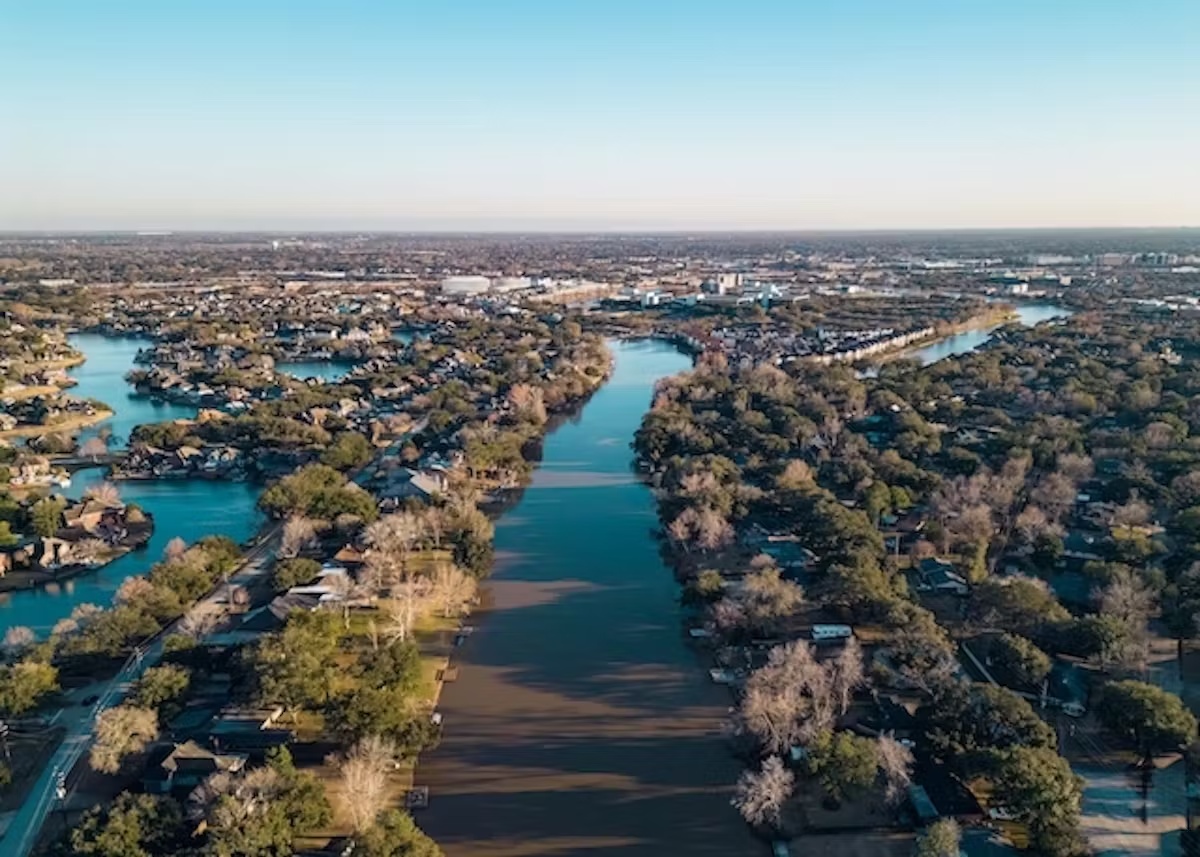
Sugar Land is a master-planned city in Fort Bend County, Texas, home to roughly 118,000 residents. Located in the southeastern part of the state, it has grown from its origins as a sugar-refining town into one of the most affluent and well-regarded suburbs in the Houston metropolitan area. About 20 miles southwest of downtown Houston, the city offers tree-lined neighborhoods, walkable commercial districts, and an array of cultural and recreational amenities that make it feel less like a typical commuter suburb and more like a self-contained destination. Sugar Land is best known for its high quality of life, the legacy of the historic Imperial Sugar refinery that gives the city its name, and its proximity to both the urban offerings of Houston and the natural landscapes of the upper Texas Gulf Coast.
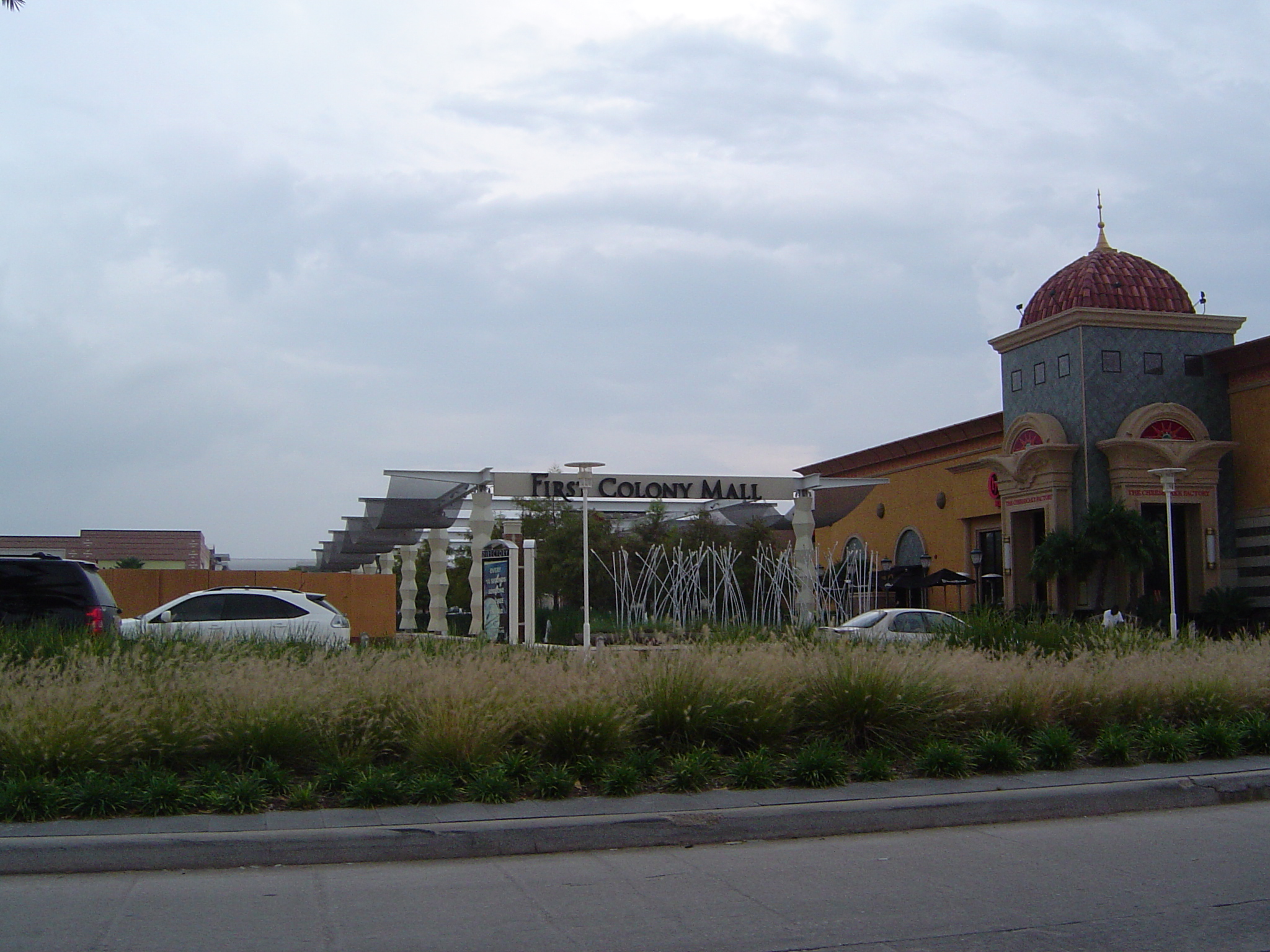
At the heart of the city lies Sugar Land Town Square, a pedestrian-friendly mixed-use district filled with restaurants, shops, hotels, and public plazas that host concerts and seasonal events. The square anchors the city's downtown and draws both residents and visitors for evening strolls and weekend outings, and it is essentially next door to most of Sugar Land's hotels and short-term rental properties. A short walk or drive away, the Smart Financial Centre at Sugar Land is a modern performing arts and concert venue that brings nationally touring musicians, comedians, and family shows to the area, regularly drawing attendees from across the Houston region.
Families and curious visitors often make their way to the Houston Museum of Natural Science at Sugar Land, a satellite campus of the well-known Houston institution that features exhibits on dinosaurs, gems and minerals, and the natural history of the Gulf Coast. For those looking to spend time outdoors, Brazos Bend State Park sits about 25 miles south of Sugar Land and is one of the region's most popular natural escapes, with nearly 5,000 acres of prairie, wetland, and bottomland forest that are home to American alligators, abundant birdlife, and the George Observatory. The park is roughly a 35- to 40-minute drive from the city, making it an easy day trip for short-term rental guests.
With its mix of corporate visitors, medical travelers, and families visiting the Houston area, Sugar Land offers a compelling base for short-term rentals. Its combination of safe, well-maintained neighborhoods, walkable entertainment districts, and quick access to both Houston and the surrounding bayou-and-prairie landscape gives the city a year-round appeal that extends well beyond any single attraction.
Want to know if a property in Sugar Land is a good investment?
Enter an address to get instant revenue potential and comps.