
Mckinney, Texas
Want to see how Mckinney compares to other top cities in Texas? Explore all city regulations in Texas. →
Mckinney, TX
Generally Investor Friendly
STR Regulations for Mckinney, Texas
Overview: Are STRs allowed in McKinney, TX?
- Yes, short‑term rentals are allowed in McKinney. The city’s tax code defines short‑term rentals as a “hotel” for hotel occupancy tax (HOT) purposes and requires compliance with tax collection, reporting, and payment.
- McKinney has not codified STRs as a distinct zoning use; operations must comply with general zoning, building, fire, and nuisance standards. If a property is in the Historic District or subject to other overlays, additional approvals may apply, but those details are not in the provided sources.
- McKinney is tightening enforcement and expanding platform participation to collect and remit HOT, including on VRBO. Investors should plan to comply at the operator level and leverage platform collections where available.
What do Airbnb hosts actually earn in Mckinney?
Mckinney hosts earn a median $36,474/year with $190 ADR and 65% occupancy.
Top performers pull in $50,084+ per year.
See the full Mckinney market breakdownMarket Entry: How to start a short‑term rental business in McKinney
- Confirm zoning and land use constraints for the subject property with the Planning Department. While the city has not created a separate STR zoning category, ensure the intended use does not conflict with occupancy limits, HOA covenants, or deed restrictions.
- Structure the business and obtain any necessary business registrations and sales tax accounts through state and county channels (Texas Comptroller for sales/HOT), though only HOT is specifically cited in McKinney sources.
- Align insurance coverage with short‑term rental exposures (liability, property, and loss of use) and confirm any HOA or property management rules allowing STR operations.
- Establish listing, guest screening, and operating policies consistent with city nuisance laws and noise/occupancy rules.
- Implement tax compliance procedures: collect city HOT (7%), calculate the state HOT (6%) as applicable, and remit according to city/state rules.
- Where available, enroll in platform tax‑collection agreements (e.g., Airbnb in McKinney) and confirm reporting workflows; if using non‑enrolled platforms (e.g., VRBO as of the ordinance’s introduction), plan for direct operator collection and reporting.
- File monthly HOT reports with the City of McKinney Financial Services Department, or apply for quarterly reporting if below the threshold.
Documents, Permits, Licenses, and Guidelines
- City Hotel Occupancy Tax:
- Report of Hotel Occupancy Tax form (McKinney Financial Services).
- Compliance with Chapter 98, Article IV (Hotel Occupancy Tax).
- State Hotel Occupancy Tax:
- File and remit directly to the Texas Comptroller; use state HOT forms and guidance.
- Administrative records:
- Guest ledger/occupancy documentation, consideration amounts, and tax collection records.
- Documentation to support any claimed exemptions (permanent resident, federal/state employees, diplomatic personnel, military on official business).
- Zoning and permits:
- Standard building/fire permits as applicable to the property type; no STR‑specific license is cited in the provided sources.
- Platform agreements:
- Enroll with platforms that remit McKinney HOT (e.g., Airbnb); document any authorization/collection arrangements.
Specific Regulations: City of McKinney
Hotel Occupancy Tax (HOT) is the primary active regulatory framework for STRs.
- Taxable base and rate:
- The city levies a 7% HOT on room charges of $2 or more per day for stays of 30 days or less, excluding food and unrelated personal services. Room‑cleaning services may be excluded as specified by ordinance.
- Definitions:
- “Short‑term rental” is defined as the rental of all or part of a residential property to a person who is not a permanent resident under state law.
- “Short‑term rental platform” is a person or entity that provides a means through which a short‑term rental operator offers a dwelling unit for short‑term rental and from which the platform financially benefits.
- Collection and responsibility:
- STR operators must collect and remit city HOT.
- STR platforms must collect and remit the applicable HOT in lieu of the operator; if a platform fails or refuses, the operator remains responsible.
- Reporting:
- Monthly HOT reports are due on the 20th day of the month following the reporting period. If the 20th falls on a weekend/holiday, the next business day applies. The U.S. Postal Service postmark date is considered the payment date, but the city must receive the report within five business days of the postmark or it will be considered delinquent.
- Quarterly reporting option: If taxes owed are less than $500 in a calendar month or $1,500 in a calendar quarter, an operator may request quarterly filing (January–March, April–June, July–September, October–December), with payment due by the 20th day after the close of the quarter.
- Administrative reimbursement:
- Operators may retain 1% of HOT collected as reimbursement for collection costs, subject to forfeiture for late payment, failure to file, or filing a false report.
- Penalties and enforcement:
- 5% penalty on tax due if not paid when due; additional 5% if not paid within 30 days after the due date; minimum penalty $1.
- Delinquent taxes accrue interest at 10% per annum starting 60 days from the due date.
- Violations are a misdemeanor; every 24 hours of violation may constitute a separate offense.
- Enforcement tools include forfeiture of the 1% reimbursement, suit to collect tax, and injunction against operating until compliance is achieved.
- Revenue use:
- HOT revenue may be used only to promote tourism and the convention/hotel industry, as specified by state law (e.g., convention centers, visitor information centers, arts, and historic preservation/attraction programs).
- Ongoing policy work:
- City staff are reviewing whether to require local contact information on listings and whether to require an annual registration or operating permit for STRs; no final actions are evidenced in the provided sources.
County (Collin County) and State (Texas) Context
- Collin County:
- The provided sources do not include county‑level STR regulations or licensing for McKinney.
- State of Texas:
- Texas Hotel Occupancy Tax is 6% on short‑term lodging stays of 30 days or less; operators must file and remit directly to the Texas Comptroller separately from city remittances.
- Under Texas Tax Code Chapter 351, cities may impose and collect HOT up to 7%; state and local taxes are separate obligations.
Compliance Workflows and Best Practices
- Collect city HOT (7%) on all qualifying occupancies; remit monthly or quarterly per thresholds.
- Track and remit state HOT (6%) to the Texas Comptroller; maintain separate records.
- Use platform tax‑collection where available (e.g., Airbnb) to simplify city HOT compliance; if using platforms that don’t collect (e.g., VRBO as of the ordinance discussion), collect and report directly.
- Maintain complete records: guest payments, dates of occupancy, nightly rates, exemptions, and calculations.
- File on time to avoid penalties and preserve the 1% administrative reimbursement.
- Monitor city updates on potential STR registration/permit requirements and any platform enrollment expansions.
Contacts
- City of McKinney — Financial Services Department
- Address: 401 E. Virginia St., McKinney, TX 75069
- Phone: 972‑547‑2084
- Fax: 972‑547‑2611
- Email: see the city’s “Email Financial Services” link on the Hotel Occupancy Tax page
- Office hours and department details: refer to the city’s Financial Services page
- Texas Comptroller (State Hotel Occupancy Tax)
- Phone: 1‑800‑252‑1385
- Website: see sources below
Source Links
- City of McKinney — Hotel Occupancy Tax page and report form:
- City of McKinney — Hotel Occupancy Tax Ordinance (Municode):
- Proposed ordinance (2025) — STR operators and platforms to collect/remit HOT:
- Texas Comptroller — State Hotel Occupancy Tax guidance and forms:
- City staff update on STR status (McKinney Courier‑Gazette):
- STR policy context and platform taxation (Citizen Portal AI article):
- Industry commentary (STRisker):
Next step
Found a property in Mckinney?
Paste any address and get estimated revenue, cash-on-cash return, and comparable STR performance in under 5 minutes. 3 free analyses per day.
Free brief
Get the free Mckinney STR Investment Brief
Revenue data, top neighborhoods, seasonal trends, and the key regulations for Mckinney, Texas in one email.
Mckinney
Market Saturation Score
Photos of Mckinney

Overview of Mckinney
McKinney is a city in Collin County, Texas, situated in the north-central part of the state within the Dallas-Fort Worth metropolitan area. With an estimated population of around 200,000, it is one of the largest suburbs of Dallas and has been among the fastest-growing cities in Texas for the past two decades. The city carries a distinctive small-town character, anchored by a well-preserved historic downtown, even as it has expanded into a major commuter and family-residential hub. Located approximately 30 miles north of downtown Dallas, McKinney is best known for its charming town square and as a popular residential base within easy reach of the broader DFW region's cultural and business offerings.
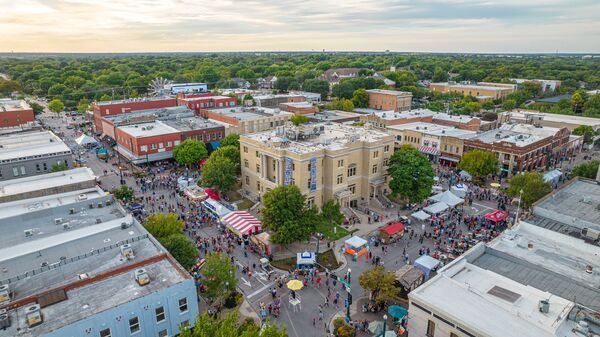
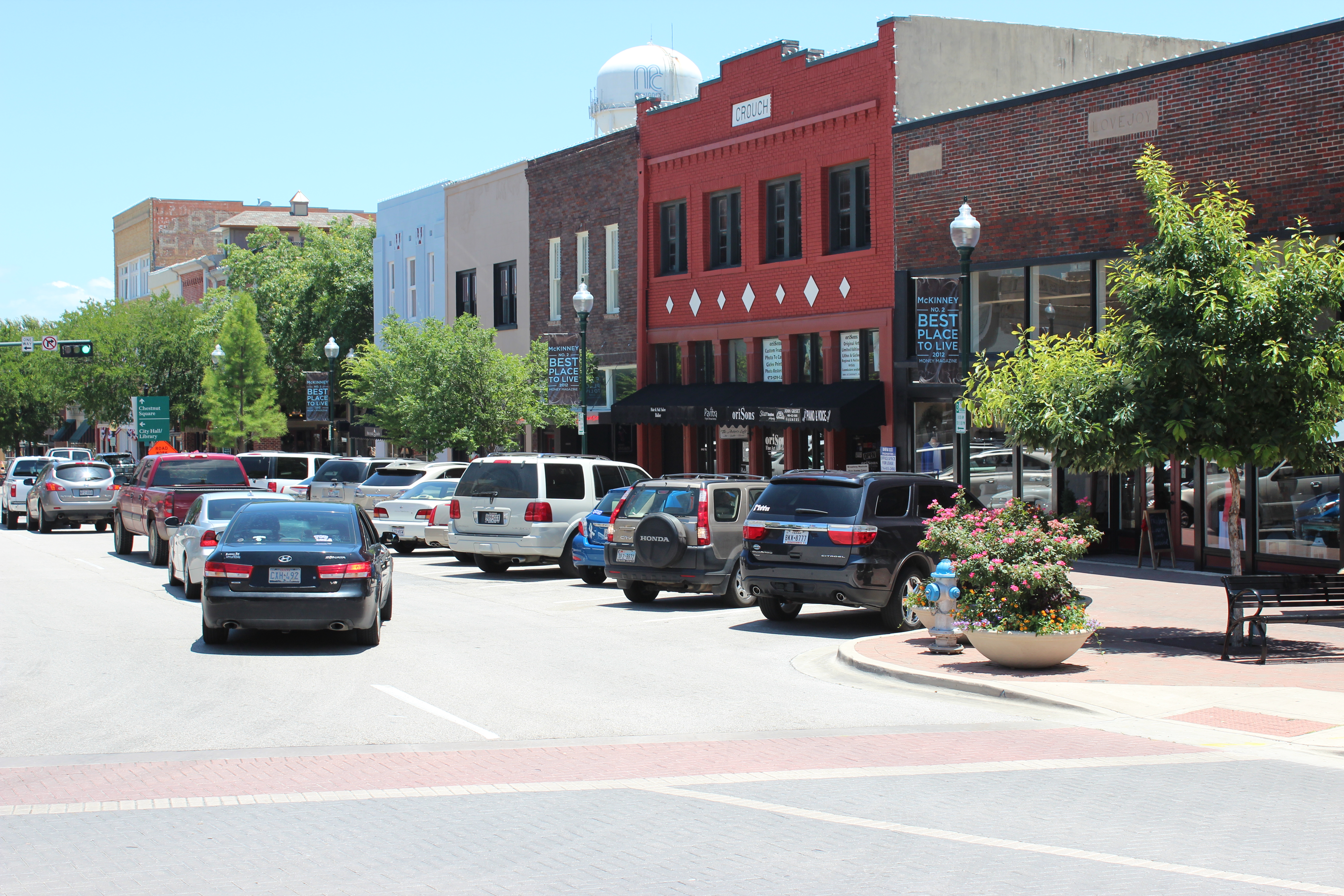
The historic McKinney Downtown Square is the city's centerpiece and a primary draw for visitors. Centered around a restored 19th-century Collin County Courthouse, the square is lined with locally owned boutiques, restaurants, wine bars, and antique shops housed in historic buildings. Visitors can stroll the tree-lined streets, attend seasonal events such as the annual Home for the Holidays celebration, and take in performances at the McKinney Performing Arts Center inside the old courthouse. The square sits at the heart of the city and is within walking distance of several surrounding neighborhoods.
Just a short drive west of the historic district, the Heard Natural Science Museum & Wildlife Sanctuary offers roughly 289 acres of native Texas habitat with several miles of walking trails, indoor and outdoor exhibits, and a sanctuary for injured or non-releasable native wildlife. The Heard is especially popular in the fall for its seasonal events and for families visiting the outdoor dinosaur exhibits. The sanctuary is located off North Colony Road, roughly a 10-minute drive from the downtown square.
A short distance east of the square, Chestnut Square Historic Village preserves a collection of original 19th-century buildings from the area's early settlement days, including a one-room schoolhouse, a general store, and several period homes. Guided tours and seasonal events such as the candlelit Christmas celebration give visitors a tangible sense of frontier life in North Texas. The village offers a quiet, walkable complement to the more bustling downtown.
About 15 minutes east of McKinney, Lavon Lake provides a refreshing outdoor escape with fishing, boating, swimming beaches, and lakeside picnicking. Although primarily a local recreational spot, the lake adds to McKinney's appeal as a base for travelers who want a quieter suburban stay while remaining within driving distance of Dallas's professional sports venues, museums, and restaurants roughly 30 miles to the south.
McKinney offers a combination of small-town charm and metropolitan access that works well for short-term rental operators. Visitors can spend time on the walkable historic square, visit family-friendly museums, or enjoy the nearby lakes without straying far from the city, while day trips into Dallas, Frisco, and Plano open up the full range of North Texas attractions. Its continued growth, well-regarded schools, and broad appeal to families and event-goers help support year-round demand for short-term accommodations.
Want to know if a property in Mckinney is a good investment?
Enter an address to get instant revenue potential and comps.