
Avery, Texas
Want to see how Avery compares to other top cities in Texas? Explore all city regulations in Texas. →
Avery, TX
Challenging To Investors
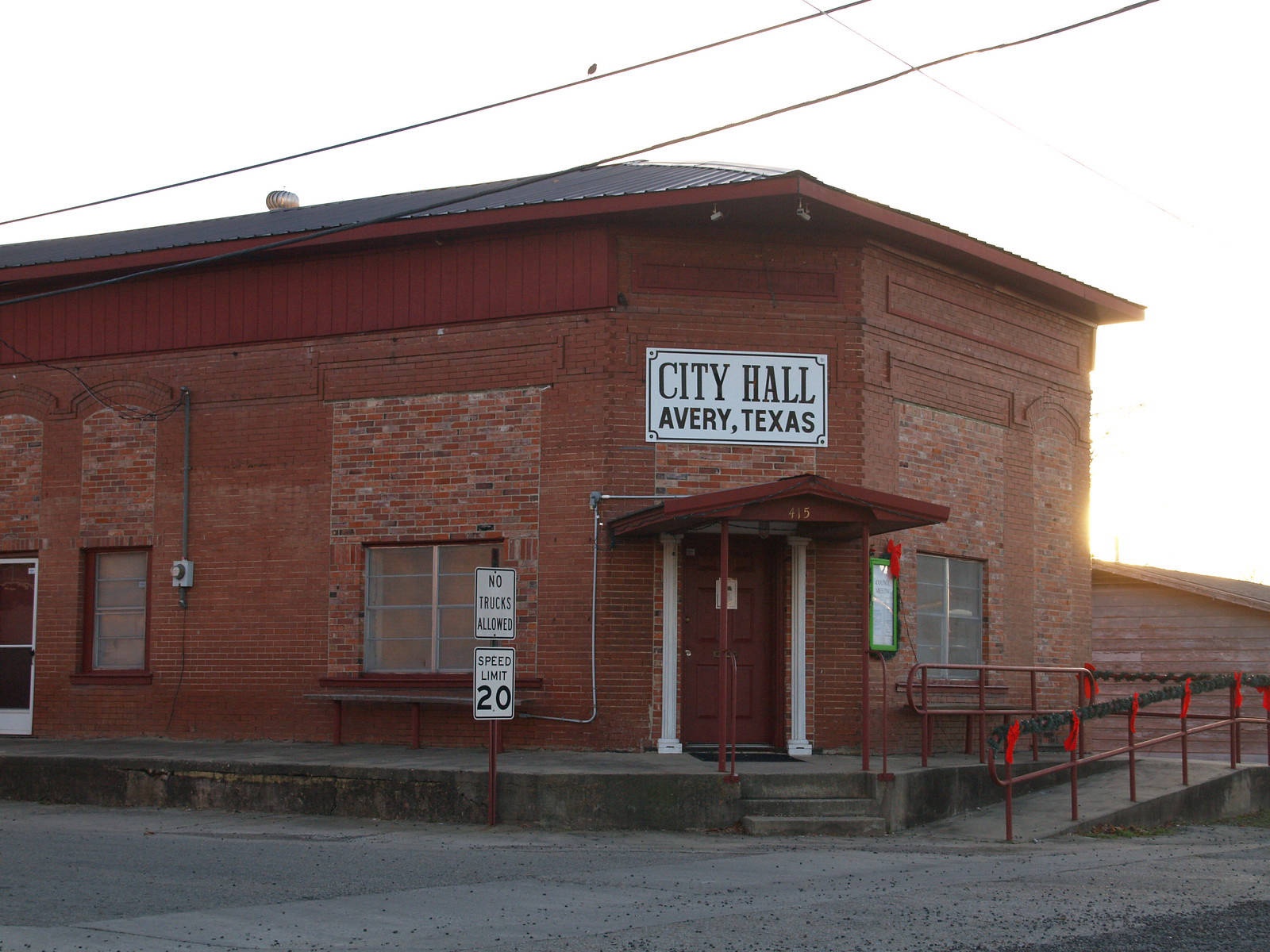
STR Regulations for Avery, Texas
Overview: Are Short-Term Rentals Allowed in Avery, TX?
- City-specific status: Unclear. No direct, verified city or county ordinances for Avery, TX are present in the provided content. Many small Texas towns regulate STRs at the municipal level via zoning or business registration rules; others rely on state and county frameworks.
- Practical takeaway: Assume STRs may be allowed by-right in residential zones unless proven otherwise, but verify locally. Several Texas municipalities require host registration, safety inspections, and local hotel occupancy tax (HOT) collection/remittance. Some restrict STRs via HOA deed restrictions, zoning caps, or minimum-stay rules. Reference guidance and source links at the end of this guide.
What do Airbnb hosts actually earn in Avery?
Avery hosts earn a median $16,577/year with $124 ADR and 33% occupancy.
Top performers pull in $20,245+ per year.
See the full Avery market breakdownHow to Start a Short-Term Rental Business in Texas (Avery, TX)
-
Confirm zoning and land-use eligibility
- Check with the City of Avery or Red River County for zoning rules, setbacks, and whether your parcel allows transient lodging. In Texas, ADUs (accessory dwelling units) are allowed in certain areas under local rules; there is no statewide prohibition on ADUs, but Texas has no statewide ADU statute—local rules apply. If you plan an ADU, confirm size, placement, and permitting with your local building department. Source links: ADU overview and local variability in Texas.
-
Assess HOA and deed restrictions
- Texas Supreme Court precedent (2018) allows STRs in HOAs unless the governing documents specifically prohibit them. Many HOAs now do prohibit STRs or set minimum lease durations (e.g., 30+ days). Source link: Texas HOA STR case discussion.
-
Consider business structure and insurance
- Registration with the Texas Secretary of State is not required for STRs unless you form an entity (LLC/corporation) for liability protection. Obtain:
- Property insurance with short-term rental (STR) or hospitality endorsements.
- General liability coverage aligned with platform requirements (Airbnb/Vrbo).
- Consider LLC formation for asset protection.
- Registration with the Texas Secretary of State is not required for STRs unless you form an entity (LLC/corporation) for liability protection. Obtain:
-
Licensing and permits
- No statewide STR license. Many Texas cities require:
- Short-term rental registration/permit.
- Safety inspections (smoke/CO detectors, fire extinguishers, egress).
- Local business tax (if applicable).
- Building/electric/plumbing/HVAC permits for any construction or ADUs.
- No statewide STR license. Many Texas cities require:
-
Tax obligations (Hotel Occupancy Tax, Texas)
- State HOT is 6% of the price charged for the room.
- Local HOT (commonly 1–2% or more) may apply depending on the jurisdiction.
- Red River County’s local HOT is not confirmed in the provided content; verify with county or city. Collect and remit both state and local HOT where applicable.
- You are responsible for collecting HOT on bookings and remitting per filing cadence and thresholds. Registration with the Texas Comptroller may be required for HOT.
-
Launch and operations
- Listing platforms: Airbnb, Vrbo, Booking.com. Comply with platform host requirements.
- Pricing and minimum stays: Many Texas cities require minimum stays (often 30+ days). Reference length-of-stay rules and local variations.
- House rules, guest screening, and recordkeeping: Establish occupancy limits, party/event bans, quiet hours, and documentation for tax filings.
Required Documents, Permits, Licenses, and Guidelines (What to Verify in Avery/Red River County)
- City-level (Avery):
- Zoning determination allowing transient lodging.
- STR registration/permit (if required).
- Safety inspection certificate (if required).
- Local business tax registration (if applicable).
- Short-term rental tax collection and remittance procedures (if applicable).
- County-level (Red River County):
- Verification of any local HOT and collection/remittance requirements.
- Building permits for any improvements (including ADUs).
- State-level (Texas):
- Hotel Occupancy Tax registration with the Texas Comptroller (if applicable).
- Sales/use tax guidance for furnishings and supplies used in the STR.
- Standard property, liability, and (optionally) workers’ compensation insurance.
- HOA documentation:
- Deed restrictions and bylaws: confirm STR prohibition or permitted minimum stays.
ADU Note (if building an accessory unit)
- ADUs are allowed under Texas local rules; no statewide ban exists. Requirements vary by county/city and may include:
- Minimum size between 400–650 sq ft; ADU typically must be smaller than the primary home (often 40–50% of the primary residence’s square footage).
- Setbacks commonly require 5 ft rear and 10 ft separation from the main house; side setbacks vary.
- Permits needed: building, mechanical, electrical, plumbing, and HVAC.
- Source: Texas ADU regulations overview.
Specific Regulations for Short-Term Rentals in Texas
- State frameworks:
- Texas does not mandate a statewide STR license or registration; regulation is local.
- Hotel Occupancy Tax: 6% state HOT. Many cities/counties add local HOT; rates vary.
- Local variability:
- Municipalities like Austin, Round Rock, and others have permitting and inspection requirements, minimum-stay rules, and caps on STR permits in certain zones.
- Short-term rentals are generally defined as stays shorter than 30 days. Some jurisdictions define or restrict stays to ≤30 days; others define 14-day thresholds. Reference definitions and state-by-state guidance.
- HOA controls:
- Texas HOAs may restrict or prohibit STRs only if the rules explicitly state it. After the 2018 Supreme Court decision, generic clauses (e.g., “no businesses”) cannot be used to ban STRs. Many HOAs now specifically prohibit STRs or set minimum lease durations.
Verification Steps for Avery/Red River County
- Contact the City of Avery and Red River County directly to confirm:
- Whether STRs are a permitted use in your zoning district.
- Any local STR registration, inspection, or HOT collection requirements.
- The status of any local HOT and the correct remittance channel.
Contact Information (Local Authority; verify before acting)
- City of Avery, TX (contact City Hall or the Planning/Zoning Department; phone/email not available in provided content)
- Red River County (County Clerk/Tax Assessor-Collector; phone/email not available in provided content)
- Texas Comptroller (for Hotel Occupancy Tax registration and filing guidance)
- HOA/Property Management (deed restriction confirmation)
Note: Because the provided content does not include direct Avery or Red River County contacts, phone/email/website are not listed here. Use the source links below to locate official city/county and state resources.
Source Pages and Verification Links (IMPORTANT)
- The Short-Term Shop – STR in the USA (general overview and tips; regulatory cautions)
- The Short-Term Shop – How long is a short-term rental stay? (state-level definitions and examples; short vs long-term thresholds)
- Real Estate in Austin – STRs and HOAs (Texas Supreme Court 2018 case; HOA rules)
- Zook Cabins – ADU Regulations in Texas (ADU allowance, size/placement, permits, and local variability)
Next Steps for Investors
- Perform local diligence: Contact the City of Avery and Red River County to confirm zoning, permits, registration, inspections, and HOT requirements. Document responses in writing.
- Review HOA documents; if prohibited, pivot to long-term rentals or seek properties outside HOAs.
- Set up tax compliance: Determine whether state and local HOT apply and register/remit accordingly.
- Prepare a compliance checklist and operating binder to ensure consistent adherence to local and state rules.
Next step
Found a property in Avery?
Paste any address and get estimated revenue, cash-on-cash return, and comparable STR performance in under 5 minutes. 3 free analyses per day.
Free brief
Get the free Avery STR Investment Brief
Revenue data, top neighborhoods, seasonal trends, and the key regulations for Avery, Texas in one email.
Avery
Market Saturation Score
Photos of Avery

Overview of Avery
Avery is a small town in Red River County, in the northeast corner of Texas, with a population of roughly 450 people. It has the quiet, rural character typical of the Texas Ark-La-Tex region, where small farming communities dot the rolling pine-and-post-oak countryside near the Red River. The town is best understood as a peaceful rural base rather than a destination in itself, with its appeal rooted in open landscapes, friendly small-town pace, and easy access to the historic towns and outdoor areas of the Red River Valley. Avery sits about 20 miles north of Paris, the regional hub of northeast Texas, and roughly 30 miles south of the Red River, which forms the Texas–Oklahoma border.
The closest major draw is downtown Paris, Texas, the seat of neighboring Lamar County. Paris is famous across the state for its 65-foot-tall replica of the Eiffel Tower, complete with a red cowboy hat perched on top, a nod to the town's unofficial slogan, "Second Largest Paris in the World." Beyond the tower, downtown Paris offers a walkable historic square, antique shops, locally owned restaurants, and a handful of small museums that reflect the area's nineteenth-century heritage. The drive from Avery is roughly 25 to 30 minutes south on US-271.
To the north, the Red River itself shapes the character of the region, serving as the natural boundary between Texas and Oklahoma. While there is no large public access point right at Avery, the river corridor is part of a long stretch of bottomland forest, wetlands, and farmland that draws hunters, birders, and anglers throughout the year. Visitors interested in the broader natural setting can explore portions of the river bottoms within a short drive of town.
A bit farther afield, the lakes and forests of the Pineywoods region of East Texas lie to the south and east, and the rolling prairies and historic sites of the Oklahoma borderlands are within an hour's drive to the north. This positioning gives travelers a taste of two distinct regions without long highway days, making Avery a convenient, low-key stopover.
For short-term rental owners, Avery's appeal lies in its setting rather than its size. Guests who book a stay here tend to be travelers seeking quiet rural lodging, hunters and anglers passing through the Red River region, road-trippers exploring northeast Texas, and visitors using the town as an affordable, uncrowded base from which to enjoy Paris, the Red River Valley, and the wider Pineywoods landscape.
Want to know if a property in Avery is a good investment?
Enter an address to get instant revenue potential and comps.