
Alice, Texas
Want to see how Alice compares to other top cities in Texas? Explore all city regulations in Texas. →
Alice, TX
Generally Investor Friendly
STR Regulations for Alice, Texas
Overview: Are short-term rentals allowed in Alice, TX?
- City-specific status. None of the materials provided indicates a city of Alice municipal ordinance that expressly allows or prohibits short-term rentals. As of this guide’s compilation, it appears there is no documented, Alice-specific licensing or registration system for STRs; the Municode code entry referenced is incomplete and non-functional. You should verify current city rules directly with the City of Alice before opening or advertising any STR.
- State-level legality. In Texas, short-term rentals (typically defined as rentals of fewer than 30 consecutive days) are generally lawful subject to state-level taxation and any applicable local rules. State-level tax obligations typically apply under the Texas Hotel Occupancy Tax (HOT) regime (see “Taxes” below).
- Practical implication. Plan to operate under state and county requirements and monitor city communications for any emerging or updated Alice ordinances.
What do Airbnb hosts actually earn in Alice?
Alice hosts earn a median $20,321/year with $82 ADR and 79% occupancy.
Top performers pull in $26,924+ per year.
See the full Alice market breakdownHow to start a short-term rental business in Alice, TX
- Confirm zoning and neighborhood suitability
- Identify the property’s zoning and whether short-term rentals are a permitted use. If no city-specific ordinance is found, default to typical Texas practice and neighbor-relations best practice: avoid being a nuisance and confirm homeowners’ association (HOA) or leasing restrictions if applicable.
- Consider community impact and safety (e.g., parking, noise, trash).
- Prepare the property for guest safety and comfort
- Install functioning smoke and carbon monoxide detectors, fire extinguishers, and clearly posted emergency exit information.
- Provide guest contact information and house rules; consider quiet hours and a local 24/7 contact for rapid response to non-emergency issues.
- Maintain accurate maximum occupancy and parking limits; include these in listing descriptions and guest agreements to discourage “party house” use.
- Decide on operating structure and tax status
- Determine whether you will use the property yourself for personal use during the year. Texas applies the 14-day de minimis personal use rule for federal income tax (rental income exclusion for 14 or fewer days of personal use), and the 10% of days test at the federal level (10% of 365 is 36.5 days; Texas state tax rules below are separate).
- If renting long-term (30 or more consecutive days), the rental is generally not subject to the Texas HOT but may be subject to state sales tax depending on the period of tenancy. Confirm with a tax professional and the Texas Comptroller for current rules.
- Register for state and local taxes, and set up remittance processes
- Register with the Texas Comptroller for state HOT and obtain any required local tax accounts as applicable. See the Texas Comptroller guidance link below. Local HOT may apply; if the City of Alice levies a local HOT, you will register separately with the City or the applicable local tax entity.
- Confirm county-level HOT requirements. As of this guide, county-level local HOT status for Jim Wells County was not verified in the provided materials. Check with the county tax assessor-collector or the Texas Comptroller’s local tax lookup.
- Operationalize tax collection and compliance workflows
- Set up systems to collect HOT from guests at booking and remit per filing cadence.
- Retain detailed records (contracts, guest logs, payments) for at least three years to support audits and inspections.
- For online listings, include permit numbers if required by any future city rules, occupancy limits, parking limits, and local contact information to aid enforcement and neighbor relations.
- Establish monitoring and enforcement readiness
- Monitor occupancy, noise, and guest behavior; respond promptly to complaints. The practical guidance materials emphasize proactive monitoring and a 24/7 local contact to minimize nuisance issues.
- Document complaint handling and corrective actions; maintain a clear “three-strike” internal policy to revoke access for problematic guests and escalate violations.
- Plan for inspections and licensing if city rules emerge
- If Alice later adopts a permitting system, be prepared to undergo safety inspections and display/display-in-advertising permit numbers as required. Use inspection checklists and pre-visit readiness to reduce remediation time.
Required documents, permits, licenses, and guidelines
- Federal requirements
- Accurate income reporting on federal returns; consider the 14-day de minimis rule for rental income exclusion at the federal level when personally using the property.
- Texas state-level requirements
- Texas Hotel Occupancy Tax (state portion currently 6%) registration and monthly/quarterly filing with the Texas Comptroller for most STRs. Note: Texas law uses “14 days or less” as the state-level threshold for HOT purposes; rentals of 30+ consecutive days are commonly outside HOT, and there are additional nuances for periods between 14 and 30 days. Confirm current rules with the Comptroller.
- Set up sales tax accounts if leasing practices or services trigger sales tax obligations beyond HOT.
- Local requirements (county/city)
- If the City of Alice or Jim Wells County adopts local HOT or an STR registration/permitting regime, you must register, display permit numbers, comply with inspections, and remit local taxes as required.
- Operational policies
- Guest agreements stating occupancy limits, quiet hours, parking limits, and a local 24/7 contact.
- “Good neighbor” materials summarizing local noise, trash, and parking rules.
- Recordkeeping for at least three years (invoices, reservations, remittances).
Specific regulations for STRs in Alice, Jim Wells County, and Texas
- Texas state
- Taxes: Texas HOT applies to most short-term rentals. The state rate is 6%, and local HOT surtaxes may apply depending on jurisdiction.
- Frequency rules: For HOT, leases for “14 days or less” are commonly taxable; leases of 30 or more consecutive days typically fall outside HOT. Rules for 15–29 days are nuanced—confirm with the Comptroller.
- Registration and filing: Register with the Texas Comptroller, collect HOT from guests, and file per required cadence (monthly/quarterly). Maintain records for audits.
- Jim Wells County
- The provided materials do not confirm whether Jim Wells County levies a local HOT surtax. Check with the county tax assessor-collector or the Texas Comptroller’s local tax lookup before remitting any local county HOT.
- City of Alice
- No city-specific STR ordinance, permit, or licensing framework is confirmed in the provided materials. Monitor city communications for any new permitting, inspection, occupancy, or advertising requirements.
Contact information for local authority in charge of STRs
- City of Alice (municipal information)
- Phone: Not available in the provided materials
- Email/Website: Not available in the provided materials
- Action: Contact city hall directly to confirm whether any city-level STR permits or ordinances exist.
- Jim Wells County (local tax inquiries; confirm if local HOT applies)
- Phone/Website: Not available in the provided materials
- Action: Call the county tax assessor-collector’s office to confirm local HOT status and reporting procedures.
- Texas Comptroller of Public Accounts (state HOT and local tax guidance)
- Phone: Not available in the provided materials
- Website: See link below under “Links to source pages”
- Action: Register for HOT, review local tax lookup, and download state guidance for STR taxation and reporting.
Links to source pages (if available)
- Texas Comptroller of Public Accounts – Hotel Occupancy Tax guidance for short-term rentals: www.comptroller.texas.gov/taxes/hotel/
- ApartmentHomeLiving – Alice local context (general information; not STR-specific): www.apartmenthomeliving.com/alice-tx/apartments-for-rent/short_term_lease
- City of Alice Code of Ordinances – Short-term rental references (access may require navigation to the correct section; link is to Municode index): library.municode.com/tx/alice/codes/code_of_ordinances?nodeId=PTIICOOR_CH22BU_ARTVIIMO_S22-181SC
- Granicus whitepaper – A practical guide to regulating short-term rentals (best-practice framing): granicus.com/pdfs/Whitepaper_-A-practical-guide-to-effectively-regulating-short-term-rentals-on-the-local-government-level.pdf
- Minut blog – 2024 short-term rental taxes by US city (Texas examples and tax overview): www.minut.com/blog/short-term-rental-tax
Notes for investors
- Begin with compliance at the state level and the potential for county/local taxes, then layer on city requirements if/when adopted.
- Establish a robust guest education and monitoring program to preempt nuisance issues and align with enforcement best practices.
- Maintain detailed financial and operational records to streamline future permitting and tax audits.
Next step
Found a property in Alice?
Paste any address and get estimated revenue, cash-on-cash return, and comparable STR performance in under 5 minutes. 3 free analyses per day.
Free brief
Get the free Alice STR Investment Brief
Revenue data, top neighborhoods, seasonal trends, and the key regulations for Alice, Texas in one email.
Alice
Market Saturation Score
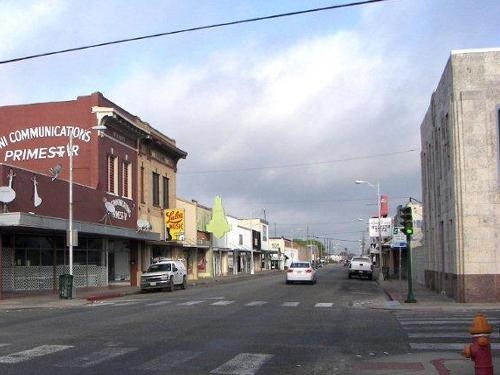
Photos of Alice



Overview of Alice
Alice is a city in Jim Wells County in South Texas, where it serves as the county seat with a population of approximately 18,000 residents. Long established as a regional center for the surrounding ranching, farming, and oil-producing lands of the Coastal Bend, the city carries the relaxed, unpretentious feel of a working South Texas community. Positioned along US Highway 281, Alice sits roughly 90 miles southeast of San Antonio and about 50 miles west of Corpus Christi, placing it within easy reach of both the Gulf Coast and the larger urban centers of the region.
The South Texas Museum, located in Alice, preserves and interprets the natural and cultural history of the surrounding brush country, including fossils and artifacts tied to the region's long ranching and oil heritage. It offers visitors a worthwhile stop and a sense of place that helps frame the broader South Texas landscape.
About 30 miles north of Alice, Lake Corpus Christi State Park wraps around a sizable reservoir on the Nueces River, drawing families and outdoor enthusiasts for boating, fishing, swimming, and camping. The park is one of the closest large-scale outdoor recreation areas to Alice and sees steady visitation throughout the year.
To the south, the King Ranch near Kingsville covers roughly 825,000 acres and ranks among the largest ranches in the world. Its visitor center, museum, and tour programs introduce guests to more than a century and a half of cattle ranching, horse breeding, and agricultural innovation, and it makes for a memorable day trip from Alice.
East of Alice, Corpus Christi sits about 50 miles down the road, providing access to the bayfront, the Texas State Aquarium, and miles of Gulf beaches. The relatively short drive makes day trips to the coast practical and a regular feature of any stay in the area.
Alice's appeal as a base for short-term rentals lies in its central position within the South Texas region, its affordability compared to the coast, and its proximity to a varied mix of cultural, historical, and outdoor attractions. Visitors drawn to the ranching heritage of the Brush Country, the small-town rhythms of a South Texas community, or the beaches and bayfront of the Gulf Coast will find Alice a convenient and characterful launching point.
Want to know if a property in Alice is a good investment?
Enter an address to get instant revenue potential and comps.