
Joelton, Tennessee
Want to see how Joelton compares to other top cities in Tennessee? Explore all city regulations in Tennessee. →
Joelton, TN
Challenging To Investors
STR Regulations for Joelton, Tennessee
Executive overview
- Are STRs allowed in Joelton, TN? Yes. Short‑term rentals are allowed in Joelton (Davidson County) provided the operator obtains a Nashville Metro Short‑Term Rental Property (STRP) permit, pays applicable taxes, and operates within zoning, safety, and operational rules. Non‑owner‑occupied permits are only available in specific, non‑residential zoning districts under Metro’s zoning code. If a property is owner‑occupied, other residential zones may qualify. Nashville Metro is the permitting authority for STRPs across Davidson County, including Joelton. [Source 1]
- Nashville defines an STRP as renting a residential dwelling for less than 30 continuous days (e.g., entire home or rooms), excluding hotels, motels, and certain tourist courts. Permits are required before listing on platforms like Airbnb/Vrbo. [Source 1]
How to start a short‑term rental business in Joelton (Davidson County/Nashville Metro)
- Verify zoning eligibility
- Identify the exact zoning of the subject property (via Nashville zoning maps and the District Land Use Table). New non‑owner‑occupied STRPs are only allowed in certain non‑residential districts (e.g., various commercial and mixed‑use zones). They are not permitted in AR2A, R, RS, or RM districts. Owner‑occupied STRPs have different zoning allowances (including some single‑family and two‑family districts with additional limits such as one permit per lot). [Source 1]
- Use Metro’s District Land Use Table and zoning maps to confirm permissible use for your specific parcel before acquiring or committing capital. [Source 1]
- Determine the permit type
- Owner‑Occupied STRP: The operator’s principal residence is on the same lot, or the property is owner‑occupied and meets additional eligibility requirements. Limited to one permit per lot in many residential districts. [Source 1]
- Non‑Owner‑Occupied STRP: Operated as an investment property with no owner residence on the lot. Only permitted in certain non‑residential zoning districts per the District Land Use Table. [Source 1]
- Prepare documentation and submit
- Assemble required documents (see list below).
- Submit the permit application through the Codes Department and pay the fee ($313 per current fee schedule). New permits must be renewed annually (operating with an expired permit triggers a one‑year prohibition from obtaining a new permit). [Source 1]
- Tax registration and compliance
- Register with the Tennessee Department of Revenue for sales tax collection.
- Register for local hotel occupancy tax and any applicable local taxes per Nashville Metro Finance/Treasury. Remit room/occupancy, sales, and hotel taxes as required. [Source 1]
- Compliance program and ongoing management
- Implement safety equipment, posting requirements, occupancy limits, parking, noise, and signage compliance per Nashville’s STRP operation rules. Maintain records for inspections and renewals. [Source 1, 4]
Required documents, permits, licenses, and guidelines Permits/licenses
- Nashville Metro Short‑Term Rental Property (STRP) Permit, issued by the Codes Department. Two types: owner‑occupied and non‑owner‑occupied. Annual renewal required. [Source 1]
Application requirements (as applicable)
- Proof of payment of all due taxes.
- Certified floor plan of the entire dwelling showing rooms, doors, windows, and smoke detectors.
- Proof of insurance: homeowner’s fire/hazard and liability coverage with at least $1,000,000 per occurrence.
- Notarized affidavit confirming all information is true and accurate.
- Proof of notification of adjacent property owners.
- Statement that operating the STRP does not violate HOA, condominium, covenants, codes, and restrictions.
- Two forms of identification showing proof of residence (for owner‑occupied permit).
- Initiation of fire marshal inspection for multifamily structures (3+ dwellings on the property).
- Permit application fee ($313). [Source 1]
Operational requirements (selected highlights)
- All signs must be compliant; no food prepared or served to guests.
- Rentals to a single party only; compensation for less than 24‑hour stays is prohibited.
- Principal renter must be at least 21 years of age.
- Maximum occupancy: two persons per bedroom plus an additional four persons (maximum 12 persons).
- Occupants must comply with noise and waste management rules.
- No recreational vehicles, buses, or trailers visible on the street or on the property.
- Permit holder must collect and remit room/occupancy and sales taxes.
- Local responsible party’s name and phone number must be posted within the unit. [Source 1, 4]
Business and tax licenses
- City and county business licenses (as applicable).
- Tennessee Department of Revenue sales tax registration.
- Local hotel/motel occupancy tax registration (per Nashville Metro Treasury). [Source 1]
Insurance
- Liability coverage of at least $1,000,000 per occurrence. This aligns with the application requirements and statewide baseline expectations for short‑term rentals (see Tennessee context below). [Source 1]
Zoning compliance
- Confirm zoning district and permitted use status (owner‑occupied vs non‑owner‑occupied) using the District Land Use Table. Non‑owner‑occupied permits are limited to specific non‑residential zoning districts. [Source 1]
State of Tennessee baseline requirements (contextual)
- Tennessee’s Short‑Term Rental Unit Act (SB1086) defines a short‑term rental as renting all or part of a residential dwelling for fewer than 30 continuous days; hotels/motels/tourist courts are excluded. [Source 2]
- Statewide minimums typically include liability insurance (≥$500,000 unless the marketplace provides coverage), and baseline safety items such as smoke alarms, carbon monoxide alarms, and fire extinguishers. [Source 2]
- Local authorities may regulate short‑term rentals to protect public health and safety using the least restrictive means. [Source 2, 3]
- Most Tennessee cities require business licenses and tax collection/remittance for room/occupancy and sales taxes. [Source 2, 3]
Specific regulations: Nashville Metro (applies to Joelton in Davidson County) Permit types and eligibility
- Owner‑Occupied: Property is the owner’s principal residence (or on the same lot). One permit per lot in many single‑family/two‑family districts. [Source 1]
- Non‑Owner‑Occupied: Investment properties without an on‑site owner residence. New non‑owner‑occupied permits are limited to specific non‑residential zoning districts (e.g., MUN/MUN‑A, MUL/MUL‑A, MUG/MUG‑A, MUI/MUI‑A, OG, OR20–OR40‑A, ORI/ORI‑A, CN/CN‑A, CL/CL‑A, CS/CS‑A, CA, CF, DTC North/South/West/Central, SCN, SCC, SCR). Prohibited in AR2A, R, RS, RM zones. [Source 1]
Operational rules (selected)
- Single‑party rentals only; no rentals under 24 hours for compensation.
- Principal renter age ≥21.
- Maximum occupancy: 2 per bedroom +4 (max 12).
- Posted local responsible party contact information.
- Noise, waste, parking, signage, and vehicle restrictions.
- Permit holder is responsible for tax collection/remittance. [Source 1, 4]
Taxes (check current local rates on Metro Finance)
- Sales tax: combined rate typically 9.25% in Nashville/Davidson County.
- Hotel/occupancy tax: Nashville’s local rate is 6% per Metro Finance; some third‑party sources cite 7% plus a $2.50 nightly fee. Verify the current rate and any nightly fee directly with Metro Treasury before collection. [Source 1, 2, 3]
Permit renewal
- Annual. Permits are non‑transferable. Operating with an expired permit triggers a one‑year prohibition from obtaining a new permit. [Source 1]
Enforcement and reporting
- Report violations (illegal STRs, noise, parking, trash, etc.) through hubNashville (Metro’s 311 system). False complaints may be punishable as perjury under Tennessee law. [Source 1]
Contact information (Nashville Metro and Tennessee authorities)
- Metro Codes Department (STRP Permits)
- Website: www.nashville.gov/departments/codes/short-term-rentals
- Email: [email protected]
- Phone (general Metro Customer Service/311): 311 or (615) 862‑5000
- hubNashville (violations/requests): hub.nashville.gov
- Tennessee Department of Revenue (sales tax registration)
- Website: www.tn.gov/revenue.html
- Phone: Contact via the Department of Revenue website or main line (consult official channels for current phone)
- Metropolitan Treasurer’s Office (hotel/occupancy tax information)
Source pages (links)
- Nashville Metro Codes: Short‑Term Rentals (main page). www.nashville.gov/departments/codes/short-term-rentals
- Nashville Metro Codes: Operation Requirements. www.nashville.gov/departments/codes/short-term-rentals/operation-requirements
- Nashville Metro Codes: Applying for a Permit. www.nashville.gov/departments/codes/short-term-rentals/apply-short-term-rental-property-permit
- Nashville District Land Use Table (PDF). library.municode.com/tn/metro_government_of_nashville_and_davidson_county/codes/code_of_ordinances?nodeId=CD_TIT17ZO_CH17.08ZODILAUS_17.08.030DILAUSTA
- Nashville District Land Use Table (PDF direct). www.nashville.gov/sites/default/files/2025-09/LandUseTable.pdf
- Tennessee Short‑Term Rental Unit Act (SB1086). www.capitol.tn.gov/Bills/110/Bill/SB1086.pdf
- Summer: Tennessee Short‑Term Rental Laws overview. www.gosummer.com/post/tennessee-short-term-rental-laws
- Checkmate Rentals: Tennessee STR Laws overview. www.checkmaterentals.com/blog/short-term-rental-laws-tennessee
- hubNashville (report violations/requests). hub.nashville.gov
- Nashville Department of Revenue (sales tax information). www.nashville.gov/departments/finance
Notes for investors
- Zoning is the gating factor for investor (non‑owner‑occupied) STRs in Davidson County. Confirm eligible districts for any Joelton‑area property before acquisition.
- Build compliance into your operations from day one: occupancy limits, signage, parking, tax collection/remittance, safety equipment, and responsible‑party posting.
- Track renewal calendars; expired‑permit operation can shut down your ability to obtain a new permit for a full year.
- Verify the current hotel/occupancy tax rate and any nightly fee with the Metro Treasurer’s Office prior to listing.
This guide reflects current Nashville Metro/Davidson County rules and Tennessee statewide context as of the date of the provided materials. Rules can change; investors should confirm details with the Codes Department and Finance/Treasury offices prior to purchase or listing.
What do Airbnb hosts actually earn in Joelton?
Joelton hosts earn a median $32,192/year with $213 ADR and 60% occupancy.
Top performers pull in $50,486+ per year.
See the full Joelton market breakdownNext step
Found a property in Joelton?
Paste any address and get estimated revenue, cash-on-cash return, and comparable STR performance in under 5 minutes. 3 free analyses per day.
Free brief
Get the free Joelton STR Investment Brief
Revenue data, top neighborhoods, seasonal trends, and the key regulations for Joelton, Tennessee in one email.
Joelton
Market Saturation Score
Photos of Joelton

Overview of Joelton
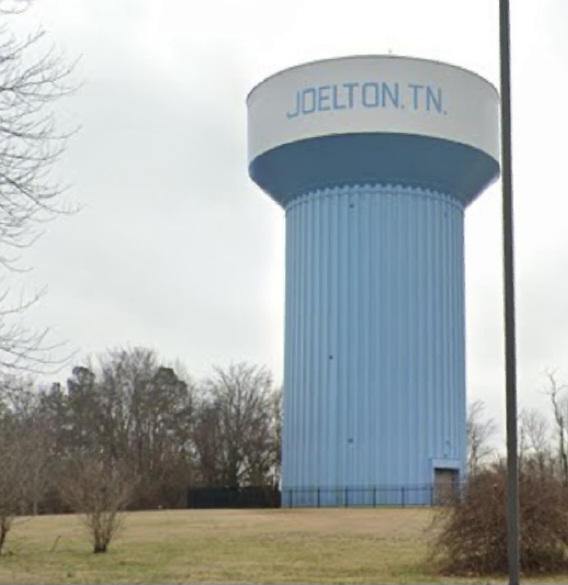
Joelton is a small unincorporated community situated in the northern reaches of Davidson County, Tennessee, just outside the Nashville metropolitan core. With a population of roughly a few thousand residents, Joelton has the feel of a quiet rural pocket that has gradually been drawn into the orbit of a much larger city. The community is best known as a peaceful bedroom community for Nashville workers, and it serves as a convenient, laid-back alternative to staying in the city itself. It sits about fifteen miles north of downtown Nashville, reached via a short drive up I-24 and State Route 41, and it offers travelers an appealing blend of country scenery and easy access to Music City's cultural draws.
One of the closest natural escapes to Joelton is Beaman Park, a sizeable nature preserve managed by Metro Nashville Parks. Located just a few miles from the heart of Joelton, the park features more than three thousand acres of forested ridges, creeks, and limestone bluffs connected by a network of hiking trails. It is a popular spot for birding, wildflower walks, and quiet outings away from the city, and it represents the kind of rolling, wooded Middle Tennessee landscape that defines the area around Joelton.
A short drive south brings visitors to downtown Nashville, roughly twenty to twenty-five minutes away, where the Country Music Hall of Fame and Museum anchors a vibrant downtown entertainment district. The museum chronicles the history of country music through interactive exhibits, rare recordings, and stage costumes, while the surrounding SoBro neighborhood offers honky-tonks, restaurants, and live music venues on Lower Broadway. The Ryman Auditorium, the Grand Ole Opry, and a thriving food scene make Nashville a year-round draw for visitors from around the world.
For those willing to drive a bit farther, Montgomery Bell State Park lies about an hour west of Joelton near Dickson. The park surrounds three lakes and features more than thirty miles of trails, a public golf course, and a historic gristmill dating back to the 1800s. Its combination of outdoor recreation and Civil War-era history gives travelers a different side of Tennessee beyond the Nashville spotlight.
Joelton makes a compelling base for a short-term rental because it offers a quieter, more affordable alternative to staying directly in Nashville while still putting visitors within easy reach of the city's biggest attractions. Travelers who appreciate a more pastoral setting, with starrier skies and a slower pace, can enjoy country roads, farm stands, and trailheads in every direction, then slip into Nashville for a concert, a museum, or a hot chicken dinner and be back home in well under half an hour. That balance of rural calm and urban access is exactly the kind of flexibility that makes the Nashville area such a strong short-term-rental market.
Want to know if a property in Joelton is a good investment?
Enter an address to get instant revenue potential and comps.