
Decaturville, Tennessee
Want to see how Decaturville compares to other top cities in Tennessee? Explore all city regulations in Tennessee. →
Decaturville, TN
Challenging To Investors
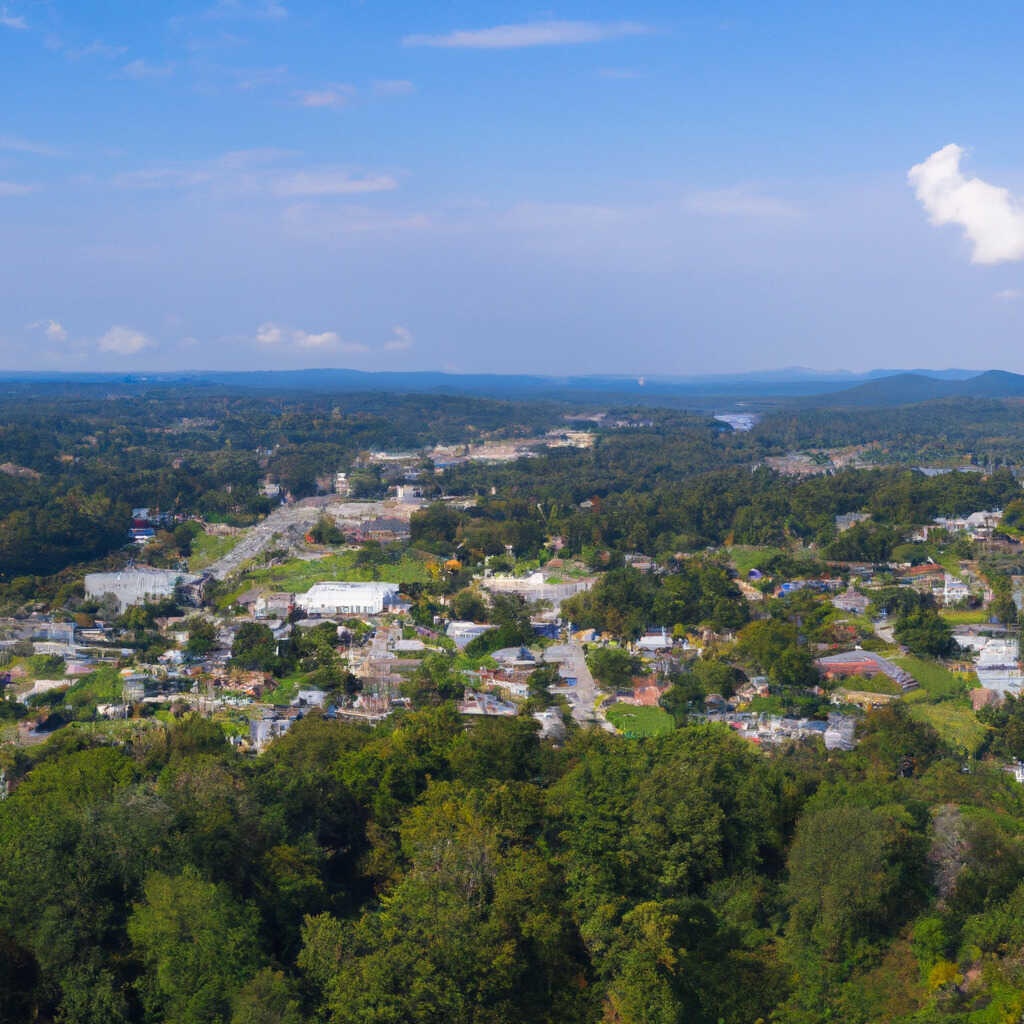
STR Regulations for Decaturville, Tennessee
Note on scope: The provided content does not include Decaturville-specific or Decatur County-specific short‑term rental (STR) ordinances or contacts. In Tennessee, municipal/county STR rules can vary significantly, and many jurisdictions have adopted their own permit and zoning frameworks. Where city or county specifics are not available in the provided sources, this guide defaults to statewide Tennessee requirements and best‑practice expectations.
1) Overview: Are Short-Term Rentals Allowed in Decaturville, TN?
- Tennessee explicitly allows short-term rentals (STRs) under the Tennessee Short-Term Rental Unit Act (SB1086), which took effect in 2018.
- A “short-term rental unit” is statutorily defined as a residential dwelling (single‑family or unit in a multi‑unit building) rented wholly or partially for a fee for fewer than 30 continuous days.
- Local municipalities and counties retain authority to regulate STRs via local ordinances. The provided sources do not include a Decaturville municipal STR ordinance; Decatur County‑specific STR rules are also not present.
- Practical implication: STRs are legal under state law. Whether Decaturville allows STRs (and under what conditions) depends on any local ordinance adopted by the City of Decaturville and/or Decatur County. If no local ordinance applies, statewide rules apply, including sales and hotel taxes and safety requirements. If you encounter a local rule that restricts STRs, the state’s “legacy”/grandfathering clause may protect existing STRs under certain conditions.
Key state references:
- Tennessee Short-Term Rental Unit Act (SB1086): www.capitol.tn.gov/Bills/110/Bill/SB1086.pdf
- Tennessee Code §68-120-112 (fire, smoke, and CO safety): codes.findlaw.com/tn/title-68-health-safety-and-environmental-protection/tn-code-sect-68-120-112.html
What do Airbnb hosts actually earn in Decaturville?
Decaturville hosts earn a median $17,483/year with $146 ADR and 43% occupancy.
Top performers pull in $25,624+ per year.
See the full Decaturville market breakdown2) How to Start an STR Business in This Market
If Decaturville (and/or Decatur County) has no local STR ordinance that you can confirm, follow this path to operate legally under Tennessee state rules:
- Confirm local rules
- Check with the City of Decaturville and Decatur County for any municipal/county permit, zoning, or registration requirements. The absence of an explicit local ordinance in your documents suggests none was found, but laws can change.
- Verify whether the property is in a zoning district that permits lodging/rental use.
- Register for taxes
- Register with the Tennessee Department of Revenue and obtain a sales tax certificate to collect and remit state sales tax and any applicable hotel occupancy tax on STRs.
- Expect to file and pay sales tax (7%) and state hotel tax (1% for whole‑house; 6% for rooms) if your rental meets the statutory definitions. Local hotel taxes may also apply.
- Processing time: approximately 10 business days.
- Obtain local business licenses
- Secure county and city business licenses (commonly around $15 each), even if no local STR permit is required.
- Compliance and operations
- Comply with Tennessee fire, smoke, and carbon monoxide alarm requirements (see “Required Documents, Permits, Licenses, and Guidelines”).
- Establish processes to collect and remit all applicable state and local taxes on the full rental price (including cleaning, pet, and other fees).
- Maintain clear house rules and safety information for guests; ensure adequate insurance coverage (Tennessee’s statewide “grandfathering” law mentions liability insurance within the Act, but enforcement/practical practice varies by local government; see “Regulatory Framework” below).
- Grandfathering and legacy status
- If a later local ordinance would restrict STR operations, existing STRs operating at the time the ordinance is adopted may be “grandfathered” provided certain conditions are met. Under Tennessee law, grandfathered status continues until the property is transferred, the operation ceases for 30 continuous months, or the operator accumulates at least three violations of generally applicable local laws. (Details vary, but the Act sets these statewide standards.)
3) Required Documents, Permits, Licenses, and Guidelines
Statewide (Tennessee)
- State registration with the Tennessee Department of Revenue; obtain a sales tax certificate.
- County and city business licenses (approx. $15 each).
- Compliance with Tennessee fire, smoke, and CO alarm standards under Title 68, Chapter 120, including:
- Smoke alarms in every sleeping room.
- Carbon monoxide alarms within 10 feet of each sleeping room where a fossil‑fuel‑burning heater, appliance, or fireplace is present.
- Maintenance responsibilities and penalties for non‑compliance (Class C misdemeanor).
If Decaturville or Decatur County adopts STR ordinances, expect requirements such as:
- Municipal/county STR permit or registration (often annual).
- Zoning compliance (e.g., residential vs. commercial districts).
- Owner‑occupied vs. non‑owner‑occupied categories with differing rules.
- Posting/transparent display of permit number on listings.
- Local contact person requirements.
- Safety inspections or self‑certification.
- Additional local taxes/fees.
To confirm the latest local requirements and fees, contact Decaturville and Decatur County directly.
4) Specific Regulations: City, County, and State
State of Tennessee (Short-Term Rental Unit Act, SB1086)
- Definition: Short-term rental = residential dwelling rented for fewer than 30 continuous days.
- Grandfathering (Legacy Clause): Properties operating as STRs before a new local restriction are protected unless:
- Ownership is transferred,
- STR operation ceases for 30 continuous months, or
- At least three violations of generally applicable local laws occur.
- Transfers: Permits cannot be transferred with the sale of the property.
- False complaints: Treated as perjury.
- Liability insurance: The statewide Act references liability insurance for STR providers as part of its framework; the $500,000 figure appears in the provided sources, but it is not clear whether the “$500,000” minimum is codified statewide or appears in specific local ordinances referenced elsewhere in Tennessee (e.g., Nashville). Investors should verify any insurance minimums directly with local authorities in Decaturville/Decatur County if/when those jurisdictions adopt STR ordinances.
- Safety: Must comply with Title 68, Chapter 120 (smoke alarms, sprinklers, carbon monoxide alarms).
Decaturville (City) and Decatur County
- The provided content contains no city- or county‑specific STR ordinances, permit procedures, contacts, or fee schedules for Decaturville or Decatur County.
- Most Tennessee municipalities that regulate STRs require a city permit and enforce zoning/use limitations, safety standards, and tax remittance. Examples in other Tennessee cities include Nashville, Brentwood, Chattanooga, and Gatlinburg, which have adopted distinct STR frameworks under the state’s enabling law.
Municipal examples (for context only; do not assume these apply in Decaturville):
- Nashville/Davidson County: Owner‑occupied vs. non‑owner‑occupied permits issued by Metro Codes; additional zoning, permitting, and tax obligations.
- Brentwood: Restrictions in single‑family residential districts for rentals under three months.
- Chattanooga: Annual grandfather permit renewals; owner‑residence requirements in residential zones; limits on bedrooms and minimum stays; local contact requirements; fines up to $500/day for violations.
- Gatlinburg: Vacation rentals allowed with zoning compliance; relaxed restrictions but still subject to local codes.
5) State and Local Taxes (Tennessee)
State rates
- Sales tax: 7% on STRs (rentals for fewer than 90 consecutive days).
- State hotel tax (whole‑house STR): 1% (total ≈ 8% when combined with 7% sales tax).
- State hotel tax (room/rented space STR): 6% (total ≈ 13% when combined with 7% sales tax).
- Local hotel taxes may apply depending on jurisdiction; verify rates with the City/County.
Compliance notes
- Register with the Tennessee Department of Revenue, collect taxes on the full sales price (including fees such as cleaning and pet fees), and remit according to state filing requirements.
6) Contact Information
Since local contacts for Decaturville/Decatur County STR administration are not provided in the sources, start with the following and request referrals to the appropriate local department:
Tennessee Department of Revenue (State sales and hotel tax registration)
- Phone: 615-253-0600
- Website: www.tn.gov/revenue/for-businesses/for-lodging-providers.html
City of Decaturville (general municipal contact; confirm STR administration)
- Phone: Request via City Hall or County information line; no STR‑specific number is provided in the sources.
- Website: City municipal site (not provided); inquire about permits, zoning, and business licensing.
Decatur County (general county contact; confirm any county-level STR/registration or zoning rules)
- Phone: Request via County offices; no STR‑specific number is provided in the sources.
- Website: County site (not provided); inquire about business licensing, zoning, and any STR registration.
Note: If Decaturville/Decatur County adopt STR ordinances, the issuing department will be designated locally (often Planning/Codes/Building/Zoning or a Business Licensing division). Ask for the STR permit coordinator.
7) Sources and Links
- Tennessee Short-Term Rental Unit Act (SB1086) (state enabling law): www.capitol.tn.gov/Bills/110/Bill/SB1086.pdf
- Tennessee Code §68-120-112 (fire, smoke, CO alarm safety standards): codes.findlaw.com/tn/title-68-health-safety-and-environmental-protection/tn-code-sect-68-120-112.html
- Tennessee Department of Revenue (lodging/STR tax info): www.tn.gov/revenue/for-businesses/for-lodging-providers.html
- Lodge Compliance overview (Tennessee STR registration/tax basics; consult local jurisdictions for details): www.lodgecompliance.com/states/tennessee
- National League of Cities report on STR regulation best practices (for framing local ordinances): www.nlc.org/wp-content/uploads/2022/05/Short-Term-Rental-Regulations.pdf
Investor action checklist (if no local STR ordinance applies):
- Obtain state sales tax certificate (TN Department of Revenue).
- Secure county and city business licenses.
- Install/maintain required smoke and CO alarms.
- Collect and remit state sales tax and state hotel tax (and any local hotel taxes).
- Maintain records and safety documentation.
- Monitor City/County for any future STR ordinances and comply promptly.
Next step
Found a property in Decaturville?
Paste any address and get estimated revenue, cash-on-cash return, and comparable STR performance in under 5 minutes. 3 free analyses per day.
Free brief
Get the free Decaturville STR Investment Brief
Revenue data, top neighborhoods, seasonal trends, and the key regulations for Decaturville, Tennessee in one email.
Decaturville
Market Saturation Score
Photos of Decaturville

Overview of Decaturville
Decaturville is a small town in Decatur County, Tennessee, where it serves as the county seat. With a population of approximately 900 residents, it has the character of a quiet rural community, the kind of place where neighbors know each other and the pace slows noticeably compared to the state's larger cities. The town lies in a region defined by rolling farmland, the Tennessee River shoreline, and a long agricultural heritage. Decaturville is roughly 60 miles east of Jackson, the nearest major city and the commercial hub of west Tennessee, making it a peaceful base for travelers who want easy access to both the countryside and the region's amenities.
Mousetail Landing State Park lies just outside Decaturville along the Tennessee River and serves as one of the area's marquee outdoor destinations. The park offers hiking trails, riverfront camping, picnicking areas, and access for fishing and boating on the river, with a backdrop of wooded bluffs and the confluence of several small creeks. It is a popular spot for families and outdoor enthusiasts, particularly during the warmer months when the river becomes a focal point for swimming, paddling, and lazy afternoons by the water.
The Tennessee River itself is the dominant natural feature of the region, forming the western boundary of Decatur County and shaping much of the local landscape. Its waters and shoreline offer year-round opportunities for fishing, boating, and quiet observation, with several public launches and river accesses within a short drive of Decaturville. The river also connects travelers to other recreation areas and historic sites up and down its course, making it a unifying thread for any visit to the area and a reminder of the waterway's central role in the region's commerce and culture.
A bit farther afield, the Natchez Trace Parkway is reachable from Decaturville as a day drive, threading through the western Tennessee countryside within roughly an hour or so. This scenic national parkway follows the route of an old travel corridor once used by Native Americans, early settlers, and Kaintuck boatmen returning home, and today offers travelers a slow-paced drive through forests, past historic stands, and over rolling pastures. The parkway, administered by the National Park Service, provides an evocative look at the landscape and history of the region.
Decaturville's appeal as a short-term rental market lies in its blend of small-town character and proximity to genuine outdoor and scenic recreation. Guests looking for a quiet rural escape can spend their days on the river, exploring the state park, or driving the Natchez Trace, then return in the evening to a peaceful community where the stars come out and the roads are quiet. For travelers seeking an authentic slice of west Tennessee away from the tourist crowds, Decaturville offers both a relaxing base and a convenient jumping-off point to the region's natural and historic riches.
Want to know if a property in Decaturville is a good investment?
Enter an address to get instant revenue potential and comps.