
Winner, South Dakota
Want to see how Winner compares to other top cities in South Dakota? Explore all city regulations in South Dakota. →
Winner, SD
Very Investor Friendly
STR Regulations for Winner, South Dakota
Overview: Are STRs Allowed in Winner, SD?
- What the content says: In South Dakota, short‑term rentals (STRs) operated through platforms such as Airbnb and VRBO are allowed, and the state’s regulatory framework varies by city and county. Some cities have ordinances; others do not.
- Explicit status for Winner, SD: Winner is the county seat of Tripp County, SD. No city‑ or county‑specific ordinances for STRs are identified in the provided sources. In the absence of local rules, STRs are permitted in practice subject to general zoning, building, fire, and health standards that may apply at the state level or through local general business licensing, and subject to state tax obligations (sales and municipal taxes collected via platform).
- Implication: Treat STRs as a residential use unless zoning or a conditional use permit indicates otherwise. Confirm with the local zoning/building official that your intended STR use is compliant, then satisfy state tax obligations through your platform.
What do Airbnb hosts actually earn in Winner?
Winner hosts earn a median $15,431/year with $90 ADR and 52% occupancy.
Top performers pull in $17,604+ per year.
See the full Winner market breakdownHow to Start an STR Business in this Market (Step-by-Step)
- Confirm zoning and land use feasibility
- Verify that short‑term rental use is allowed at the property address (owner‑occupied vs non‑owner‑occupied). If uncertain, request a zoning determination from the city/county.
- If the property is in a residential district without explicit STR allowances, ask whether a conditional use permit or business license is required.
- Secure business licensing (if applicable)
- If no local STR ordinance exists, obtain a general business license/registration if required for any rental activity in the municipality or county.
- For benchmarking, note that Lead, SD requires an STR license and proof of inspection; Minnehaha County applies a conditional use permit (CUP) process to bed‑and‑breakfasts, which in practice can be used for STRs.
- Set up tax compliance
- Enroll in state sales and municipal taxes via your STR platform (Airbnb/VRBO) and ensure tax remittance is activated for your listings.
- If you expect or are required to collect local room/occupancy taxes and any local fees (e.g., BID), register with the relevant local authority. Platforms typically collect and remit state sales and municipal taxes automatically; check whether your municipality requires you to also file or remit separately.
- Health and safety readiness
- Implement fire safety and egress standards consistent with state health guidance (even if routine inspections aren’t mandated). For some cities (e.g., Lead), proof of inspection from the South Dakota Department of Health is required.
- Launch and monitor
- Publish your listing with clear house rules and local guidance.
- Monitor any municipal changes and maintain renewal of licenses or permits as applicable.
Required Documents, Permits, Licenses, and Guidelines
- Zoning compliance: Written confirmation from city or county zoning that an STR is an allowed use. If not explicitly permitted, ask about a CUP or variance.
- Business license/registration: Local business license or registration if required by the municipality or county.
- Lead example (for comparison): If located in a city with STR rules, expect a license application and proof of health inspection (from the South Dakota Department of Health) or city inspection if the state cannot inspect.
- Health and safety guidelines: Fire extinguishers, clearly marked exits, smoke/CO detectors, safe egress routes, and basic life-safety measures; lead-based disclosure if applicable.
- Insurance: STR‑specific liability coverage (often through the platform or a standalone policy).
- State tax enrollment: Sales and municipal tax remittance via Airbnb/VRBO; verify remittance scope and determine if separate local filings are required.
- Operational disclosures: House rules, quiet hours, occupancy limits, and contact information for local emergencies.
Specific Regulations: City, County, and State
- City-level (Winner): No STR‑specific ordinance identified in provided sources. Treat as permitted if consistent with zoning; confirm any general business license requirements.
- County-level (Tripp County): No STR‑specific ordinance identified. If located in a zoning district without explicit STR allowances, check with planning and zoning on CUP applicability.
- State-level (South Dakota):
- Tax: The South Dakota Department of Revenue collects state sales taxes via platforms; this includes state, tourism, municipal, and municipal gross receipts taxes when remitted through Airbnb/VRBO.
- Health: State does not require regular health inspections for STRs (unlike hotels). Some cities, such as Lead, impose inspection proof as part of licensing.
- Level playing field: State STRs generally do not pay room/occupancy taxes or BID fees unless municipalities specifically extend those taxes to STRs or require registration for collection.
- Benchmarking for context:
- Sioux Falls: No STR-specific regulations; city has a 1% room/occupancy tax and a $2 per room BID fee for traditional lodging; STRs operating on platforms did not historically pay these as of the source date.
- Lead: New ordinance requiring an STR license and proof of health inspection.
- Minnehaha County (regional context): STRs follow the bed‑and‑breakfast CUP pathway through planning.
- Yankton, Spearfish, Keystone: As of the source date, no specific STR rules in place.
- City of Yankton commentary: City had not determined a need to regulate STRs at the time of publication.
Local Authority Contacts (Winner/Tripp County)
Note: Specific contact details for Winner/Tripp County STR oversight are not provided in the sources. Reach out to the following to confirm zoning, business licensing, and potential local tax registration needs.
- City of Winner (Municipal)
- Phone: Not listed in provided sources
- Email: Not listed in provided sources
- Website: Not listed in provided sources
- Tripp County (County)
- Planning/Zoning or County Commission: Not listed in provided sources
- Phone: Not listed in provided sources
- Email: Not listed in provided sources
- Website: Not listed in provided sources
- South Dakota Department of Revenue (State tax inquiries)
- Phone: Not listed in provided sources
- Email: Not listed in provided sources
- Website: Not listed in provided sources
- South Dakota Department of Health (Inspection-related questions)
- Phone: Not listed in provided sources
- Email: Not listed in provided sources
- Website: Not listed in provided sources
Practical Recommendations and Risk Considerations
- Confirm zoning first. Even absent STR rules, zoning use type (e.g., “residential single‑family”) can constrain STR operations.
- If your municipality adds STR regulations later (as some South Dakota cities have), expect licensing/inspection requirements and potential fees or taxes.
- Maintain strong safety practices and documentation to mitigate liability and consumer risk.
- Document your tax setup with platforms; if local room/occupancy taxes apply or are subsequently adopted, ensure you register and remit appropriately.
Links to Source Pages
- Rules vary on short‑term rentals in South Dakota — KELOLAND.com Original
www.keloland.com/keloland-com-original/rules-vary-on-short-term-rentals-in-south-dakota/ (accessed via provided content)
Important note: This guide is based exclusively on the provided content. If no city‑ or county‑specific rules exist for Winner or Tripp County, rely on state tax obligations via platforms and general zoning/health safety standards. For definitive compliance, contact city/county authorities directly.
Next step
Found a property in Winner?
Paste any address and get estimated revenue, cash-on-cash return, and comparable STR performance in under 5 minutes. 3 free analyses per day.
Free brief
Get the free Winner STR Investment Brief
Revenue data, top neighborhoods, seasonal trends, and the key regulations for Winner, South Dakota in one email.
Winner
Market Saturation Score
Photos of Winner

Overview of Winner
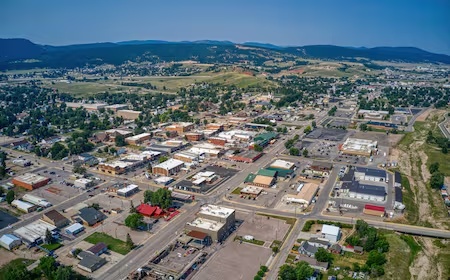
Winner sits in south-central South Dakota as the seat of Tripp County, a small prairie community of roughly 2,800 residents. The town is widely recognized as the self-proclaimed "Pheasant Capital" of South Dakota, a reputation that draws thousands of hunters each fall to the surrounding grasslands. It has a quiet agricultural character shaped by ranching, grain production, and a strong outdoor heritage. Winner is located along US Highway 183, roughly 200 miles southwest of Sioux Falls and about 150 miles southeast of Rapid City, placing it within a few hours' drive of the Black Hills and the Missouri River reservoirs.
The surrounding countryside is the main draw for visitors, with rolling prairie and wildlife habitat that makes it a destination for pheasant, deer, and upland game bird hunting each autumn. The Dog Ear Buttes, a pair of small but distinctive hills rising above the plains a few miles south of town, are a recognizable local landmark and a popular stop for visitors exploring the back roads of Tripp County.
About an hour west of Winner, the Missouri River's Lake Francis Case offers fishing, boating, and shoreline camping, with Fort Randall Dam and the associated recreation areas providing access to the water. The lake is one of the larger reservoirs along the Missouri in central South Dakota and serves as a regional hub for warm-weather outdoor recreation. Travelers looking for a longer day trip sometimes continue westward toward the Badlands National Park, roughly three hours from Winner, with its eroded buttes, prairie grasslands, and abundant wildlife viewing.
The Winner community itself is small but functional, with a compact downtown core, the Tripp County Fairgrounds, and Pease Creek providing green space for rodeos, county fairs, and the busy hunting-season gatherings. Visitors traveling during the pheasant season in late autumn and early winter often use the town as a base for guided hunts on surrounding private land and public walk-in areas, and the community leans into that identity with local events, lodging, and outfitter services.
Winner's appeal as a short-term rental market is tied closely to seasonal demand. Pheasant hunters from across the country, often traveling in groups, drive strong fall and early-winter occupancy, while summer road-trippers passing between the Black Hills, the Badlands, and points east provide a steadier secondary stream of visitors. The combination of small-town Midwestern character, easy access to the Missouri River lakes, and proximity to South Dakota's marquee western destinations makes Winner a workable, if specialized, base for owners who understand the rhythms of the hunting and travel seasons.
Want to know if a property in Winner is a good investment?
Enter an address to get instant revenue potential and comps.