
Custer, South Dakota
Want to see how Custer compares to other top cities in South Dakota? Explore all city regulations in South Dakota. →
Custer, SD
Challenging To Investors
STR Regulations for Custer, South Dakota
Overview: Are Short-Term Rentals Allowed in Custer, SD?
Explicit Answer: YES, short-term rentals are allowed in Custer, SD, but with significant restrictions and requirements.
Short-term rentals are permitted in Custer, South Dakota, but the city has implemented a regulatory framework that requires property owners to obtain proper permits and comply with specific zoning requirements. According to market research, Custer requires all short-term rental properties to obtain a Conditional Use Permit, which involves a public hearing and City Council approval. The city also has specific zoning laws that may affect the ability to operate short-term rentals, particularly in residential areas. Both Custer City and Custer County maintain separate regulatory frameworks, creating a complex regulatory environment that investors must navigate carefully.
The Custer market operates within the broader Black Hills tourism economy, where short-term rentals have become increasingly popular due to the area's proximity to iconic attractions like Mount Rushmore, Crazy Horse Memorial, and Custer State Park. However, the city has implemented measures to balance economic benefits with residential neighborhood protection.
What do Airbnb hosts actually earn in Custer?
Custer hosts earn a median $36,065/year with $265 ADR and 62% occupancy.
Top performers pull in $53,522+ per year.
See the full Custer market breakdownHow to Start a Short-Term Rental Business in Custer, SD
Step 1: Understand Zoning Requirements
Before purchasing or converting a property, verify the zoning designation with Custer city planning officials. Residential zoning may have restrictions on commercial activities, while commercial or mixed-use zones may be more conducive to short-term rental operations.
Step 2: Obtain Conditional Use Permit
The cornerstone requirement for legal operation in Custer is securing a Conditional Use Permit. This process involves:
- Application Submission: Complete the formal permit application with the City Planning Department
- Public Hearing: Attend a public hearing where neighbors and community members can voice support or concerns
- City Council Review: The City Council will evaluate the application based on compatibility with neighborhood character, parking impacts, and other community considerations
- Approval Process: Upon approval, the permit becomes active and subject to ongoing compliance requirements
Step 3: Tax Registration and Compliance
Register with the South Dakota Department of Revenue to obtain necessary tax licenses for:
- State Sales Tax Collection: Currently 4.5% on rental amounts
- Tourism Tax: Additional 1.5% tax on short-term rentals
- Monthly Remittance: Establish systems for collecting and remitting these taxes
Step 4: Insurance and Liability Protection
Given the unique risks associated with short-term rentals, standard homeowners insurance is insufficient. Invest in comprehensive short-term rental insurance that covers:
- Commercial liability protection
- Property damage from guest use
- Loss of rental income during repairs
- Guest-related incidents and accidents
Step 5: Property Preparation and Safety Compliance
Ensure the property meets all safety standards including:
- Functional smoke detectors and carbon monoxide detectors
- Fire extinguisher placement
- Adequate egress from all bedrooms (complying with state health and safety requirements)
- Basic amenities and cleanliness standards
Step 6: Marketing and Listing Management
Once operational approvals are secured:
- Create compelling listings on major platforms (Airbnb, VRBO, etc.)
- Implement dynamic pricing strategies that account for Custer's significant seasonality
- Develop professional photography and detailed property descriptions
- Establish clear house rules and guest communication protocols
Required Documents, Permits, Licenses, and Guidelines
City-Level Requirements
Conditional Use Permit (Primary Requirement)
- Application form from City Planning Department
- Site plan and property description
- Floor plans showing bedroom locations and egress
- Parking plan addressing guest parking needs
- Noise mitigation and neighborhood compatibility plan
- Proof of property ownership or lease authorization
Local Business License
- Application for business operation within city limits
- Annual renewal requirements
- Compliance with local zoning ordinances
State-Level Requirements
South Dakota Department of Revenue Registration
- Tax license application for sales tax collection
- Tourism tax registration
- Regular filing and remittance requirements
Health and Safety Compliance
- State health regulations for lodging facilities
- Fire safety inspections where applicable
- Building code compliance for commercial lodging use
Documentation Checklist
- Property deed or lease agreement
- Conditional Use Permit approval letter
- State tax registration certificates
- Insurance policy certificates
- Emergency contact information posted in property
- Local business license
- Safety inspection reports (if required)
Specific Regulations for Short-Term Rentals
City of Custer Regulations
Zoning Restrictions: While short-term rentals are permitted, the city maintains strict zoning oversight, particularly in residential areas. The Conditional Use Permit process serves as the primary mechanism for evaluating compatibility with neighborhood character.
Permit Requirements: All short-term rental operations must obtain and maintain a current Conditional Use Permit, subject to annual review and potential renewal requirements.
Public Hearing Process: Applications are subject to public review, allowing neighbors and community members to provide input on proposed operations.
Custer County Regulations
Separate Regulatory Framework: Custer County maintains different rules from the city, creating a two-tier regulatory environment that investors must navigate depending on property location.
County-Level Compliance: Properties located in unincorporated areas of Custer County may be subject to different requirements than those within city limits.
State of South Dakota Regulations
Tax Obligations:
- State sales tax: 4.5% on all rental charges
- Tourism tax: 1.5% additional tax on short-term rentals
- Monthly filing and remittance requirements to the Department of Revenue
Health and Safety Standards:
- Egress requirements for all bedrooms (either exterior door or minimum-size windows)
- Fire safety equipment and alarm systems
- Compliance with state lodging facility health standards
Advertising and Disclosure Requirements:
- Proper tax license display in advertisements
- Compliance with state advertising standards for lodging facilities
Enforcement and Monitoring
The city employs monitoring systems to identify non-compliant operations, and violations can result in permit revocation, fines, and legal action. The regulatory environment is actively enforced, with particular attention to neighborhood compatibility and tax compliance.
Contact Information for Local Authorities
City of Custer - Planning and Zoning Department
Primary Contact for Permits and Zoning
- Phone: Contact city hall at (605) 673-2244 for planning department routing
- Email: inquiries through city website contact forms
- Website: www.custergov.org
- Address: 631 Minneopa Ave, Custer, SD 57730
- Office Hours: Monday-Friday, 8:00 AM - 5:00 PM
Custer County Planning and Zoning
County-Level Regulations and Unincorporated Area Permits
- Phone: (605) 673-7349
- Email: Contact through county website
- Website: www.custercountysd.gov
- Address: 420 Mt. Rushmore Road, Custer, SD 57730
South Dakota Department of Revenue
Tax Registration and Compliance
- Phone: (605) 773-3311
- Email: rdinfo@state.sd.us
- Website: dor.sd.gov
- Address: 445 E Capitol Ave, Pierre, SD 57501
Custer County Sheriff's Office
Noise Complaints and Emergency Response
- Phone: (605) 673-8146 (Non-emergency)
- Emergency: 911
- Address: 501 Crook Street, Suite 5, Custer, SD 57730
Important Links to Source Pages
Primary Regulatory Sources
- City of Custer Official Website: www.custergov.org (planning and zoning information)
- Custer County Government: www.custercountysd.gov (county-level regulations)
- South Dakota Department of Revenue: dor.sd.gov (tax registration and compliance)
Industry and Market Information
- South Dakota News Watch Article on STR Regulations: https://www.sdnewswatch.org/deadwood-lead-airbnb-short-term-rentals-black-hills-housing
- Custer County Chronicle Regulatory Coverage: https://custercountychronicle.com/content/airbnb-vrbo-rental-laws-remain-puzzle-south-dakota
- Proper Insurance State Regulations Guide: https://www.proper.insure/regulations/south-dakota-short-term-rental-regulations-and-airbnb-laws/
- Summer Vacation Rental Market Guide: https://www.gosummer.com/vacation-rental-management/custer-south-dakota
Investment Considerations and Market Dynamics
Seasonal Demand Patterns
Custer experiences significant seasonality in tourism demand, with peak periods during:
- Late spring through summer months (May-September)
- Sturgis Motorcycle Rally period (August)
- Fall tourism season (September-October)
Winter months offer reduced but steady demand for winter sports and recreational activities.
Competitive Landscape
The Black Hills market features:
- Growing short-term rental inventory across multiple communities
- Varying regulatory approaches creating market differentiation
- Strong tourism infrastructure supporting visitor demand
- Premium pricing potential during peak seasons
Regulatory Risk Factors
Investors should be aware that:
- The regulatory environment is evolving with increased scrutiny
- Local ordinances may change based on housing availability concerns
- Enforcement mechanisms are becoming more sophisticated
- Tax requirements may be subject to legislative changes
This guide provides a comprehensive framework for understanding and navigating the short-term rental regulatory environment in Custer, South Dakota. Success in this market requires careful attention to compliance requirements, proactive community engagement, and understanding of the dynamic regulatory landscape.
Next step
Found a property in Custer?
Paste any address and get estimated revenue, cash-on-cash return, and comparable STR performance in under 5 minutes. 3 free analyses per day.
Free brief
Get the free Custer STR Investment Brief
Revenue data, top neighborhoods, seasonal trends, and the key regulations for Custer, South Dakota in one email.
Custer
Market Saturation Score
Photos of Custer


Overview of Custer
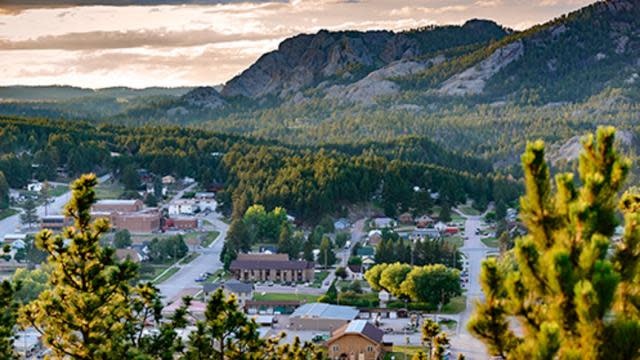
Custer is a small, characterful city in western South Dakota, serving as the county seat of Custer County. With a population of roughly 1,900 residents, it has the feel of a small mountain town, with a tidy downtown, pine-scented air, and a steady stream of visitors year-round drawn by the surrounding Black Hills scenery. The community functions primarily as a basecamp for travelers exploring nearby natural landmarks, and it sits within easy driving distance of some of the most recognizable sites in the region. Rapid City, the nearest major hub, lies about 30 miles to the northeast, while larger metropolitan areas such as Denver are several hours away by car.
Just south and east of the city lies Custer State Park, one of the largest and most-visited state parks in the United States. Covering more than 70,000 acres of pine-studded hills, granite spires, and open prairie, the park is famous for its free-roaming bison herds, scenic byways such as the Needles Highway and Wildlife Loop Road, and the strikingly clear waters of Sylvan Lake. Entry is only minutes from downtown Custer, making it a daily draw for guests staying in town.
A short drive north of the city brings travelers to two of the most iconic monuments in the American West. Mount Rushmore National Memorial, roughly 25 miles from Custer, features the sixty-foot faces of four U.S. presidents carved into a granite cliffside and draws visitors from around the world. Not far beyond it, the ongoing Crazy Horse Memorial — about 20 miles from Custer — depicts a Lakota warrior on horseback and, when complete, will be the largest mountain carving in the world. Both sites include visitor centers, museums, and evening programs that extend their appeal well beyond a quick photo stop.
To the south and southwest, two of the world's most remarkable cave systems lie within a short drive of town. Wind Cave National Park, roughly 20 minutes south, protects one of the longest and most complex caves on earth and is also home to a large herd of prairie bison. Jewel Cave National Monument, about 45 minutes west of Custer, contains the third-longest cave in the world and offers ranger-led tours through glittering underground chambers. Together, these sites give the Custer area an unusually rich mix of above-ground scenery and below-ground adventure.
With its central Black Hills location, walkable downtown, and proximity to multiple headline destinations, Custer makes a natural base for travelers who want to experience several major attractions without constantly packing up. Guests can return each evening to a quieter, more intimate small-town setting while still being within reach of state parks, national monuments, and cultural landmarks that anchor any trip to the region.
Want to know if a property in Custer is a good investment?
Enter an address to get instant revenue potential and comps.