
Greenwood, South Carolina
Want to see how Greenwood compares to other top cities in South Carolina? Explore all city regulations in South Carolina. →
Greenwood, SC
Generally Investor Friendly
STR Regulations for Greenwood, South Carolina
Executive summary
- Are STRs allowed? The content provided does not contain city- or county-specific text confirming whether STRs are permitted in the City of Greenwood or in Greenwood County. Because South Carolina operates under a local-control model, Greenwood and Greenwood County are authorized to adopt their own STR rules if they choose to; if they have not adopted specific rules, state requirements still apply. Bottom line for investors: treat STRs as likely allowed but confirm zoning and any local registration/tax requirements before acquiring or listing a property.
Important disclaimer
- The guidance below relies solely on the provided sources. It is not legal, tax, or financial advice. Because local rules can change quickly, confirm current requirements with the City of Greenwood and Greenwood County before purchasing or listing.
1) Overview: Are short-term rentals allowed in Greenwood, SC?
- No city-specific or county-specific text is present in the provided materials that directly answers whether STRs are permitted in the City of Greenwood or Greenwood County.
- South Carolina grants municipalities and counties broad authority to regulate STRs (zoning, permits, caps, etc.). If no local ordinance exists, state-level requirements still govern STR operations.
- Practical implication for investors: expect to verify zoning and any local licensing/tax steps with City of Greenwood and Greenwood County before operating.
What do Airbnb hosts actually earn in Greenwood?
Greenwood hosts earn a median $27,356/year with $152 ADR and 58% occupancy.
Top performers pull in $37,348+ per year.
See the full Greenwood market breakdown2) How to start an STR business in this market
Follow this state-anchored workflow and then confirm local rules before listing:
- Select a compliant property
- Confirm the property’s zoning allows “lodging” or short-term rental use; South Carolina leaves zoning to local jurisdictions.
- Validate physical suitability: off-street parking, smoke/CO detection, safe egress, and fire extinguishers as applicable.
- Establish business and tax registration
- Register your business entity and obtain any required business license.
- If you collect state or local taxes, register with the South Carolina Department of Revenue (SCDOR) for sales and/or accommodations taxes as applicable.
- Secure proper insurance
- Acquire a commercial general liability (CGL) policy with at least $1,000,000 per occurrence, per South Carolina’s current statewide baseline for STRs.
- Confirm local requirements
- Determine whether the City of Greenwood or Greenwood County requires a local STR permit, inspection, local contact, occupancy limits, or posting requirements.
- Launch and maintain compliance
- Implement safe operations (guest screening, house manual, emergency contacts).
- Collect and remit all applicable state and local taxes.
- Display required permits/permit numbers where required and keep records for renewals.
3) Required documents, permits, licenses, and guidelines
Based on statewide requirements and common local patterns:
- Business registration and licensing
- South Carolina Secretary of State business registration (often ~$110; see the Secretary of State for current fees).
- Local business license if required by the city or county where the property is located.
- Tax setup and filings
- Sales tax and state accommodations tax registration (if you collect taxes and are not fully remitted by a platform).
- State accommodations tax is typically 2% and state sales tax is 5%, and local option sales tax (up to 3%) and local accommodations taxes (up to 3% each at the county and/or municipal level) may also apply.
- Many platforms collect state sales and state accommodations tax automatically; verify what each platform remits and what you must remit directly.
- Insurance
- Commercial General Liability: minimum $1,000,000 per occurrence.
- Common local documentation (if local rules exist)
- Local STR permit application, site/floor plan, parking plan, proof of ownership, local contact information, emergency procedures, and compliance affidavit.
- Posting requirements: display permit numbers in listings and/or on the property if local code requires.
4) Specific regulations at city, county, and state levels
- State of South Carolina (applies statewide)
- STRs are permitted; local governments control zoning, permitting, caps, and operating rules.
- Liability insurance: minimum $1 million CGL per occurrence.
- Tax definitions and obligations: short-term rentals for tax purposes are typically under 90 consecutive days; operators must collect/remit state sales tax (5%), state accommodations tax (2%), and any applicable local option sales tax (up to 3%) and local accommodations taxes (up to 3% each at county and/or municipal levels).
- Greenwood County
- The provided content includes a Greenwood County local-jurisdiction page in the Lodge Compliance directory (see links), indicating there may be local STR-related materials available there. However, county-specific regulatory text is not present in the provided content. Confirm with Greenwood County whether a local ordinance, registration, taxes, or other requirements apply.
- City of Greenwood
- No city-specific STR regulations were found in the provided content. Confirm directly with the City of Greenwood whether a local STR ordinance, permit, occupancy/parking restrictions, or posting rules exist.
Note on dates and definitions
- The content cites South Carolina’s current framework, including legislative clarifications introduced in the 2025–2026 session (e.g., S.442), and defines short-term rentals for tax purposes as rentals of less than 90 consecutive days.
5) Contact information (phone, email, website)
State resources (as reflected in the content):
- South Carolina Department of Revenue (SCDOR): Contact details are not included in the provided content; verify via the official SCDOR website for current phone/email.
- South Carolina Secretary of State: Registration fees are referenced (~$110), but specific contact details are not included in the provided content; verify via the official Secretary of State website.
- South Carolina General Assembly/Senate Bill S.442: See links below.
Local resources (City of Greenwood and Greenwood County):
- Phone, email, and website: Not provided in the content. Verify current contacts via official municipal and county sites.
- Greenwood County note: The Lodge Compliance local-jurisdiction page may point to county resources; see links below.
6) Links to source pages (IMPORTANT)
Statewide framework and definitions (from the content):
- South Carolina Airbnb Laws (Home Team Luxury Rentals): hometeamluxuryrentals.com/blog/south-carolina-airbnb-laws
- South Carolina Regulations Overview (Proper Insurance): www.proper.insure/regulations/south-carolina-airbnb-laws/
- South Carolina STR Laws Overview (Lodge Compliance): www.lodgecompliance.com/states/south-carolina
- Specific local-jurisdiction listing for Greenwood County (Lodge Compliance): www.lodgecompliance.com/local-jurisdiction/greenwood-county-sc
- Legislative reference: Senate Bill S.442 (2025–2026 session): www.scstatehouse.gov/sess126_2025-2026/bills/442.htm
Local contacts (for follow-up)
- City of Greenwood (official site): Not present in the content; verify via the City’s official website.
- Greenwood County (official site): Not present in the content; verify via the County’s official website and the Greenwood County link above.
Next steps for investors
- Confirm zoning and land use with the City of Greenwood and Greenwood County prior to purchase.
- Register with SCDOR if you will collect/remit taxes, and set up local business licensing as required.
- Obtain at least $1 million CGL coverage and document compliance with local safety standards (smoke/CO detectors, fire extinguisher, egress, parking, etc.).
- Collect and remit all applicable state and local taxes; verify what your platform(s) remit versus what you must remit directly.
- If local STR rules exist, display permit numbers and maintain a local emergency contact where required.
If you would like, I can draft a short due-diligence checklist tailored to Greenwood, SC that your team can use when vetting properties.
Next step
Found a property in Greenwood?
Paste any address and get estimated revenue, cash-on-cash return, and comparable STR performance in under 5 minutes. 3 free analyses per day.
Free brief
Get the free Greenwood STR Investment Brief
Revenue data, top neighborhoods, seasonal trends, and the key regulations for Greenwood, South Carolina in one email.
Greenwood
Market Saturation Score
Photos of Greenwood

Overview of Greenwood
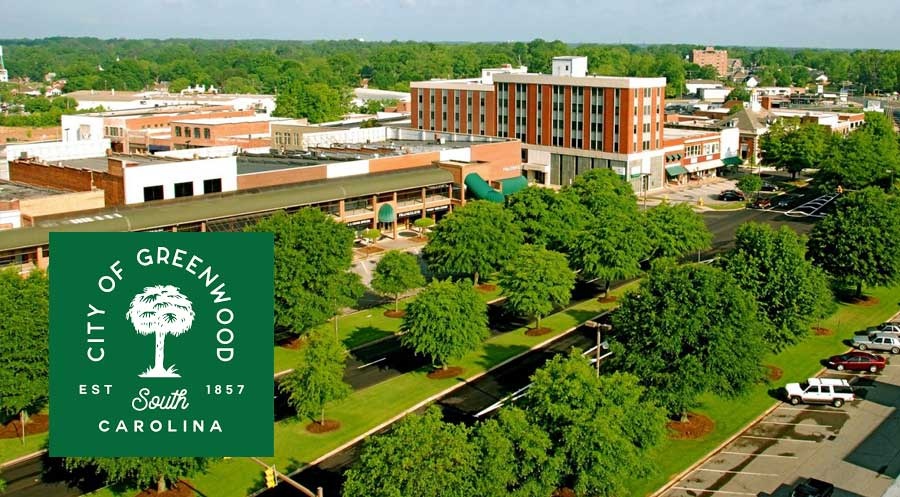
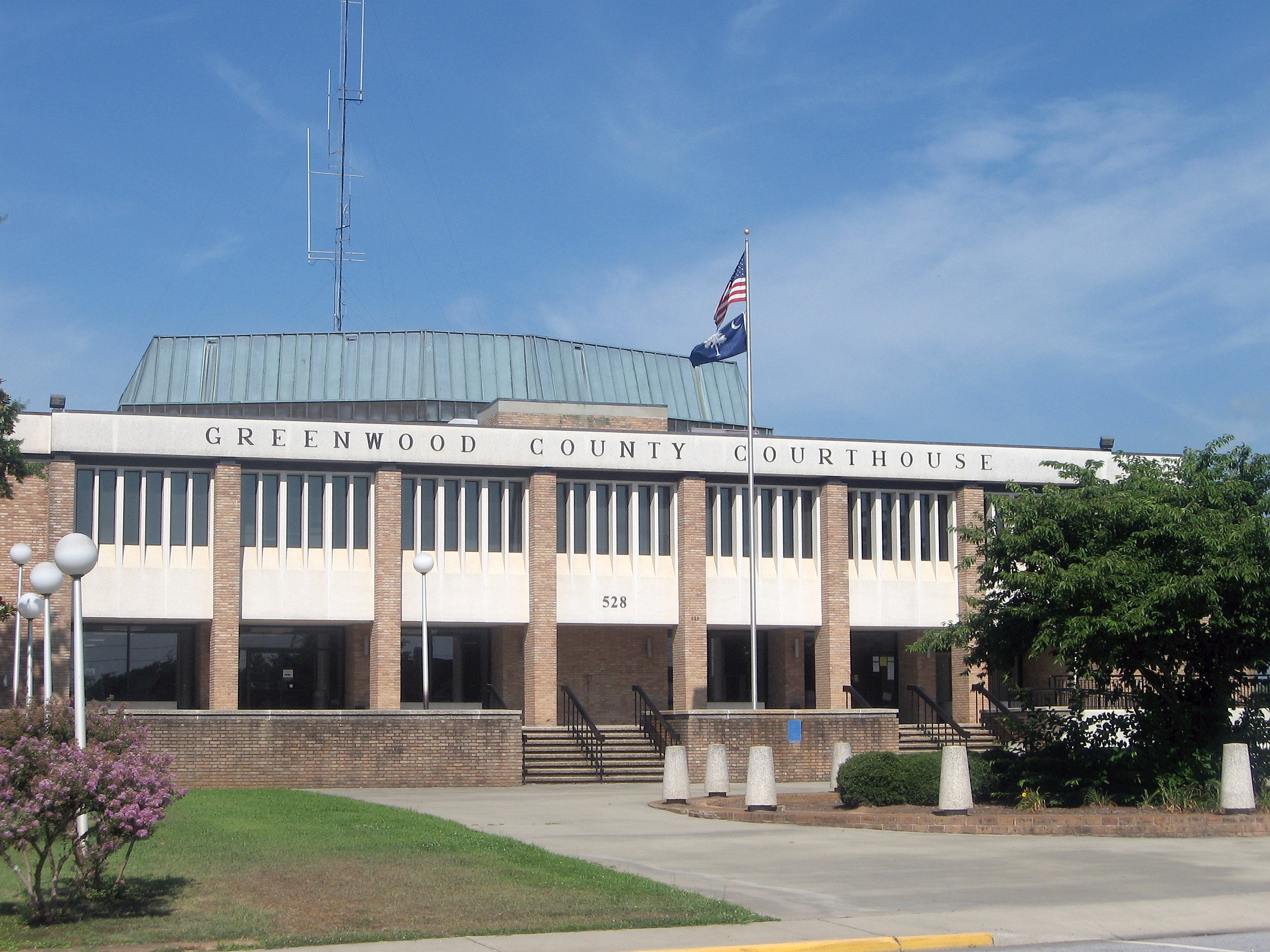
Greenwood is a small, welcoming city in the western part of South Carolina, serving as the seat of Greenwood County. With an estimated population of roughly 22,000 residents, it carries the feel of a classic Southern town while functioning as a regional hub for the surrounding Piedmont and Lakelands area. The city is best known for its walkable historic downtown, its role as the home of Lander University, and its proximity to Lake Greenwood and a cluster of small farms, parks, and historic sites. Greenwood sits about 65 miles south of Greenville and roughly 100 miles west of Columbia, placing it within easy driving distance of the Blue Ridge foothills and the larger upstate metropolitan region.
A short drive north of the city center leads to Uptown Greenwood, the revitalized historic main-street district centered around Maxwell Avenue and the surrounding blocks. The area is known for locally owned shops, restaurants, and a twice-monthly Saturday market, along with preserved early-twentieth-century storefronts and the historic Greenwood Community Theatre. It functions as the social and dining core of the community and is the kind of district that rewards slow strolls on foot.
Just outside the city, Lake Greenwood is one of the area's most popular outdoor draws. The reservoir and the adjoining Lake Greenwood State Recreation Area offer boating, fishing, swimming, and several miles of wooded shoreline and trails, making the lake a year-round destination for both day-trippers and weekenders renting cabins and cottages nearby.
To the south of Greenwood, the small community of Ninety Six gives its name to Ninety Six National Historic Site, a National Park Service property that preserves the remains of a colonial-era trading post and a star-shaped fort from the American Revolution. Visitors can walk interpretive trails through original earthworks and a recreated stockade, and the site is roughly a twenty- to twenty-five-minute drive from downtown Greenwood.
A bit farther afield, the surrounding countryside of Greenwood County is dotted with small working farms, including goat dairies and seasonal produce operations that have become modest agritourism stops. These venues, together with the wooded Lake Greenwood corridor, give the area a relaxed, rural character that contrasts with the busier cities to the north.
Taken together, Greenwood offers a short-term rental market an appealing combination: an authentic small-city downtown, a sizable recreational lake, and a nationally recognized historic site all within a short drive. Its central position in South Carolina's western corridor, paired with the steady draw of university events, lake visitors, and heritage tourism, makes it a comfortable and versatile base for travelers exploring this quieter corner of the state.
Want to know if a property in Greenwood is a good investment?
Enter an address to get instant revenue potential and comps.