
Little Compton, Rhode Island
Want to see how Little Compton compares to other top cities in Rhode Island? Explore all city regulations in Rhode Island. →
Little Compton, RI
Generally Investor Friendly
STR Regulations for Little Compton, Rhode Island
Overview: Are Short-Term Rentals Allowed in Little Compton, RI?
Yes—short-term rentals (STRs) are allowed in Little Compton, Rhode Island, provided the operator complies with state requirements. As of October 2025, the Town of Little Compton has not adopted a final local STR ordinance. A draft local ordinance has been discussed at public hearings and would, if enacted, introduce local registration, inspections, and operational requirements (e.g., occupancy caps and parking). Until a local ordinance is adopted, STR operators must still meet statewide Rhode Island registration, health, and reporting obligations.
State-level rules apply now:
- Mandatory Rhode Island Department of Business Regulation (DBR) registration for any STR listed on a third‑party hosting platform (Airbnb, Vrbo, etc.), including properties rented for 30 days or less.
- Rhode Island Department of Health (RIDOH) statewide rental registry requirements (including Lead Safe Certification where applicable).
- Hosting platforms must report listing data to the state under R.I. Gen. Laws § 42‑63.1‑14.1.
Bottom line for investors: proceed under state requirements today and monitor the Town of Little Compton for adoption of a local ordinance.
What do Airbnb hosts actually earn in Little Compton?
Little Compton hosts earn a median $28,285/year with $401 ADR and 52% occupancy.
Top performers pull in $48,017+ per year.
See the full Little Compton market breakdownHow to Start a Short-Term Rental Business in Little Compton, RI
A practical, step-by-step pathway based on current Rhode Island requirements and the most recent Little Compton discussions:
- Confirm Property Suitability
- Verify zoning and any deed restrictions with the Town of Little Compton Zoning Official.
- Assess septic capacity, well water, and environmental constraints. Draft local ordinance discussions reference septic system design loads limiting bedroom counts.
- Build and Safety Readiness (Prepare for Likely Local Inspections)
- Even without an adopted ordinance, ensure smoke detectors, egress, and fire safety are compliant. If local rules take effect, inspections by the Building Official and Fire Marshal are expected to determine occupancy limits and safety.
- Parking and Occupancy Planning (Align to Draft Local Rules)
- Draft local rules discussed in 2022 proposed at least one off‑street parking space per bedroom and a maximum occupancy of two persons per bedroom. Prepare your site plan accordingly to streamline future approvals.
- Rhode Island DBR State Registration (Required Now)
- Register the STR with the RI Department of Business Regulation via the state’s e‑Licensing portal.
- Provide property details, owner/manager contact info, number of rooms, rental type (entire home, private room, shared), and ownership status.
- RIDOH Statewide Rental Registry and Lead Safe Certification (Required Now)
- Complete RIDOH registration for every rental property.
- Determine Lead Safe Certification requirements (most pre‑1978 housing will require certification; post‑1978 may be exempt). Properties used solely for temporary housing may be exempt if rentals do not exceed 100 consecutive days—owners should register and document the exemption status appropriately.
- Local Contact and Record-Keeping (Prepare for Local Requirements)
- Draft local ordinance concepts include a local contact requirement for nuisance and safety enforcement. Designate a local property manager or point of contact who can respond rapidly to issues.
- Platform Compliance
- Add your DBR registration number to your Airbnb/Vrbo listing. Hosting platforms must report listing data to the state; keeping your registration current helps avoid platform takedowns or penalties.
- Monitor Town Action
- Follow Town Council and Planning Board meetings for ordinance adoption, fee schedules, and inspection processes. Expect possible phased implementation, registration, and safety checks once adopted.
Required Documents, Permits, Licenses, and Guidelines
Current statewide requirements (municipal rules in Little Compton not yet finalized):
-
Rhode Island DBR Short-Term Rental Registration
- Application: via Rhode Island e‑Licensing portal.
- Fee: $25 (state fee cited by state resource).
- Validity: 1 year.
- Required information: property address, number of rooms, rental type, owner/manager contact details.
-
Rhode Island Department of Health Statewide Rental Registry
- Registry: Rhode Island Statewide Rental Registry.
- Lead Safe Certification: may be required for pre‑1978 properties; exemptions for specific temporary housing use scenarios.
- Requirements: all properties must register; local manager listed for out‑of‑state owners; inspection pathways for certification.
-
Local Ordinance (Pending)
- Anticipated requirements if adopted: property registration with the Town Clerk; inspections by Building Official and Fire Marshal; occupancy limits (two persons per bedroom); parking (at least one off‑street space per bedroom); septic capacity constraints; local contact information.
- At the time of registration (when adopted), properties will likely need an inspection to confirm occupancy limits and safety installations.
-
Safety and Operational Guidelines (Recommended Now)
- Smoke/CO detectors, clear egress, fire extinguisher, emergency contact information, quiet hours, garbage/recycling protocols, parking management, guest rules to mitigate noise and parties.
Specific Regulations: Little Compton (Municipal), County/Region (if any), and State
Little Compton (Municipal) — Status and Anticipated Rules
- Current Status: No adopted local STR ordinance as of October 2025. A draft ordinance was discussed at public hearings in 2022 and 2025, with the Town Council taking no formal action after the October 2025 hearing.
- Proposed/Discussed Municipal Provisions:
- Registration and filing with the Town Clerk before tenant check‑in.
- Inspections by the Building Official and Fire Marshal to set occupancy limits and verify safety (smoke detectors, parking).
- Maximum occupancy: two persons per bedroom.
- Parking: at least one off‑street space per bedroom on the same lot.
- Septic capacity: bedroom counts cannot exceed septic design load.
- Local contact requirement for enforcement and nuisance response.
- Some public discussion in 2022 referenced minimum stay concepts (e.g., five‑night minimum) and concerns about neighborhood impacts (noise, parties). Such provisions were not adopted and remain speculative unless codified.
Given the ongoing deliberation, investors should expect future municipal rules focused on registration, safety inspections, occupancy and parking standards, and nuisance enforcement. Plan your property configuration now to meet these likely standards.
County/Regional Context
- Newport County does not administer separate STR regulations. State rules apply county‑wide, and municipalities may adopt their own ordinances.
State of Rhode Island — Current Requirements
-
DBR Registration for STRs
- Any STR listed on a third‑party hosting platform must be registered with DBR.
- Registration is completed via the RI e‑Licensing portal; provide owner/manager contact, property address, room count, and rental type.
- Hosting platforms are required to report listing data to DBR under R.I. Gen. Laws § 42‑63.1‑14.1.
-
RIDOH Statewide Rental Registry and Lead Safe Certification
- All rental properties must register with RIDOH.
- Lead Safe Certification is required for pre‑1978 housing unless an exemption applies; post‑1978 housing may be exempt.
- Out‑of‑state owners must designate a local manager; in‑state owners may self‑manage.
- Properties used solely for temporary housing may be exempt if rentals do not exceed 100 consecutive days; owners must register and document exemption status.
Contact Information: Local Authority in Charge of STRs
Because Little Compton has not finalized an STR ordinance, the relevant local contacts are the general municipal departments involved in zoning, building, fire, and town clerk functions. Use these for zoning verification, building and fire safety questions, and future STR registration:
-
Town of Little Compton — Zoning Official
- Website: www.littlecomptonri.org/town_departments/zoning_official.php
- Phone: Contact Town Hall general line for routing: typically available via the town’s main website.
- Purpose: Zoning compliance, future local STR ordinance updates, septic and land use questions.
-
Building and Fire (Inspection and Safety Coordination)
- Route via Town Hall for Building Official and Fire Marshal inspections once a local ordinance is adopted.
-
State of Rhode Island — Department of Business Regulation (DBR)
- STR Registration Portal: RI e‑Licensing (see “Links to Source Pages”)
- Phone: (401) 462‑9500
- Email: DBR.REInquiry@dbr.ri.gov
- Purpose: State STR registration, compliance, platform reporting rules.
-
State of Rhode Island — Department of Health (RIDOH)
- Statewide Rental Registry: www.rentalregistry.ri.gov
- Purpose: RIDOH registry and Lead Safe Certification requirements.
Links to Source Pages
Use these authoritative resources for verification and updates:
-
East Bay RI — Little Compton moves closer to regulating short-term rentals (Oct 24, 2022)
-
Citizen Portal AI — Little Compton holds public hearing on short‑term rental ordinance; council takes no action (Oct 10, 2025)
-
RI Department of Business Regulation — Short-Term Rentals (Official State Site)
-
Rhode Island e‑Licensing Portal (DBR STR Registration)
-
Rhode Island Statewide Rental Registry (RIDOH)
-
Town of Little Compton — Zoning Official Page
Strategic Notes for STR Investors
- Operate now under state rules and prepare your property to meet anticipated local standards (occupancy, parking, safety, septic).
- Maintain rigorous guest screening and House Rules to reduce noise, parties, and neighborhood complaints.
- Designate a reliable local manager and keep emergency contacts visible to guests.
- Track Town Council/Planning Board meetings for ordinance adoption timelines, fee schedules, and inspection protocols.
- Keep your DBR and RIDOH registrations current to avoid platform or enforcement issues.
Next step
Found a property in Little Compton?
Paste any address and get estimated revenue, cash-on-cash return, and comparable STR performance in under 5 minutes. 3 free analyses per day.
Free brief
Get the free Little Compton STR Investment Brief
Revenue data, top neighborhoods, seasonal trends, and the key regulations for Little Compton, Rhode Island in one email.
Little Compton
Market Saturation Score
Photos of Little Compton



Overview of Little Compton
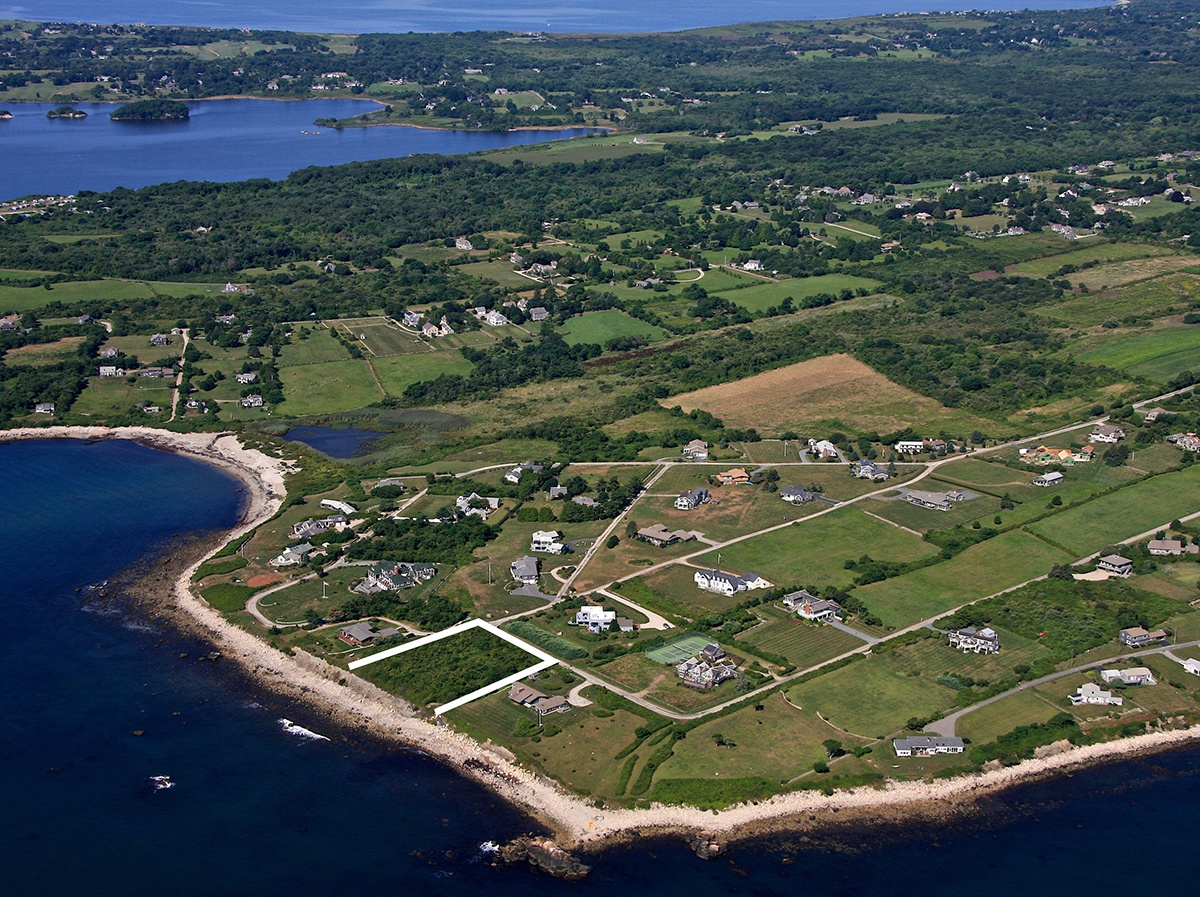
Little Compton is a small, historic town tucked into the southeastern corner of Newport County, Rhode Island, just a few miles from the Massachusetts border along the Sakonnet River. With a year-round population of roughly 3,500 residents, it has the feel of a quiet coastal New England village, characterized by stone walls, colonial-era homes, working farms, and winding lanes that lead down to the water. The town is best known for its deep colonial history—Little Compton is one of the oldest communities in Rhode Island, founded in the seventeenth century—and for its agricultural identity, particularly the locally grown sweet corn that has long been a point of friendly rivalry with neighboring Tiverton. It sits about 30 miles southeast of Providence and roughly 60 miles south of Boston, making it a peaceful escape within reach of two major metropolitan areas.
The Sakonnet Point area, at the southeastern tip of town where the Sakonnet River meets the ocean, is one of Little Compton's most beloved landmarks. This small harbor and rocky shoreline offers classic New England coastal scenery, with a working fishing fleet, a historic lighthouse, and access to some of the quietest stretches of shoreline in the state. It is just a few minutes' drive from the town center and serves as a natural focal point for visitors who want to experience the area's maritime character.
A short drive north leads to the nearby town of Tiverton and the broader Sakonnet River corridor, where rolling farmland meets tidal estuaries. The area is dotted with conservation preserves, farm stands, and country roads ideal for cycling. This rural landscape gives Little Compton a noticeably different feel from the busier tourist destinations farther west, even though it remains only about a 25-minute drive from Newport and its famous Gilded Age mansions along Bellevue Avenue.
To the north, the adjoining town of Tiverton and the city of Fall River, Massachusetts, offer additional services and historic sites, while a longer drive west leads to the broader Newport County coastline, known for its beaches, cliff walks, and sailing culture. Within Little Compton itself, the colonial town common and the cluster of eighteenth-century homes near its center reflect the settlement's deep roots, while the surrounding farmland and shoreline preserves offer a glimpse of the rural Rhode Island that has largely resisted the pace of development found elsewhere in southern New England.
Little Compton is a compelling base for short-term rentals precisely because it offers something increasingly rare in the region: genuine quiet, scenic farmland, and a coastline that has not been overbuilt. Its combination of historic charm, agricultural tradition, and proximity to both Providence and Newport allows guests to enjoy a tranquil rural retreat while remaining within easy reach of Rhode Island's most popular cultural and culinary destinations. For travelers seeking a slower pace, the town provides an authentic slice of coastal New England that feels a world away from the busier resort towns nearby.
Want to know if a property in Little Compton is a good investment?
Enter an address to get instant revenue potential and comps.