
Wilkes Barre, Pennsylvania
Want to see how Wilkes Barre compares to other top cities in Pennsylvania? Explore all city regulations in Pennsylvania. →
Wilkes Barre, PA
Challenging To Investors
STR Regulations for Wilkes Barre, Pennsylvania
Overview: Are short-term rentals (STRs) allowed in Wilkes-Barre, PA?
- Yes, STRs are likely allowed in Wilkes-Barre, but the permissibility depends on the property’s zoning and local restrictions. Pennsylvania is a Dillon’s Rule state; zoning and land use are governed by local ordinances (municipal and county). Under state law, short-term rentals are treated as “lodging establishments” (occupancy for less than 30 days), which are subject to the PA Lodging and Housing Code and the state hotel occupancy tax.
- In residential zoning districts, many municipalities (including those in the Scranton/Wilkes-Barre area) interpret “single-family residential use” to require a “single housekeeping unit” and therefore prohibit transient use. The Pennsylvania Supreme Court’s 2019 decision in Slice of Life, LLC v. Hamilton Township upheld municipal authority to prohibit transient use in residential zones. In practice, many communities limit or prohibit whole-home STRs in residential districts while permitting some form of short-term lodging in commercial or mixed-use zones. As of early 2025, a statewide definition of STRs does not exist; municipal regulation remains local and varied.
- Bottom line for investors: Do not assume any residential zoning in Wilkes-Barre permits whole-home short-term rentals. Confirm the zoning classification and any local STR regulations for your specific property before purchasing or listing.
How to Start a Short-Term Rental Business in Wilkes-Barre
-
Property Due Diligence
- Confirm the zoning designation with the City of Wilkes-Barre Planning/Zoning Department. Determine whether your intended use (homestay, entire home, or multi-unit) is permitted, requires a conditional use, or is prohibited in that district.
- Review neighborhood covenants, HOA, or planned community documents if applicable. Even where zoning allows STRs, community declarations and bylaws may restrict or ban short-term rentals.
- For purchased properties, conduct a title search and obtain a written zoning compliance opinion from counsel. Title searches do not identify land-use restrictions.
-
Use Classification and Compliance Path
- Homestay (owner present; primary residence): Often the most permissible form in many PA municipalities. Still requires compliance with safety, tax, and recordkeeping rules.
- Entire-home STR in residential zones: Likely prohibited or strictly limited; many jurisdictions require relocation to commercial or mixed-use zones.
- Vacation rental or multi-unit commercial operation: Expect formal licensing, inspections, insurance minimums, and ongoing compliance.
-
Operational Readiness
- Safety and inspections: If required locally, complete any municipal or county inspections (electrical, fire, health, etc.). Maintain smoke and carbon monoxide detectors; ensure egress and safety equipment.
- Insurance: Secure short-term rental-specific liability coverage (rider to homeowner’s policy or stand-alone). Homeowner’s policies typically exclude home-based business risks and commercial lodging exposure.
- Taxes and registrations: Register for Pennsylvania sales/use and hotel occupancy tax (if remitting directly rather than via a booking agent), comply with state recordkeeping, and prepare to collect/remit county hotel taxes.
-
Listing and Operations
- Use a reputable booking platform (Airbnb, VRBO). Ensure guest screening, house rules, and emergency procedures are documented and communicated.
- Maintain detailed records of rentals for at least two years (guest names, contact info, check-in/out dates, all occupants). Keep a 24/7 contact for emergencies.
- Comply with the Lodging and Housing Code (Title 48, Chapter 13) for lodging establishments (occupancy < 30 days).
What do Airbnb hosts actually earn in Wilkes Barre?
Wilkes Barre hosts earn a median $20,816/year with $111 ADR and 63% occupancy.
Top performers pull in $28,176+ per year.
See the full Wilkes Barre market breakdownRequired Documents, Permits, Licenses, and Guidelines
- State-Level (Pennsylvania)
- Sales, Use, and Hotel Occupancy Tax license (if not using a booking agent that collects/remits for you). Registration via the Pennsylvania Department of Revenue.
- Compliance with 48 Pa.C.S. § 1311 (Lodging and Housing Code) for lodging establishments and transient occupancy.
- If operating as a business, register with the PA Department of State (business entity formation and fictitious name, if applicable).
- Insurance adequate to cover guest injuries, property damage, and commercial lodging liability. Consider riders/stand-alone policies; recognize homeowner’s policy exclusions.
- Income tax compliance: PA personal income tax applies to STR income (net business income at 3.07%). Federal rules may require Schedule E reporting depending on days rented and personal use.
- County-Level (Lackawanna County)
- Local hotel occupancy taxes apply (see Specific Regulations section). Payment to the county tax collection authority unless collected via a booking agent.
- Municipal-Level (City of Wilkes-Barre)
- Zoning compliance confirmation for the property address.
- Permits/licensing may be required for STRs if the municipality has adopted an STR ordinance (varies). Contact Wilkes-Barre City Hall/Planning & Zoning for current requirements.
- If inspections are mandated locally, obtain required inspections and maintain certificates.
- Additional municipal filings could include: business privilege/merchant licenses, rental property registrations, and sign/parking standards (if any).
Note: Municipalities may also require STRs to be entered into a municipal registry, cap the number of STRs, limit length of stay, set occupancy limits, require safety measures, and enforce nuisance/recordkeeping standards.
Specific Regulations for Short-Term Rentals
Pennsylvania State-Level
- Lodging and Housing Code (Title 48, Chapter 13)
- Definition of “lodging establishment” covers short-term rentals and transient occupancy.
- Applies recordkeeping, order, and safety requirements commonly associated with hotels.
- Hotel Occupancy Tax
- State rate: 6%; booking agents are required to collect and remit; individuals who do not exclusively use a booking agent must register and remit directly to PA Department of Revenue.
- Municipal Ordinances and Zoning
- Under the Pennsylvania Municipalities Planning Code, municipalities control land use via zoning. STRs are typically permitted only if explicitly allowed; otherwise, transient use is prohibited in residential districts under the “single housekeeping unit” standard recognized in Slice of Life (2019).
- Municipalities may define categories (e.g., homestay, vacation rental, corporate host), set caps, require permits/inspections, and restrict STRs to non-residential zones.
- Federal Income Tax
- STR income is reportable; federal treatment depends on days rented and personal use (Publication 527).
- State Income Tax
- STR income taxed as net income from business at 3.07%; expenses offset gross rents.
County-Level (Lackawanna County)
- Third-class counties with a “second class A city” (Scranton) may impose up to 7% county hotel tax. Lackawanna County’s effective hotel tax rate is 7% (per state staff study).
- Local hotel taxes are in addition to the 6% state tax; total state + local often reaches ~13%.
City-Level (Wilkes-Barre)
- As of this guide’s date, no Wilkes-Barre-specific STR ordinance is cited in the provided source documents. Wilkes-Barre is a third-class city and exercises zoning authority via the Municipalities Planning Code.
- In practice, many third-class cities regulate STRs through zoning: restricting whole-home rentals in residential districts and allowing lodging uses in commercial/mixed-use areas. Contact the City of Wilkes-Barre for current rules, permits, inspections, and any rental registration requirements.
- Note: Local policy can change rapidly; verify directly with the city before acquisition or listing.
Compliance Burden by Operator Type (Policy Framework Not Law)
- Homestay (owner present; primary residence): Minimal regulation (permit, proof of inspection, basic liability insurance).
- Vacation rental (small commercial host; <10 properties): Licensing, inspections, insurance, designated person in charge, nuisance provisions.
- Corporate host (≥10 properties): Subject to hotel-equivalent regulations (construction/renovation standards, full hotel rules), likely requiring commercial zoning.
Contact Information
- Pennsylvania Department of Revenue (Sales, Use, and Hotel Occupancy Tax)
- Phone: 717-787-1064
- Website: www.pa.gov/agencies/revenue/resources/tax-types-and-information/sales-use-and-hotel-occupancy-tax/home-sharing.html
- Email: Online contact portal via website
- Pennsylvania Insurance Department (Homeowners and STR Insurance Guidance)
- Phone: 717-783-2667
- Website: www.pa.gov/agencies/insurance/consumer-help-center/learn-about-insurance/homeowners.html
- Email: Consumer services via website
- City of Wilkes-Barre (Planning/Zoning and Permits)
- Address: City Hall, Wilkes-Barre, PA
- Phone: Not provided in sources
- Website: Not provided in sources
- Notes: Verify zoning district, any STR permit/licensing requirements, inspections, and rental property registration.
- Lackawanna County (Hotel Tax Administration)
- Address/Phone: Not provided in sources
- Website: Not provided in sources
- Notes: Confirm local hotel tax collection procedures and applicable rates (effective rate 7%).
- Legal Counsel (Regional Real Estate and STR Guidance)
- Mazzoni Valvano Szewczyk & Karam
- Address: 321 Biden Street, Suite 201 Bank Towers, Scranton, PA 18503
- Phone: (570) 348-0776
- Website: www.mvsklaw.com/contact/
- Notes: For zoning and acquisition diligence, title issues, and STR compliance strategy.
- Mazzoni Valvano Szewczyk & Karam
Links to Source Pages
- www.mvsklaw.com/short-term-vacation-rentals-are-they-legal-in-pennsylvania/
- www.pa.gov/agencies/revenue/resources/tax-types-and-information/sales-use-and-hotel-occupancy-tax/home-sharing.html
- www.irs.gov/pub/irs-pdf/p527.pdf
- www.pa.gov/agencies/insurance/consumer-help-center/learn-about-insurance/homeowners.html
- jsg.legis.state.pa.us/resources/documents/ftp/publications/2025-03-17%20Short-term%20Rental%20Web%203.17.25.pdf
- www.airbnb.com/help/article/2325
- www.phila.gov/services/payments-assistance-taxes/taxes/business-taxes/business-taxes-by-type/sales-use-hotel-occupancy-tax/
- ldpc6.legis.state.pa.us/cfdocs/legis/LI/consCheck.cfm?txtType=HTM&ttl=00&div=0&chpt=1&sctn=1&subsctn=0
- ldpc6.legis.state.pa.us/cfdocs/legis/LI/consCheck.cfm?txtType=HTM&ttl=00&div=0&chpt=8&sctn=2&subsctn=0
Practical Notes for STR Investors in Wilkes-Barre
- Assume that residential zoning does not permit whole-home STRs unless the City of Wilkes-Barre expressly allows it. Confirm before purchase.
- If your model is a homestay (owner-occupied), you still must comply with state lodging and tax rules, maintain records, and consider insurance adjustments.
- If your model is commercial (multiple units or non-primary residences), budget for licensing, inspections, county/state taxes, and hotel-equivalent compliance.
- Track municipal policy closely. Even where STRs are permitted, many municipalities are adding caps, occupancy limits, and safety inspections to manage neighborhood impacts.
This guide synthesizes the provided sources and reflects Pennsylvania law and practice as of early 2025. Because local rules change, investors should verify current requirements directly with the City of Wilkes-Barre and the relevant county and state agencies before committing capital.
Next step
Found a property in Wilkes Barre?
Paste any address and get estimated revenue, cash-on-cash return, and comparable STR performance in under 5 minutes. 3 free analyses per day.
Free brief
Get the free Wilkes Barre STR Investment Brief
Revenue data, top neighborhoods, seasonal trends, and the key regulations for Wilkes Barre, Pennsylvania in one email.
Wilkes Barre
Market Saturation Score
Photos of Wilkes Barre

Overview of Wilkes Barre
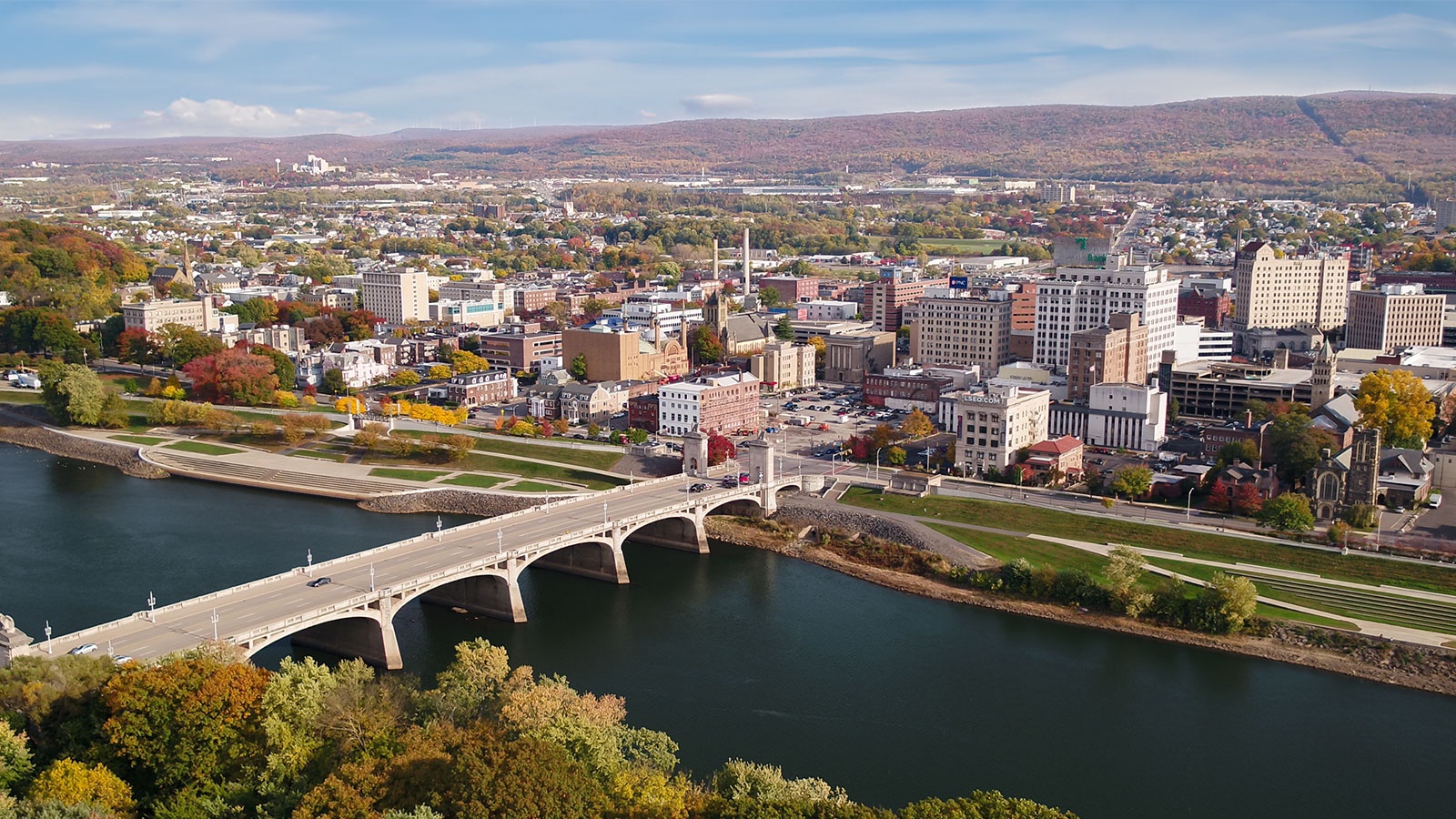
Wilkes-Barre sits in Luzerne County in northeastern Pennsylvania, anchored along the Susquehanna River in the Wyoming Valley. With a population of roughly 44,000, it is the larger of the two principal cities that anchor the Scranton-Wilkes-Barre metropolitan area. The city carries a deep anthracite-coal heritage, but today it functions as a regional hub for healthcare, higher education, and entertainment, and as a practical base for travelers exploring the Pocono Mountains, the Endless Mountains, and the broader Wyoming Valley. Wilkes-Barre lies roughly 100 miles north of Philadelphia, about 20 miles south of Scranton, and a little over 120 miles west of New York City.
Just a few miles west of downtown, Frances Slocum State Park wraps around a 165-acre lake with about 1,000 acres of surrounding forest. The park, roughly a 15-minute drive from the city, draws local visitors for swimming, fishing, picnicking, and short hikes, and its campground gives guests a quiet overnight option without leaving the immediate Wilkes-Barre area.
About 50 miles northwest, an easy hour-long drive, Ricketts Glen State Park is one of the marquee outdoor destinations in Pennsylvania. The park's Glens Natural Area strings together more than two dozen named waterfalls along a rugged, hemlock-shaded gorge, and in winter its higher elevations offer cross-country skiing and snowshoeing. For a Wilkes-Barre-based guest, it is one of the most rewarding day trips in the region.
Scranton, about 20 miles to the north, adds a second anchor for cultural and historical exploration. The Steamtown National Historic Site operates as a working railroad museum with a collection of preserved steam locomotives, and the Lackawanna Coal Mine Tour descends into a former anthracite mine, both giving visitors a hands-on sense of the area's industrial past. Pairing a Wilkes-Barre stay with a Scranton day trip is a common itinerary for short-term rental guests.
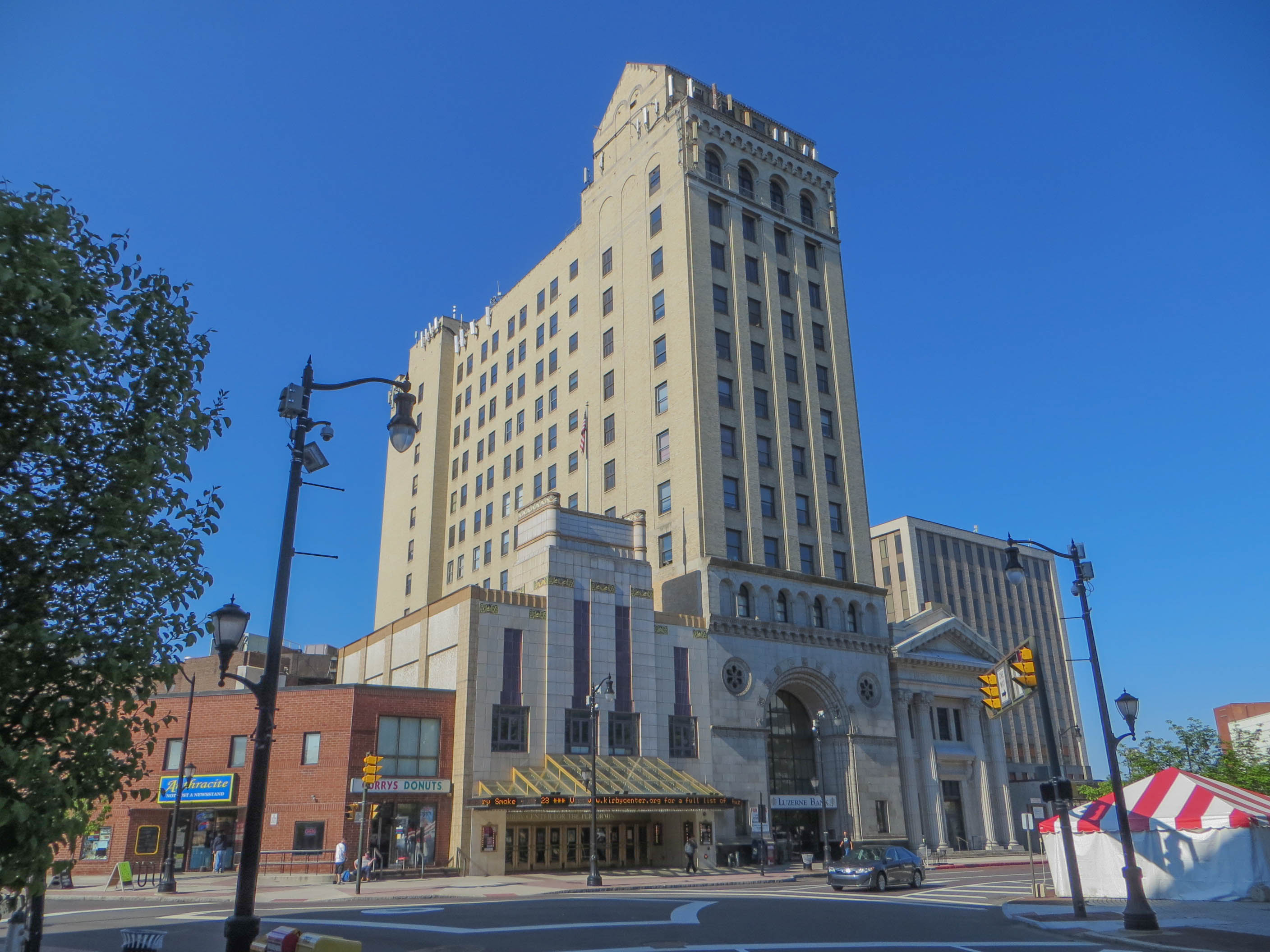
Closer to home, the F.M. Kirby Center for the Performing Arts on Public Square brings touring concerts and shows to downtown Wilkes-Barre, while the Mohegan Arena at Casey Plaza in the township hosts family events, concerts, and minor-league hockey. Together with Mohegan Sun Pocono in nearby Plains Township, these venues make the city a year-round entertainment hub for the Wyoming Valley.
For short-term rental owners and guests alike, Wilkes-Barre's appeal lies in its mix of small-city convenience and wide-reaching day-trip options. The city offers a walkable downtown, a busy events calendar, and quick interstate access, all within easy reach of state-park hiking, Pocono resorts, and the heritage attractions of Scranton. That combination of affordability, central location, and varied nearby experiences makes Wilkes-Barre a flexible base for travelers exploring northeastern Pennsylvania.
Want to know if a property in Wilkes Barre is a good investment?
Enter an address to get instant revenue potential and comps.