
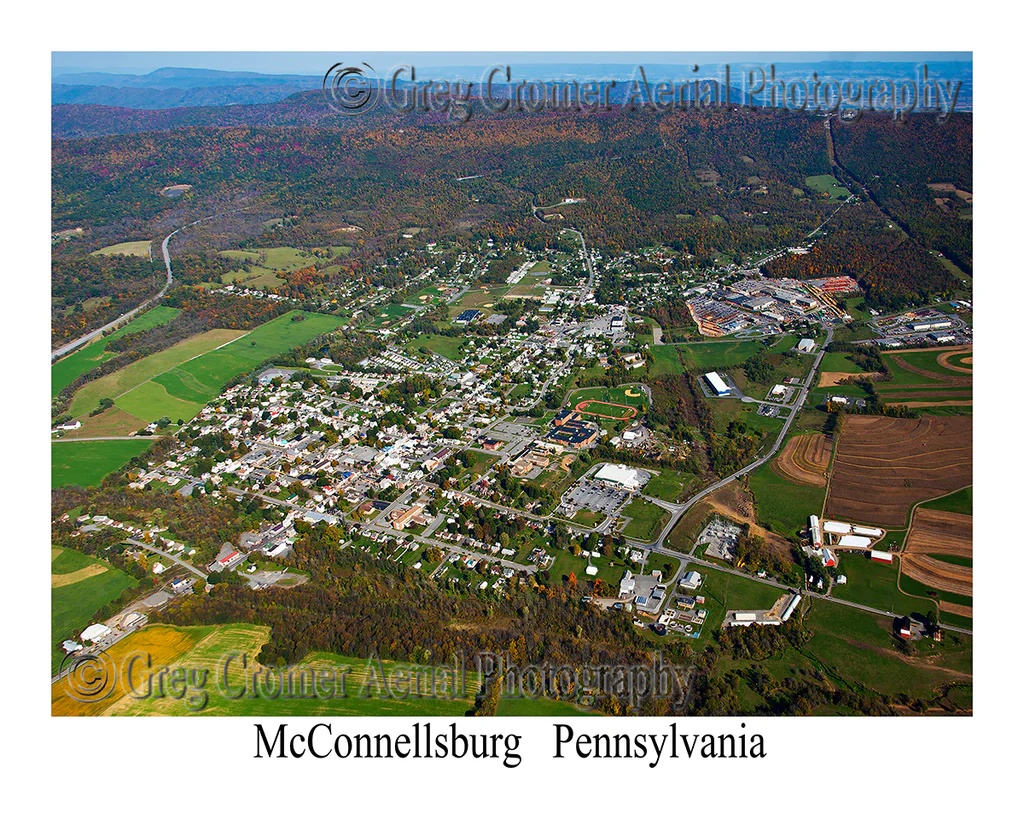
Mc Connellsburg, Pennsylvania
Want to see how Mc Connellsburg compares to other top cities in Pennsylvania? Explore all city regulations in Pennsylvania. →
Mc Connellsburg, PA
Generally Investor Friendly
Local STR Agent
Local STR Agent
STR Regulations for Mc Connellsburg, Pennsylvania
Overview: Are Short-Term Rentals Allowed in McConnellsburg?
Yes, short-term transient lodging is allowed in McConnellsburg—but with clear district-based limitations. The local zoning ordinance treats “Bed and Breakfast” as the primary lodging use in residential districts (R1 and R2) and as a permitted use in commercial districts (C1 and C2). Whole-home or apartment-style STRs are not explicitly defined or permitted in the ordinance; therefore, any STR-style operation must align with the “Bed and Breakfast” provisions. Practically, investors can operate:
- In C1 (General Commercial) and C2 (Highway Commercial): as “Hotels, Motels, and Bed and Breakfast establishments” (no special exception required).
- In R1 (Single Household Residential) and R2 (Two-Household Residential): as a “Bed and Breakfast establishment” but only by special exception approval from the Zoning Hearing Board, subject to conditions.
- In the Historic Resources Overlay District (HR): “Bed and Breakfast establishments” are allowed by conditional use if the owner resides in the building and must comply with additional historic preservation standards.
Key point: A traditional whole-home STR (non-owner-occupied) in R1 or R2 is not expressly permitted. A “room-rental” Bed & Breakfast model (including potentially small apartment lodging in commercial districts) aligns with permitted uses. Always confirm with the Zoning Officer before proceeding.
What do Airbnb hosts actually earn in Mc Connellsburg?
Mc Connellsburg hosts earn a median $19,836/year with $143 ADR and 48% occupancy.
Top performers pull in $25,925+ per year.
See the full Mc Connellsburg market breakdownHow to Start a Short-Term Rental Business in This Market
Step-by-Step Plan
-
Select a compliant site:
- Commercial strategy: Choose a property in C1 or C2 (or mixed-use areas) suitable for lodging; verify zoning with the Zoning Officer.
- Residential strategy: Select a property in R1 or R2 with the intent to operate as a Bed & Breakfast; prepare to seek a special exception.
- Historic overlay: If in HR, prepare plans that meet historic standards and plan for owner-residency and Council/Planning Commission review.
-
Determine permitting path:
- C1/C2 lodging (Hotels/Motels/Bed & Breakfast): Zoning conformity check; then apply for a Building Permit and Certificate of Use and Occupancy (C of O).
- R1/R2 Bed & Breakfast: File a Special Exception application with the Zoning Hearing Board; proceed to Building Permit and C of O upon approval.
- HR Bed & Breakfast (owner-occupied): Proceed through conditional use and historic preservation review with Planning Commission and Borough Council; then obtain Building Permit and C of O.
-
Design to meet dimensional and use standards:
- Respect yard setbacks, building height limits, lot coverage, and accessory use rules for the specific district.
- If you plan rooms within a dwelling (R1/R2), align with bed and breakfast special exception conditions (owner-residency may be required locally even if not spelled out in the ordinance).
- In HR district, prepare plans to meet Secretary of the Interior’s Standards for Rehabilitation.
-
Prepare for code compliance:
- Building code requirements and Life Safety Code for transient occupancy typically apply. Engage a licensed contractor early.
- Address off-street parking, signage limits, and screening between commercial and residential uses.
-
Final approvals:
- After inspections, obtain the Certificate of Use and Occupancy (C of O).
- Post occupancy, maintain compliance with all conditions (parking, signage, noise, historic standards).
-
Operation:
- Implement house rules, parking management, and record-keeping.
- Monitor and renew any permits as required; maintain property per historic and zoning standards.
Required Documents, Permits, Licenses, and Guidelines
Permits and Approvals
- Zoning Permit (to verify use is permitted in the selected district).
- Special Exception (R1/R2 Bed & Breakfast only): Application to the Zoning Hearing Board.
- Conditional Use (HR Bed & Breakfast, owner-occupied): Planning Commission review; Borough Council approval.
- Building Permit: For construction, alterations, or improvements necessary for lodging use.
- Certificate of Use and Occupancy (C of O): Issued after final inspections; evidences compliance and authorizes operation.
Typical Documentation
- Property ownership proof (deed or purchase agreement).
- Site plan and building floor plans.
- Business and contact information (applicant, property manager, emergency contact).
- Detailed description of the lodging operation (number of rooms, amenities, food service, owner-residency status).
- Parking plan demonstrating compliance with Article VIII, Section 810 requirements.
- Signage plan compliant with Article VIII, Section 809 (size, placement, illumination).
- Proof of utility service (water, sewer, electric, gas).
- Pennsylvania licensing (if alcohol service is provided).
- Fire safety/Life Safety compliance documentation.
Note: Pennsylvania’s Uniform Construction Code (UCC) governs safety for transient occupancy spaces; consult a licensed building professional for details.
Specific Regulations for Short-Term Rentals in McConnellsburg, Fulton County, Pennsylvania
Zoning Districts
- R1 (Single Household Residential):
- Bed & Breakfast allowed by special exception only.
- Dimensional controls: front setback 30 ft; side setbacks 25 ft aggregate; rear 30 ft; max height 35 ft (2.5 stories); minimum lot size 6,000 sq ft; max building coverage 40%; minimum lot width 50 ft.
- R2 (Two-Household Residential):
- Bed & Breakfast allowed by special exception only.
- Dimensional controls: front setback 30 ft; side setback 15 ft; rear 40 ft; max height 35 ft (2.5 stories); minimum lot area 7,500 sq ft per unit; max building coverage 40%; minimum lot width 50 ft.
- C1 (General Commercial):
- Hotels, Motels, and Bed & Breakfast establishments permitted as-of-right.
- Dimensional controls: front 0 ft or match adjacent; rear 5 ft; side abutting commercial: 0 ft; side abutting residential: match adjacent structure; max height 40 ft (3 stories); minimum lot area 6,000 sq ft; max building coverage 80%; parking per Article VIII, Section 810; screening required where adjacent to residential.
- C2 (Highway Commercial):
- Hotels, Motels, and Bed & Breakfast establishments permitted as-of-right.
- Dimensional controls: front 15 ft; side abutting commercial 15 ft; side abutting residential 20 ft; rear 15 ft; max height 40 ft (3 stories); minimum lot area 7,500 sq ft; maximum coverage 50%; minimum lot width 100 ft; parking per Article VIII, Section 810; screening required where adjacent to residential.
- HR (Historic Resources Overlay District):
- Bed & Breakfast allowed by conditional use; owner must reside in the building.
- Additional approvals: Planning Commission review and Borough Council approval for building permits; adherence to “Secretary of the Interior’s Standards for Rehabilitation.”
- Demolition permits required within HR; variances guided by historical lot patterns and dimensions.
- Signage tailored to historic context: limited types (plaques, nameplates, hanging signs, painted signs on walls, individual letters); illumination must be shielded; stricter placement and design compatibility.
Parking, Signage, and Screening
- Off-Street Parking and Loading (Article VIII, Section 810): Required; ensure clear, safe access and adequate spaces for guests and staff.
- Commercial districts abutting residential: Provide ornamental fence or shrubbery hedge minimum six (6) feet high.
- Signage (Article VIII, Section 809):
- Residential R1/R2: Identification sign for the dwelling; non-illuminated or indirectly illuminated; flush-mounted signs; limited sizes; free-standing signs allowed only under specific conditions.
- Commercial C1/C2: Multiple sign types permitted (flush, projecting, freestanding) within specified size limits and setbacks; illumination controls apply.
- HR: Strict design standards; illumination limitations; sign types tailored to historic compatibility.
Accessory Uses and Limitations
- Article VIII governs accessory structures and uses:
- Height limits for accessory structures: typically 15 ft.
- Placement restrictions: minimum distances from principal structures, property lines; rear yard occupancy limits.
- Fencing: height and location controls; fencing around swimming pools; siting and material restrictions.
- Mixed Uses: Residential buildings must align with approved uses in the zone; accessory structures cannot be used as dwellings unless specifically authorized.
Compliance and Enforcement
- Zoning Officer administers the ordinance; conducts site inspections; can issue notices of violation.
- Building Permit and Certificate of Use and Occupancy are mandatory before operation.
- Zoning Hearing Board hears special exceptions and appeals; variances may be considered for dimensional relief under MPC standards.
- Remedies and penalties provided for violations (Article X); nonconforming use rules apply (Article IX).
County- and State-Level Considerations
- Fulton County: The zoning documents reviewed are borough-specific; county-wide STR-specific rules were not provided in the material. Confirm with the Borough Zoning Officer and consider whether County health or tax registration is needed for lodging operations.
- State of Pennsylvania:
- Uniform Construction Code (UCC) governs building safety; lodging space alterations may trigger permits and inspections.
- Pennsylvania Liquor Code licensing may be required for any on-premise alcohol service.
- Local business registration and tax obligations may apply; consult Borough and County offices.
- Hotel Occupancy Tax: Pennsylvania localities may levy a hotel tax. Confirm whether McConnellsburg/Borough Council has enacted such a tax and the applicable rate and registration process.
Contact Information (Local Authority in Charge of STRs)
- Borough of McConnellsburg – Zoning Officer
- Municipal Building (official map and records maintained on-site)
- Note: phone, email, and specific office hours were not provided in the materials.
- Zoning Hearing Board
- Appointed by Borough Council; receives special exception applications and hears appeals.
- Planning Commission
- Provides review and comment for HR overlay district projects and building permits within the historic district; forwards recommendations to Borough Council.
- Borough Council
- Final approval authority for conditional uses in HR and for building permits in the HR overlay district (per ordinance provisions).
Source Pages (Links)
- McConnellsburg Borough Zoning Ordinance (1995) – PDF: www.co.fulton.pa.us/files/live-folders/mcconnellsburg/McConnellsburg%20Zoning%20Ordinance%20-%201995.pdf
Action Checklist for Investors
- Confirm district (R1/R2/C1/C2/HR) and permitted lodging use at the site.
- If R1/R2, initiate special exception process for Bed & Breakfast; if HR, prepare conditional use and historic compliance plans.
- Engage building professionals for design and permit preparation.
- Finalize parking, signage, and screening plans to code.
- Apply for Building Permit and obtain C of O post-inspection.
- Implement operating procedures (guest rules, maintenance, record-keeping) to remain compliant.
This guide reflects the zoning and administrative framework from the McConnellsburg Borough Zoning Ordinance (1995). Regulatory details beyond those in the ordinance should be confirmed directly with the Zoning Officer or the appropriate borough boards before acquiring or developing a property for STR/Bed & Breakfast use.
Next step
Found a property in Mc Connellsburg?
Paste any address and get estimated revenue, cash-on-cash return, and comparable STR performance in under 5 minutes. 3 free analyses per day.
Free brief
Get the free Mc Connellsburg STR Investment Brief
Revenue data, top neighborhoods, seasonal trends, and the key regulations for Mc Connellsburg, Pennsylvania in one email.
Mc Connellsburg
Market Saturation Score
Photos of Mc Connellsburg

Overview of Mc Connellsburg
McConnellsburg is a borough and the county seat of Fulton County, Pennsylvania, United States. The population was 1,150 at the 2020 census.
Want to know if a property in Mc Connellsburg is a good investment?
Enter an address to get instant revenue potential and comps.