
Cranberry, Pennsylvania
Want to see how Cranberry compares to other top cities in Pennsylvania? Explore all city regulations in Pennsylvania. →
Cranberry, PA
Challenging To Investors
Local STR Agent
Local STR Agent
STR Regulations for Cranberry, Pennsylvania
Overview: Are short-term rentals allowed in Cranberry, PA?
- Your question refers to “Cranberry, PA,” but the provided web sources are focused on the Poconos/Monroe County region and do not contain city- or township-specific rules for a place named “Cranberry.” The closest reference is “The Woodlands at Cranberry,” which is in Pocono Township (Monroe County), not a municipality called “Cranberry.” Therefore, this guide uses the provided sources to present statewide Pennsylvania STR rules and highlights what to verify locally before purchasing or permitting an STR in your target municipality.
How to start a short-term rental business in this market
- Confirm zoning and municipal policy first.
- Check if the specific municipality (borough/township/city) where the property sits allows STRs in the zoning district of the subject property. Pennsylvania municipalities regulate STRs under their zoning ordinances; the 2019 PA Supreme Court decision in Slice of Life, LLC v. Hamilton Township upheld municipal authority to exclude transient lodging uses in residential zones.
- If the property sits in a planned community (HOA/POA), verify the association’s rental rules, registration requirements, amenity access policies for renters, caps or fees, and any bans on short-term rentals.
- Obtain required permits and licenses.
- Many townships/boroughs require a municipal STR license or registration; confirm with the municipality’s code enforcement or zoning office. In the Poconos examples, municipalities like Tobyhanna and Kidder require licenses, while some townships have caps or bans; others exempt specific HOAs (e.g., Big Bass Lake in Clifton Township).
- If within an HOA/POA, complete the association’s STR registration and pay any required fees; post or provide amenity wristbands/passes as directed.
- Maintain compliance operations.
- Post local ordinance rules (quiet hours, occupancy limits, parking, trash) inside the property.
- Screen guests, collect guest and vehicle information as required by the HOA/municipality, and enforce community rules.
- Keep records of all permits, licenses, registrations, and fees, and track renewals.
- Taxes and accounting.
- Register for Pennsylvania sales and use tax (if applicable to transient lodging) and any local hotel occupancy tax; consult a CPA for a Pennsylvania sales tax registration and filing cadence.
- Maintain accurate income and expense records for tax reporting.
- Insurance and safety.
- Carry appropriate property and liability coverage for STRs (often a landlord policy or business policy) and ensure smoke/CO detectors, fire extinguishers, and safe egress are in place.
- Operations and guest experience.
- Standardize check-in instructions, house rules, and contact protocols for neighbor issues. For HOA-based communities, many require wristbands or passes for amenities; ensure your listing clearly states access rules and any additional fees.
Required documents, permits, licenses, and guidelines Based on the provided sources and typical Pennsylvania practice, expect to prepare:
- Municipal STR application and license (if offered):
- Application form, property information, owner identification, proof of insurance, floor plans/occupancy info, and fee payment.
- Evidence of HOA approval/registration where applicable.
- HOA/POA STR registration:
- Completed rental registration form, list of guests and vehicle information, payment of per-stay or annual fees, acknowledgment of community rules.
- Examples in the Poconos: Penn Estates (guest registration, annual assessment, vehicle passes), Locust Lake Village (annual rental license, guest wristbands), Pocono Farms (per-stay registration fee, amenity wristbands).
- Taxes:
- Pennsylvania sales/use tax registration (if required), and any local hotel occupancy tax remittance procedures.
- Records:
- License and registration copies, renewal dates, guest logs, correspondence, and fee payments.
Specific regulations for short-term rentals: Cranberry, county, and state
- State (Pennsylvania):
- Municipal zoning authority: Municipalities may regulate and even prohibit STRs in residential zoning districts. The PA Supreme Court in Slice of Life, LLC v. Hamilton Township Zoning Hearing Board (2019) affirmed that transient lodging can be excluded by zoning.
- Statewide, short-term rentals are typically subject to Pennsylvania sales and use tax when applicable to transient accommodations; local hotel occupancy taxes may also apply. Always verify the exact tax obligations for your municipality and county.
- Pennsylvania’s团住宿 taxation is nuanced: many STRs are subject to state sales tax and possibly local hotel occupancy tax. Consult your municipality and the Pennsylvania Department of Revenue for definitive guidance.
- County (but verify with your county):
- Provided sources do not detail county-level STR rules for Butler County or any county in relation to “Cranberry.” Some counties in Pennsylvania have additional administrative layers or fees, but you must verify directly with the county planning/commissioners office for the jurisdiction of your property.
- City/municipality (must verify locally):
- The provided sources do not contain city- or township-specific STR rules for a place named “Cranberry.” If you are targeting a specific municipality, request:
- Zoning designation of the property (e.g., R-1 residential, commercial, resort).
- Whether STRs are permitted by right, by conditional use, prohibited, or require a use variance.
- Occupancy limits, parking requirements, and inspection rules.
- License caps, renewal periods, and fees.
- Important caution from the Poconos data: municipal rules can differ within the same community across township lines (e.g., Big Bass Lake spans multiple townships with differing STR license requirements).
- The provided sources do not contain city- or township-specific STR rules for a place named “Cranberry.” If you are targeting a specific municipality, request:
Contact information (phone, email, website where available) for the local authority in charge of STRs Because the provided sources do not include Cranberry-specific contacts, use the following as a starting framework (replace with your municipality’s contacts):
- Municipality (city/borough/township):
- Phone: [Insert municipal office phone]
- Email: [Insert municipal zoning/code enforcement email]
- Website: [Insert municipal website and STR/zoning page]
- County (if applicable):
- Phone: [Insert county planning/commissioners office]
- Email: [Insert county planning/commissioners email]
- Website: [Insert county website/planning page]
- State:
- Pennsylvania Department of Revenue (sales/use tax): Revenue.pa.gov
- Phone and guidance available on the state site for tax registration and filing.
- Suggested outreach language:
- “I’m evaluating a property at [address] for short-term rental. Please confirm the zoning district, whether STRs are permitted, and provide the STR licensing application, fees, inspection requirements, occupancy limits, and any caps or bans.”
Links to source pages (if available) Important note: The provided sources focus on the Poconos/Monroe County and do not contain Cranberry-specific content. However, they are useful for statewide context and for understanding how municipalities and HOAs in Pennsylvania regulate STRs.
- poconovacationhomesales.com/2022/03/01/str-scorecard-municipal-rules-on-short-term-rentals-in-the-poconos/
- www.thektcteam.com/poconos-short-term-rental-guide-2025-where-strs-are-legal/
- poconovacationhomesales.com/2023/07/03/short-term-rental-friendly-pocono-communities/
- poconovacationhomesales.com/2025/02/19/top-10-str-friendly-communities-in-the-poconos/
Important caveats and next steps
- Given the lack of Cranberry-specific regulations in the provided content, you must verify zoning and licensing with the actual municipality and county where the property is located.
- Even where a municipality allows STRs, HOAs/POAs often restrict rentals (minimum stay lengths, bans, or additional fees). Always obtain written confirmation from the association and keep that confirmation on file.
- Municipal rules can change quickly; monitor local ordinance updates and maintain timely license renewals and fee payments.
What do Airbnb hosts actually earn in Cranberry?
Cranberry hosts earn a median $36,475/year with $258 ADR and 59% occupancy.
Top performers pull in $56,872+ per year.
See the full Cranberry market breakdownNext step
Found a property in Cranberry?
Paste any address and get estimated revenue, cash-on-cash return, and comparable STR performance in under 5 minutes. 3 free analyses per day.
Free brief
Get the free Cranberry STR Investment Brief
Revenue data, top neighborhoods, seasonal trends, and the key regulations for Cranberry, Pennsylvania in one email.
Cranberry
Market Saturation Score
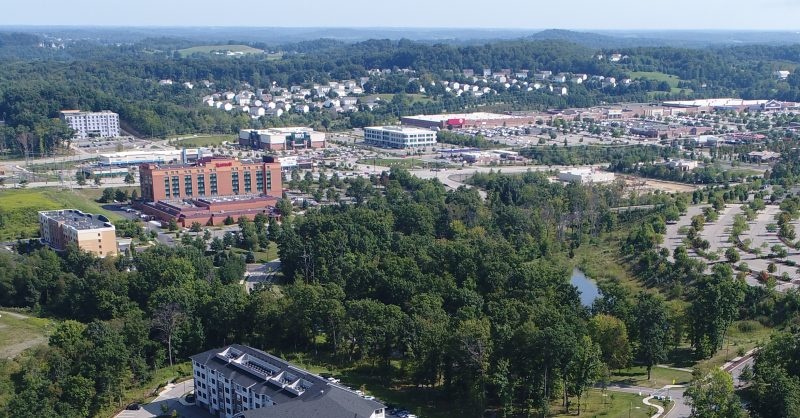
Photos of Cranberry
Overview of Cranberry
Cranberry Township is a suburban community in Butler County, Pennsylvania, with a population of approximately 30,000 residents. It serves as a major retail and commercial hub for the northern suburbs of the Pittsburgh metropolitan area, characterized by a mix of planned residential developments, business parks, and modern shopping centers clustered along its main highway corridors. Best known as a convenient jumping-off point for both Pittsburgh's urban offerings and the outdoor recreation of western Pennsylvania, Cranberry sits roughly 20 miles north of downtown Pittsburgh, with easy access via Interstate 79 and the Pennsylvania Turnpike.
About 15 to 20 minutes north of Cranberry, Moraine State Park covers more than 16,000 acres centered on Lake Arthur, a 3,225-acre man-made lake. The park offers a sandy swimming beach, miles of paved biking and hiking trails, picnicking areas, and boat rentals, drawing visitors year-round for everything from summer swimming to fall foliage drives.
A bit farther north, roughly 40 minutes from Cranberry, McConnells Mill State Park showcases the deep Slippery Rock Creek Gorge and the historic McConnells Mill covered bridge, a wooden structure dating to 1874. Visitors come for the dramatic scenery, whitewater rafting and kayaking on the creek, and the picturesque gristmill that gives the park its name.
About 25 to 30 minutes south of Cranberry, downtown Pittsburgh anchors the region with a dense cluster of cultural institutions, professional sports venues, and a celebrated restaurant scene along the three rivers. The city is home to major institutions like the Carnegie Museums of Art and Natural History, the Andy Warhol Museum, and Mount Washington, which offers sweeping skyline views across the Monongahela River.
Cranberry makes a compelling base for short-term rentals thanks to its strategic position between Pittsburgh's urban energy and the natural attractions of Butler County and the surrounding region. Travelers who stay here enjoy a quieter, amenity-rich suburban setting with plentiful shopping and dining, while remaining within a short drive of major league sports, world-class museums, large state parks, and the broader network of small towns and rural landscapes that define western Pennsylvania.
Want to know if a property in Cranberry is a good investment?
Enter an address to get instant revenue potential and comps.