
Bedford, Pennsylvania
Want to see how Bedford compares to other top cities in Pennsylvania? Explore all city regulations in Pennsylvania. →
Bedford, PA
Very Investor Friendly
STR Regulations for Bedford, Pennsylvania
Overview and bottom line
- Short-term rentals are allowed in Bedford, PA. As of the latest public reporting, there is no city- or county-level ordinance that prohibits short‑term rentals. The Bedford Gazette reported that “there’s not much local law at all” on short‑term rentals and that the county is only now beginning to formalize a local hotel tax and consider a registry; county officials said they have “just begun to try to figure out how to best address short‑term rentals.”
- There is no dedicated city or county licensing program for STRs yet; hosts operate under Pennsylvania’s general lodging, housing, health, safety, zoning, tax, and landlord‑tenant laws. Bedford County is evaluating its first local hotel occupancy tax and a registry but has not enacted those measures as of the sources.
- State-level guidance and frameworks are mature. A 2025 staff study for the Pennsylvania General Assembly recommends a three‑tier regulatory framework (homestay, vacation rental, corporate), statewide minimum standards (registries, inspections, safety, insurance, tax compliance), and clearer definitions to address the patchwork of local rules. See the 2025 report for details.
Source: Bedford Gazette article “Short term rentals — boon or bane to the community?” (link below); Pennsylvania Joint State Government Commission report “The Short-Term Rental Industry in Pennsylvania” (March 17, 2025) (link below).
How to start a short‑term rental business in Bedford, PA
- Site selection and zoning due diligence
- Confirm that your property is not in a residential zone with explicit STR prohibitions (none identified in Bedford as of the sources), and that your homeowners association, condo association, or planned community declaration allows transient lodging. Planned communities in Pennsylvania can restrict STRs via covenants; disclosure and enforcement depend on the community’s recorded documents.
- Verify building use and occupancy. Historic downtown properties and converted apartments are common in Bedford and often popular with guests, but ensure the current legal use matches the intended STR use.
- Business setup and bookkeeping
- Form a business entity and open a separate business bank account to track income and expense, prepare for tax remittances, and strengthen liability protections.
- Obtain short‑term lodging and general liability insurance appropriate to the occupancy and risk profile of your property. The state study recommends minimum liability coverage for homestays and more robust coverage for vacation rentals and corporate operators.
- Open a sales tax account with the Pennsylvania Department of Revenue and a local hotel tax reporting profile with Bedford County (when the county finalizes the tax and collection procedures).
- Health, safety, and guest experience
- Meet state lodging/housing standards for health and safety. In Pennsylvania, “lodging establishment” is broadly defined to cover transient rentals of private residences. As a practical matter, most municipalities rely on the state’s lodging and housing code framework (sprinklers/fire safety, exits, sanitation, life safety devices), and these provisions apply to short‑term rentals that offer transient lodging.
- Follow recognized safety practices drawn from local reports: smoke and CO detectors on every level, clear egress, safe sleeping arrangements for capacity, fire extinguishers, posted emergency instructions, and a local contact available 24/7. (No city‑specific ordinance mandates these yet, but they align with state code and are market‑standard.)
- Guest screening and operations
- Screen guests carefully; enforce quiet hours, occupancy caps, and rules aligned with your HOA or condo documents. Central booking and 24/7 response reduce noise, party, and complaint risks that often trigger municipal intervention.
- Keep records. The state study recommends a two‑year recordkeeping requirement for all rentals, including guest name, address, contact info, check‑in/check‑out dates, and all occupants. Bedford County has not enacted this yet, but keeping detailed logs reduces liability and supports tax reporting.
- Taxes and tax collection
- State sales tax: A 6% Pennsylvania sales tax applies to most short‑term rentals. Register with the Department of Revenue and collect and remit accordingly.
- Local hotel/occupancy tax: Bedford County is considering a 5% local hotel tax. Until formal county guidance is issued, confirm the current rate and collection process with Bedford County. Do not assume a local tax is not due; the county is working on formalizing its collection and reporting mechanisms.
- Retain transaction records for at least two years for sales tax and any local tax audits.
- Listing and marketing
- List on major platforms (Airbnb, VRBO, etc.). Ensure your listing accurately describes the entire property vs. shared space, clarifies that this is a transient lodging arrangement, and references house rules and maximum occupancy.
- Emphasize historic charm and amenities (downtown walkability, nearby state parks/outdoor activities), which the Bedford market rewards. Price and availability should reflect Bedford’s strong seasonality: peak demand during fall foliage and summer events, with slower winters.
Required documents, permits, licenses, and guidelines
- Business formation documents and EIN (for entity owners).
- Liability and property insurance appropriate to occupancy and use.
- Registration and a sales tax license with the Pennsylvania Department of Revenue.
- Local hotel/occupancy tax registration with Bedford County (when finalized).
- Proof of compliance with applicable health and life‑safety standards and local zoning/occupancy approvals.
- Two‑year guest recordkeeping (name, address, contact, check‑in/out, occupants) as a recommended practice pending local adoption of a registry or recordkeeping rule.
- HOA/condo/planned community approval if your property is subject to covenants that govern transient lodging.
Note: There is no city-specific STR permit program in place in Bedford as of the sources. A county registry and local hotel tax are under consideration but not yet enacted.
Specific regulations by level
City (Bedford Borough)
- No STR‑specific ordinance has been enacted. Short‑term rentals operate under general housing, zoning, and life‑safety laws. If your property is in a planned community, comply with the community’s declaration and rules.
County (Bedford County)
- No enacted STR licensing or registry as of the sources. The county is working on a local hotel occupancy tax and a registry. Contact the Bedford County Commissioners/County Treasurer for updates on rate, reporting, and collection procedures.
State (Pennsylvania)
- Definitions and scope: Short‑term rentals of private residences to transient guests are treated as “lodging establishments” and fall under Pennsylvania’s Lodging and Housing Code framework (consolidated under Title 48). This includes hotels, motels, inns, B&Bs, and transient rentals of private residences.
- Taxes: 6% Pennsylvania sales tax applies; register with the Department of Revenue.
- Local hotel occupancy taxes: The state authorizes local hotel taxes (rates vary by county). Bedford County is considering a 5% local tax but has not finalized collection procedures.
- Housing and safety standards: Short‑term rentals must meet health, sanitation, and fire/life‑safety standards equivalent to lodging establishments.
- Planned communities: HOAs and condo associations can restrict STRs via recorded covenants; buyers are generally bound by recorded restrictions disclosed at sale.
- Recordkeeping: The 2025 JSG staff study recommends mandatory registries and two‑year retention of guest records.
- Recommended statewide framework (study proposal):
- Homestay (owner‑present, primary residence, minimal regulation with permit + inspection + minimal liability insurance).
- Vacation rental (owner‑limited portfolio, e.g., <10 properties; licensing/permitting, annual inspection, insurance, person‑in‑charge, nuisance safeguards).
- Corporate (10+ properties; hotel‑level regulation and safety requirements).
Contact information
-
Bedford County Commissioners / County Administration
- Phone: 814‑623‑4800
- Website: (county contact pages may evolve; start with the county’s official portal)
-
Bedford County Treasurer (local hotel tax administration – once enacted)
- Phone: 814‑623‑4013
-
Bedford Borough Municipal Contacts (general zoning and property use)
- Phone: 814‑623‑8172 (typical Borough office line; confirm the current contact page for zoning/code enforcement)
-
Pennsylvania Department of Revenue (sales tax registration/collection)
- Phone: 717‑787‑1064
- Website: revenue.state.pa.us
Important: As Bedford County develops its local hotel tax and any registry, these contacts may change. Confirm directly with the county before remitting any local tax.
Links to source pages
- Short term rentals — boon or bane to the community? (Bedford Gazette, May 31, 2023; updated Aug 7, 2025)
- The Short‑Term Rental Industry in Pennsylvania (Staff Study, March 17, 2025)
Operational takeaways for investors
- Bedford’s STR market is active and growing, with strong demand in historic downtown properties and in the broader county’s natural‑amenity areas (hiking, parks, fall foliage). Many properties are marketed successfully via platforms like Airbnb and VRBO.
- No city prohibitions; general lodging and housing laws apply. The county is working on a local hotel tax and a registry; do not delay tax compliance, and be ready to adopt a registry and recordkeeping standard when enacted.
- Price for seasonality, optimize for occupancy in shoulder periods, and invest in guest experience—historic charm plus modern amenities and clear house rules command premium rates and fewer complaints.
- Build a compliance‑first operating model now: sales tax registration, proposed local hotel tax tracking, two‑year recordkeeping, and documented life‑safety measures will reduce risk and facilitate a smooth transition when local regulations finalize.
What do Airbnb hosts actually earn in Bedford?
Bedford hosts earn a median $24,509/year with $168 ADR and 47% occupancy.
Top performers pull in $36,869+ per year.
See the full Bedford market breakdownNext step
Found a property in Bedford?
Paste any address and get estimated revenue, cash-on-cash return, and comparable STR performance in under 5 minutes. 3 free analyses per day.
Free brief
Get the free Bedford STR Investment Brief
Revenue data, top neighborhoods, seasonal trends, and the key regulations for Bedford, Pennsylvania in one email.
Bedford
Market Saturation Score
Photos of Bedford


Overview of Bedford
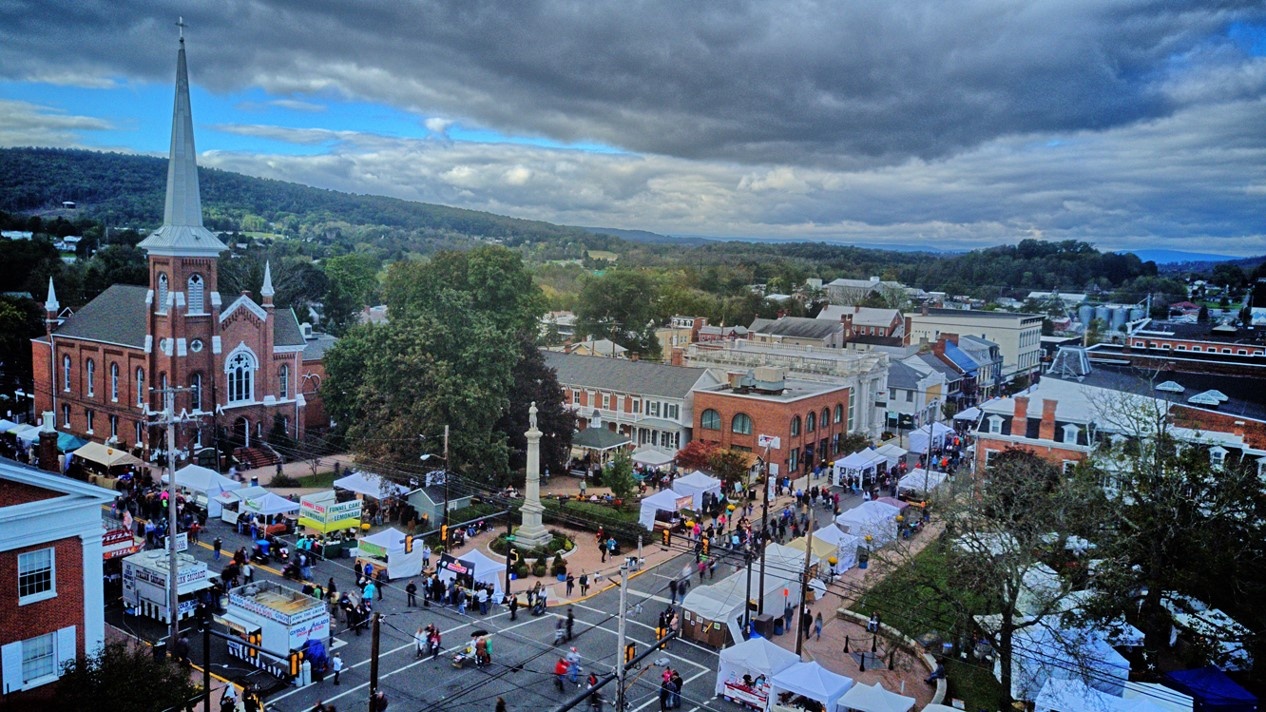
Bedford is a small borough in south-central Pennsylvania and the seat of Bedford County, set in the scenic Ridge-and-Valley region of the Appalachians. With a population of roughly 2,700 residents, it has the feel of a quiet, tree-lined historic town anchored by a brick-faced downtown that has changed little in a century. Bedford sits along the old Lincoln Highway and the Pennsylvania Turnpike, and it has long served as a natural stopping point for travelers crossing the Allegheny Mountains. It lies approximately 100 miles east of Pittsburgh and a similar distance west of Harrisburg, placing it within a few hours' drive of several major East Coast population centers.
Just north of Bedford, in Shanksville, the Flight 93 National Memorial preserves the site of the September 11, 2001 crash of United Flight 93. The memorial, about a half-hour drive from downtown Bedford, draws visitors from across the country and has become one of the region's most significant cultural and historical sites. The visitor center, walking trails, and the wall of names offer a contemplative experience that pairs naturally with a stay in the area.
Within Bedford itself, Old Bedford Village is a living history museum that recreates 18th- and 19th-century rural Pennsylvania life, with dozens of restored log and stone buildings, costumed interpreters, and demonstrations of period crafts and trades. The village is one of the town's main visitor draws and is especially popular with school groups and families during the warmer months.
Outdoor recreation is another pillar of the Bedford experience. Blue Knob State Park, roughly 20 miles northeast, surrounds the second-highest point in Pennsylvania and offers hiking, mountain biking, cross-country skiing, and a campground, with sweeping views of the surrounding ridges. Closer to town, the Raystown Branch Juniata River and its tributaries wind through the valleys, providing fishing and paddling access for visitors who want a quieter day on the water. Together, these natural assets give the area a year-round appeal that extends well beyond the summer travel season.
For travelers, Bedford's appeal is its combination of small-town character, layered history, and easy access to both outdoor adventure and a nationally significant memorial. Its position along a major east-west corridor makes it a practical base for road-trippers exploring the Mid-Atlantic, and its walkable downtown, independent restaurants, and historic inns give short-term rentals a strong foundation. Whether guests come for a single night passing through the mountains or for a longer stay exploring the region's trails and historical sites, Bedford offers a distinctive Appalachian experience that feels a world away from the state's larger cities.
Want to know if a property in Bedford is a good investment?
Enter an address to get instant revenue potential and comps.