
Lake Oswego, Oregon
Want to see how Lake Oswego compares to other top cities in Oregon? Explore all city regulations in Oregon. →
Lake Oswego, OR
Generally Investor Friendly
STR Regulations for Lake Oswego, Oregon
Overview: Are STRs allowed in Lake Oswego, OR?
Short-term rentals are legally permissible in Lake Oswego, Oregon. There are no city-specific prohibitions identified in the sources reviewed. Oregon does not impose a statewide STR license or ban; instead, it regulates short-term rentals at the local level (city/county). Clackamas County has jurisdiction over the unincorporated parts of the county; incorporated cities like Lake Oswego manage land use and local rules themselves. You must comply with Oregon’s state-level transient lodging tax obligations, and you should verify if the City of Lake Oswego has adopted any additional requirements or registration processes not captured in the provided materials.
Key takeaway: Operating an STR in Lake Oswego is allowed; you must satisfy Oregon’s state taxes and any applicable local rules adopted by the City of Lake Oswego. If your property sits in unincorporated Clackamas County, you may also be subject to county requirements (see County Rules, below).
What do Airbnb hosts actually earn in Lake Oswego?
Lake Oswego hosts earn a median $37,008/year with $191 ADR and 71% occupancy.
Top performers pull in $53,746+ per year.
See the full Lake Oswego market breakdownHow to Start a Short-Term Rental Business in Lake Oswego
- Confirm your property’s land use and zoning. Ensure the STR use is allowed under current zoning and any homeowner association rules. If there’s any doubt, seek written confirmation from the City of Lake Oswego’s planning department.
- Obtain any required local approvals. While the provided sources do not indicate a city-run permitting system, verify whether the City of Lake Oswego has adopted an STR registration, business license, or safety inspection requirement for STRs.
- Register for state taxes and local lodging taxes. If you collect or receive payment for lodging, you must collect and remit Oregon’s 1.5% Transient Lodging Tax (TLT) and any applicable local lodging taxes. Register with the Oregon Department of Revenue (DOR) and follow quarterly filing requirements.
- Prepare the unit for safe operation. Install and maintain required smoke alarms and carbon monoxide alarms, ensure safe egress, and keep the property sanitary and code-compliant.
- If your property is in unincorporated Clackamas County, anticipate compliance with any county STR rules in effect (registration, safety certification, posting guest notices, and off-street parking). The 2023 proposal included these items; confirm current status with the county.
- Set up tax, licensing, and operating records. Maintain guest logs, receipts, and tax filings. If using platforms (e.g., Airbnb), verify whether they automatically collect and remit taxes on your behalf.
- List and advertise only once you’re compliant. If the city or county requires registration or permits, include those identifiers in your listings, and obey any posting requirements (e.g., permit display, contact information on-site).
Required Documents, Permits, Licenses, and Guidelines
- State transient lodging tax registration and quarterly filings. Oregon requires lodging providers to collect and submit 1.5% TLT unless an intermediary (platform) does so. Register with the Oregon Department of Revenue; file returns quarterly (April 30, July 31, October 31, January 31).
- Local lodging taxes (if applicable). If the City of Lake Oswego or another local jurisdiction has adopted a room or lodging tax, you may need to register separately and file local returns.
- Business registration. If operating under an LLC or a DBA, register the business with the Oregon Secretary of State. If Lake Oswego requires a city business license, obtain it before operating.
- Health and safety compliance. Oregon requires working smoke alarms in all rental dwellings and carbon monoxide alarms if the home has gas appliances or an attached garage. Maintain fire extinguishers, clear emergency exits, and overall habitability standards.
- Guest notice and contact posting (unincorporated Clackamas County, proposed). If the county’s rules apply to your location, be prepared to post county noise control notices and 24/7 contact information visible from the roadway. Provide a contact able to respond to complaints within two hours.
- Advertising requirements (unincorporated Clackamas County, proposed). If applicable, listings should display the county registration/permit number and any occupancy, parking, or other conditions.
- Tenant and HOA agreements. If the property is leased, obtain the landlord’s written authorization for STR operations. If governed by an HOA, obtain written approval or confirm the STR is permitted under the HOA rules.
City, County, and State Regulations
-
City of Lake Oswego
- Status: No city-specific STR ordinance identified in the sources reviewed. Contact the City of Lake Oswego for any adopted rules (business license, STR registration, occupancy limits, etc.).
- Implication: Absent a city ordinance, the primary constraints are state tax law and general land use/zoning compliance. Verify in writing with the city.
-
Clackamas County (applies only in unincorporated areas)
- As of the latest proposal (Aug 2023), the County was considering:
- STR registration requirement.
- Safety certification.
- 0.85% user fee in addition to the existing 6% county transient lodging tax.
- Off-street parking: at least one space per sleeping area.
- Guest notice posting: contact information for the responsible party, visible from the nearest public roadway; that party must be available 24/7 and able to respond to complaints within two hours.
- Important: These were proposed rules undergoing public hearings in August 2023. Whether they were adopted and are currently in effect should be confirmed with Clackamas County.
- As of the latest proposal (Aug 2023), the County was considering:
-
State of Oregon
- No statewide STR license or ban. Regulations are locally administered.
- Taxes: 1.5% Transient Lodging Tax on gross rent for stays under 30 days. Returns are filed quarterly. If a platform collects tax, confirm filing responsibilities and remittance.
- Health and safety: Working smoke alarms throughout the dwelling and carbon monoxide alarms where applicable; habitability and building code standards apply.
- Business registration: If using an LLC or DBA, register with the Oregon Secretary of State.
- Zoning and HOAs: Zoning can limit or condition STRs; HOAs may further restrict or prohibit short-term rentals.
Contact Information (Local Authority in Charge)
-
City of Lake Oswego (City Hall; general planning/building questions)
- Phone: 503-635-0215
- Website: www.ci.oswego.or.us
- Email/Office: Contact the City’s Planning Department to confirm current STR rules and permitting requirements.
-
Oregon Department of Revenue (DOR) — Transient Lodging Tax
- Phone: 503-378-4988 or 1-800-356-4222 (toll-free in Oregon)
- Website: www.oregon.gov/dor/programs/businesses/pages/lodging.aspx
- Email/Online: Register and file returns via DOR’s Revenue Online portal; use the DOR help contact numbers above for lodging tax guidance.
-
Clackamas County (unincorporated areas; STR registration, fees, and posting)
- Website: www.clackamas.us
- Phone: 503-655-8547 (General County information)
- Hearing/Program Contacts: 503-655-8525 (Land Use Planning); for current STR program status, contact the county’s planning or business licensing divisions.
Links to Source Pages
- Oregon STR regulations overview (state tax, local ordinances, examples): hometeamluxuryrentals.com/blog/oregon-short-term-rental-regulations
- Oregon STR laws, definitions, and state tax responsibilities: www.hostfully.com/regulations/oregon/
- Clackamas County proposed STR fees and regulations (2023 proposal; unincorporated areas): lakeoswegoreview.com/2023/08/04/clackamas-county-proposes-new-fees-regulations-for-vacation-rentals/
Notes and Practical Guidance
- Start with compliance fundamentals: register for lodging tax and keep precise records of gross receipts by property and quarter.
- Adopt a conservative safety posture: install and test smoke and CO alarms, provide fire extinguishers, and ensure clear emergency exits.
- If your property is in the unincorporated county, plan for potential registration and posting requirements; obtain written confirmation from the county as to whether the 2023 proposal was adopted.
- If your property is within Lake Oswego’s city limits, get written confirmation from the City that no STR registration or licensing is required. If the City adopts an STR program in the future, be ready to comply promptly.
This guide is informational and not legal advice. Regulations can change; verify all requirements with the City of Lake Oswego and the Oregon Department of Revenue, and with Clackamas County if you are in an unincorporated area.
Next step
Found a property in Lake Oswego?
Paste any address and get estimated revenue, cash-on-cash return, and comparable STR performance in under 5 minutes. 3 free analyses per day.
Free brief
Get the free Lake Oswego STR Investment Brief
Revenue data, top neighborhoods, seasonal trends, and the key regulations for Lake Oswego, Oregon in one email.
Lake Oswego
Market Saturation Score
Photos of Lake Oswego


Overview of Lake Oswego
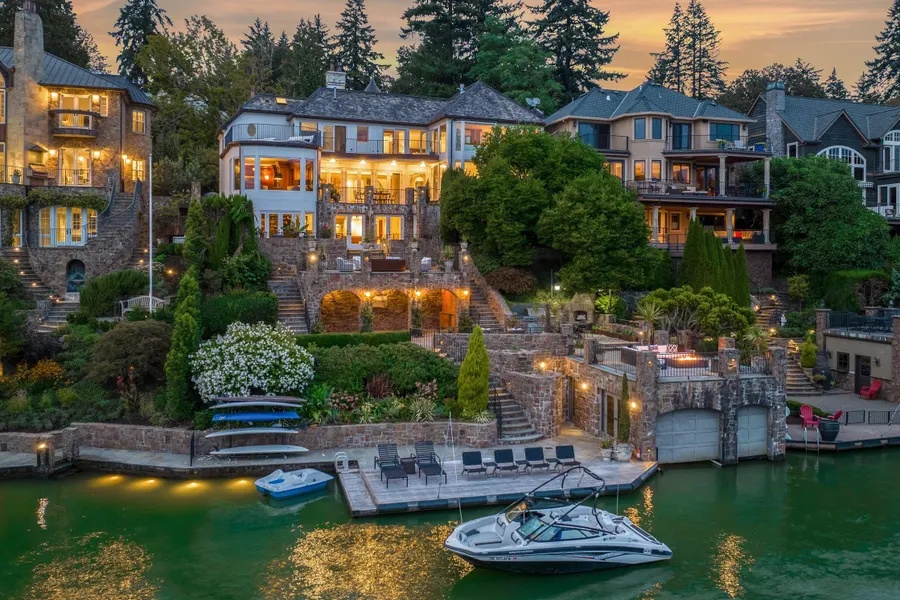
Lake Oswego is a well-to-do city in northwestern Oregon, situated primarily in Clackamas County with a small portion spilling into Multnomah County. Home to roughly 40,000 residents, the city is set along the eastern shore of the Willamette River and wraps around its namesake, Oswego Lake, a roughly 400-acre body of water that gives the community much of its character. Tree-shaded streets, tidy residential neighborhoods, a walkable downtown core, and a polished, small-town feel have made Lake Oswego one of the most sought-after suburbs in the Portland metro area. It sits about eight miles south of downtown Portland, serving as a refined base for visitors who want to explore both the city and the broader Willamette Valley.
Just minutes from the heart of Lake Oswego, Tryon Creek State Park offers more than 670 acres of old-growth Douglas fir and cedar forest threaded with roughly 15 miles of hiking trails. The park is about a five-minute drive from downtown and provides picnicking, a nature center, and connections to the regional trail network, making it a favorite for visitors who want a quick dose of Pacific Northwest wilderness without leaving the urban fringe.
The community's centerpiece, Oswego Lake, is a private lake, but its shoreline is woven into the city's identity. A paved public pathway loops much of the water's edge, linking neighborhoods to Millennium Plaza Park in the downtown, where locals and visitors gather for the summer farmers market and the popular Lake Oswego Festival of the Arts. Public lakefront viewing points and the small lakeside beaches give non-residents a chance to enjoy the scenery that defines the city.
A short drive north, roughly 15 to 20 minutes, Portland opens up a deep roster of urban attractions, including the Portland International Rose Test Garden, the Oregon Zoo, Powell's City of Books, and a celebrated food and brewery scene. Lake Oswego's close proximity lets guests enjoy a quieter, more residential stay while remaining within easy reach of the metro's marquee draws.
To the west, the Willamette River forms the city's boundary, and George Rogers Park runs along its banks with walking paths, sports fields, and a boat launch. A bit farther afield, Mount Hood's ski slopes and the vineyards of the Willamette Valley wine country are both within about an hour's drive, rounding out the region's appeal.
With its blend of natural beauty, a charming downtown, and unmatched access to both Portland and the outdoor recreation of the Pacific Northwest, Lake Oswego offers short-term rental owners a market that draws visitors seeking comfort, scenery, and convenience in equal measure.
Want to know if a property in Lake Oswego is a good investment?
Enter an address to get instant revenue potential and comps.