
Halfway, Oregon
Want to see how Halfway compares to other top cities in Oregon? Explore all city regulations in Oregon. →
Halfway, OR
Generally Investor Friendly
STR Regulations for Halfway, Oregon
Overview: Are short‑term rentals allowed in Halfway, OR?
- Allowed: Yes. Short‑term rentals are allowed in Halfway (an unincorporated community within Baker County, OR) subject to Baker County and the State of Oregon requirements (permits/registration, lodging taxes, health/safety rules). Baker City’s framework is the primary county‑wide reference used by Baker County for permits and lodging tax administration. No city‑specific ordinance for Halfway is identified.
- Practical route: Most operators in Halfway pursue a Baker City Vacation Rental Permit (Baker City lodging tax permit and certificate) to comply. County short‑term rental registrations or exemptions are not explicitly documented; proceed with the Baker City process and confirm with the Baker County Tax Office.
- State overlay: Oregon’s Vacation Rental Act (SB 391, 2019; HB 2679, 2021) limits local regulation in larger cities and sets uniform definitions and registration/tax obligations. Smaller jurisdictions like Baker County may require a permit, and Baker County is subject to lodging tax collection (currently administered via Baker City for the “hotel/motel” tax).
- Exclusions: Non‑hosted short‑term rentals remain disallowed in certain cities (e.g., Cannon Beach, Hood River, Seaside). Those prohibitions do not apply to Halfway or Baker County.
How to start a short‑term rental business in this market
- Confirm eligibility and property type
- Ensure the property is an approved residential use and can legally operate as lodging in Baker County; confirm HOA/CC&R rules allow short‑term rentals.
- Identify occupancy limits, parking availability, and fire/life‑safety compliance needs.
- Register with the State of Oregon
- Register with the Oregon Department of Revenue (DOR) to obtain a state‑wide Transient Lodging Account ID (L‑Number) for state lodging taxes.
- If you have employees, obtain an Employer Identification Number (EIN) from the IRS.
- Consider forming an LLC or other entity and opening a dedicated business bank account (not required by law but recommended for asset protection and accounting).
- Obtain a local lodging permit and lodging tax certificate (Baker City framework)
- Apply for a Vacation Rental Permit through Baker City Municipal Court (Administrative Office) and complete required inspections.
- Obtain a Baker City lodging tax certificate and register for lodging tax remittance. The City currently administers the county lodging tax at the city level.
- Comply with health, safety, and insurance
- Pass required inspections (fire, life safety, and property maintenance standards).
- Obtain general liability insurance (recommend $500k minimum).
- Install/verify smoke/CO detectors, fire extinguishers, address signage, egress plans, and any building permits if renovations were performed without permits.
- Collect and remit lodging taxes
- State: Oregon Transient Lodging Tax is 1.5% on gross receipts; the L‑Number is needed to remit.
- Local: Baker County lodging tax is 6.5% (administered via Baker City). Remit using the city’s lodging tax account.
- Prepare operations and guest screening
- Draft house rules, parking plan, quiet hours, trash/recycling instructions, and emergency contacts.
- Set up occupancy limits, on‑call response, and complaint handling.
- If you intend to be the “primary operator,” define your responsibilities and ensure contactability.
- List and operate compliantly
- Include your Baker City permit/tax certificate number in listings (if required by local practice).
- Keep guest logs and maintain compliance with state and local requirements; file quarterly state lodging tax returns; remit local lodging taxes per local schedule.
Required documents, permits, licenses, and guidelines
-
State of Oregon
- DOR Transient Lodging Account (L‑Number) registration for lodging tax collection and remittance
- EIN (if you have employees or operate via an entity)
- Any local business tax registration as applicable (varies by jurisdiction)
-
Baker County / Baker City (primary county‑wide framework)
- Vacation Rental Permit (application, inspections, and annual renewal)
- Lodging tax certificate and monthly/quarterly filings (Baker City lodging tax and county lodging tax administration)
- Safety compliance: fire/life safety and property maintenance inspections; verification of:
- Smoke and carbon monoxide detectors
- Fire extinguishers
- Address numbers, egress plans, emergency contacts posted
- Insurance: General liability coverage (commonly $500,000 minimum)
- Guest logs (names, ages, check‑in/out dates) maintained and available for inspection
- Documentation of utility bills, proof of ownership or lease (if renting), and a parking plan or statement
Specific regulations (city, county, and state)
-
Baker County / Baker City (operational framework for county‑wide permits and lodging tax)
- Permitting and inspections: Initial and periodic inspections are required; properties must meet Baker City standards for life safety, fire, and property maintenance.
- Lodging taxes: State lodging tax 1.5%; local Baker County lodging tax 6.5% (administered via Baker City). Monthly remittance is typical for lodging providers.
- Safety posting: Address signage, posted emergency contacts, egress maps, and other required notices.
- Guest logs: Maintain accurate occupancy logs and make them available to authorities upon request.
- Advertising: Ensure listings align with permit status and include required identifiers or numbers if applicable.
-
State of Oregon (Oregon Vacation Rental Act and related statutes)
- Definition: “Transient lodging” generally means lodging for fewer than 30 consecutive days; an “operator” is the party who provides lodging for consideration.
- Registration and taxes: Registration with DOR for lodging tax collection; filing quarterly returns and remitting the 1.5% state lodging tax.
- Tax rate alignment: If a local Transient Lodging Tax (TLT) applies (Baker County’s 6.5% is typically administered via Baker City), rates may change; operators must remit both state and local lodging taxes.
- Key statutes:
- ORS 320.305 to 320.350 (Transient Lodging Tax definitions, registration, filing, and audits)
- ORS 221.540 (City lodging tax authority; collection by Baker City for county lodgers)
- ORS 221.610 to 221.660 (Business License Law; local business tax administration for lodging)
- SB 391 (2019) / HB 2679 (2021) (state preemption and registration framework for larger cities; does not invalidate local permit and lodging tax requirements applicable to smaller jurisdictions like Baker County)
-
Property standards and exclusions
- Short‑term rentals may not be operated from properties excluded under local rules (for example, certain forms of institutional housing or facilities requiring separate licensing). Confirm property eligibility with Baker County planning and the Baker City inspection unit.
Contact information (phone, email, website where available)
-
Oregon Department of Revenue (State lodging tax registration and filings)
- Phone: 503‑945‑8100
- Website: www.oregon.gov/dor
-
Baker County Tax Office (for county lodging tax/registration questions)
- Phone: 541‑523‑8205
- Address: 1995 3rd Street, Baker City, OR 97814
- Email: taxquestions@co.baker.or.us
- Website: www.co.baker.or.us/Departments/TaxOffice/TaxOffice.html
-
Baker City Municipal Court / Vacation Rental Permit (local lodging tax certificate and inspections)
- Phone (permit and inspections): 541‑524‑2000
- Address: 1655 1st Street, Baker City, OR 97814
- Website: www.bakercity.gov
-
Baker County Planning (zoning and land use compliance for STR use)
- Phone: 541‑523‑8219
- Website: www.co.baker.or.us/Departments/Planning/Planning.html
Links to source pages
- Oregon Department of Revenue – Transient Lodging Tax information: www.oregon.gov/dor/businesses/pages/transient-lodging-tax.aspx
- Baker County Tax Office: www.co.baker.or.us/Departments/TaxOffice/TaxOffice.html
- Baker County Planning: www.co.baker.or.us/Departments/Planning/Planning.html
- Baker City Vacation Rental & Lodging (permits, lodging tax): www.bakercity.gov
Notes for STR investors
- Conflicting data: Multiple sources do not directly link to the above pages; verify current details directly with Baker County Tax Office and Baker City Municipal Court to confirm permit forms, inspection schedules, and lodging tax remittance procedures.
- Zoning: Confirm there are no land use or CC&R restrictions that could limit short‑term rentals in your specific subdivision or property type in the Baker County area.
- Taxes: Remit the 1.5% state lodging tax and the 6.5% local lodging tax. If local procedures change (e.g., separate county remittance), adjust filings accordingly. Maintain guest logs and an audit‑ready trail.
- Safety: Treat inspections and liability coverage as operational essentials; post required notices and keep emergency contact information current.
What do Airbnb hosts actually earn in Halfway?
Halfway hosts earn a median $21,948/year with $133 ADR and 59% occupancy.
Top performers pull in $30,153+ per year.
See the full Halfway market breakdownNext step
Found a property in Halfway?
Paste any address and get estimated revenue, cash-on-cash return, and comparable STR performance in under 5 minutes. 3 free analyses per day.
Free brief
Get the free Halfway STR Investment Brief
Revenue data, top neighborhoods, seasonal trends, and the key regulations for Halfway, Oregon in one email.
Halfway
Market Saturation Score
Photos of Halfway


Overview of Halfway
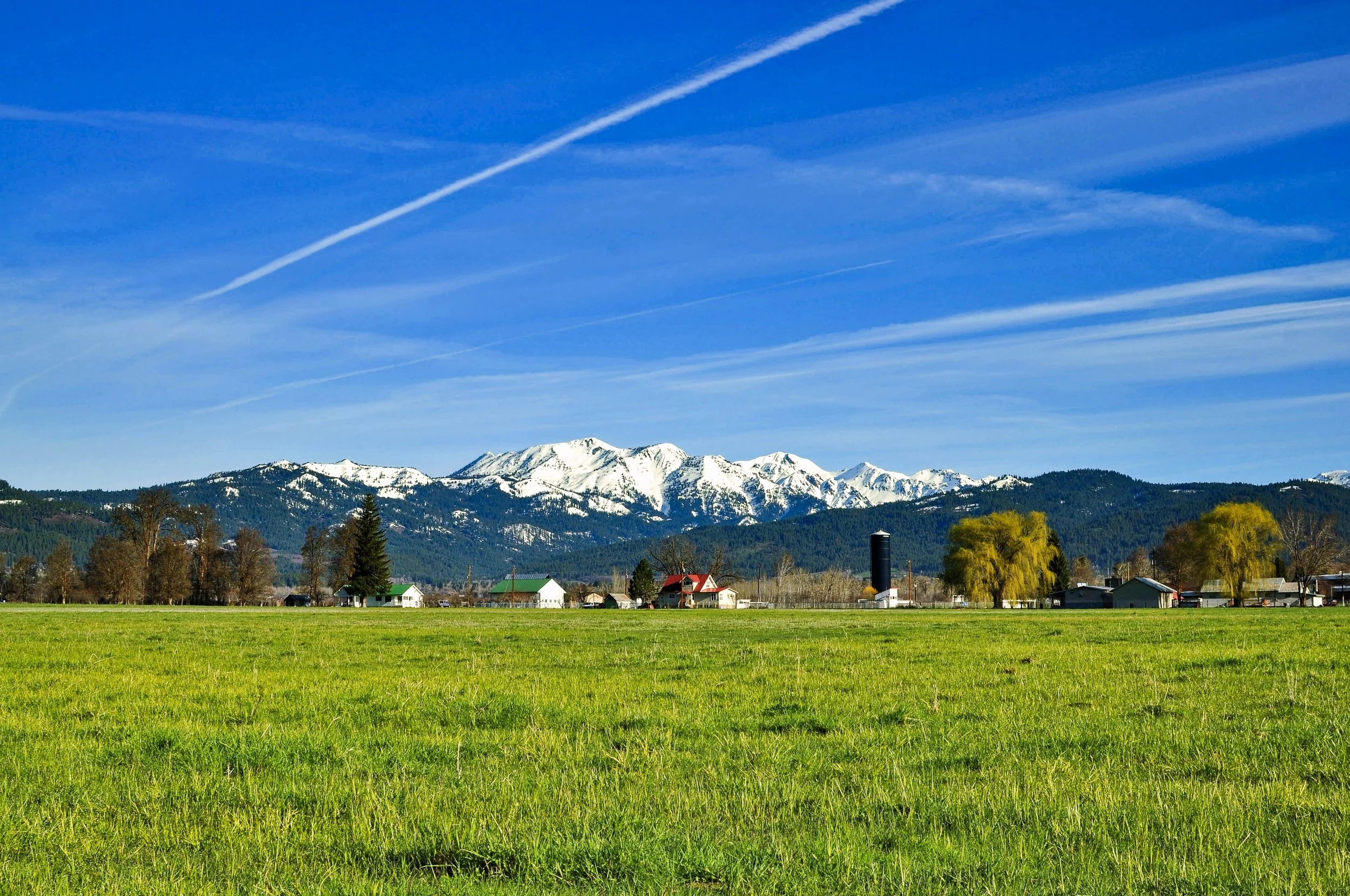
Halfway is a tiny community of roughly 300 residents in Baker County, in the far northeastern corner of Oregon, tucked into Pine Valley between the Wallowa Mountains and the Snake River. The town has the feel of a quiet, high-desert ranching settlement that has long served as a staging point for visitors heading into some of the most rugged country in the contiguous United States. Most travelers who pass through are bound for the nearby national forest and the dramatic river canyons to the east. Halfway sits about 50 miles northeast of Baker City, the nearest larger town, and roughly 150 miles northwest of Boise, Idaho, the closest major metropolitan area.
The biggest draw in the region is Hells Canyon, which lies just to the east of Halfway along the Snake River. The canyon is the deepest river gorge in North America, and travelers from Halfway can reach viewpoints, boat launches, and the Hells Canyon Dam area in roughly an hour. Outfitters run jet boat excursions on the river, and the canyon is also popular for fishing, rafting, and simply admiring the sheer basalt walls that drop away from the rim.
A short drive to the north and west places visitors in the Wallowa-Whitman National Forest, a vast expanse of evergreen forest and alpine terrain that surrounds Pine Valley. The forest offers campgrounds, trailheads, and rivers and creeks known for trout fishing, all within a 30-to-60-minute drive of town. Higher elevations lead toward the Eagle Cap Wilderness, where granite peaks rise above 9,000 feet and hiking trails wander through glacial lakes and wildflower meadows during the short alpine summer.
For those wanting a more developed base with museums, restaurants, and the historic Baker City downtown, the county seat is about an hour to the southwest. Baker City's preserved 19th-century architecture, the National Historic Oregon Trail Interpretive Center, and its ties to the mining and ranching era make it a worthwhile day trip from a Halfway rental.
Together, these features make Halfway an appealing base for travelers who want quiet, small-town lodging within striking distance of one of the country's most extraordinary natural landscapes, while still having a historic regional hub within easy reach for supplies and entertainment.
Want to know if a property in Halfway is a good investment?
Enter an address to get instant revenue potential and comps.