
Eagle Point, Oregon
Want to see how Eagle Point compares to other top cities in Oregon? Explore all city regulations in Oregon. →
Eagle Point, OR
Challenging To Investors
STR Regulations for Eagle Point, Oregon
Executive Overview
Short-term rentals are allowed in Eagle Point, Oregon, but there are no city‑specific short‑term rental licensing requirements publicly identified in the Eagle Point Municipal Code at this time. The city does regulate Bed & Breakfast (B&B) uses in its zoning code (Chapter 17.52.310), including a maximum stay of 14 days, off‑street parking standards, and signage limits. Investors should treat lodging‑type activity (rentals for less than 30 days) as subject to Oregon transient lodging tax requirements and, at minimum, to city business licensing, and, if applicable, B&B conditional use approval. Where a B&B permit is not obtained, operators still must comply with state tax obligations and should expect future city oversight to evolve as Oregon municipalities continue to formalize short‑term rental standards.
How to Start a Short‑Term Rental Business in Eagle Point
To launch a compliant operation in Eagle Point:
- Confirm zoning and permitted lodging activity. B&B uses are permitted in R‑1, R‑2, and the designated town center with a conditional use approval process (EPMC 17.52.310). Standard “short‑term rental” licensing was not identified in Eagle Point’s municipal code; however, lodging activity (rents under 30 days) should be assessed against the B&B standards or treated as lodging activity that requires business licensing and state transient lodging tax compliance.
- If you will operate as a traditional lodging provider (unrelated to the B&B conditional use), prepare to register for Oregon transient lodging tax (TLT) collection/remittance at 1.8%, and register for any applicable Jackson County TLT. Confirm the county rate and collection rules with the Jackson County Tax Collector.
- Apply for a city business license (Eagle Point requires business licensing per the B&B section of the code; lodging operators should assume licensing applies broadly).
- Meet B&B standards if seeking approval, or operate consistent with residential use while meeting tax and safety obligations. B&B approvals involve a city application, findings of fact, parking, signage, and maximum stay limitations (14 days). Undeveloped sites require a full hearing; fully developed sites may use a streamlined Type B review. City departments and Fire District No. 3 review applications.
- Develop a compliance program: guest screening and rules; parking and noise management; annual guest register maintenance (required for B&Bs); and tax remittance cadence (quarterly filings are typical under Oregon statutes unless otherwise directed).
Required Documents, Permits, Licenses, and Guidelines
- Business license: Required by city for lodging providers; confirm application forms and fees with the City of Eagle Point.
- Conditional use approval for Bed & Breakfast (EPMC 17.52.310):
- Application form, filing fee, site inspection by the building official.
- List of property owners within 250 feet.
- Findings of fact demonstrating conformance with zoning, neighborhood compatibility, parking adequacy, and traffic safety.
- All required state and county permits/certifications filed prior to business license issuance.
- Occupancy: Maximum stay 14 days; specify number of rental rooms and total guests permitted.
- Off‑street parking: R‑1/R‑2—standard for the zone plus one space per sleeping room; town center commercial—prevailing standards (no front yard parking).
- Signage: Total of two signs (one freestanding allowed); max 12 square feet per sign; aggregate 16 square feet; max height 42 inches; no internal illumination or neon; lighting cannot negatively impact adjoining properties.
- Operational requirements: Breakfast served only to guests; maintain an up‑to‑date guest register; annual review; proprietorship/property transfer requires reissuance of approvals.
- Oregon Transient Lodging Tax (TLT):
- State TLT at 1.8% applies to lodging providers, including short‑term rentals under 30 days.
- Registration, collection, and remittance required through the Oregon Department of Revenue.
- Jackson County Transient Lodging Tax:
- County TLT likely applies; verify the current rate and filing schedule with Jackson County.
- Safety and life safety compliance: Fire District No. 3 review for B&B; smoke detectors, egress, and emergency access typical of conditional use reviews.
- Tax registration:
- Obtain Oregon business tax registration if applicable (income tax business classification and any local tax obligations).
Specific Regulations for Short‑Term Rentals (City, County, and State)
- City of Eagle Point (Eagle Point Municipal Code, Chapter 17.52.310—Bed & Breakfast):
- Permitted in R‑1, R‑2, and designated town center subject to conditional use approval.
- Application must include findings of fact and 250‑foot noticing.
- Occupancy limitation: room rentals not to exceed 14 days.
- Parking: standard zone spaces plus one per sleeping room; no front yard setbacks for parking.
- Signage: two signs total, 16 square feet aggregate, one freestanding (max 12 sq ft each); height limit 42 inches; no internal illumination or neon; lighting cannot impact adjacent properties.
- Yearly review by the city; proprietorship or property transfer requires reissuance; changes to the facility/signage may require a new conditional use permit.
- Guest register must be maintained.
- City business licensing is a prerequisite for B&B operation (EPMC 17.52.310(N)).
- Jackson County:
- County-level transient lodging tax applies to lodging providers in the county; confirm current rate and filing requirements with the county tax collector.
- State of Oregon:
- Transient Lodging Tax (TLT) at 1.8% applies to rentals under 30 days; lodging operators must register and remit TLT to the Oregon Department of Revenue.
- Statewide municipal trend favors licensing, inspections, concentration caps, occupancy limits, and enforcement via citations. Eagle Point has not published separate short‑term rental licensing beyond the B&B framework at this time.
Contact Information (Phone, Email, Website) for the Local Authority in Charge of STRs
- City of Eagle Point — Planning/Community Development Department:
- Phone: +1 (541) 826‑4212
- Website: www.codepublishing.com/OR/EaglePoint/ (municipal code)
- Jackson County — Tax Collector (for TLT registration and remittance):
- Phone: +1 (541) 774‑6029
- Website: www.jacksoncountyor.gov/ (County information page; navigate to “Tax Collector” or “Transient Lodging Tax”)
- Oregon Department of Revenue — Transient Lodging Tax:
- Phone: +1 (503) 378‑4988
- Website: www.oregon.gov/dor
Links to Source Pages
- Eagle Point Municipal Code — Special Uses, General Provisions and Exceptions (Chapter 17.52): www.codepublishing.com/OR/EaglePoint/html/EaglePoint17/EaglePoint1752.html
- Assessing and Responding to Short‑Term Rentals in Oregon (University of Oregon, 2017): www.eugene-or.gov/DocumentCenter/View/52934/UO-STR-Research-published
Practical Notes for Investors
- Clarify whether your operation will be treated as a B&B or as a standard lodging provider under city business licensing. The B&B path offers an explicit process with defined parking, signage, and occupancy standards; general STR licensing was not identified in the code.
- Even absent city STR licensing, Oregon TLT obligations are mandatory for rentals under 30 days; county TLT likely applies and should be confirmed.
- Build a compliance and operating plan—noise, parking, guest rules, emergency access—and prepare for annual review if permitted as a B&B.
- Monitor city code updates; many Oregon jurisdictions are formalizing STR licensing, safety inspections, and nuisance abatement. Eagle Point’s B&B standards provide a reliable baseline, but broader STR rules may be introduced.
What do Airbnb hosts actually earn in Eagle Point?
Eagle Point hosts earn a median $26,689/year with $179 ADR and 53% occupancy.
Top performers pull in $35,661+ per year.
See the full Eagle Point market breakdownNext step
Found a property in Eagle Point?
Paste any address and get estimated revenue, cash-on-cash return, and comparable STR performance in under 5 minutes. 3 free analyses per day.
Free brief
Get the free Eagle Point STR Investment Brief
Revenue data, top neighborhoods, seasonal trends, and the key regulations for Eagle Point, Oregon in one email.
Eagle Point
Market Saturation Score
Photos of Eagle Point
Overview of Eagle Point
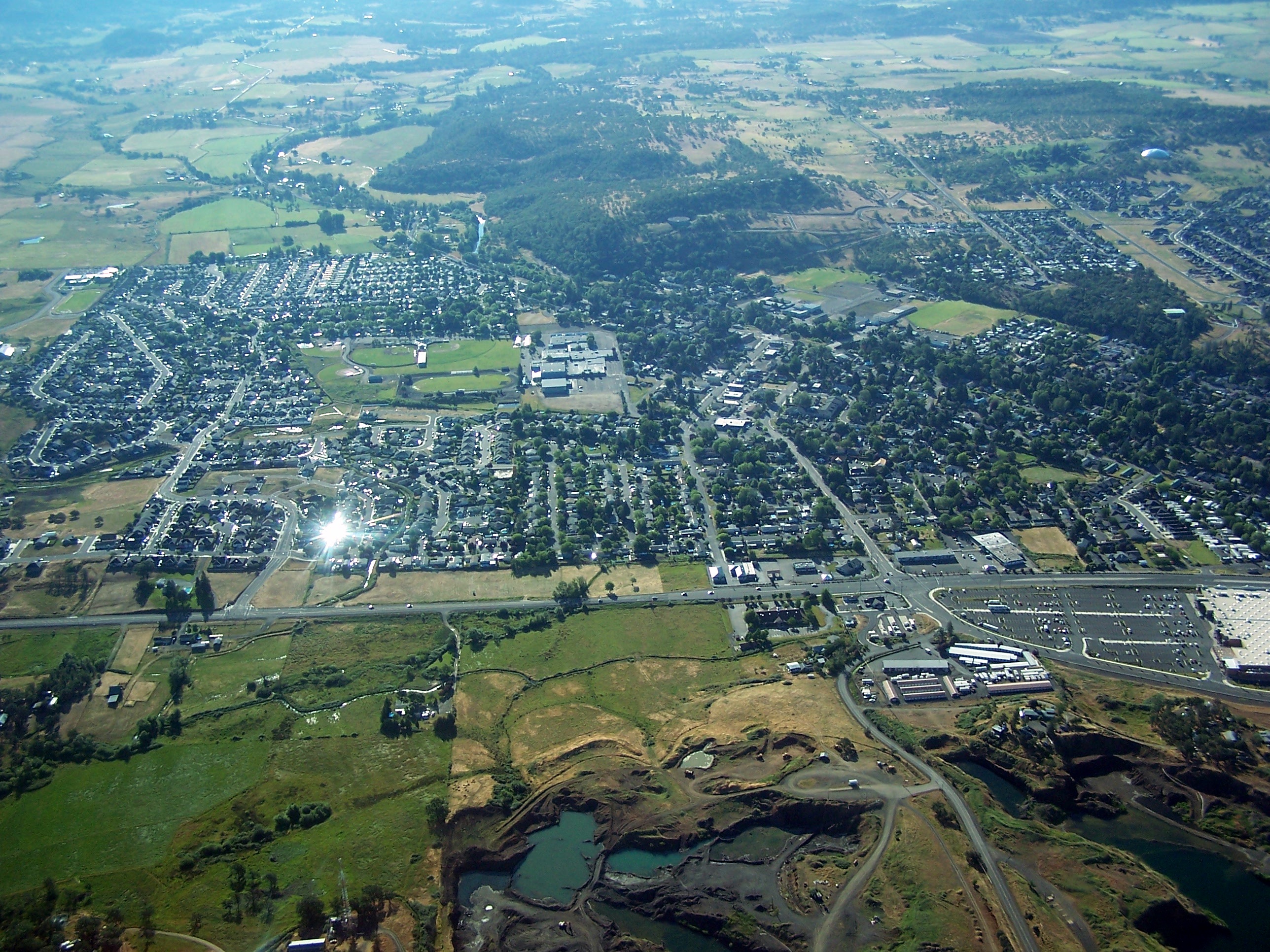
Eagle Point is a small city in Jackson County in the southwestern corner of Oregon, set in the scenic Rogue Valley and bordered by the Rogue River. The city has a population of roughly 9,500 to 10,000 residents, and it carries the feel of a relaxed small town with deep ties to the outdoors, ranching, and the river. It functions as a convenient base for visitors exploring the wider Rogue Valley, which includes the regional hub of Medford about ten to twelve miles to the southwest, as well as the forested slopes of the Cascades to the east and the higher peaks of the Siskiyous to the south. Eagle Point is best known for its riverfront access, its proximity to several of southern Oregon's signature natural landmarks, and its small-town atmosphere that feels far removed from the larger cities of the Pacific Northwest.
One of the marquee draws within day-trip distance is Crater Lake National Park, the deep-blue caldera lake formed in the collapsed remnant of Mount Mazama. The drive from Eagle Point to the park's southern Rim Village area is roughly seventy-five to ninety miles and takes about two hours by car, mostly via Highway 62 through the forested Upper Rogue corridor. Visitors are drawn by the lake's clarity, the dramatic cliff-rim viewpoints, and the hiking trails along Rim Drive.
Just outside town, the [Rogue River](en.wikipedia.org/wiki/Rogue_River_(Oregon) offers some of the region's most accessible recreation, including fishing, kayaking, and the famous floating and rafting stretches that run from the Lost Creek Lake area downstream. Within a fifteen- to twenty-minute drive from the city center, rafters and anglers can put in at popular launches and enjoy stretches that range from gentle to whitewater, depending on the season. The river is one of the defining features of the Eagle Point area and a major reason outdoor-oriented travelers are drawn to the town.
To the west of Eagle Point sit the Upper and Lower Table Rocks, two flat-topped volcanic plateaus that rise several hundred feet above the valley floor and are managed as Table Rock Wilderness by the Bureau of Land Management. A short drive of about ten to fifteen minutes brings visitors to trailheads that lead to the broad mesa tops, where wildflower displays in spring and sweeping valley views make for an easy, family-friendly outing. The area is part of the ancestral homeland of the Takelma people, and interpretive signs along the trail share that history.
For travelers willing to drive a bit farther, the city of Ashland lies roughly thirty miles to the south and is home to the Oregon Shakespeare Festival, Lithia Park, and a walkable downtown filled with galleries and restaurants. The drive typically takes about forty-five minutes along Interstate 5.
Eagle Point appeals to short-term rental investors and visitors because it combines small-town affordability with immediate access to some of southern Oregon's most celebrated outdoor destinations. From the Rogue River right outside the door to Crater Lake, the Table Rocks, and the cultural offerings of Ashland all within easy reach, the city offers a quieter, more residential alternative to staying directly in Medford while still placing travelers at the center of the Rogue Valley's best experiences.
Want to know if a property in Eagle Point is a good investment?
Enter an address to get instant revenue potential and comps.