
Oklahoma City, Oklahoma
Want to see how Oklahoma City compares to other top cities in Oklahoma? Explore all city regulations in Oklahoma. →
Oklahoma City, OK
Challenging To Investors

STR Regulations for Oklahoma City, Oklahoma
Overview: Are Short-Term Rentals Allowed in Oklahoma City?
YES, short-term rentals are explicitly allowed in Oklahoma City, Oklahoma, but under a regulated framework called "Home Sharing." The city has established comprehensive regulations since January 2019 to govern STR operations, with significant updates implemented in 2025. Oklahoma City defines home sharing as the temporary rental of a dwelling (or rooms in a dwelling) for up to 30 consecutive days per guest, typically facilitated through platforms like Airbnb, VRBO, or HomeAway.
The city requires operators to obtain a Home Sharing License before renting any property, with additional requirements for non-primary residences and properties in Historic Preservation districts. Oklahoma City has implemented a cap system limiting STRs to no more than 10% of homes per block, along with strict occupancy limits and parking requirements.
What do Airbnb hosts actually earn in Oklahoma City?
Oklahoma City hosts earn a median $25,993/year with $138 ADR and 65% occupancy.
Top performers pull in $35,828+ per year.
See the full Oklahoma City market breakdownHow to Start a Short-Term Rental Business in Oklahoma City
Step 1: Verify Zoning Compliance
Before proceeding, confirm your property is zoned for residential use using the city's Zoning Map. Home sharing is permitted wherever residential use is allowed, but specific requirements vary between Citywide Residential Districts and Historic Preservation Districts.
Step 2: Determine Primary Residence Status
- Primary Residence (Owner-Occupied): No special exception required, easier licensing process
- Non-Primary Residence: Requires special exception from Board of Adjustment ($1,100 fee)
- Historic Preservation District: Requires special exception and host must be primary resident on-site during rentals
Step 3: Apply for Home Sharing License
Create an account through the OKC Online Licensing Portal and submit your application with required documentation.
Step 4: Obtain Special Exception (If Required)
If operating a non-primary residence or in a Historic Preservation district, apply for special exception through the Board of Adjustment.
Step 5: Comply with Safety and Building Codes
Ensure your property meets all applicable building and fire codes, including installation of required safety equipment.
Step 6: Register for Tax Obligations
Set up hotel/motel tax accounts and Oklahoma state tax accounts as required.
Required Documents, Permits, Licenses, and Guidelines
Core License Requirements
Home Sharing License
- Annual fee: $110.40 (July 1, 2025 - June 30, 2026), $120.00 (July 1, 2026 - June 30, 2027)
- Required for all STR operations in Oklahoma City
Special Exception Permit (when applicable)
- Fee: $1,100
- Required for non-primary residences and Historic Preservation districts
- Contact: (405) 297-2623 or email SubdivisionandZoning@okc.gov
New License Application Documents
- New Home Sharing Application (PDF, 165KB)
- Property Compliance Affidavit (PDF, 147KB)
- Immigration Affidavit (PDF, 63KB)
- Home Sharing Primary Residence Affidavit (PDF, 158KB)
- Zoning verification (completed by city staff)
- Proof of property ownership (county assessor records, mortgage documentation)
- Authorization Letter (if tenant, notarized letter from property owner)
- Primary residence proof (minimum 3 forms):
- Valid driver's license
- Automobile registration
- Voter's registration
- Homestead exemption
- Utility bills
- Tax/banking documents
- Valid driver's license or state-issued photo ID
License Renewal Requirements
- Renewal Home Sharing Application and Affidavit (PDF, 320KB)
- Valid driver's license or state-issued photo ID
Safety and Building Code Requirements
- Smoke detectors (required)
- Carbon monoxide detectors (required)
- Fire extinguishers (required)
- International Building Code compliance (required for properties with 4+ bedrooms)
- Contact: (405) 297-2525 for compliance review
Business Tax Registration
- Oklahoma Tax Commission registration required
- Sales and Use Tax Certificate of Registration needed
- State lodging tax collection and remittance setup
Specific Regulations for Short-Term Rentals
Operational Limits (2025 Updates)
Rental Frequency
- Maximum of 10 nights per month unless special exception obtained
- Maximum rental period: 30 consecutive days per guest
Occupancy Limits
- Maximum of 16 occupants at any time
- Generally calculated as 2 occupants per bedroom plus 2 additional guests
Geographic Concentration
- 10% cap per block: STRs requiring special exception permits cannot exceed 10% of homes on any given block
- Applies to special exception properties only
Parking Requirements
- One off-street parking space required for every 4 guests
- Designed to reduce street congestion in residential neighborhoods
Primary Residence vs. Investment Property Rules
Primary Residence (Owner-Occupied)
- No special exception required
- Property must be host's primary residence
- Standard licensing process applies
- Home sharing allowed in all residential zones
Non-Primary Residence
- Special exception required before licensing
- $1,100 special exception fee
- Subject to 10% cap per block
- Additional scrutiny by Board of Adjustment
Historic Preservation District
- Special exception required
- Must be owner's primary residence
- Owner must be on premises during rental periods
- Additional historical preservation compliance required
Tax Obligations
City Hotel/Motel Tax
- 5.5% tax on rental payments when renting 2+ bedrooms
- Monthly tax reporting required
- Airbnb and VRBO collect and remit this tax on behalf of hosts
- Independent platform users must file and pay directly
State Taxes
- Oklahoma lodging taxes apply
- Marketplace facilitators (Airbnb, VRBO) collect state taxes or notify purchasers
- Direct registration with Oklahoma Tax Commission required
Safety and Compliance Standards
Mandatory Safety Equipment
- Operable smoke detectors
- Carbon monoxide detectors
- Fire extinguishers
- Must be provided in each rental unit
Information Requirements
- Information packet with host contact details required in each rental
- Local point of contact information (if different from host)
- Safety information and house rules
Building Code Compliance
- International Building Code review required for 4+ bedrooms
- All applicable city building codes must be followed
- Fire code compliance mandatory
Enforcement and Penalties
License Suspension/Revocation
- Two or more municipal code violations within two years
- Felony convictions
- Convictions involving misconduct, fraud, or dishonesty
Monetary Penalties
- Maximum $500 fine plus court costs and fees per violation
- Each day of continuing violation constitutes separate offense
Denial Period
- Permits may be denied for one year to operators with STR rule violations
Grandfathering Provisions
Hosts operating home sharing before January 15, 2019 are exempt from special exception requirements. Proof of prior use required (receipts, agreements, reviews). Exemption expires if use discontinued for two years.
Contact Information for Local Authority
Primary Licensing Authority
Business Licensing Office
- Phone: (405) 297-2606
- Email: action.center@okc.gov
- Address: City Hall, 200 North Walker, Oklahoma City, OK 73102
Special Exception/Board of Adjustment
Board of Adjustment
- Phone: (405) 297-2623, option 1
- Email: SubdivisionandZoning@okc.gov
- Responsible for special exception approvals
Development Services Department
Development Services
- Phone: (405) 297-2525
- Responsible for building code compliance reviews
- Zoning verification services
Municipal Court (Enforcement)
Municipal Court
- Address: 700 Couch Drive, Oklahoma City, OK 73102
- Handles STR ordinance violations
- Fine collection and enforcement
Oklahoma Tax Commission (State Taxes)
Oklahoma Tax Commission
- Website: oklahoma.gov/tax.html
- Responsible for state tax registration and compliance
- Sales and Use Tax Certificate of Registration
Source Links and References
Official City Resources
- Home Sharing License - City of Oklahoma City
- Oklahoma City Municipal Code
- Zoning Map
- Board of Adjustment
- Historic Preservation Districts
Application Forms and Documents
- New Home Sharing Application (PDF)
- Property Compliance Affidavit (PDF)
- Home Sharing Primary Residence Affidavit (PDF)
- Letter of Authorization (PDF)
- Renewal Application (PDF)
Tax and Financial Resources
Licensing Portal
Reporting and Enforcement
Additional Resources
Note: This guide is based on regulations current as of 2025. Short-term rental laws are subject to change. Always verify current requirements with official city sources before operating a short-term rental business in Oklahoma City.
Next step
Found a property in Oklahoma City?
Paste any address and get estimated revenue, cash-on-cash return, and comparable STR performance in under 5 minutes. 3 free analyses per day.
Free brief
Get the free Oklahoma City STR Investment Brief
Revenue data, top neighborhoods, seasonal trends, and the key regulations for Oklahoma City, Oklahoma in one email.
Oklahoma City
Market Saturation Score
Photos of Oklahoma City
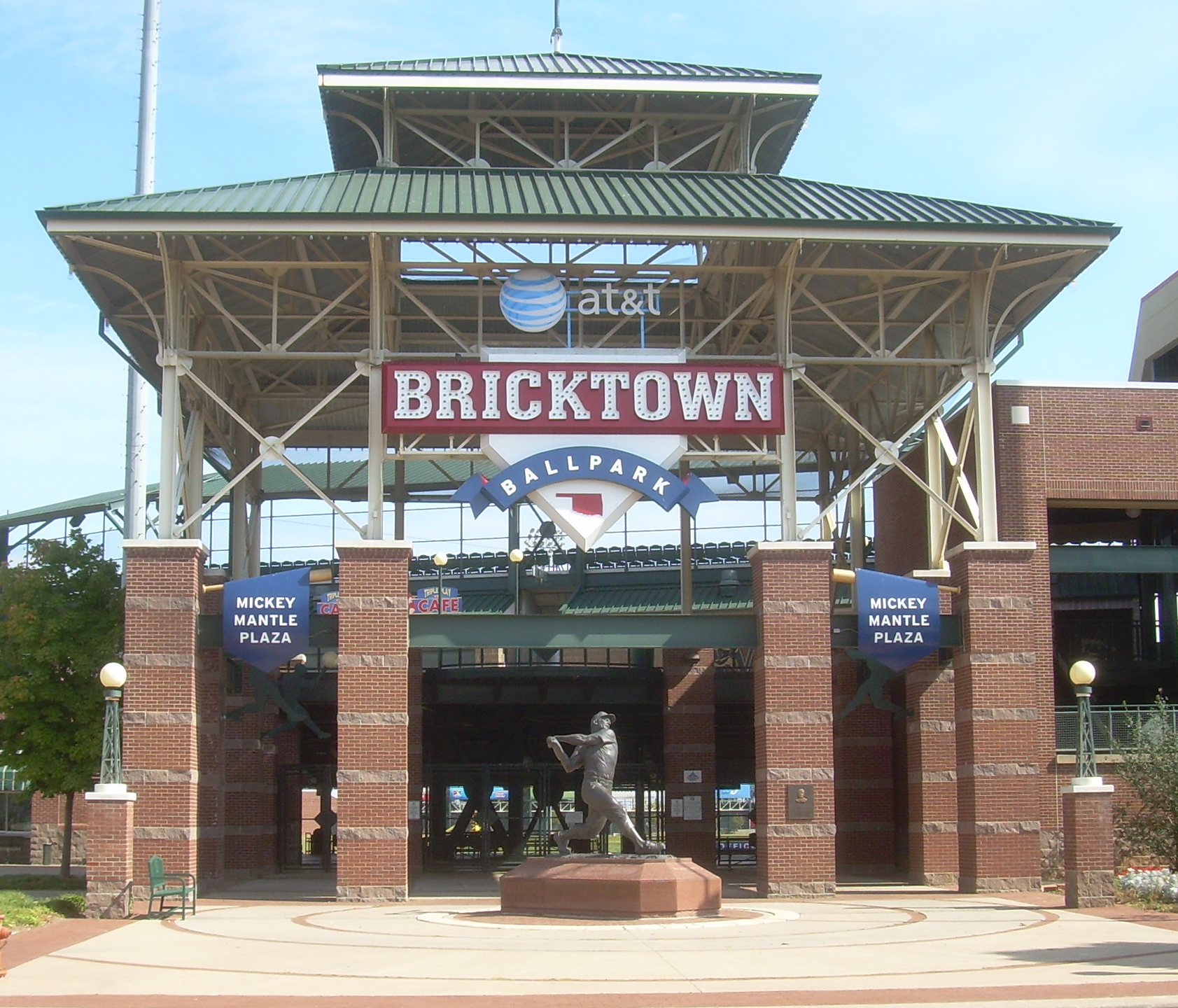
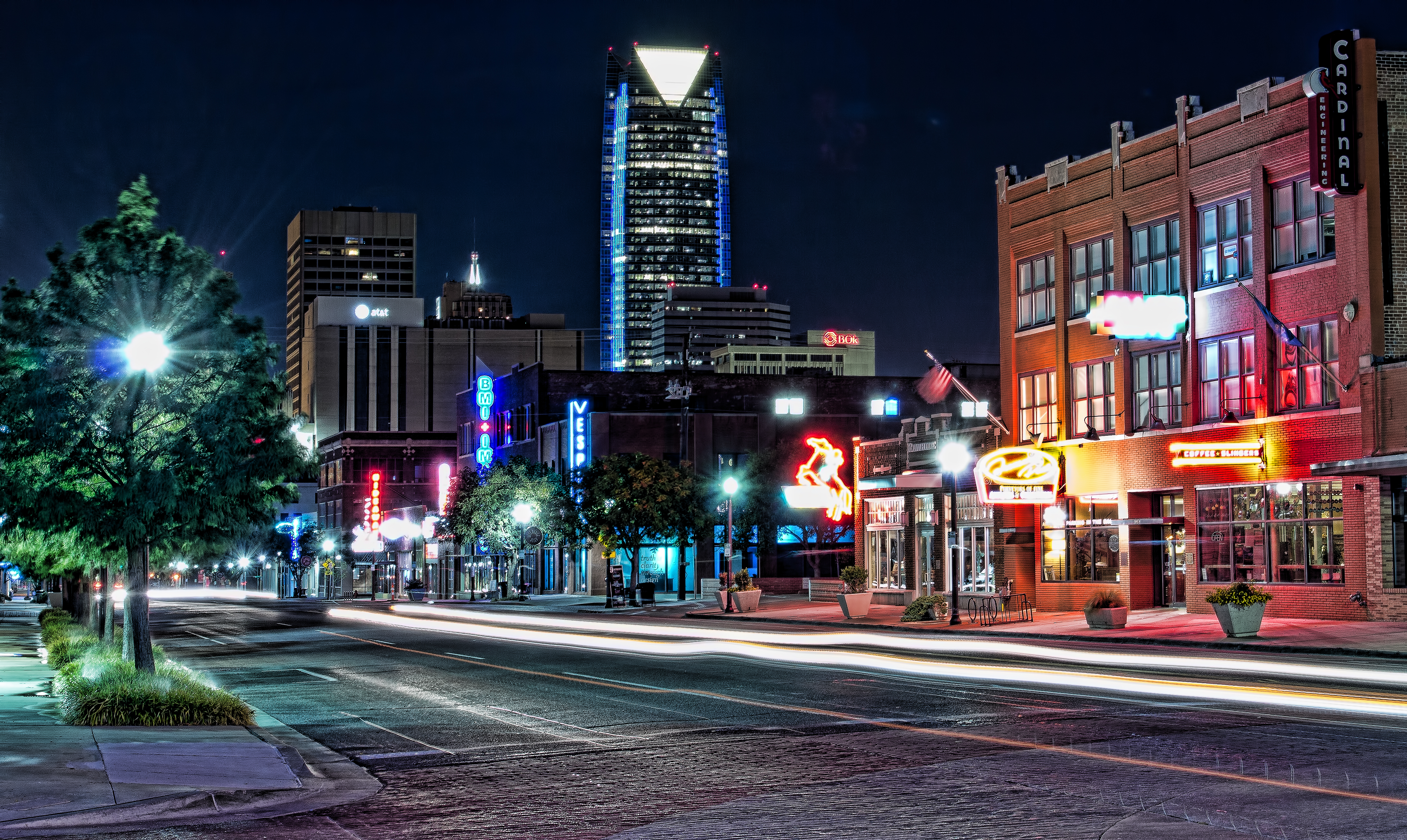

Overview of Oklahoma City
Oklahoma City, the capital of the U.S. state of Oklahoma, sits in the center of Oklahoma County at the crossroads of the southern Great Plains. The city has a population of roughly 680,000 residents, with a metropolitan area approaching 1.4 million, and is known for its blend of Western heritage, Native American cultural influence, and a revitalized downtown that has gained attention in recent years. Often described as a friendly, sprawling city with big skies and a down-to-earth character, Oklahoma City serves as a gateway to the wider region's cowboy culture, working cattle ranches, and historic Route 66 landmarks. It lies about 160 miles south of Wichita, Kansas, and roughly 200 miles north of Dallas, Texas, placing it within easy driving distance of several major population centers of the central United States.
The Oklahoma City National Memorial stands at the heart of downtown, occupying the site of the 1995 Alfred P. Murrah Federal Building bombing. The outdoor symbolic memorial, with its reflecting pool, the Field of Empty Chairs, and the surviving "Survivor Tree," is free to visit at any hour, while the adjacent museum offers a more in-depth interpretive experience just a few steps away. Within walking distance of the memorial, Scissortail Park stretches roughly 70 acres along the Oklahoma River and opened in its current form in 2019, hosting concerts, festivals, and farmers markets throughout the year.
To the southwest of the city center, the Stockyards City district preserves a slice of Oklahoma City's cattle-era past. It remains home to working livestock auctions, Western wear shops, restaurants, and the famous Stockyards City Main Street, where the smell of leather and the sight of cowboys on horseback are still part of daily life. Visitors interested in the food and culture of the area often pair a trip here with a stop at the longtime Cattlemen's Steakhouse, a local institution that has been serving travelers and ranchers for decades.
The National Cowboy & Western Heritage Museum sits a short drive northeast of downtown, with a sizable collection of Western art, historic rodeo memorabilia, frontier artifacts, and exhibits on Native American heritage. Its outdoor Persimmon Hill complex features a re-created turn-of-the-century frontier town, making it a popular stop for families exploring the wider story of the American West. Together with other nearby draws such as Lake Hefner, the Oklahoma River boathouse district, and a number of Route 66 sites, these attractions give Oklahoma City a varied appeal for short-term rental visitors looking to combine big-city amenities with easy access to the Great Plains landscape beyond.
Want to know if a property in Oklahoma City is a good investment?
Enter an address to get instant revenue potential and comps.