
Elk City, Oklahoma
Want to see how Elk City compares to other top cities in Oklahoma? Explore all city regulations in Oklahoma. →
Elk City, OK
Very Investor Friendly
STR Regulations for Elk City, Oklahoma
Important note on local rules: Based on the Elk City Code of Ordinances provided, there are no city‑ or county‑specific sections that explicitly authorize, prohibit, or regulate short‑term rentals/vacation rentals in Elk City (Beckham County). The document contains no chapter or section titled “Short-Term Rentals,” “Transient Lodging,” “Vacation Rentals,” or similar, and does not appear to include a local hotel/motel or occupancy tax (transient lodging tax) chapter. In the absence of city‑specific STR regulations, short‑term rentals in Elk City are governed by Oklahoma state law, including sales tax and transient lodging occupancy tax requirements.
Are Short-Term Rentals Allowed in Elk City, OK?
Allowed under general state law and no local prohibition identified in the provided code. Elk City’s municipal code does not contain short‑term rental–specific rules. Investors may operate short‑term rentals in Elk City provided they comply with applicable state tax and lodging statutes and general municipal requirements such as building, fire, and health and safety codes.
How to Start a Short-Term Rental Business in Elk City, OK
- Confirm zoning and property use
- Verify zoning allowances for short‑term rental use with the Planning & Zoning Department and the Building Department. Use the property in a manner consistent with the adopted building, fire, and life safety codes and the local nuisance/quiet hours ordinances.
- Address parking, occupancy, noise, and exterior appearance (signage, lighting) to avoid nuisance complaints.
- Register for Oklahoma tax accounts
- Register your business with the Oklahoma Tax Commission (OTC) to collect and remit:
- Sales tax on lodging and related charges.
- Transient lodging occupancy tax on the gross receipts from lodging (typically an additional percentage due to the state).
- Obtain any applicable OTC permit or account numbers and file returns according to the OTC schedule.
- Meet health and safety standards
- Comply with state and local health regulations for lodging.
- Provide functioning smoke and CO detectors; maintain safe egress; post emergency egress maps/instructions; ensure address visibility and posted house rules.
- For properties serving food or beverages, confirm any applicable food service permits and health department requirements.
- Obtain insurance and maintain property
- Carry adequate liability coverage appropriate for transient lodging.
- Maintain the property to meet building, fire, and safety standards.
- Professional operation practices
- Use reputable listing platforms and screening measures; publish clear house rules (quiet hours, occupancy limits, parking, pet policy, smoking, events).
- Provide and maintain accurate listing descriptions; avoid “rent by owner” tax avoidance by collecting/remitting required taxes.
- Maintain accurate records and remittances for OTC.
Required Documents, Permits, Licenses, and Guidelines
- OTC Sales Tax and Transient Lodging Occupancy Tax registration/account:
- Oklahoma Tax Commission registration for sales tax collection on lodging and related charges.
- Collection and remittance of the transient lodging occupancy tax on gross receipts from lodging.
- OTC permits/accounts as assigned; file per OTC schedule.
- General business compliance:
- Business license (if required for local commerce—confirm with the City Clerk).
- Use zoning confirmation (Planning & Zoning Department) to ensure short‑term rental use is permitted.
- Health and safety:
- Compliance with adopted building, fire, electrical, plumbing, and mechanical codes for lodging facilities.
- Compliance with state/local health department standards for lodging and food (if applicable).
- Insurance:
- Property and general liability coverage appropriate for a lodging operation.
- Other property documentation:
- Post house rules; emergency contact information; occupancy limits; safety instructions; parking rules.
- Keep records supporting compliance (permits, tax filings, insurance, inspections).
Specific Regulations for Short-Term Rentals (City, County, and State)
- City of Elk City (no STR‑specific rules found in provided code):
- No municipal STR licensing or registration requirement identified.
- No local transient lodging occupancy tax or hotel/motel tax chapter identified.
- General codes apply:
- Building and Construction (permits/inspections as applicable).
- Fire Protection (life safety requirements, egress, alarms).
- Health and Safety (public health standards and enforcement).
- Nuisances (noise, exterior conditions, parking).
- Offenses (code enforcement and penalties).
- Administration and Management (municipal authority and enforcement).
- County (Beckham County):
- No county‑level STR rules or occupancy tax provisions are provided. Verify any county business licensing or public health requirements with county offices if necessary.
- State of Oklahoma (governing short‑term rentals when no local STR rules exist):
- Lodging services are taxable. Short‑term rentals must collect and remit sales tax on lodging charges and applicable fees.
- The state also imposes a transient lodging occupancy tax on the gross receipts from lodging. STR operators must register with the OTC and remit these taxes per state rules.
- Additional compliance may apply under local health and safety statutes and administrative code provisions for lodging.
Contact Information (Local Authority for STRs and General Municipal)
Important: The Elk City Code sections provided contain limited contact details. Confirm phone/email/website with official city sources.
- City Hall – Municipal Offices (general administration, permits, and business licensing):
- Email: cityinfo@elk-city.com
- Address: City Hall, City of Elk City, OK
- Phone: Verify current number via official city website.
- Planning & Zoning Department:
- Contact: Municipal Planning & Zoning Board (Chapter 18; general planning authority).
- Purpose: Zoning confirmation and land use questions relevant to STRs.
- Building Department (Building Inspector):
- Purpose: Permits, inspections, and building code compliance; see Building and Construction (Chapter 4) and Building Inspector (Section 1‑44).
- Fire Department (Fire Chief):
- Purpose: Fire/life safety inspections and egress/compliance; see Fire Protection (Chapter 8) and Fire Chief (Section 1‑42).
- Health Department (County‑City Co‑operative Health Department):
- Purpose: Lodging health standards and inspections; see Health Department (Section 1‑65).
- Oklahoma Tax Commission (OTC) – State taxation authority for lodging:
- Purpose: Sales tax and transient lodging occupancy tax registration, filing, and compliance.
- Phone/email/website: Verify via OTC official channels.
- Municipal Court and Code Enforcement:
- Purpose: Nuisance enforcement and ordinance violations (Chapters 14, 15).
- Municipal Clerk:
- Purpose: Licensing/permits and records (Section 1‑38).
Links to Source Pages
- Elk City Code of Ordinances (PDF, provided source): www.elkcity.com/wp-content/uploads/2021/06/Elk_City_OK_Code_of_Ordinances_2021_FULL.pdf
- STRIsker page for Elk City (site issue noted; not used): www.strisker.com/place/elk-city-ok/
Practical Guidance for Investors
- Assume state‑level tax and lodging compliance applies unless local STR rules are formally adopted.
- Consult the Building, Fire, and Health Departments before opening to ensure life safety and lodging standards are met.
- Document zoning compliance and maintain a compliance file (permits, tax registrations, inspections, insurance).
- Implement house rules and guest communication to manage noise, parking, and occupancy to prevent nuisance violations.
- Re‑check the Elk City Code annually for any new STR‑related ordinances; if none, continue to operate under state law and general municipal codes.
In summary: Short‑term rentals appear allowed in Elk City under general law with no city‑specific restrictions identified in the provided code. Investors should focus on state‑level tax compliance (sales tax and transient lodging occupancy tax), municipal building and fire code compliance, health standards, and good operational practices.
What do Airbnb hosts actually earn in Elk City?
Elk City hosts earn a median $19,230/year with $94 ADR and 60% occupancy.
Top performers pull in $27,004+ per year.
See the full Elk City market breakdownNext step
Found a property in Elk City?
Paste any address and get estimated revenue, cash-on-cash return, and comparable STR performance in under 5 minutes. 3 free analyses per day.
Free brief
Get the free Elk City STR Investment Brief
Revenue data, top neighborhoods, seasonal trends, and the key regulations for Elk City, Oklahoma in one email.
Elk City
Market Saturation Score
Photos of Elk City


Overview of Elk City
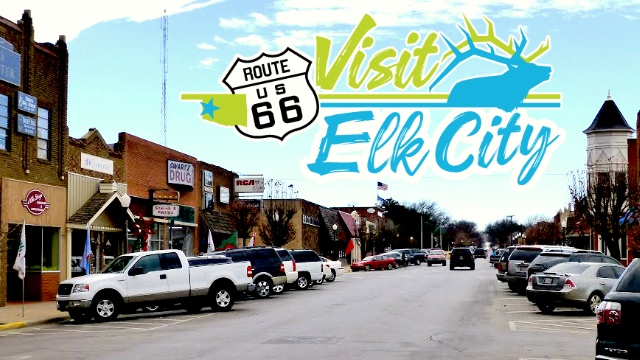
Elk City sits in Beckham County in western Oklahoma, a crossroads community with a population of roughly 11,500 residents. The city straddles historic Route 66 and modern Interstate 40, giving it a strong sense of mid-America travel heritage. It serves as a natural gateway to the western reaches of Oklahoma and the open landscapes of the Great Plains, located about 120 miles west of Oklahoma City. The town carries a friendly, small-city feel shaped by ranching, energy production, and the steady flow of travelers who pass through on their way across the country.
The centerpiece of Elk City's cultural offerings is the Route 66 Museum, a complex operated by the Oklahoma Historical Society that chronicles the history of the Mother Road and the communities it shaped. Located within Elk City itself, the museum is part of a larger campus that also includes exhibits on early transportation, pioneer life, and the agricultural roots of the region, making it a popular stop for road-trippers tracing the historic route across eight states.
A short drive northeast of Elk City, roughly 20 minutes away, brings visitors to the Washita Battlefield National Historic Site, managed by the National Park Service. The site preserves the location of the 1868 Battle of the Washita, where Lt. Col. George Armstrong Custer led an attack against a Cheyenne village led by Chief Black Kettle. The park offers interpretive trails, a visitor center, and a quiet landscape that draws history enthusiasts interested in the broader story of the Southern Plains.
For outdoor enthusiasts, Elk City's position makes it a reasonable base for exploring southwestern Oklahoma's varied landscapes. The rolling granite terrain of the Wichita Mountains and the fishing waters around Lake Altus-Lugert and Quartz Mountain State Park lie within roughly an hour's drive to the southeast, offering a pleasant change of pace from the open plains that surround the city.
Elk City offers short-term rental owners a compelling mix of small-town affordability, walkable historic districts, and steady visitor traffic tied to Route 66 nostalgia. Its combination of in-town museums, nearby national park land, and central location along a major interstate makes it well suited for travelers exploring the American heartland, whether they are tracing the Mother Road, studying frontier history, or simply passing through on a longer road trip.
Want to know if a property in Elk City is a good investment?
Enter an address to get instant revenue potential and comps.