
Ashtabula, Ohio
Want to see how Ashtabula compares to other top cities in Ohio? Explore all city regulations in Ohio. →
Ashtabula, OH
Challenging To Investors
STR Regulations for Ashtabula, Ohio
Overview: Are Short-Term Rentals Allowed in Ashtabula, Ohio?
Yes, short-term rentals are explicitly allowed in Ashtabula, Ohio, both at the city level and throughout Ashtabula County. However, they are heavily regulated and require proper licensing, registration, and compliance with both city and county requirements.
Short-term rentals are defined as the rental of a legally-licensed dwelling unit for periods of less than 30 consecutive days per occurrence. Any owner renting a property for 30 consecutive days or less is required to apply for a Short-Term Rental License and comply with all applicable ordinances, resolutions, and regulations.
What do Airbnb hosts actually earn in Ashtabula?
Ashtabula hosts earn a median $21,556/year with $195 ADR and 47% occupancy.
Top performers pull in $32,150+ per year.
See the full Ashtabula market breakdownHow to Start a Short-Term Rental Business in Ashtabula
Step 1: County-Level Registration
- Obtain Ashtabula County STR Business License through the county's online portal (ashtabulacounty.munirevs.com)
- Register for county lodging tax collection (5% rate)
- Complete required tax registration before beginning operations
Step 2: City-Level Compliance
- Register as a landlord with the City of Ashtabula Planning and Community Development
- Pay annual Occupancy Permit fee
- Schedule yearly property inspection through the Housing Inspector
- Ensure compliance with International Property Maintenance Standards
Step 3: Local Tax Registration
- Register for city lodging tax (3% rate for Ashtabula City)
- File monthly lodging tax returns
- Maintain separate records for county and city taxes
Step 4: Operational Setup
- Display STR License number prominently in the rental unit
- Set up tax collection systems (platforms like Airbnb do not collect local taxes)
- Establish compliance monitoring for ongoing requirements
Required Documents, Permits, Licenses, and Guidelines
County-Level Requirements
- Ashtabula County STR Business License (required before advertising)
- Annual registration for all STR addresses
- Lodging tax registration (5% county rate)
- Monthly lodging tax filing and payment
City of Ashtabula Requirements
- Rental property registration with Planning & Community Development
- Annual Occupancy Permit fee
- Property inspection by Housing Inspector (yearly)
- Property registration including owner information and contact details
- Compliance with Chapter 13 of City Codified Ordinance
- Adherence to International Property Maintenance Standards
Documentation Requirements
- STR License number display in conspicuous location within unit
- Local contact information (required if owner resides more than 25 miles from property)
- Tax forms filed monthly (due last day of month following rental activity)
- Zero-file returns required even with no rental activity
Safety and Compliance Standards
- International Property Maintenance Code compliance
- City ordinance adherence
- Regular code enforcement compliance
Specific Regulations for Short-Term Rentals
Ashtabula County Regulations
Licensing Limits:
- One STR license per dwelling unit
- Maximum one "whole home" rental per owner
- Maximum one "partial home" rental per owner
- Each STR requires separate license
Tax Obligations:
- 5% county lodging tax on all rental receipts
- Monthly filing deadline (last day of month following rental period)
- 10% penalty for late payments
- Additional $100/month penalty if 6+ months late
Tax Collection:
- No automatic collection by Airbnb or Vrbo
- Owners responsible for tax collection and remittance
- Multiple payment options accepted (credit cards, e-check, ACH)
Reporting Requirements:
- Combined reporting available for some municipalities (Ashtabula City, Austinburg Township, Conneaut City, Geneva City, Saybrook)
- Separate reports required for Geneva on the Lake and Harpersfield Township
City of Ashtabula Regulations
Registration Requirements:
- Landlord must register with Planning & Community Development
- Owner information required including name, address, phone
- Local agent required if owner lives more than 25 miles from property
- Email registration to pcd@cityofashtabula.com with property address
Inspection Requirements:
- Yearly inspections for all rental units
- Exterior inspections for owner-occupied properties
- Code enforcement of City Ordinances and IPMC standards
- Compliance verification before operations begin
Vacant Property Compliance:
- Separate registration required for vacant structures
- Criminal charges for failure to register (Section 1369)
- Specific forms available for vacant property registration
- Exemption processes available under certain conditions
State of Ohio Regulations
Definition and Classification:
- Residential properties rented under 30 days classified as STRs
- State-level license not required for basic operations
- Local regulations supersede state minimums
State Tax Obligations:
- Ohio sales tax (5.75%) on gross rental receipts
- Registration required with Ohio Department of Taxation
- Vendor's license needed for tax collection
- Local registration also required for applicable jurisdictions
General Framework:
- Short-term rentals legal throughout Ohio
- Zoning restrictions vary by municipality
- Safety standards enforced locally
- Insurance requirements may apply
Contact Information for Local Authority
Ashtabula County STR Administration
GovOS Support (STR System)
- Phone: (888) 751-1911
- Email: blt.str.support@govos.com
- Online: ashtabulacounty.munirevs.com
Cathy Coffield (County Lodging Tax)
- Phone: (440) 576-3649
- Email: CACoffield@ashtabulacounty.us
- Address: 25 West Jefferson St., Jefferson OH 44047
- Hours: Monday-Friday, 8:00 AM - 4:30 PM
City of Ashtabula Administration
Planning & Community Development
- Phone: (440) 992-7118
- Email: pcd@cityofashtabula.com
- Address: 4250 Lake Avenue, Ashtabula OH 44004
- Hours: Monday-Friday, 8:00 AM - 4:30 PM
City Manager's Office
- Phone: (440) 992-7103
- Address: City of Ashtabula Municipal Building, 4250 Lake Avenue, Ashtabula OH 44004
Amy Coursen (Fair Housing)
- Email: acoursen@cityofashtabula.com
- Phone: (440) 992-7154
Additional Contacts
Ashtabula County General
- Phone: (440) 576-9090
- Address: 25 W. Jefferson St., Jefferson, OH 44047
- Hours: Monday-Friday, 8:00 AM - 4:30 PM
Geneva on the Lake Contact
- Phone: (440) 466-8197
- Rate: 3% lodging tax
Harpersfield Township Contact
- Phone: (440) 466-2242
- Rate: 3% lodging tax
Links to Source Pages
Primary Sources
-
Ashtabula County STR FAQ and Licensing - Complete STR license information, tax requirements, and operational guidelines
-
Ashtabula County Lodging Tax Information - Official county lodging tax rates, registration requirements, and contact information
-
City of Ashtabula Housing Division - Rental registration requirements, inspection processes, and local compliance standards
Supporting Information
-
Geneva STR Regulations - Additional context for Ashtabula County STR operations
-
Ohio STR Laws Overview - State-level regulatory framework and compliance requirements
Critical Compliance Notes for STR Investors
🚨 Immediate Action Items:
- Register with county before advertising any STR property
- Complete city rental registration and schedule inspection
- Set up tax collection systems (no automatic collection by platforms)
- Display license numbers prominently in all rental units
⚠️ Common Pitfalls:
- Operating without proper licensing can result in penalties
- Missing tax filing deadlines incurs 10% penalties plus monthly charges
- Skipping property inspections violates city requirements
- Failing to register with city when renting within city limits
💡 Best Practices:
- Maintain detailed records of all transactions and compliance activities
- File zero returns during inactive periods
- Renew registrations promptly before expiration
- Monitor tax rate changes across different jurisdictions
This comprehensive regulatory environment reflects Ashtabula's commitment to balancing STR business opportunities with community safety and neighborhood integrity. Success requires meticulous attention to both county and city requirements, but the structured approach provides clear pathways for compliant operations.
Next step
Found a property in Ashtabula?
Paste any address and get estimated revenue, cash-on-cash return, and comparable STR performance in under 5 minutes. 3 free analyses per day.
Free brief
Get the free Ashtabula STR Investment Brief
Revenue data, top neighborhoods, seasonal trends, and the key regulations for Ashtabula, Ohio in one email.
Ashtabula
Market Saturation Score
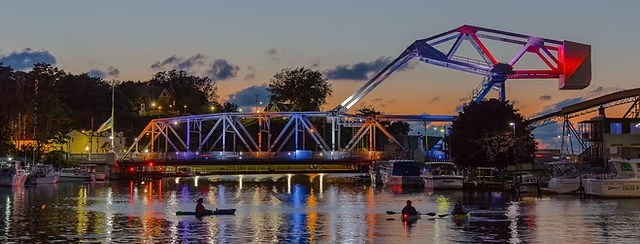
Photos of Ashtabula


Overview of Ashtabula
Ashtabula is a small port city in Ashtabula County, Ohio, sitting on the southern shore of Lake Erie in the state's northeastern corner. With a population of roughly 18,000, it carries the feel of a working-class lakeside community that has been quietly reinventing itself around its waterfront, its industrial heritage, and its proximity to some of Ohio's most distinctive countryside. The city is best known as a gateway to the Grand River Valley wine region, the covered-bridge country of Ashtabula County, and the long stretch of Lake Erie shoreline that draws summer visitors from across the region. From Cleveland, Ashtabula is about 55 miles to the northeast, an easy drive of roughly one hour along Interstate 90 and US Route 20.
A short stroll from downtown, the Lake Erie shoreline forms the centerpiece of any visit. The city maintains public access points and a harbor area where travelers can watch freighters and pleasure craft come and go, and the adjacent beaches and lighthouses are popular spots during the warmer months. The lake itself is the geographic anchor of the region, and Ashtabula's lakefront parks give visitors a front-row seat to it.
Just a few minutes from the city center, the Hubbard House stands as one of northeastern Ohio's most meaningful historical landmarks. The house is a documented stop on the Underground Railroad and now operates as a museum, offering guided tours that share the story of the freedom seekers and conductors who passed through the area in the decades before the Civil War. It anchors the city's historic district and pairs naturally with a walk through the surrounding streets of 19th-century architecture.
About 20 minutes west along the lake, the small resort community of Geneva-on-the-Lake offers a different flavor, with a historic lakeside strip of arcades, casual restaurants, and a small public beach. Inland, the rolling farmland of Ashtabula County is home to more than 20 covered bridges, making the area one of the largest concentrations of covered bridges in the country, and to a growing cluster of wineries and vineyards in the Grand River Valley.
For short-term rental investors, Ashtabula offers a combination that is increasingly rare in the Midwest: an authentic, affordable small city on a Great Lake, within an hour of a major metropolitan area, and surrounded by a wine, covered-bridge, and lake-shore tourism economy that already draws visitors year after year. Its mix of historic attractions, outdoor recreation, and proximity to Cleveland makes it a flexible base for travelers who want a quieter, more characterful alternative to the usual Ohio destinations.
Want to know if a property in Ashtabula is a good investment?
Enter an address to get instant revenue potential and comps.