
Troy, New York
Want to see how Troy compares to other top cities in New York? Explore all city regulations in New York. →
Troy, NY
Generally Investor Friendly

STR Regulations for Troy, New York
Overview: Are STRs allowed in Troy, NY? Short‑term rentals are permitted in Troy, NY, subject to compliance with New York State regulations and the City’s rental registration requirements. Troy does not publish a city‑specific short‑term rental (STR) ordinance. Investors therefore operate under state‑wide STR rules (registry, data reporting, and tax obligations) and Troy’s general landlord registry, which applies to rental properties that are non‑owner‑occupied. Investors must secure all required registrations, verify tax obligations, and maintain insurance and safety standards consistent with city and state requirements. [1][2][3]
How to Start an STR Business in Troy, NY
- Confirm eligibility and zoning: While Troy has not enacted STR‑specific restrictions, zoning and occupancy limits can still affect operations. Validate that your property’s use is lawful for rental activity and that you meet life‑safety standards.
- Register with the state under New York’s new STR regime: Starting around March 25, 2025, hosts must register each STR with the New York Department of State (DOS) or a designated municipal system, and renew every two years. Platforms (e.g., Airbnb, Vrbo) must verify registration numbers and remove listings that lack valid registration. [1]
- Comply with Troy’s landlord registry: Even if the state allows the use, Troy’s Code requires non‑owner‑occupied rental properties to register with the Bureau of Code Enforcement within 90 days of becoming a rental property. Owners located more than 20 miles outside the city or any non‑natural person owners must designate a local managing agent who resides or has a regular business within 20 miles of Troy. Insurance documentation is required. [2]
- Obtain an Employer Identification Number (EIN): Required if operating through an LLC, corporation, or partnership; recommended for all hosts to separate finances and facilitate tax filings.
- Register for and collect taxes: STRs are treated as “hotels” for tax purposes. Hosts must register for New York State sales tax, collect applicable local sales taxes, and, where applicable, remit Metropolitan Commuter Transportation District (MCTD) sales tax. Confirm local hotel occupancy tax requirements for Troy/Rensselaer County and enroll in all necessary remittance programs. [1]
- Set up insurance and safety compliance: Maintain property and liability coverage. If the property is mortgaged, verify lender consent for STR use. Install and maintain smoke and carbon monoxide detectors and fire extinguishers as required by applicable codes; be prepared for safety inspections where applicable.
- Operate through compliant booking platforms: Platforms must verify registration and report occupancy and rental activity to the state. Hosts should ensure all listings match current registrations to avoid platform‑level removals. [1]
- Bookkeeping and renewals: Keep meticulous records for state data submissions and taxes. Prepare to renew the DOS registration biennially and maintain Troy landlord registry updates within 30 days of any material change. [1][2]
Required Documents, Permits, Licenses, and Guidelines New York State (statewide STR framework)
- STR registration and renewal: Hosts must register each STR with the NYS DOS (or a municipal registry where applicable). Registration numbers must be included on listings. Renewal is biennial. [1]
- Booking‑platform compliance: Platforms must verify registration, block unregistered listings, and share monthly/quarterly data (registration numbers, property locations, occupancy, guest counts) with the state and municipalities. Platforms must register, collect/remit taxes, and maintain records. [1]
- Tax compliance: Register with the NYS Tax Department for sales tax; comply with local sales tax and MCTD where applicable; confirm and collect any local hotel occupancy tax; file returns on the required cadence. STRs are taxed as hotels. [1]
City of Troy (general landlord registry)
- Landlord Registration Statement (per property): Submit to the Bureau of Code Enforcement; include property details, owner information, and required insurance proof. Filing fee: $150; late fee: $75 per additional 60 days of unregistered status. Failure to register is a violation punishable by a fine of $100–$500, imprisonment up to 15 days, or both. [2]
- Managing agent designation (if required): If the owner resides >20 miles outside Troy or is not a natural person, a local managing agent (natural person, 18+, residing or with a regular business within 20 miles) must be designated, with contact details provided. [2]
- Insurance proof: Provide the name, address, and phone of the insurance provider and a copy of the policy with the registration. [2]
- Update obligations: Update the landlord registration within 30 days of changes in ownership, managing agent, insurance, or other requested items. New owners must file a new statement within 30 days of transfer. [2]
- Certificate of Occupancy: Confirm the property’s current CO reflects legal residential use; some investors secure new COs reflecting STR or short‑stay occupancy when necessary. This is a practical step where the city’s records or use classification require it.
- Safety inspections (as applicable): Depending on building type and local requirements, be prepared to demonstrate compliance with fire and building codes.
Notes
- Troy’s published registry focuses on rental property identification and landlord accountability. It does not itself create a separate STR permit category. STR operations must therefore satisfy the state registry and tax regime and the city’s rental registration and safety standards. [1][2]
Specific Regulations by Level New York State (effective March 25, 2025; statewide STR registry and reporting)
- Registration: Hosts must register each STR with the NYS DOS (or designated municipal system) and renew every two years. Registration numbers must appear on listings. [1]
- Platform obligations: Booking services must verify registrations, remove unregistered listings, and submit monthly or quarterly reports to the state containing registration numbers, property locations, occupancy details, and guest counts; platforms must also register, collect/remit applicable taxes, and maintain records. [1]
- Enforcement: Cities, towns, villages, and the Attorney General may enforce violations through legal action; repeated violations can trigger registration revocation or fines up to $500 per day. [1]
- Taxation: STRs are classified as “hotels” for tax purposes. Hosts and platforms must collect and remit applicable state and local taxes (including sales tax, MCTD where applicable, and any local hotel occupancy taxes). [1]
Rensselaer County (Troy’s county)
- No county‑specific STR regulations are provided in the sources. Expect standard state tax administration and any county‑level occupancy tax programs if applicable; confirm directly with local tax authorities. [1]
City of Troy
- Landlord registry: Non‑owner‑occupied rental properties must register with the Bureau of Code Enforcement within 90 days. A $150 filing fee applies (waivable if filed within 90 days of the effective date or CO issuance for new units), with a $75 late fee per additional 60 days of non‑compliance. Unpaid fees can be added to the property’s annual tax levy. [2]
- Managing agent: Required where the owner resides >20 miles outside Troy or is not a natural person; the agent must be a natural person, 18+, residing or regularly conducting business within 20 miles. [2]
- Insurance and documents: Provide insurance provider details and a copy of the policy with registration; maintain and update owner/agent information within 30 days of changes. [2]
- Penalties: Failure to comply is a violation punishable by a fine of $100–$500, up to 15 days imprisonment, or both. [2]
Contact Information Bureau of Code Enforcement (City of Troy)
- Address: 433 River Street, Troy, NY
- Phone: 518‑279‑7180
- Fax: 518‑270‑4547
- Notes: Handles landlord registrations, rental property compliance, and related inquiries. [2]
New York State Department of State (NYS DOS) — Short‑Term Rental Registry
- Information: State registry for STRs and platform requirements. Details for hosts and platforms, including how to register and comply, are provided on the DOS website. (Refer to the state bill text for statutory obligations.) [1]
- Phone: Not listed in the provided sources. Contact via DOS website for host registration guidance.
New York State Tax Department (NYS Tax)
- Topic: Sales and occupancy tax registration, filing requirements, and guidance for STRs (treated as hotels).
- Phone: Not listed in the provided sources. Hosts should enroll through the Tax Department’s online services and consult state publications for rates and filing cadence. [1]
Local Authority in Charge of STRs (Troy)
- City enforcement for rental properties is handled by the Bureau of Code Enforcement. STR registration and data/reporting oversight is handled at the state level by the NYS DOS in coordination with municipalities. Hosts should maintain compliance with both. [1][2]
Important Links to Source Pages
- NY statewide STR registry law and platform/data obligations: www.news10.com/news/ny-news/new-york-short-term-rental-regulations-start-in-2025/
- Background on the bill’s passage and policy intent: www.timesunion.com/capitol/article/short-term-rentals-airbnb-face-new-rules-n-y-19508426.php
- Troy Landlord Registration form and Chapter 177 (definitions, fees, penalties): www.troyny.gov/DocumentCenter/View/176/
- NY STR licensing and tax overview (context, rates, deductions): www.gosummer.com/post/new-york-short-term-rental-law
Additional Investor Notes
- Compliance is layered: Even absent city‑specific STR rules, Troy’s landlord registry and state registry/tax regime apply. Missing either layer can trigger city penalties or platform‑level removal.
- Insurance is central to Troy’s registry and to lender/occupancy requirements. Maintain coverage and submit proof with registration and upon renewal.
- Expect audits and data checks: State reporting gives municipalities visibility into STR activity; maintain records to support filings and registration renewals.
- Market nuance: Because Troy has not published a separate STR ordinance, assume state rules and city rental standards govern operations; re‑confirm any local changes before scaling.
References [1] New York short‑term rental regulations start in 2025 (News10). www.news10.com/news/ny-news/new-york-short-term-rental-regulations-start-in-2025/ [2] City of Troy Bureau of Code Enforcement – Landlord Registration Statement (Chapter 177). www.troyny.gov/DocumentCenter/View/176 [3] Short‑term rentals such as Airbnb could face new rules in N.Y. (Times Union). www.timesunion.com/capitol/article/short-term-rentals-airbnb-face-new-rules-n-y-19508426.php [4] New York Short Term Rental & Airbnb Laws (Summer). www.gosummer.com/post/new-york-short-term-rental-law
What do Airbnb hosts actually earn in Troy?
Troy hosts earn a median $22,437/year with $136 ADR and 62% occupancy.
Top performers pull in $35,388+ per year.
See the full Troy market breakdownNext step
Found a property in Troy?
Paste any address and get estimated revenue, cash-on-cash return, and comparable STR performance in under 5 minutes. 3 free analyses per day.
Free brief
Get the free Troy STR Investment Brief
Revenue data, top neighborhoods, seasonal trends, and the key regulations for Troy, New York in one email.
Troy
Market Saturation Score
Photos of Troy

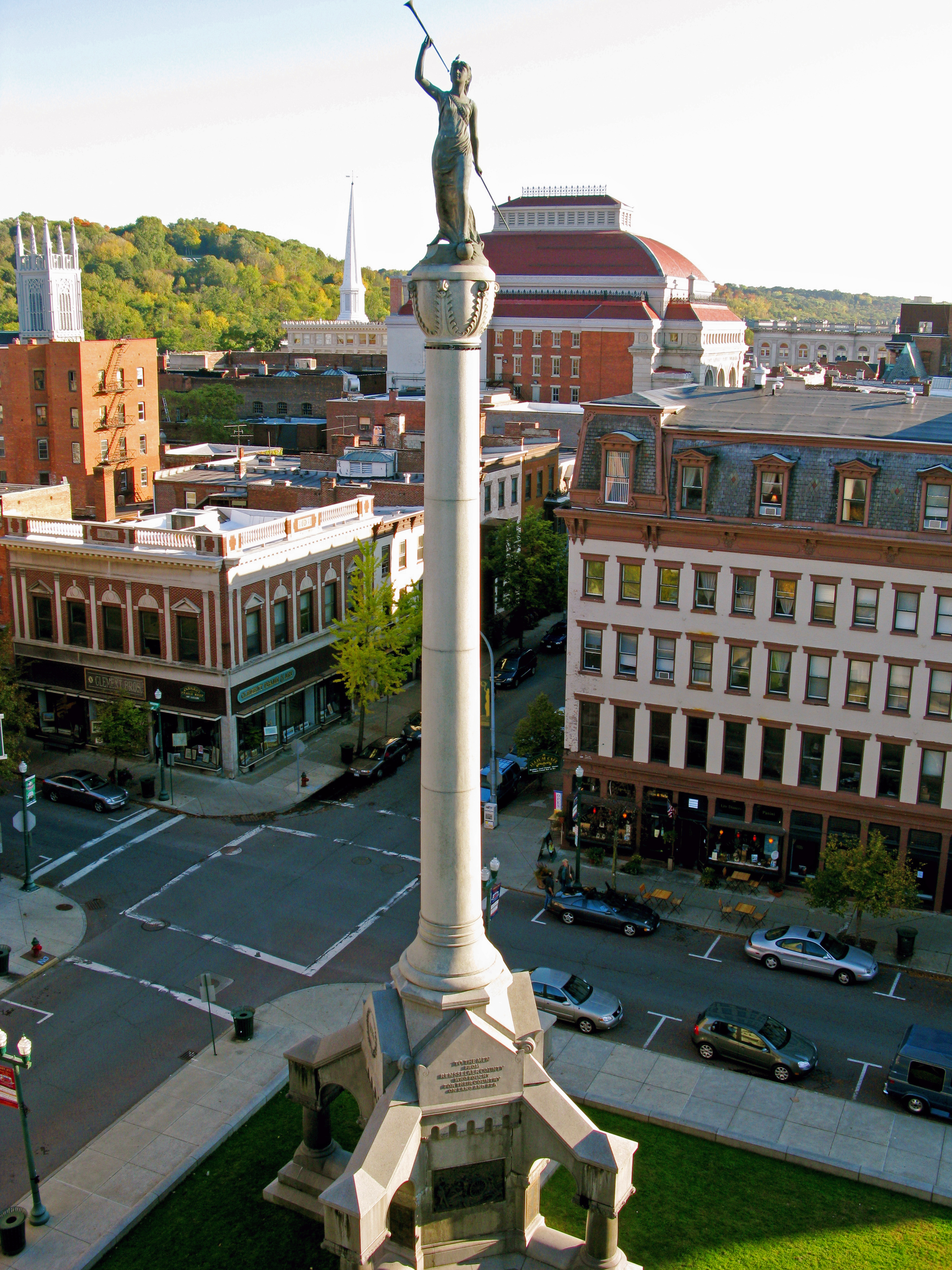

Overview of Troy
Troy sits on the eastern bank of the Hudson River in Rensselaer County, New York, just across the water from the state capital of Albany. The city has a population of roughly 50,000 residents and carries a distinctive 19th-century industrial character, with restored brownstones and brick rowhouses lining its compact downtown streets. It is best known as the adopted home of "Uncle Sam" — the meatpacker Samuel Wilson worked in Troy in the early 1800s — and as the home of Rensselaer Polytechnic Institute, one of the country's oldest technological universities. Troy also serves as a useful gateway to the broader Capital Region, the upper Hudson Valley, and the southern Adirondacks, sitting roughly 150 miles north of New York City and only a few miles east of Albany.
The Troy Savings Bank Music Hall is one of the city's crown jewels, a 19th-century concert venue that has hosted everything from classical performances to rock legends and is recognized for its remarkable acoustics and ornate interior. Located on Second Street in the heart of downtown, it continues to operate as a performing arts center and is widely regarded as one of the finest small concert halls in the country.
Just up the hill from downtown sits Rensselaer Polytechnic Institute, founded in 1824 and consistently ranked among the nation's top engineering and technology schools. Its campus draws a steady stream of visitors for lectures, sporting events, conferences, and tours, and contributes a significant year-round population of students, faculty, and visiting families.
A short drive north of Troy, roughly 30 to 40 minutes via Interstate 87, brings visitors to Saratoga Springs and the Saratoga Race Course, a world-famous thoroughbred horse racing venue that draws hundreds of thousands of spectators each summer. Beyond the track, the town offers mineral spas, performing arts venues, and a lively downtown, making it a popular day-trip or overnight excursion from Troy.
Closer to home, the Troy Waterfront Farmers Market fills the riverfront every Saturday with regional produce, prepared foods, and crafts, anchoring a stretch of the Hudson that has been gradually redeveloped with parks, walking paths, and event space. The surrounding riverfront offers easy access to cycling and pedestrian trails, and the city's historic districts — filled with Victorian homes, churches, and former factory buildings — reward visitors who prefer to explore on foot.
Troy's combination of architectural character, a compact walkable core, riverfront amenities, and proximity to Albany, Saratoga Springs, and the Adirondacks makes it an appealing base for short-term rental operators. Year-round demand comes from RPI families and visitors, state government business in Albany, and seasonal travelers heading north to Saratoga's racing and summer events, while the city's preserved 19th-century streetscapes provide the kind of place-based atmosphere that draws guests looking for something more distinctive than a standard chain-hotel stay.
Want to know if a property in Troy is a good investment?
Enter an address to get instant revenue potential and comps.