
Staten Island, New York
Want to see how Staten Island compares to other top cities in New York? Explore all city regulations in New York. →
Staten Island, NY
Unfriendly To Investors
STR Regulations for Staten Island, New York
Overview: Are Short‑Term Rentals Allowed in Staten Island?
Short‑term rentals are permitted in New York City (including Staten Island) only under very narrow conditions established by Local Law 18 (2022) and NYC’s Short‑Term Rental Registration program. The law is explicit:
- Hosts must be present in the same unit as their guests.
- No more than two guests may stay at a time.
- Every guest must have access to all parts of the dwelling unit and each exit.
- Hosts cannot rent out an entire apartment or home to visitors for fewer than 30 days, even if the host owns or lives in the building. This applies to all permanent residential buildings regardless of the number of units.
- Registration with the Mayor’s Office of Special Enforcement (OSE) is mandatory for eligible hosts; booking platforms cannot process transactions for unregistered listings.
Note on geographic scope: The rules summarized here apply citywide and therefore to Staten Island. There are no separate, borough‑specific STR regulations; New York City (including Staten Island) follows the same requirements.
What do Airbnb hosts actually earn in Staten Island?
Staten Island hosts earn a median $16,297/year with $95 ADR and 77% occupancy.
Top performers pull in $24,066+ per year.
See the full Staten Island market breakdownHow to Start a Short‑Term Rental Business in Staten Island
- Confirm eligibility and legal viability
- Ensure you will be present in the unit during all guest stays (host‑in‑residence model).
- Your property cannot be:
- A New York City Housing Authority (NYCHA) apartment.
- A rent‑controlled or rent‑stabilized apartment.
- A Single‑Room Occupancy (SRO) unit.
- If the building’s lease or occupancy agreement prohibits short‑term rentals, the owner may notify OSE to have the address placed on the prohibited buildings list.
- Understand that rentals of 30 consecutive days or more are outside the STR regime and do not require registration.
- Register with the city (OSE)
- Submit an application through the OSE Short‑Term Rental Registration Portal.
- Once approved, you will receive a unique registration number. Booking platforms may only process transactions for registered listings.
- Prepare to operate compliantly
- You must remain present and share living space with guests; do not restrict guest access to any part of the unit or any exit.
- Limit occupancy to no more than two guests.
- Comply with all other applicable laws regarding legal sleeping areas (no attic, cellar, or garage sleeping).
- If you plan to use the unit for longer stays of 30+ days, no STR registration is required.
- Maintain compliance and avoid platform issues
- Keep your registration status current.
- If your building owner opts to list the property on the prohibited buildings list, OSE will block your listing and booking platforms will be unable to process transactions.
Required Documents, Permits, Licenses, and Guidelines
- Short‑Term Rental Registration Number: Mandatory for eligible hosts. Obtain via OSE’s Registration Portal.
- Unique listing details: Registered hosts receive a unique STR registration number to be used on listing platforms.
- Proof of compliance: Hosts must evidence that they are present and sharing the unit with no more than two guests, and that all parts of the unit are accessible to each guest and exit.
- Prohibited categories: NYCHA units, rent‑controlled apartments, rent‑stabilized apartments, and SRO units are explicitly ineligible for STR registration.
- Prohibited Buildings List: Property owners can notify OSE to include their building on the prohibited list (by law or by lease/occupancy agreement).
- Registration status: Hosts can check and manage application status in the OSE Registration Portal.
Specific Regulations for Short‑Term Rentals (NYC/Staten Island)
City‑level regulations (applies to Staten Island)
- Registration requirement: Hosts must register with OSE under Local Law 18.
- Booking platform compliance: Platforms may not process transactions for unregistered short‑term rentals.
- Operating conditions:
- Host must be present in the unit.
- Maximum of two guests.
- Full access for guests to all parts of the dwelling unit and each exit.
- No renting out an entire apartment or home for fewer than 30 days, regardless of whether the host lives in the building.
- Exclusions and prohibited categories:
- No STR registration for NYCHA apartments, rent‑controlled units, rent‑stabilized units, or SRO units.
- Class B multiple dwelling units have separate provisions and are not required to register for STR purposes.
- Rentals for 30 consecutive days or more do not require STR registration.
- Prohibited Buildings List: OSE maintains a list of buildings where STRs are prohibited by law or by lease/occupancy agreement; property owners may request inclusion.
County/state notes
- New York City’s STR regime (Local Law 18) governs all five boroughs, including Staten Island. This guide does not identify any county‑specific or state‑specific STR laws beyond NYC’s framework.
Practical implications for investors
- The host‑in‑residence requirement, the two‑guest limit, and the prohibition on short‑term rentals of entire dwellings materially restrict investment strategies typical in other markets. A typical “whole‑home Airbnb” model is not compliant in NYC/Staten Island.
- Registrants must remain on‑site and share the living space. This operational model is more akin to “home‑sharing” than to a stand‑alone hospitality business.
- Building owners can block STRs entirely via the prohibited buildings list, which will prevent any listing or transaction on platforms.
- Bookings can only be processed on registered listings.
Contact Information for the Local Authority (OSE)
- OSE Registration email: registration@ose.nyc.gov
- Short‑Term Rental Registration Portal: See References below.
- Learn more: Short‑Term Rental Registration Law overview and host resources: See References below.
- Prohibited Buildings List and application: See References below.
- Check registration status: See References below.
Links to Source Pages
- Short‑Term Rental Registration (NYC311 Knowledge Article KA‑03559): portal.311.nyc.gov/article/?kanumber=KA-03559
- Learn more about the Short‑Term Rental Registration Law: www.nyc.gov/site/specialenforcement/registration-law/registration.page
- Submit an application via OSE’s Registration Portal: strr-portal.ose.nyc.gov/s/?language=en_US
- Tips, informational videos, and FAQ for hosting a legal short‑term rental: www.nyc.gov/site/specialenforcement/registration-law/tips-for-hosts.page
- Prohibited Buildings List (information and application): www.nyc.gov/site/specialenforcement/registration-law/pbl.page
- Check registration status: strr-portal.ose.nyc.gov/s/?language=en_US
- NYC Rules – Registration and Requirements for Short‑Term Rentals (Adopted Rule): rules.cityofnewyork.us/rule/registration-and-requirements-for-short-term-rentals/
- Adopted Rule Full Text (PDF): rules.cityofnewyork.us/wp-content/uploads/2022/12/FINAL-RULES-GOVERNING-REGISTRATION-AND-REQUIREMENTS-FOR-SHORT-TERM-RENTALS-1.pdf
Key Takeaways for Investors Considering Staten Island
- Strict operating constraints: Host‑in‑residence model, two‑guest cap, and prohibition on whole‑unit short‑term rentals under 30 days.
- Registration is mandatory and platforms will not process transactions for unregistered listings.
- Several property classes (NYCHA, rent‑controlled, rent‑stabilized, SRO) are ineligible; buildings can be placed on a prohibited list by owners.
- Compliance systems and documentation are essential; hosts can monitor registration status through the OSE portal.
- Given the citywide framework, there are no separate Staten Island rules; investors must plan within NYC’s Local Law 18 structure.
This guide reflects NYC’s current regulatory framework and applies to Staten Island operations. For Staten Island‑specific contacts beyond OSE, consult the OSE portal and emails referenced above.
Next step
Found a property in Staten Island?
Paste any address and get estimated revenue, cash-on-cash return, and comparable STR performance in under 5 minutes. 3 free analyses per day.
Free brief
Get the free Staten Island STR Investment Brief
Revenue data, top neighborhoods, seasonal trends, and the key regulations for Staten Island, New York in one email.
Staten Island
Market Saturation Score
Photos of Staten Island


Overview of Staten Island
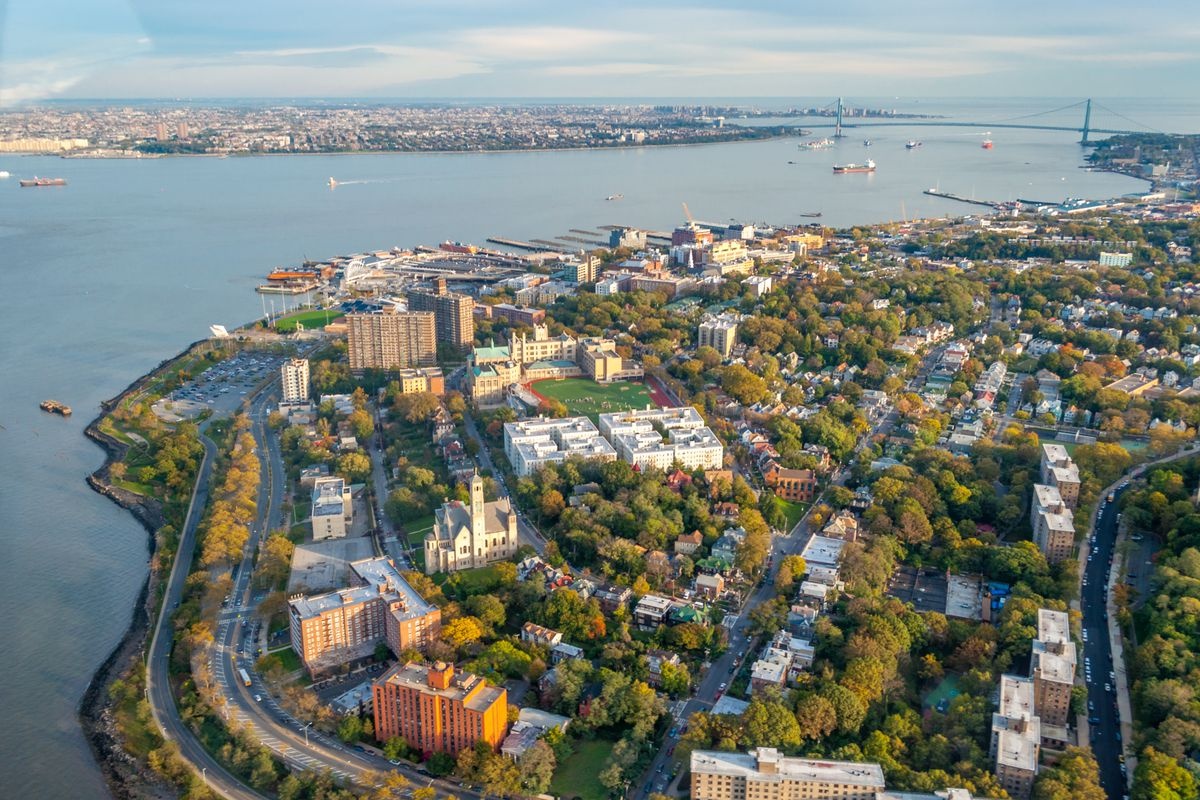
Staten Island is the southernmost of New York City's five boroughs, occupying most of Richmond County in the state of New York. With a population of roughly 475,000, it is the least densely populated of the boroughs and feels markedly different from its neighbors, blending suburban streets, parkland, and waterfront with a more residential, small-town pace. Best known as the home of the free Staten Island Ferry, the borough also offers some of the most direct public views of the Statue of Liberty and Lower Manhattan and serves as a gateway to the Staten Island units of the Gateway National Recreation Area. It sits approximately five miles southwest of Manhattan across New York Harbor, connected to Brooklyn by the Verrazzano-Narrows Bridge and to New Jersey by three crossings further west.
The Staten Island Ferry is the borough's marquee attraction, running between the St. George Terminal on the island and Whitehall Terminal in Lower Manhattan around the clock. The roughly 25-minute ride is free for all riders and passes close to the Statue of Liberty and Ellis Island, making it a staple New York experience. On the St. George side, ferry riders step off into a small waterfront district of restaurants, the historic St. George Theatre, and esplanades that look directly back at the skyscrapers of Lower Manhattan.
A short drive from the ferry terminal, Snug Harbor Cultural Center & Botanical Garden occupies about 83 acres on the island's north shore. The grounds, once a 19th-century retirement home for sailors, now contain a campus of museums, galleries, performance spaces, and the New York Chinese Scholar's Garden, set among formal gardens and a row of preserved Greek Revival buildings. It is one of the larger adaptive reuse projects of its kind in the country and a frequent stop for families and culturally curious travelers.
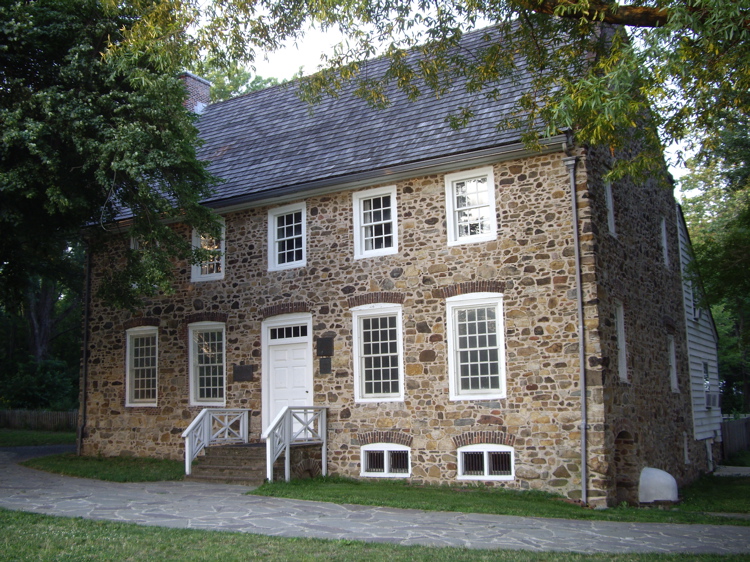
Historic Richmond Town sits near the geographic center of the island and is the borough's main destination for early American history. The site gathers dozens of preserved and restored structures spanning the 17th through 19th centuries, with costumed interpreters, a working farm, and craft demonstrations throughout the season. Together with the Staten Island Historical Society collections, it offers a quiet counterpoint to the better-known historic sites of lower Manhattan.
The Gateway National Recreation Area includes several Staten Island units, most notably Fort Wadsworth beneath the Verrazzano-Narrows Bridge, Great Kills Park along the southern shoreline, and Miller Field to the east. Managed by the National Park Service, the multi-thousand-acre recreation area layers beaches, salt marshes, and birding hotspots over centuries of coastal defense history, giving the borough some of the city's most accessible parkland.
Staten Island's mix of harbor views, green space, and historic sites, paired with a quick ferry ride into the heart of Manhattan, makes it a quietly compelling base for short-term rentals. Guests can spend a day on a National Park Service beach or wandering an 18th-century village and still make it to a Broadway show by evening, all while staying in a setting that feels a step removed from the city's busier corridors.
Want to know if a property in Staten Island is a good investment?
Enter an address to get instant revenue potential and comps.