
Schenectady, New York
Want to see how Schenectady compares to other top cities in New York? Explore all city regulations in New York. →
Schenectady, NY
Challenging To Investors
STR Regulations for Schenectady, New York
Overview: Are Short-Term Rentals Allowed in Schenectady, NY?
Yes, short-term rentals are explicitly allowed in Schenectady, New York, but they are subject to strict regulatory requirements at the city, county, and state levels.
Schenectady operates within New York State's new comprehensive short-term rental regulatory framework that took effect in 2025. The state has implemented the nation's first statewide short-term rental registry system, with individual counties having the option to establish their own registration systems or opt-out and allow state-level oversight.
At the local level, Schenectady has implemented additional requirements beyond state mandates, including owner-occupancy requirements and special use permits. The city's regulations are designed to balance the economic benefits of short-term rentals with housing availability concerns and community standards.
What do Airbnb hosts actually earn in Schenectady?
Schenectady hosts earn a median $21,388/year with $111 ADR and 67% occupancy.
Top performers pull in $29,506+ per year.
See the full Schenectady market breakdownHow to Start a Short-Term Rental Business in Schenectady, NY
Step 1: Understand the Legal Framework
Before investing, ensure you can meet all regulatory requirements:
- Owner-Occupancy Requirement: Schenectady requires that all short-term rental properties be owner-occupied, meaning hosts can only rent out their primary residences
- Property Type: The unit must be a residential dwelling rented for less than 30 days
- Compliance Timeline: New York State's registry system took effect in 2025, with county opt-out decisions required by June 25, 2026
Step 2: Secure Property and Permits
- Acquire or Confirm Ownership of a property you will occupy as your primary residence
- Obtain Special Use Permit from the City of Schenectady through the City Planning Department
- Attend Public Hearing as part of the Special Use Permit process
- Secure City Planning Commission Approval for the Special Use Permit
Step 3: Register with Appropriate Registry System
- State-Level Registration: If Schenectady County opts out of establishing its own registry, register with the New York State Department of State (DOS)
- County-Level Registration: If Schenectady County establishes a registry, register with the county system
- Registration Period: All registrations are valid for two years
Step 4: Prepare for Operations
- Install required safety equipment and post required information
- Establish relationships with booking platforms that comply with state regulations
- Set up tax collection and remittance systems
- Implement record-keeping systems for compliance
Required Documents, Permits, Licenses, and Guidelines
Municipal Requirements (City of Schenectady)
-
Special Use Permit
- Application through City Planning Department
- Public hearing required
- City Planning Commission approval
- Ongoing compliance with permit conditions
-
Owner-Occupancy Verification
- Proof of primary residence status
- May require periodic verification
State-Level Registration Requirements
-
STRU (Short-Term Rental Unit) Registration
- Valid for two years
- Required for all units rented for less than 30 days
- Must be completed before operations begin
-
Safety and Insurance Requirements
- Evacuation diagram identifying all means of egress
- Posting of emergency phone numbers (police, fire, poison control)
- Working fire extinguisher
- Insurance coverage: property value plus minimum $300,000 for property and bodily injury
- Compliance with local health and safety requirements
Tax Registration and Compliance
-
Sales Tax Registration
- Short-term rentals classified as "hotels" for tax purposes
- Booking services may collect sales tax on behalf of hosts
- Registration with New York State Department of Taxation and Finance
-
Local Occupancy Tax
- Schenectady County occupancy tax application to short-term rentals
- Rates and collection methods vary by county decision
- Booking platforms may collect and remit on behalf of hosts
Record-Keeping Requirements
Hosts must maintain records for two years:
- Date of each stay and number of guests
- Cost for each stay including itemized breakdown of sales and occupancy taxes collected
- Registration confirmation with NYS DOS and applicable county/local registry
- Insurance documentation
- Permit copies and compliance records
Specific Regulations for Short-Term Rentals
City of Schenectady Regulations
-
Owner-Occupancy Mandate
- Properties must be host's primary residence
- No investment property rentals allowed
- Periodic verification may be required
-
Operational Limitations
- Specific limits on number of guests per unit
- Parking requirements for guests
- Safety inspection requirements
- Compliance with local noise and nuisance regulations
-
Permit Conditions
- Public hearing process for permit approval
- City Planning Commission oversight
- Ongoing compliance monitoring
- Potential permit revocation for violations
Schenectady County Considerations
As of 2025, counties must decide whether to establish their own registry systems or opt-out in favor of state-level oversight. Schenectady County's decision will affect:
- Registration procedures and fees
- Local enforcement mechanisms
- Tax collection methods
- Data reporting requirements
Counties that establish registries gain additional authorities including:
- Ability to update local occupancy tax laws without state legislative approval
- Enhanced enforcement capabilities
- Detailed data sharing from booking platforms
New York State Regulations
-
Registry Requirements
- Statewide registry system operational as of 2025
- Two-year registration periods
- Real-time verification capabilities for booking platforms
-
Platform Compliance
- Booking services must verify registrations before hosting listings
- Required data sharing: registration numbers, property locations, occupancy details, guest counts
- Monthly or quarterly reporting requirements
- Tax collection and remittance obligations
-
Insurance and Safety Standards
- Minimum $300,000 coverage requirements
- Mandatory safety equipment and postings
- Local health and safety compliance
-
Tax Obligations
- Sales tax collection under Article 29 of NYS Tax Law
- Local occupancy tax application (county-dependent)
- Booking platform tax collection responsibilities
-
Penalties and Enforcement
- Host fines up to $200 for third violation (after warnings)
- Booking platform fines $500 per day per violation
- Attorney General enforcement authority
- Local government enforcement powers
Exceptions to Regulations
- House-sitting arrangements for less than 30 days
- Properties subject to municipal bans
- Temporary housing permitted by Department of Health
- Existing contracts and voluntary collection agreements
Contact Information for Local Authority
City of Schenectady Planning Department
Primary Contact for Local Permits and Regulations
- Phone: Contact City Hall at (518) 382-5000 and ask for Planning Department
- Address: Schenectady City Hall, 105 Jay Street, Schenectady, NY 12305
- Website: www.cityofschenectady.com
- Email: Contact through city website or call main number for specific planning staff
Schenectady County Government
Contact for County-Level Registry and Tax Information
- Phone: (518) 388-4200
- Address: 620 State Street, Schenectady, NY 12307
- Website: www.schenectadycounty.com
- Email: Contact through county website for specific department information
New York State Department of State
State-Level Registry and Registration Information
- Phone: (518) 473-2492
- Website: www.dos.ny.gov
- STR Registry Information: Available through main DOS website
New York State Department of Taxation and Finance
Tax Registration and Compliance
- Phone: (518) 457-5431
- Website: www.tax.ny.gov
- Business Registration: Available through NY.gov business portal
New York State Attorney General's Office
Enforcement and Consumer Protection
- Phone: (800) 771-7755
- Website: ag.ny.gov
- Consumer Complaints: Online complaint portal available
Source Links
-
New York State Short-Term Rental Regulations:
-
NYSAC Implementation Memo (Detailed legislative analysis):
-
City of Schenectady STR Information:
-
New York Attorney General Residential Tenants Rights:
Important Considerations for Investors
Current Market Status
The regulatory environment continues to evolve as counties make opt-out decisions and implement registry systems. Schenectady's owner-occupancy requirement significantly limits investment opportunities, making this market suitable primarily for primary residence owners seeking additional income rather than traditional investment property investors.
Compliance Risk Assessment
The new regulatory framework includes substantial penalties for non-compliance, with enforcement authority granted to both state and local governments. Investors must prioritize compliance from the initial property acquisition phase through ongoing operations.
Future Regulatory Changes
Counties have until June 25, 2026, to make final registry decisions, and local governments retain authority to modify requirements. The regulatory landscape may continue evolving, requiring ongoing monitoring of local and state policy developments.
This guide is based on information available as of 2025. Regulations and contact information are subject to change. Investors should verify current requirements with local authorities before making investment decisions.
Next step
Found a property in Schenectady?
Paste any address and get estimated revenue, cash-on-cash return, and comparable STR performance in under 5 minutes. 3 free analyses per day.
Free brief
Get the free Schenectady STR Investment Brief
Revenue data, top neighborhoods, seasonal trends, and the key regulations for Schenectady, New York in one email.
Schenectady
Market Saturation Score
Photos of Schenectady

Overview of Schenectady
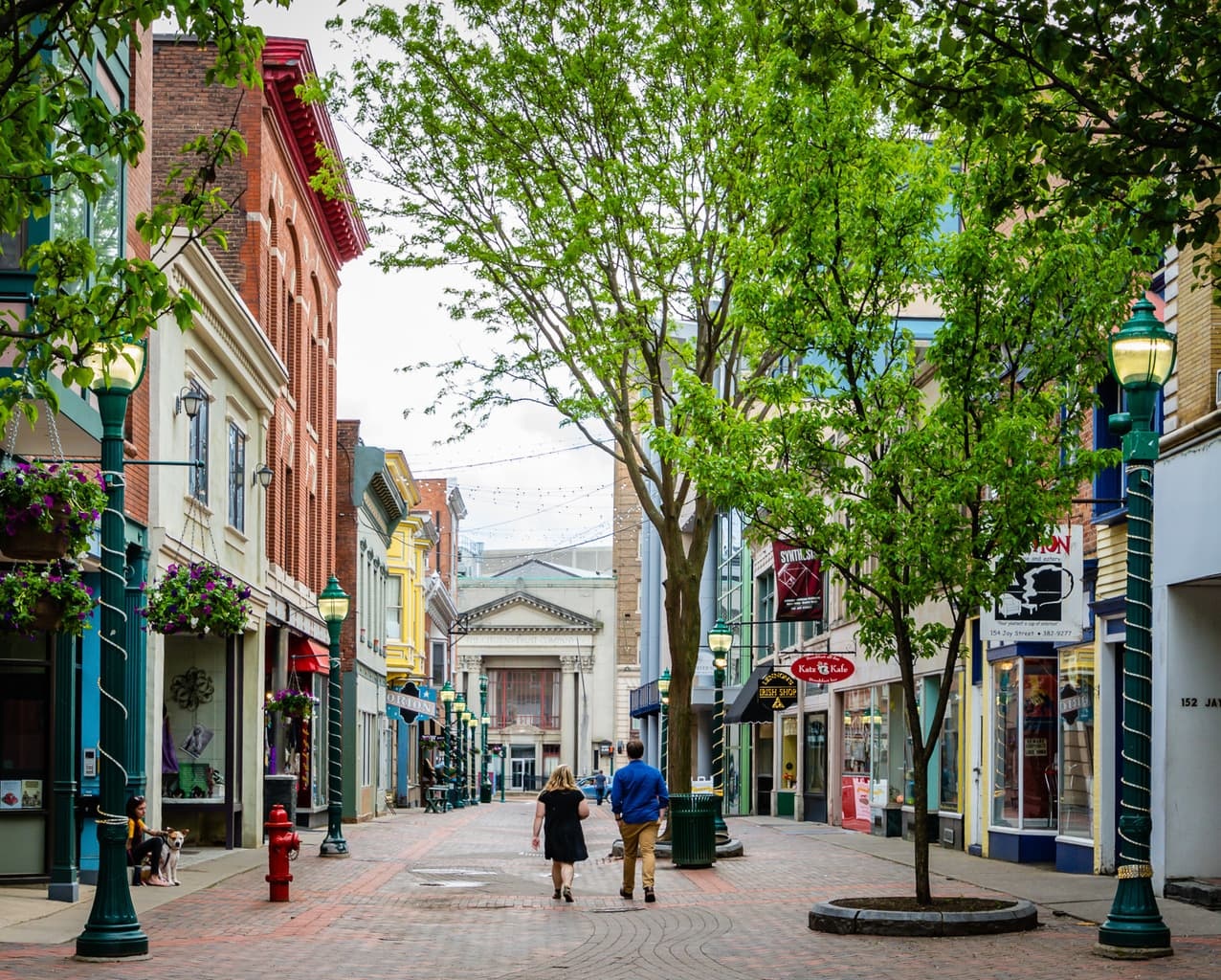
Schenectady sits in eastern New York as the seat of Schenectady County, with a population of roughly 65,000 residents. The city carries the nickname "The Electric City" thanks to its long association with General Electric, and today it blends an industrial heritage with a revitalized downtown, a historic core known as the Stockade District, and a lively arts and dining scene. It functions as a gateway to the broader Capital Region, with Albany roughly 15 to 20 miles to the southeast and Saratoga Springs about 30 miles to the north, while New York City lies approximately 160 miles south. Visitors often use Schenectady as a more affordable base from which to explore the Mohawk Valley, the southern Adirondacks, and the wider upstate New York region.
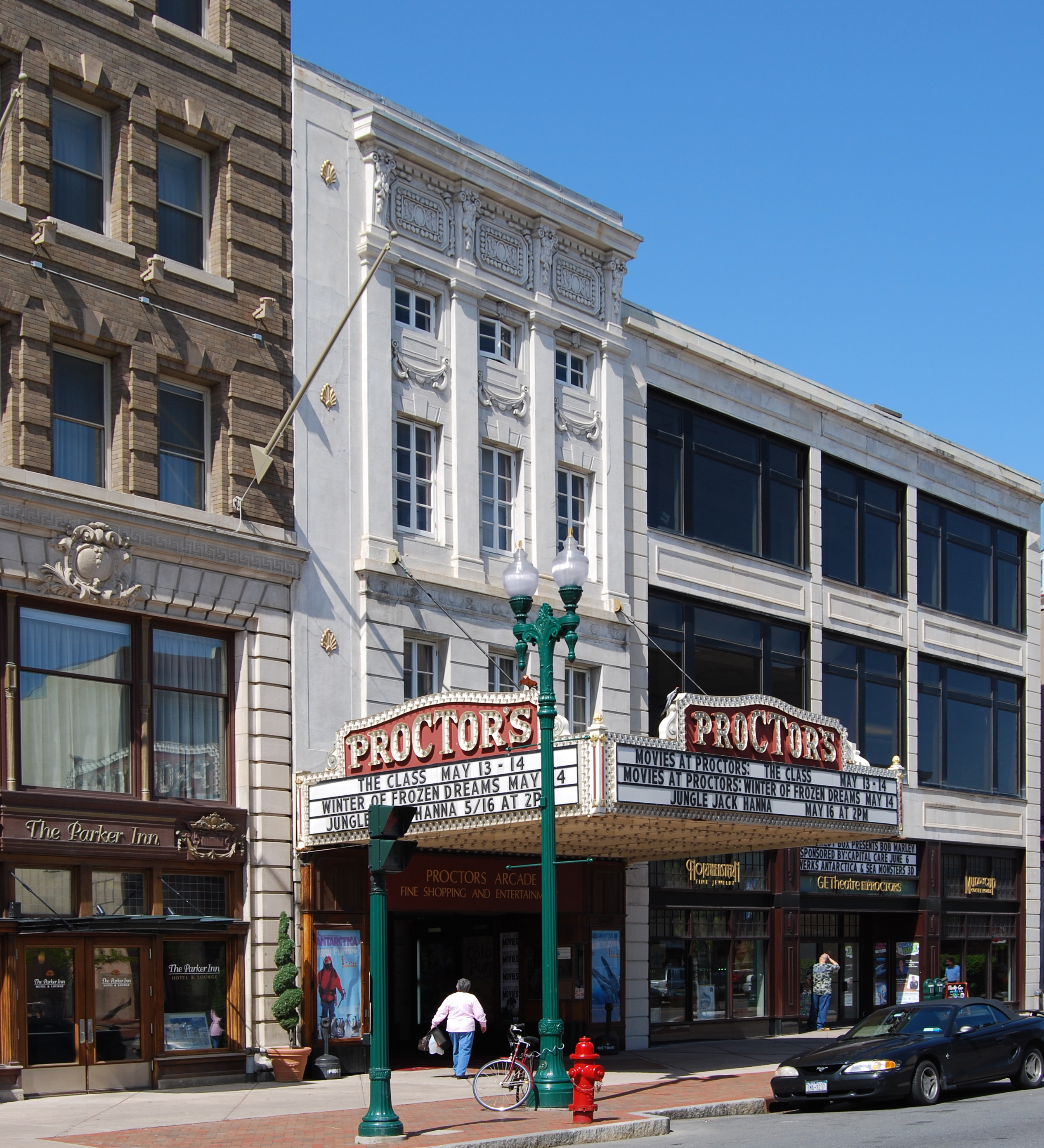
Just steps from the heart of downtown, Proctors is one of the most architecturally celebrated theaters in upstate New York. Opened in 1926 as a vaudeville and silent-movie palace, it now hosts Broadway tours, concerts, comedy acts, and film festivals, and it anchors a block of restored buildings that includes a Key Hall and a smaller black-box venue. Its location makes it a natural anchor for guests interested in a night out without leaving the city.
A short walk from Proctors, the Stockade Historic District is widely considered the oldest continuously occupied neighborhood in Schenectady. Its narrow streets are lined with 18th- and early-19th-century Dutch Colonial homes, several of which are open during an annual walking tour, and the riverside setting along the Mohawk River gives the area a distinctive, lantern-lit atmosphere in the cooler months. It is the kind of place that rewards an unhurried morning stroll and offers travelers a tangible link to the city's colonial past.
About a 10-minute drive northwest, the Museum of Innovation and Science (miSci) traces the region's deep ties to engineering, electricity, and invention. Exhibits include hands-on science displays and a notable collection of historic radio and television equipment, reflecting Schenectady's early role as a hub for GE and early broadcasting (the city was home to one of the nation's first commercial radio stations, WGY).
A short drive north brings travelers to Saratoga Springs, where the mineral springs, the racetrack, and the downtown's boutiques and restaurants make it one of New York's most popular day-trip destinations. Back in Schenectady itself, Central Park offers a sizable green space with a lake, a rose garden, and a public golf course within easy reach of most short-term rentals.
Schenectady's appeal for short-term rental investors lies in its combination of year-round cultural programming, walkable historic neighborhoods, and proximity to two of upstate New York's strongest draws, Albany and Saratoga Springs, all at a more modest price point than the bigger tourist hubs.
Want to know if a property in Schenectady is a good investment?
Enter an address to get instant revenue potential and comps.