
New Rochelle, New York
Want to see how New Rochelle compares to other top cities in New York? Explore all city regulations in New York. →
New Rochelle, NY
Challenging To Investors
STR Regulations for New Rochelle, New York
Overview: Are STRs allowed in New Rochelle, NY?
Short-term rentals are allowed in New Rochelle, but they operate within a complex framework of state and local rules. At the state level, New York’s Multiple Dwelling Law restricts stays shorter than 30 days in most multi-unit buildings unless the permanent resident is present during the rental. In practice, this often limits whole-unit short-term rentals in apartment buildings and condos, and favors owner-occupied scenarios or entire home stays where the owner resides on the premises.
Local (city) regulation is less detailed. The evidence reviewed indicates New Rochelle does not have a city-specific short-term rental ordinance; standard housing, health and safety codes apply. At the county level, Westchester County provides the permitting and compliance infrastructure and oversees registration, inspections, and lodging-related taxes.
Bottom line for investors and operators:
- Owner-occupied short-term rentals are the most viable path to operate in New Rochelle.
- Whole-unit, non-owner-occupied rentals in multi-unit buildings are constrained by the 30-day rule under state law unless the owner is present during guest stays.
- County-level compliance (Westchester County) is the operative pathway for permits, inspections, and lodging taxes.
What do Airbnb hosts actually earn in New Rochelle?
New Rochelle hosts earn a median $42,187/year with $222 ADR and 61% occupancy.
Top performers pull in $60,602+ per year.
See the full New Rochelle market breakdownHow to start a short-term rental business in New Rochelle
Starting an STR in New Rochelle requires layered compliance, reflecting New York State law, Westchester County procedures, and city zoning codes.
- Property selection and zoning confirmation
- Target owner-occupied properties or single-family homes where you can legally reside on-site. This mitigates state-level restrictions on short stays in multi-unit buildings.
- Confirm zoning allows transient occupancy. While city-specific STR zoning was not surfaced in the reviewed documents, you must verify that operating an STR does not violate residential use standards or deed restrictions.
- Westchester County licensing pathway (permitting and inspections)
- Apply for the appropriate Westchester County license/permit for your property. County-level resources emphasize “Acquire or Renew the License for your Property,” with checklists and compliance tools designed for Westchester municipalities.
- Expect requirements around safety inspections, operational standards, and guest recordkeeping. Specific permit categories, fees, and procedures should be confirmed directly with the county planning or licensing office (see Contact Information).
- Tax registration and lodging tax compliance
- Register to collect and remit lodging taxes. Westchester County’s total occupancy tax rate is approximately 8.375% and encompasses local and state components. Platforms may collect some of these taxes on your behalf; you remain responsible for ensuring full and timely remittance.
- Assess whether sales tax applies to the rental depending on the transaction structure and state guidance.
- Insurance and safety
- Maintain adequate property and liability insurance tailored to transient rentals.
- Prepare the unit to meet health and safety standards (e.g., smoke detectors, carbon monoxide alarms, egress, safe appliances), anticipating inspection requirements.
- Operations and guest management
- Implement robust guest screening, check-in protocols, and house rules consistent with state and local law.
- Keep guest records as required by county rules (format and duration of retention should be verified with the county).
- Establish neighbor communications, quiet hours, and waste management procedures to minimize complaints and enforce house rules.
- Renewal and monitoring
- Track permit renewal cycles and any updates to county regulations. Compliance monitoring and periodic inspections are typical in Westchester.
- Avoid regulatory drift by documenting all processes, communications, and safety inspections.
Required documents, permits, licenses, and guidelines
Based on the evidence reviewed:
-
Westchester County license/permit for the property
- County resources indicate a licensing pathway for STRs and provide compliance checklists. Permit categories, inspection protocols, and fees should be confirmed with the county office (see Contact Information).
-
Property registration for lodging tax purposes
- Register to collect and remit lodging taxes at approximately 8.375% (total occupancy tax rate in Westchester County).
-
Evidence of zoning compliance
- Confirm that the property’s zoning and use do not prohibit transient occupancy. City-specific STR zoning provisions were not identified in the reviewed documents.
-
Safety and health documentation
- As a practical expectation in Westchester County, properties are inspected for safety. Maintain documentation of compliant installations (e.g., smoke/CO alarms, extinguishers) and any inspection outcomes.
-
Guest recordkeeping and owner-occupancy proof
- Maintain guest logs consistent with county requirements; retain evidence that the owner is present when required (especially for multi-unit buildings subject to the 30-day rule).
-
Insurance and business registration
- Liability/property coverage appropriate for STR operations; assess whether a local business registration is required (verify with the city clerk).
-
House rules and advertising compliance
- Draft clear rules restricting parties/events, parking, occupancy limits, and noise. Ensure advertising reflects actual occupancy limits and does not misrepresent the unit’s capacity.
Notes:
- The specific permit type, application forms, fees, and inspection schedule are not detailed in the provided Westchester page fragments and should be verified directly with the county authority.
- A compliance checklist product is marketed by Lodge Compliance for Westchester County properties (paid resource), but its contents are not publicly visible in the reviewed materials.
Specific regulations affecting STRs: city, county, and state
New Rochelle (city level)
- No city-specific short-term rental ordinance was identified in the reviewed documents. As a result, general housing and zoning codes apply.
- The city’s comprehensive planning documents emphasize neighborhood stability, code enforcement, and mixed-use development but do not contain an explicit STR regulatory framework. Hosts should confirm with city zoning administrators whether any neighborhood-specific constraints affect STR use.
Westchester County (county level)
- STRs are legal but heavily regulated, and the county emphasizes licensing and inspections.
- Lodging tax: total occupancy tax rate is approximately 8.375%, which includes local and state taxes. Hosts must register and remit these taxes.
- Enforcement and compliance monitoring are county-managed; local practices may vary.
New York State (state level)
- Multiple Dwelling Law: short-term rentals (fewer than 30 days) are generally prohibited in most multi-unit buildings unless the permanent resident is present during the rental period. This is the principal constraint for apartment/condo STRs in New Rochelle.
- Hosts should also consider any relevant provisions of New York’s Multiple Residence Law and tax law, and monitor any updates to state policy affecting STRs.
Operational impacts for investors
- Favor owner-occupied models (e.g., renting a room or the entire home while residing on-site) to comply with state law in multi-unit buildings.
- Expect county-level permitting, inspections, and tax remittance; city-level zoning and code enforcement may also apply.
- Document and operationalize all compliance steps to withstand inspections and limit penalties.
Contact information (authority in charge of STRs)
Westchester County Department of Planning
- Website: see Source Pages.
- Phone/email: Not provided in the reviewed pages. Contact the department through its official website for permit categories, application instructions, and fee schedules.
City of New Rochelle (zoning and code compliance)
- Phone/email: Not provided in the reviewed documents.
- Website: see Source Pages (municipal site). Contact city hall or the zoning/building department to confirm zoning compatibility and any local licensing needs.
City of New Rochelle — Department of Development
- 708 North Avenue, New Rochelle, NY 10801
- Phone: 914‑654‑2090
- Hours: 8:30 AM–4:30 PM, Monday–Friday
- Email/website: See Source Pages.
- Use for zoning and development-related inquiries (note: the City of New Rochelle does not appear to have a dedicated STR licensing program; the building and zoning departments can advise on underlying codes and allowed uses).
Note: If you operate through a platform (e.g., Airbnb, Vrbo), that platform may assist with lodging tax collection or provide guidance, but you remain responsible for legal compliance.
Source pages (for verification and updates)
-
Lodge Compliance: Westchester County STR overview (permits/licensing and compliance resources; includes references to Westchester County Department of Planning and lodging tax) www.lodgecompliance.com/local-jurisdiction/westchester-county-ny
-
GoSummer: New Rochelle market overview (states New Rochelle lacks city-specific STR laws; references the 30-day rule for multi-unit buildings; notes no local hotel tax) www.gosummer.com/vacation-rental-management/new-rochelle-new-york
-
City of New Rochelle — Department of Development www.newrochelleny.gov/DocumentCenter/View/5862
Disclaimer: This guide synthesizes information from the provided sources and is intended for investors and operators in New Rochelle, NY. Always confirm current requirements directly with county and city authorities, as regulations and tax rates can change.
Next step
Found a property in New Rochelle?
Paste any address and get estimated revenue, cash-on-cash return, and comparable STR performance in under 5 minutes. 3 free analyses per day.
Free brief
Get the free New Rochelle STR Investment Brief
Revenue data, top neighborhoods, seasonal trends, and the key regulations for New Rochelle, New York in one email.
New Rochelle
Market Saturation Score
Photos of New Rochelle

Overview of New Rochelle
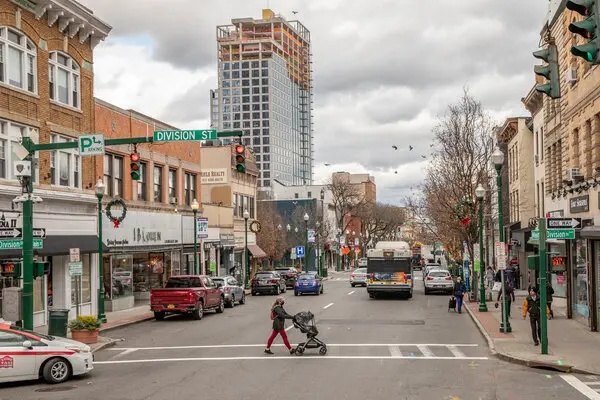
New Rochelle is a coastal city in southern Westchester County, New York, situated along Long Island Sound just north of the New York City border. With a population of approximately 80,000 residents, it is one of the larger municipalities in Westchester and carries the feel of an established suburban community with genuine urban amenities. Long known as a commuter town with direct rail service to Midtown Manhattan, New Rochelle has a notably diverse population, a walkable downtown that has seen significant redevelopment in recent years, and a stretch of shoreline that gives the city a more relaxed, seaside character than many of its inland neighbors. It functions as an appealing gateway to New York City, lying roughly sixteen miles north of Midtown Manhattan, while also offering easy access to the wider Hudson Valley and the beaches, parks, and villages of southern Westchester.
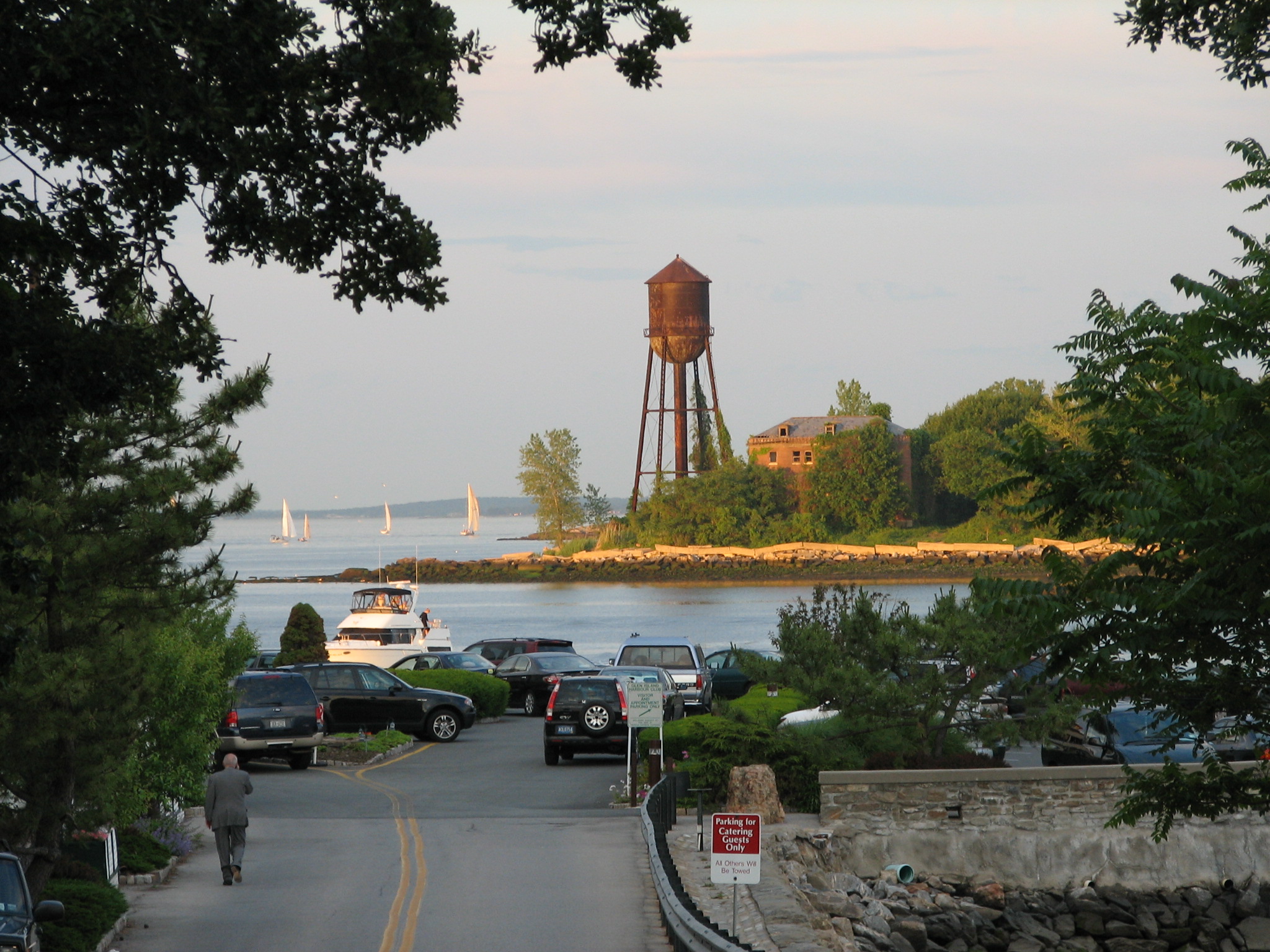
A short drive east of the city center brings visitors to Glen Island Park, a roughly 105-acre Westchester County park set on a group of small islands connected by bridges in New Rochelle Harbor. The park combines sandy beaches on Long Island Sound, picnic areas, a small zoo, and a historic stone castle, making it a popular summer destination for families. Closer to downtown, [Hudson Park]([en.wikipedia.org/wiki/Hudson_Park_(New_Ro](https://en.wikipedia.org/wiki/Hudson_Park_(New_Ro) Rochelle)) and the adjoining New Rochelle Waterfront provide another waterfront escape with a small beach, a bandshell that hosts summer concerts, and views across the Sound toward Long Island. These shoreline parks give the city a distinctly coastal identity that sets it apart from other inner-ring Westchester suburbs.
History-minded visitors can step into the city's past at the Thomas Paine Cottage, a small eighteenth-century farmhouse on the grounds of the local historical society where the revolutionary writer and author of "Common Sense" is believed to have lived. Interpreted by the Huguenot and New Rochelle Historical Association, the cottage and the adjacent museum offer a tangible connection to the city's colonial-era roots and its long association with Enlightenment-era thought. The surrounding Huguenot Park area adds a quiet green counterpoint to the busier commercial corridors nearby.
Within the city itself, the revitalized downtown around the Metro-North station has emerged as a regional dining and retail hub, with new mixed-use development complementing older storefronts, restaurants, and the city's long-standing institutions. Just over the border, the village of Larchmont and the Pelham neighborhoods offer additional boutiques, restaurants, and marina-front walks within a few minutes' drive, while Pelham Bay Park in the Bronx — the largest park in New York City, with beaches, a historic mansion, and miles of trails — lies only about ten miles to the south.
For short-term-rental investors and operators, New Rochelle offers a compelling mix: a substantial year-round population base, a steady stream of visitors visiting family or attending events at the city's schools and institutions, and a location that places both Long Island Sound recreation and Midtown Manhattan within easy reach. Its combination of commuter convenience, coastal scenery, cultural diversity, and proximity to some of the New York metropolitan area's most visited destinations makes it a flexible and resilient market for short-term stays.
Want to know if a property in New Rochelle is a good investment?
Enter an address to get instant revenue potential and comps.