
Maryland, New York
Want to see how Maryland compares to other top cities in New York? Explore all city regulations in New York. →
Maryland, NY
Challenging To Investors
STR Regulations for Maryland, New York
Note on geography: “Maryland, NY” is ambiguous, and the source you provided pertains to Montgomery County, Maryland (the State of Maryland). Based on the provided content, this guide covers Montgomery County, Maryland. If you meant Maryland, New York (a hamlet/town in New York state), the sources you provided do not contain city‑specific regulations. In that case, see “State‑Level Regulations (New York)” below for NY references only.
Overview: Are short‑term rentals allowed in Maryland, NY?
- Explicit answer: In Montgomery County, Maryland, short‑term rentals are allowed, but with specific limits and conditions. A short‑term rental is the rental of an entire home or a unit/room for fewer than 30 consecutive days through platforms such as Airbnb, Flipkey, HomeAway and VRBO. Importantly, the dwelling unit used as a short‑term rental must be the property owner’s or an owner‑authorized resident’s primary residence. All short‑term rentals must be licensed through the Montgomery County Department of Housing and Community Affairs (DHCA).
Key quantitative caps:
- Maximum number of adults (18+) per short‑term rental: six.
- Maximum number of adults per bedroom: two.
What do Airbnb hosts actually earn in Maryland?
Maryland hosts earn a median $34,077/year with $331 ADR and 56% occupancy.
Top performers pull in $41,893+ per year.
See the full Maryland market breakdownHow to start a short‑term rental business in this market
-
Confirm eligibility
- The property must be your primary residence (or the primary residence of an owner‑authorized resident).
- Confirm zoning and any HOA/condo restrictions independently; the sources do not cover private covenants.
-
Obtain the required Montgomery County license
- Apply for the Short‑Term Residential Rental License through the Montgomery County Department of Housing and Community Affairs (DHCA). The DPS page directs all STR operators to DHCA for licensing.
- The sources do not provide DHCA’s application portal URL or forms; contact DHCA directly (see “Contact Information” below).
-
Set occupancy and guest limits to county standards
- Enforce a maximum of six adults (18+) per property, and no more than two adults per bedroom.
-
Prepare safety and guest‑information standards
- While the sources do not list a formal inspection regime for Montgomery County STRs, best practice (reflected in Maryland legislative discussion) includes fire safety equipment, carbon monoxide detectors, emergency information for guests, sanitation plans, and emergency plans.
-
Register and remit taxes
- Transient Occupancy Tax (TOT) and any additional local taxes may apply. The sources indicate Maryland has an active TOT regime with platforms like Airbnb collecting and remitting significant tax revenue statewide. Whether Montgomery County requires host‑remitted or platform‑collected TOT is not specified in the provided sources. Confirm requirements with Montgomery County Finance/Taxation and DHCA.
-
Maintain compliance and a local contact
- Maintain a local contact who can respond to issues, and set expectations with guests via a “good‑neighbor” guide (noise, parking, trash, etc.). The sources do not provide a formal Montgomery County good‑neighbor template.
-
Keep records and monitor enforcement
- Maintain licenses, guest logs (for occupancy compliance), tax filings, communications, and any inspection records. Be aware that repeat violations can trigger enforcement actions (see “Enforcement” below).
Required documents, permits, licenses, and guidelines
From the sources:
- Short‑Term Residential Rental License issued by DHCA is required to operate.
- Evidence of primary residence status is required (the source states the STR must be the property owner’s or owner‑authorized resident’s primary residence).
Not specified in the sources:
- Exact application forms, fee schedule, inspection checklist, or application portal for Montgomery County.
- Whether a separate Use and Occupancy (U&O) or zoning approval is needed.
- Platform agreement or registration number requirement (though best‑practice models often require platform‑displayed permit numbers).
Recommended, based on common requirements (not specifically mandated in the provided sources):
- Proof of liability insurance.
- Fire safety equipment and carbon monoxide detectors.
- Guest emergency information display.
- Documentation confirming compliance with local noise, trash, and parking rules.
- A local 24/7 contact for guests and neighbors.
Specific regulations for short‑term rentals (city/county/state)
Montgomery County, Maryland (county rules reflected on DPS site):
- Definition: Short‑term rental is the rental of an entire home or a unit/room in a single‑family home, apartment or condominium for less than 30 consecutive days via online platforms (Airbnb, Flipkey, HomeAway, VRBO).
- Primary residence requirement: The STR must be the property owner’s or owner‑authorized resident’s primary residence.
- Licensing: All STRs must be licensed through DHCA.
- Occupancy caps: Maximum six adults (18+) per property; maximum two adults per bedroom.
- Distinction from Bed & Breakfast: Bed & Breakfast properties are regulated differently under zoning and are not treated as STRs for licensing purposes.
State of Maryland (context from HB0087 testimony, 2025):
- State‑level taxation and regulation authority: HB0087 would have authorized counties to tax and regulate short‑term rentals, particularly in areas deemed to lack affordable housing. Airbnb testified in opposition to certain provisions, citing minimal statewide STR penetration (0.7% of homes) and emphasizing platform‑based tax collection.
- Safety and public‑nuisance context: Maryland legislators have considered nuisance party controls, fire safety, and capacity rules. Existing local laws (alcohol control, noise violations, capacity limits, parking and fireworks restrictions) remain relevant for STR operations.
- Transient Occupancy Tax: Airbnb reports collecting and remitting over $7B globally and $210M in Maryland (2023). Some jurisdictions use platform‑based TOT collection and remittance.
City‑specific note:
- No city‑level STR code is provided for “Maryland, NY.” The provided sources are county‑ and state‑level (MD).
Enforcement approach (from best‑practice sources):
- Many jurisdictions employ a “three‑strikes” rule (revocation or suspension after multiple verified complaints), require a local contact, and move registration online.
- Fines can escalate daily (e.g., $200–$750 per day depending on violation) and lead to permit revocation for repeat offenses.
- 24/7 complaint hotlines and online registration/licensing portals are common.
Contact information (local authority in charge of STRs)
Montgomery County Department of Permitting Services (DPS) – STR landing page:
- 2425 Reedie Drive, 7th Floor, Wheaton, MD 20902
- Phone: 240‑777‑0311
- Hours: 7:30 a.m. – 4:00 p.m., Mon–Fri
- Website: Short Term Rentals – Department of Permitting Services (DPS)
- Note: DPS directs STR licensing to the Montgomery County Department of Housing and Community Affairs (DHCA). Contact DHCA for license applications, forms, and specific compliance questions.
Countywide assistance (general):
- MC311 (Montgomery County): For general information and service requests.
- Website references: Montgomery County Government (privacy, accessibility, county code) for broader context.
Links to source pages
-
Short‑Term Residential Rentals – Department of Permitting Services (Montgomery County, MD) www.montgomerycountymd.gov/DPS/Process/zspe/Short-Term-Rentals.html
-
Short‑Term Residential Rental Licensing – Department of Housing and Community Affairs (DHCA) (referenced on DPS page) www.montgomerycountymd.gov/dhca/housing/licensing/short-term-rental.html
-
Legislation on Short‑Term Residential Rentals (Montgomery County) www.montgomerycountymd.gov/HHS-Special/LandRShortTermRental.html
-
HB0087 Testimony – Airbnb (Maryland State Legislation, 2025) (PDF) mgaleg.maryland.gov/cmte_testimony/2025/wam/1VKy2jh5-w9PFkxQXMgQQzouyyd2977Q2.pdf
-
Short‑Term Rental Regulations: A Guide for Local Governments (National League of Cities, 2022) www.nlc.org/wp-content/uploads/2022/05/Short-Term-Rental-Regulations.pdf
-
HOA Rental Restrictions in Maryland (context, not STR‑specific) – FirstService Residential www.fsresidential.com/maryland/news-events/articles/hoa-rental-restrictions-in-maryland/
State‑Level Regulations (New York) – only if you intended Maryland, New York
If you were asking about Maryland, New York, the provided sources do not include town‑specific STR regulations. General New York context from the NLC guide indicates common local tools: permits/licensing, occupancy caps, primary‑residence requirements, TOT collection (host or platform), nuisance/party‑house rules, and online registration. For Maryland, NY specifics, consult the town clerk, code enforcement, or the village/town board. The NLC guide provides national best‑practice models that many NY municipalities adopt:
- Permit requirements, good‑neighbor guides, complaint hotlines, fines, and platform data‑sharing agreements (VCAs/MOUs).
Practical compliance checklist for operators (Maryland, Montgomery County)
- Confirm the property is your primary residence; verify zoning allowances.
- Obtain the Montgomery County STR license through DHCA.
- Enforce occupancy limits: max six adults (18+), two adults per bedroom.
- Ensure working smoke and CO detectors; post emergency information; maintain sanitation and safety protocols.
- Register for any applicable TOT/fees; confirm host vs platform collection/remittance with county finance.
- Maintain a local 24/7 contact and a good‑neighbor guide (noise, parking, trash).
- Keep records (license, guest logs, tax filings) and monitor for complaints; address issues promptly to avoid escalation.
If any items are missing (forms, fees, inspection checklists), contact DHCA directly using the details above.
Next step
Found a property in Maryland?
Paste any address and get estimated revenue, cash-on-cash return, and comparable STR performance in under 5 minutes. 3 free analyses per day.
Free brief
Get the free Maryland STR Investment Brief
Revenue data, top neighborhoods, seasonal trends, and the key regulations for Maryland, New York in one email.
Maryland
Market Saturation Score
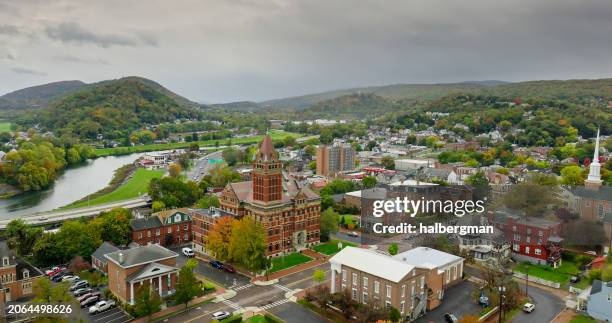
Photos of Maryland
Overview of Maryland
Maryland is a small rural town in Otsego County, in the rolling hills of central New York State. With a population of roughly 1,800 residents, it has the quiet, agricultural character typical of the Leatherstocking region, dotted with dairy farms, forested ridges, and winding country roads. The town is best known as part of the gateway to Cooperstown and the broader Otsego Lake area, a region celebrated for its American history, literary connections, and outdoor scenery. Maryland sits about 60 miles southwest of Albany, the nearest major city, and roughly 180 miles northwest of New York City, making it a relatively easy drive for weekenders escaping the metropolitan area.
Just a short drive to the north lies Cooperstown, home of the National Baseball Hall of Fame, one of the country's most visited sports museums and a major draw for baseball fans year-round. The journey from Maryland to the museum and Main Street district takes about 15 to 20 minutes, depending on the route through the surrounding countryside. Visitors can spend hours exploring the exhibits before strolling the lakefront and the well-preserved village streets lined with independent shops and restaurants.
A few miles beyond Cooperstown, Glimmerglass State Park wraps around the northern shore of Otsego Lake, the body of water often associated with James Fenimore Cooper's "Leatherstocking Tales." The park offers swimming, picnic areas, hiking trails, and a beach, and it lies roughly 25 to 30 minutes from Maryland. It is a popular destination in summer and a beautiful spot for leaf-peeping during the autumn months.
Nearby Hyde Hall, a sprawling English-country-style mansion built in the early nineteenth century and one of the largest private homes of its era in the United States, is also within easy reach. Guided tours of the estate and its grounds provide a window into early American aristocratic life. To the south, the Hyde Hall Covered Bridge — one of the oldest covered bridges in the country — is a quick detour that appeals to photographers and history enthusiasts alike.
Maryland's combination of rural tranquility, small-town character, and proximity to the Cooperstown region's cultural and natural attractions makes it a compelling base for short-term rentals. Travelers seeking a quieter alternative to staying directly in the busier tourist villages can enjoy a more pastoral setting while remaining a short drive from the Hall of Fame, Otsego Lake, and the surrounding parks, and seasonal visitors are drawn by spring planting tours, summer lake recreation, fall foliage, and the steady year-round flow of baseball and heritage tourism.
Want to know if a property in Maryland is a good investment?
Enter an address to get instant revenue potential and comps.