
Jamaica, New York
Want to see how Jamaica compares to other top cities in New York? Explore all city regulations in New York. →
Jamaica, NY
Challenging To Investors
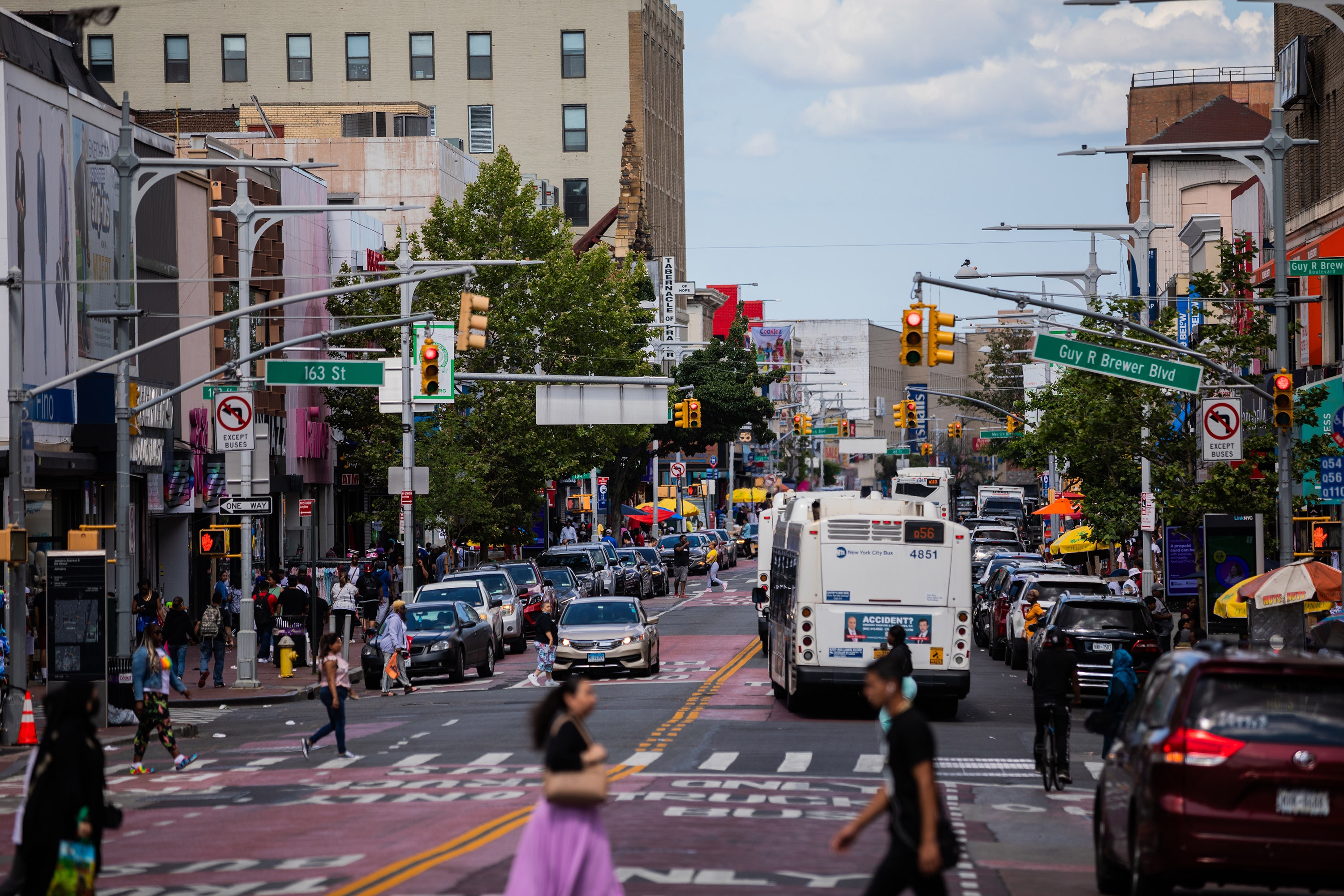
STR Regulations for Jamaica, New York
Overview: Are STRs Allowed in Jamaica, NY?
Short-term rentals (STRs) are allowed in Jamaica (Queens), but only as home-sharing, not as full-unit rentals. Under New York City’s Local Law 18 (effective March 5, 2023) and the Multiple Dwelling Law, you may legally host only if:
- You remain present in the unit during the stay.
- You host no more than two paying guests at a time.
- Guests must have access to all parts of the dwelling and all exits (sleeping in illegal areas, such as attics, cellars, or garages, is prohibited).
- Entire apartments or homes cannot be rented to visitors for fewer than 30 days, even if you live in the building. This applies to all permanent residential buildings.
These rules apply citywide, including Jamaica, Queens. A separate registration requirement is administered by the Mayor’s Office of Special Enforcement (OSE). OSE must maintain a Prohibited Buildings List, and certain classes of housing (e.g., NYCHA, rent-stabilized, rent-controlled, SRO units) are categorically ineligible for STR registration. Additionally, “Class B” multiple dwellings approved by the City for legal short-term occupancy are exempt from the registration requirement; long-term rentals of 30 consecutive days or more are also exempt.
References: NYC311 overview, OSE registration law and rules, adopted rule summary.[1][2][4]
What do Airbnb hosts actually earn in Jamaica?
Jamaica hosts earn a median $24,423/year with $146 ADR and 76% occupancy.
Top performers pull in $40,346+ per year.
See the full Jamaica market breakdownHow to Start a Short-Term Rental Business in Jamaica, NY
The compliance pathway is straightforward but strict. Follow these steps:
-
Determine eligibility
- Confirm you are the owner or lawful tenant with permission to host.
- You must be present during every stay and limit occupancy to a maximum of two guests.
- Ensure guests have access to all parts of the unit and all exits.
- Your unit cannot be in a prohibited category (e.g., NYCHA; rent-stabilized or rent-controlled units; SRO).
- Entire-home short-term stays (fewer than 30 days) are not permitted.
-
Complete OSE registration
- Apply through the OSE Short-Term Rental Registration Portal.
- Once approved, you will receive a unique registration number.
- Platforms (Airbnb, VRBO, Booking.com, etc.) may only process transactions for registered listings after verification. Enforcement of platform verification began September 5, 2023.
-
Verify building-specific restrictions
- Owners may add their building to the Prohibited Buildings List if leases or occupancy agreements prohibit STRs.
- If you are a tenant, confirm your lease allows hosting; landlord consent is strongly recommended.
-
Manage bookings on compliant platforms
- Only list and transact on platforms that verify your registration number and compliance status.
- Maintain records showing you were present during stays and adhered to occupancy and safety rules.
-
Understand platform and tax obligations
- NYC does not issue a separate “business license” for STRs; registration with OSE is the primary legal requirement.
- Platforms typically collect and remit applicable taxes (e.g., hotel occupancy tax) on bookings. Confirm your platform’s tax handling and your overall tax obligations.
References: OSE portal, registration guidance, and tips for hosts.[2][5][6]
Required Documents, Permits, Licenses, and Guidelines
Documents and actions
- OSE Short-Term Rental registration
- Submit via OSE Registration Portal.
- Upon approval, you receive a unique registration number. Keep this number on file and use it on listings and in communications with platforms.
- If your application is pending, the status can be checked via the portal.
- Prohibited Buildings List (for owners)
- Owners may apply to add their building to OSE’s prohibited list where leases or occupancy agreements prohibit STRs.
- Proof of lawful occupancy and authorization
- Documentation establishing your right to occupy or lease the unit (deed or lease). If a tenant, obtain landlord consent consistent with lease terms.
- Safety and occupancy compliance
- Provide guest access to all parts of the unit and all exits.
- Do not permit sleeping in areas where it would be illegal (e.g., attics, cellars, garages).
- Platform account and compliance
- Active account on a booking platform with verification workflow tied to your registration number.
License notes
- NYC does not require a separate business license for STRs; registration with OSE under Local Law 18 is the principal requirement.
- Rentals for 30 consecutive days or more are exempt from registration.
Guidance
- Review OSE’s “Tips for Hosts” for day-to-day operational requirements and best practices.
- Clarify building-level policies (co-op/condo board rules, HOA rules, lease clauses) before listing.
References: Registration portals, tips for hosts, prohibited building list.[5][6][7]
Specific Regulations for Short-Term Rentals (City/County/State)
City-level (NYC rules applying to Jamaica, Queens)
- Local Law 18 (adopted March 5, 2023) mandates:
- STR host registration with OSE.
- Booking platforms may only process transactions for verified, registered listings.
- Platform verification enforcement began September 5, 2023.
- Core occupancy and safety rules (existing law not changed by LL18):
- Home-sharing only (host must be present).
- Maximum of two guests.
- Guests must have access to all parts of the unit and all exits.
- No sleeping in illegal spaces (attic, cellar, garage).
- Prohibited housing categories:
- NYCHA units; rent-stabilized apartments; rent-controlled apartments; Single-Room Occupancy (SRO) units.
- Class B multiple dwelling exemption:
- Units in “Class B” multiple dwellings approved by NYC for legal short-term occupancies are exempt from the registration requirement.
- Long-term rental exemption:
- Rentals of 30 consecutive days or more are not subject to the registration requirement.
- Enforcement:
- OSE enforces host and platform compliance; platform verification is a focus area.
- Prohibited Buildings List:
- Owners may add their building where leases or occupancy agreements prohibit STRs.
County-level
- Queens operates under NYC law; no separate county STR rules are provided in the sources.
State-level (New York State)
- Rent-stabilized and rent-controlled apartments cannot be used for STRs under NYC law; these are state-protected classes, and their STR use is prohibited by Local Law 18.
References: OSE registration law page and adopted rules.[2][4]
Local Authority Contacts and Helpful Links
- Mayor’s Office of Special Enforcement (OSE)
- Registration questions: registration@ose.nyc.gov
- Short-Term Rental Registration Portal: see Reference [5]
- Prohibited Buildings List Portal: see Reference [7]
- Tips for Hosts: see Reference [6]
- NYC311
- General information and reporting (portal): see Reference [1]
- Source Law and Rules
- Registration and Requirements for Short-Term Rentals (Adopted Rule): see Reference [4]
- Proposed Rule (for context): see Reference [3]
Important Compliance Reminders and Investor Considerations
- “Entire home” short-term rentals (fewer than 30 days) are illegal in NYC, including Jamaica; only home-sharing with the host present is allowed.
- If you are a tenant, confirm that your lease allows hosting and that the unit is not rent-stabilized or rent-controlled.
- Class B multiple dwellings approved by NYC for short-term occupancy may be exempt from registration; confirm your unit’s status with OSE.
- Platforms must verify registration before processing bookings; ensure your listing remains verified at all times.
- Owners can prohibit STRs building-wide through the Prohibited Buildings List; check this list before investing or listing.
- Long-term stays of 30+ days are outside the registration framework; you may still be subject to other laws and lease restrictions.
References: OSE portals and rules.[2][4][5][7]
References
- [1] NYC311 Knowledge Article: Short-Term Rental Registration — portal.311.nyc.gov/article/?kanumber=KA-03559
- [2] OSE: Short-Term Rental Registration Law — www.nyc.gov/site/specialenforcement/registration-law/registration.page
- [3] NYC Rules: Proposed Registration Rules (Context) — rules.cityofnewyork.us/rule/registration-of-short-term-rentals/
- [4] NYC Rules: Adopted Rule Summary (Effective March 5, 2023) — rules.cityofnewyork.us/rule/registration-of-short-term-rentals/
- [5] OSE Short-Term Rental Registration Portal — strr-portal.ose.nyc.gov/s/?language=en_US
- [6] OSE Tips for Hosts — www.nyc.gov/site/specialenforcement/registration-law/tips-for-hosts.page
- [7] OSE Prohibited Buildings List (PBL) — www.nyc.gov/site/specialenforcement/registration-law/pbl.page
- [8] OSE Class B Multiple Dwelling List — www.nyc.gov/site/specialenforcement/reporting-law/class-b-mdl.page
This guide focuses solely on Jamaica, Queens within New York City. Always verify building-specific restrictions (lease, co-op/condo, HOA) before listing.
Next step
Found a property in Jamaica?
Paste any address and get estimated revenue, cash-on-cash return, and comparable STR performance in under 5 minutes. 3 free analyses per day.
Free brief
Get the free Jamaica STR Investment Brief
Revenue data, top neighborhoods, seasonal trends, and the key regulations for Jamaica, New York in one email.
Jamaica
Market Saturation Score
Photos of Jamaica


Overview of Jamaica
Jamaica is a major neighborhood and commercial hub in the borough of Queens, New York City, situated in Queens County in southeastern New York State. The broader Queens area is home to roughly 2.3 million residents, making it the most populous borough in the city and one of the most ethnically diverse places in the United States. Jamaica has long served as one of the borough's most important transit and commercial centers, and it is perhaps best known as a gateway to John F. Kennedy International Airport and as a key node connecting Manhattan with Long Island. It sits approximately 10 to 12 miles east-southeast of Midtown Manhattan, putting it within easy reach of the heart of the city while offering a distinctly local Queens atmosphere.
The neighborhood's most notable historic landmark is the King Manor Museum, a preserved early-19th-century estate that was once the home of Rufus King, a signer of the U.S. Constitution, senator, and early opponent of slavery. The museum sits in the heart of Jamaica, just minutes from the central business district, and welcomes visitors with period furnishings, archival collections, and a community garden. It offers a quiet counterpoint to the surrounding urban energy and a tangible link to the area's early American history.
Jamaica's proximity to John F. Kennedy International Airport is a defining feature of the neighborhood and a major reason travelers pass through the area. One of the busiest airports in the United States and a leading international gateway, JFK lies just southeast of Jamaica and is typically reachable in about 10 to 15 minutes by car or via the AirTrain. This convenience has long made the surrounding blocks a popular lodging area for passengers with early departures, late arrivals, or long layovers.
For outdoor recreation and sightseeing, Jamaica is well placed to reach several marquee destinations. Flushing Meadows Corona Park, home to the iconic Unisphere from the 1964 World's Fair, the Queens Museum, and Citi Field, is roughly 15 minutes north by car. Further afield, the Atlantic beaches of Long Island, including Jones Beach State Park, are about 40 to 50 miles east and can be reached in roughly an hour by car or via the Long Island Rail Road from Jamaica Station, one of the busiest rail hubs in the country.
Jamaica's combination of transit connectivity, cultural diversity, and proximity to both Manhattan and Long Island makes it a compelling base for short-term rentals. Visitors enjoy an authentic Queens experience along with quick access to airports, beaches, sports venues, and historic sites, often at rates considerably more moderate than those found in more central Manhattan neighborhoods.
Want to know if a property in Jamaica is a good investment?
Enter an address to get instant revenue potential and comps.