
Flushing, New York
Want to see how Flushing compares to other top cities in New York? Explore all city regulations in New York. →
Flushing, NY
Unfriendly To Investors
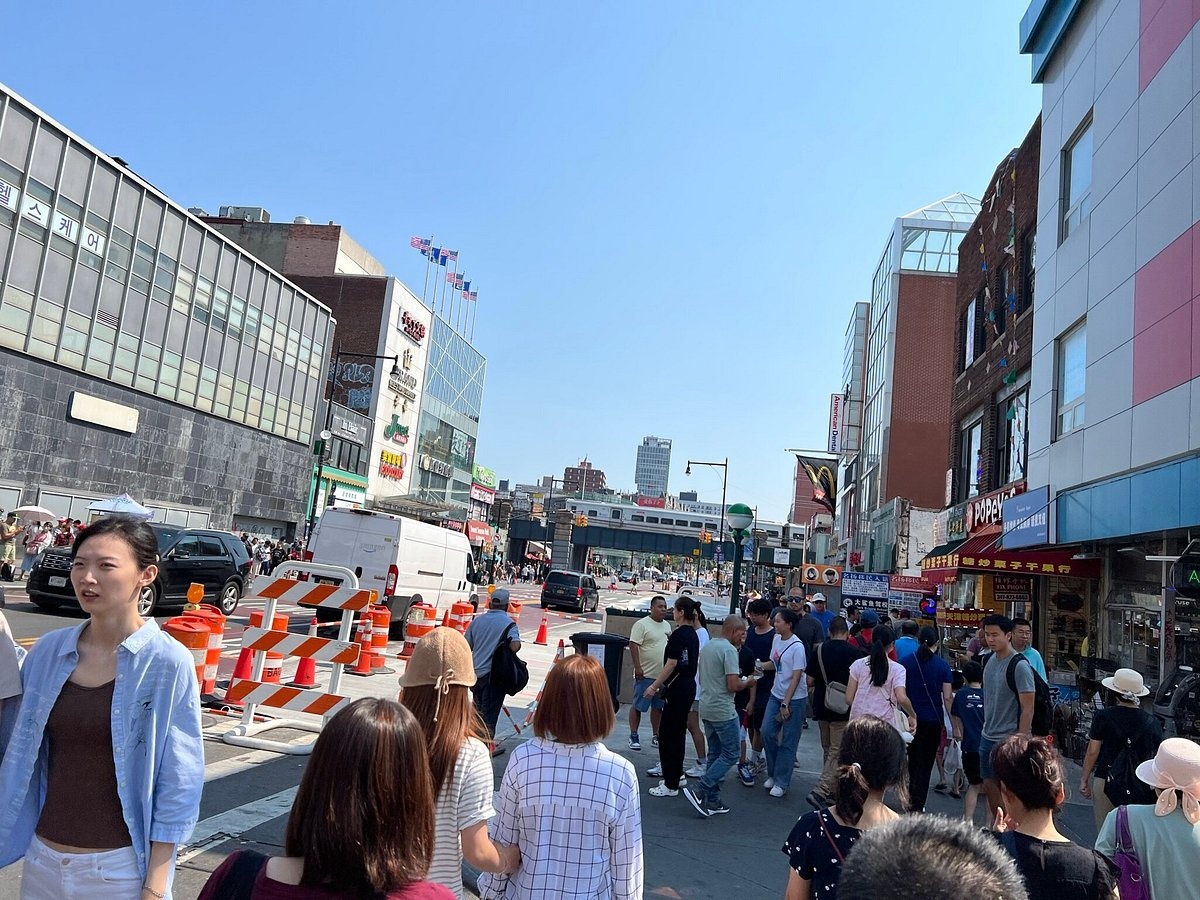
STR Regulations for Flushing, New York
Overview – Are short-term rentals allowed in Flushing? Short-term rentals for fewer than 30 days are allowed only under very limited conditions in Flushing, which is in Queens and thus fully subject to New York City (NYC) law. The default rule is that renting an entire apartment or home for fewer than 30 days is prohibited, even if the host lives in the building. The only legal path for an STR in a residential building is the “host present” model: you may share your dwelling unit with guests and host up to two guests, with full shared access to the unit and all exits, while remaining in residence for the duration of the stay. Booking platforms may not process transactions for unregistered STRs and cannot list an entire apartment if the stay is fewer than 30 days. Rent-stabilized and NYCHA apartments, and many Class B multiple dwellings, are either unregistered or prohibited altogether.
Key highlights:
- Entire-unit rentals under 30 days: Prohibited in permanent residential buildings.
- “Host present” rentals: Allowed if you are present and host no more than two guests; you must provide full access to the dwelling unit and all exits.
- Registration required: Short-term rental hosts must register with the Mayor’s Office of Special Enforcement (OSE) and display their registration number in all listings.
- Exceptions and prohibitions: Some building types and registrations are barred (e.g., NYCHA and rent-stabilized units cannot register; Class B MDLs have special rules).
- Enforcement date: OSE began enforcing registration requirements after September 5, 2023; unregistered listings cannot be processed by booking platforms.
How to start a short-term rental business in this market Because Flushing is governed by NYC’s regulations, the operational steps and compliance requirements are uniform across boroughs. Here’s how to establish a compliant STR:
- Validate eligibility
- Confirm the unit type: single-family, condo, or cooperative unit in a residential building.
- Check lease or building rules: If your lease or building occupancy agreement prohibits short-term rentals, the building may be placed on the OSE Prohibited Buildings List and your STR would be illegal.
- Confirm occupancy capacity: Any lawful STR is limited to a maximum of two guests.
- Exclusions: If the unit is NYCHA-owned, rent-stabilized, rent-controlled, or an SRO, it cannot be registered for STRs. Class B multiple dwellings have separate rules and are often not registrable for standard STR use.
- Building rules: If the building prohibits STRs by lease or agreement, OSE can place the address on the Prohibited Buildings List.
- Register with the Mayor’s Office of Special Enforcement
- Apply via OSE’s Short-Term Rental Registration Portal.
- Submit the required documents (see the next section).
- Receive your unique STR registration number.
- Use your registration number in all listings and booking platform profiles.
- Prepare the unit for safe and legal hosting
- Life-safety compliance: Ensure full access to all parts of the dwelling unit and all exits for guests.
- Occupancy and space rules: No sleeping in prohibited spaces such as attics, cellars, or garages.
- Building policy compliance: Align your hosting activities with building rules, house rules, and city codes.
- Platform compliance: Platforms may require proof of registration and adherence to the two-guest limit.
- List, operate, and maintain compliance
- Display your STR registration number on every listing, and on any required signage in the unit.
- Maintain host presence during all guest stays to stay within the “host present” exemption.
- Keep records: Maintain proof of host presence, two-guest occupancy, and any other required documentation for inspections or audits.
- Monitor law and platform changes: NYC periodically updates guidance and platform policies; continue monitoring OSE updates and any class listings.
Required documents, permits, licenses, and guidelines
- OSE Short-Term Rental Registration Number (mandatory for listings; booking platforms cannot process unregistered listings).
- Identification: Government-issued ID and contact information.
- Proof of occupancy/control: Evidence you lawfully occupy or control the unit (e.g., deed, lease, proprietary lease).
- Building compliance: Documentation that your building and unit comply with applicable codes and that short-term rentals are not barred by lease or occupancy agreement.
- Platform requirements: Platforms may require evidence that you will be present during stays and that guests will have full access to the unit and exits.
- Prohibited Building List: Property owners can add a building to OSE’s prohibited list; hosts should confirm the unit’s status before listing.
- Class B Multiple Dwelling: Check OSE’s Class B list to confirm if the unit is eligible for any STR listings or exempt from registration.
- Renter-stabilized and NYCHA: Do not attempt to register; such units are explicitly barred.
Specific regulations for short-term rentals in Flushing (Queens/NYC) NYC-wide rules apply directly to Flushing. The following are the central regulatory pillars:
-
Local Law 18 (LL18) and OSE rules
- Host presence is required; hosts cannot be absent while guests occupy the unit.
- Maximum of two guests per stay.
- Guests must have access to all parts of the dwelling unit and to all exits.
- No sleeping in illegal spaces (attics, cellars, garages).
- Booking platforms must not process transactions for unregistered listings.
- Registration enforcement began after September 5, 2023.
-
Prohibited Buildings List
- Law-based prohibitions include NYCHA buildings and entire rent-regulated buildings.
- Lease/occupancy-based prohibitions can be added by property owners.
-
Registrations NOT allowed
- NYCHA apartments.
- Rent-controlled apartments.
- Rent-stabilized apartments.
- Single-Room Occupancy (SRO) units.
-
Short-term rental registration is not required for
- Short-term rental listings for units in “Class B” multiple dwellings (these units often have separate licensing and are not standard STRs under LL18).
- Rentals of 30 consecutive days or more.
-
Class B multiple dwellings
- Class B MDLs have their own rules and separate OSE guidance; many are not registrable as standard STRs.
Contact information (local authority for STRs in NYC/Queens/Flushing)
- Mayor’s Office of Special Enforcement (OSE)
- Registration email: registration@ose.nyc.gov
- OSE STR Registration portal: strr-portal.ose.nyc.gov/s/?language=en_US
- Additional OSE resources (tips for hosts, prohibited buildings list, class list): www.nyc.gov/site/specialenforcement/registration-law/registration.page
Links to source pages
- NYC311 Short-Term Rental Registration (Overview and key rules): portal.311.nyc.gov/article/?kanumber=KA-03559
- NYC Rules: Registration and Requirements for Short-Term Rentals (LL18/OSE rulemaking): rules.cityofnewyork.us/rule/registration-and-requirements-for-short-term-rentals/
- OSE registration portal: strr-portal.ose.nyc.gov/s/?language=en_US
- OSE registration resources (registration details, tips for hosts, prohibited building list, class B list): www.nyc.gov/site/specialenforcement/registration-law/registration.page
Practical implications for Flushing investors
- Investor takeaway: The viable STR model in Flushing is a “host present” room or shared-space rental with two maximum guests. Any attempt to list an entire unit for fewer than 30 days is prohibited.
- Risk profile: Significant enforcement risk exists for unregistered listings and for non-compliant operations (e.g., absent host, more than two guests, illegal sleeping areas, or units in prohibited categories).
- Licensing and operations: Treat the OSE registration as a baseline requirement; ensure platform-level compliance and confirm the building is not on the prohibited list.
- Operational checklist: Always remain present; cap occupancy at two; guarantee full access to all exits and all parts of the unit; never list NYCHA or rent-regulated units; review Class B MDL guidance before any assumptions about eligibility.
Bottom line In Flushing, short-term rentals under 30 days are permissible only under the host-present, two-guest model in qualifying residential units. Entire-unit rentals remain illegal. Registration is mandatory and strictly enforced; unregistered or prohibited listings cannot be processed by booking platforms. Flushing does not have a separate city-specific regime; all STR operations are governed by NYC law and OSE rules.
What do Airbnb hosts actually earn in Flushing?
Flushing hosts earn a median $21,100/year with $123 ADR and 82% occupancy.
Top performers pull in $31,207+ per year.
See the full Flushing market breakdownNext step
Found a property in Flushing?
Paste any address and get estimated revenue, cash-on-cash return, and comparable STR performance in under 5 minutes. 3 free analyses per day.
Free brief
Get the free Flushing STR Investment Brief
Revenue data, top neighborhoods, seasonal trends, and the key regulations for Flushing, New York in one email.
Flushing
Market Saturation Score
Photos of Flushing


Overview of Flushing
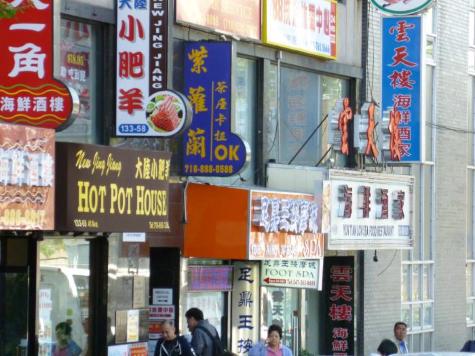
Flushing is a bustling neighborhood in the borough of Queens, in New York State, and within Queens County. It is one of the most densely populated urban districts in the United States, with the broader Flushing area home to roughly 70,000 to 90,000 residents depending on how the boundaries are drawn. Long known as the cradle of Queens County and once a Dutch colonial settlement, Flushing has evolved into one of the most dynamic and internationally flavored neighborhoods in New York City. It is celebrated for its deep Asian-American roots, particularly its large Chinese, Korean, and South Asian communities, and it functions as a culinary and cultural gateway between Midtown Manhattan and Long Island. From Midtown, Flushing sits roughly 8 to 10 miles east, typically a 30- to 45-minute subway ride or about 20 to 30 minutes by car depending on traffic.
Flushing Meadows-Corona Park anchors the neighborhood and is one of the marquee draws of the borough. This expansive green space hosted both the 1939 and 1964 World's Fairs, and its iconic Unisphere globe remains a striking symbol of the area. The park is home to the Queens Museum, the New York Hall of Science, a zoo, and miles of recreational space, and it is just minutes from downtown Flushing. Tennis fans flock to the USTA Billie Jean King National Tennis Center each summer for the US Open, while baseball lovers make their way to Citi Field, the home of the New York Mets, which sits along the park's edge. The park itself is free to enter, and the USTA grounds regularly host additional concerts and events throughout the year.
Just down the road, the Queens Botanical Garden offers a quieter counterpoint, with curated gardens, seasonal exhibits, and a focus on sustainability across about 39 acres. It is a short drive or roughly a 15-minute walk from the heart of Flushing, making it an easy add-on for families and casual visitors. Nearby, the neighborhood's main commercial corridors along Main Street and Roosevelt Avenue pulse with an extraordinary density of restaurants, dim sum halls, bakeries, herbal shops, and bubble tea cafés that rival the food scenes of much larger cities. A walk through Downtown Flushing often feels less like a New York City errand and more like a trip through Hong Kong or Seoul.
The neighborhood also offers convenient access to broader Queens and Long Island, with LaGuardia Airport just minutes to the west and the Long Island Expressway cutting through the area, making day trips to the beaches of Long Island or the cultural institutions of Manhattan highly feasible. For short-term rental owners, Flushing is a compelling base because it combines the energy of a global food destination, the draw of major sporting and cultural venues, easy transit connections, and a sense of neighborhood character that visitors rarely find in more generic Manhattan stays.
Want to know if a property in Flushing is a good investment?
Enter an address to get instant revenue potential and comps.