
Cold Spring, New York
Want to see how Cold Spring compares to other top cities in New York? Explore all city regulations in New York. →
Cold Spring, NY
Challenging To Investors
STR Regulations for Cold Spring, New York
Overview: Are STRs allowed in Cold Spring, NY? Yes. Short‑term rentals are allowed in the Village of Cold Spring, but only under a comprehensive regulatory framework that requires permits, safety inspections, and strict compliance. The Village operates a lottery system that issues a limited number of hosted and unhosted permits each year, caps annual rental nights, and imposes separation, occupancy, parking, and anti‑party rules. The rules are codified in Chapter 100 (May 2021 version and the July 27, 2021 revised version). The revised Chapter 100 is the operative ordinance adopted by the Village Board and subsequently filed with the New York Secretary of State.
What you can rent, how much you can rent, and how many permits are available
- Classifications and caps:
- Hosted STR: Up to 33 permits, owner must be on‑site during the entire rental term; min 2 nights, max 29 consecutive nights; 90 nights per calendar year.
- Unhosted STR: Up to 16 permits, owner is not on‑site during the rental; min 2 nights, max 29 consecutive nights; 90 nights per calendar year.
- One‑Time STR: Up to 14 consecutive nights per calendar year; unlimited permits; no lottery; separate verification and inspection process; only one one‑time permit per property per year.
Permit and operating limits
- Zoning allowed: R‑1, I‑1, and B‑1 districts only.
- Total property cap: No more than one STR unit per tax ID at any time; only one residence in a multi‑residence building can be permitted.
- Separation rules: No STR may abut another STR, and no STR may be within 300 linear feet (on the same street) of another STR permit.
- Owner‑occupancy required: Properties must be owner‑occupied at least 260 nights per year. Properties owned by corporations/LLCs are ineligible unless the property is owner‑occupied by one of the individual owners of the entity.
- Accessory buildings, RVs, tents, trailers: Prohibited for STR use.
- Parking: One off‑street space required in R‑1 and I‑1 districts.
How to start a STR business in Cold Spring (step‑by‑step)
- Confirm eligibility
- You must own and occupy the property as your primary residence (≥260 nights/year) for at least three years prior to applying.
- The property must be in R‑1, I‑1, or B‑1.
- If the building has multiple residences, only one can be licensed.
- Properties owned by corporate/LLC entities are only eligible if owner‑occupied by an individual owner.
- Prepare required documentation (see list below), procure insurance, and complete the application
- Village acceptance window: August 1–31 each year for the following calendar year.
- One‑Time STR applications are accepted twice per year: September 1–30 and March 1–31.
- Verification
- September 1–30 each year (or per the one‑time STR schedule): the Village verifies all submissions. You will be notified of deficiencies and must cure them by September 30 (or the applicable one‑time STR deadline).
- Public lottery (Hosted and Unhosted only)
- Early October: the Village randomly draws up to 33 hosted and up to 16 unhosted permits from the verified pool, then screens each drawn application to confirm it does not abut, and is not within 300 feet on the same street, of any previously drawn permit.
- If an application fails the spacing rule, it’s skipped and later reconsidered as needed to fill permit quotas.
- Inspection and permit issuance
- Code Enforcement Officer (CEO) conducts an inspection to verify Village Code and New York State Uniform Fire Prevention and Building Code compliance.
- You must complete the inspection and pay the permit fee by November 30 to receive your permit for the next calendar year.
- If fewer than 33 hosted or 16 unhosted permits are issued, non‑selected applications that now meet spacing are reevaluated, and additional drawings occur until quotas are filled.
- Operate in compliance
- Display your permit number in all listings and in your on‑site materials.
- Monitor and enforce guest conduct, occupancy limits, quiet hours, and trash rules.
- Maintain logs of guests and stay dates; submit to the Village Clerk by September 30 each year.
- Keep host/agent contact information visible and be available to respond in person on‑site within 20 minutes.
Required documents, permits, licenses, and guidelines
- Application package (Submitted August 1–31; one‑time STR also accepted March 1–31)
- Host name, address, phone(s), email.
- Agent name, address, phone(s), email (must be able to respond in person on‑site within 20 minutes).
- Property street address and Tax Map ID.
- Number and location of bedrooms being offered.
- Notarized owner‑occupancy statement.
- Proof of at least three years owner‑occupancy by the current applicant.
- Two documents confirming primary residence: (a) prior‑year NYS resident income tax return (redacted to show name and home address), and (b) one of: current NYS driver’s license, voter registration, or Village water bill.
- Insurance proof:
- Hosted and Unhosted: minimum $500,000 personal liability; carrier must not restrict STR coverage.
- Note: the May 2021 draft referenced $2,000,000; the adopted July 27, 2021 revision specifies $500,000.
- House number location and legibility from the street.
- Off‑street parking location (R‑1 and I‑1 only).
- STR guest record from the prior calendar year (if previously permitted).
- Indemnification and hold‑harmless agreement for the Village.
- Shared driveway: notarized written consent from each co‑owner agreeing to STR guest use.
- Permit term: One year; non‑transferable; expires December 31 of the year issued.
- Inspection: Annual by Code Enforcement Officer prior to issuance; must satisfy Village Code and the Uniform Code.
- Posting: No STR signage; display host/agent and emergency numbers on‑premises at all times.
- Advertising: Include the Village permit number in every listing.
- Recordkeeping: Maintain guest logs and submit to the Village Clerk by September 30 each year.
Operational rules and guest management
- Occupancy
- Per bedroom: 2 adults and 1 child under 12.
- Entire residence maximum: 4 adults and 4 children.
- Only one party at a time; no renting separate rooms/beds to different parties.
- Check‑in
- Host or agent must meet new guests at the start of stay to show egress routes, fire extinguisher location(s), and emergency numbers.
- No check‑ins between 9 pm and 8 am.
- Conduct and nuisance
- No parties, gatherings, or events during any rental.
- No unreasonable noise or disturbance; comply with Village Code and laws on disorderly conduct, alcohol, and illegal drugs.
- Lighting
- Exterior lighting prohibited from 10 pm to 6 am, except minimal safety lighting for driveways/walkways.
- Trash and recycling
- No bins in public view except on scheduled collection day; covered bins may be placed curbside no more than 24 hours before/after collection.
- Response availability
- Host and/or agent must be reachable and able to respond in person on‑site within 20 minutes at all times during guest stays.
Permits, fees, and taxes
- Fees: Application and permit fees are set by Village Board resolution and listed in the Village Master Fee Schedule; consult the Village for current amounts.
- State and local taxes
- No statewide STR occupancy tax is currently in effect in New York State (state‑level legislation has stalled).
- Putnam County (where Cold Spring is located) does not collect a room/occupancy tax for STRs as of the referenced materials.
- Neighboring counties that have agreements with Airbnb to collect occupancy taxes include Dutchess (4%), Westchester (3%), and Ulster (2%). These do not apply in Putnam County but may be relevant for cross‑listing in those markets.
County and state regulatory context
- State of New York: No enacted state‑wide STR occupancy tax or comprehensive licensing law; proposed legislation (e.g., the “Home Sharing Accountable and Taxing Act”) remains in committee.
- County level: Putnam County does not have a county‑level STR tax or registry per the referenced information. Ulster County (outside the Hudson Valley example cited in some guidance materials) has published resources encouraging municipalities to adopt STR regulations; however, Ulster County rules do not apply in Cold Spring.
- Municipal: Cold Spring’s Chapter 100 is the primary regulatory instrument for STRs in the Village.
Penalties and enforcement
- Operating without a permit (or advertising without one) is a violation; advertising constitutes prima facie evidence of operation.
- Penalties for violations:
- First offense: $1,000 fine; correct within 10 days.
- Second offense: $2,000 fine; forfeiture of permit for remainder of the year.
- Third offense: $5,000 fine; ineligible for a permit for four years.
- Operating without a proper STR permit:
- First offense: $2,000 fine; remove tenants within 3 days; lose eligibility to apply for the next year.
- Second offense: $5,000 fine; remove tenants within 3 days; forfeit all rights to operate an STR for four years.
- Enforcement: Village Police Department (except for the annual inspection by the Code Enforcement Officer).
- Appeals: Any aggrieved person may apply to the Village Board of Trustees for relief.
Appeals and variance
- Appeals of decisions under Chapter 100 are heard by the Village Board of Trustees.
- The code does not establish a formal variance process; applicants should consult the Village Clerk for procedural guidance if relief is needed.
Important definitions (selected)
- Host: The property owner offering the property for STR.
- Agent: Person designated to act on the host’s behalf; must be able to respond in person on‑site within 20 minutes.
- Hosted STR: Host remains on‑site during the entire rental term.
- Unhosted STR: Host is not on‑site during the rental.
- Owner‑occupied: Property owner of record occupies as primary residence for ≥260 nights/year.
- Primary residence: Where the owner resides ≥260 nights per year.
- STR unit: The residence (or specific bedrooms) rented as a short‑term rental.
- One‑Time STR: One‑time permit for up to 14 consecutive nights in a calendar year.
- Residence: The place where one lives; only one STR unit is allowed per residence.
- Bedroom: Min. 80 sq. ft., four walls and a door; two means of egress (one egress window), access to sanitary facilities, and a 7‑ft minimum horizontal dimension.
Local authority contacts
- Village Clerk (STR permitting and submissions)
- Website: coldspringny.gov (permit applications, updates, and forms are posted seasonally)
- Note: Check the Village website each summer for the current application window and fee schedule.
- Code Enforcement Officer (inspections)
- Contact via Village Hall; inspections are required annually prior to permit issuance.
- Village Police Department (enforcement)
- Enforces Chapter 100 outside of the annual inspection process.
Source links
- Chapter 100 — Short‑Term Rentals (May 2021 Public Hearing PDF): www.coldspringny.gov/DocumentCenter/View/1682/Chapter-100---Short-Term-Rentals-for-May-2021-Public-Hearing-PDF
- Chapter 100 — Short‑Term Rentals (Revised July 27, 2021 Public Hearing PDF): www.coldspringny.gov/DocumentCenter/View/1683/Chapter-100-revised-for-July-27-2021-Public-Hearing-PDF
- Cold Spring Adopts Short‑Term Rental Law (news coverage, 2021): highlandscurrent.org/2021/08/06/cold-spring-adopts-short-term-rental-law
- Ulster County HSC: Adopt Short‑Term Rental Regulations (model ordinance resource; Ulster County, not Putnam County): hsci.ulstercountyny.gov/housing-smart-actions/adopt-short-term-rental-regulations
- Cold Spring Area Chamber of Commerce: Philipstown Airbnb FAQs (community context; not regulatory): www.coldspringnychamber.com/businessfaqs/philipstownairbnb
Investor checklist
- Verify you can satisfy owner‑occupancy and three‑year residency requirement.
- Confirm zoning (R‑1/I‑1/B‑1) and that no STR is within 300 feet on the same street of an existing permit.
- Secure $500,000 liability coverage without STR exclusions.
- Prepare the full application package during the August 1–31 window (or one‑time STR window).
- Pass the CEO inspection and pay fees by November 30.
- Build an operational playbook for guest check‑in, occupancy, quiet hours, trash, lighting, and rapid response.
- Track rental nights and submit the guest log to the Village Clerk by September 30.
What do Airbnb hosts actually earn in Cold Spring?
Cold Spring hosts earn a median $35,724/year with $287 ADR and 53% occupancy.
Top performers pull in $54,538+ per year.
See the full Cold Spring market breakdownNext step
Found a property in Cold Spring?
Paste any address and get estimated revenue, cash-on-cash return, and comparable STR performance in under 5 minutes. 3 free analyses per day.
Free brief
Get the free Cold Spring STR Investment Brief
Revenue data, top neighborhoods, seasonal trends, and the key regulations for Cold Spring, New York in one email.
Cold Spring
Market Saturation Score
Photos of Cold Spring


Overview of Cold Spring
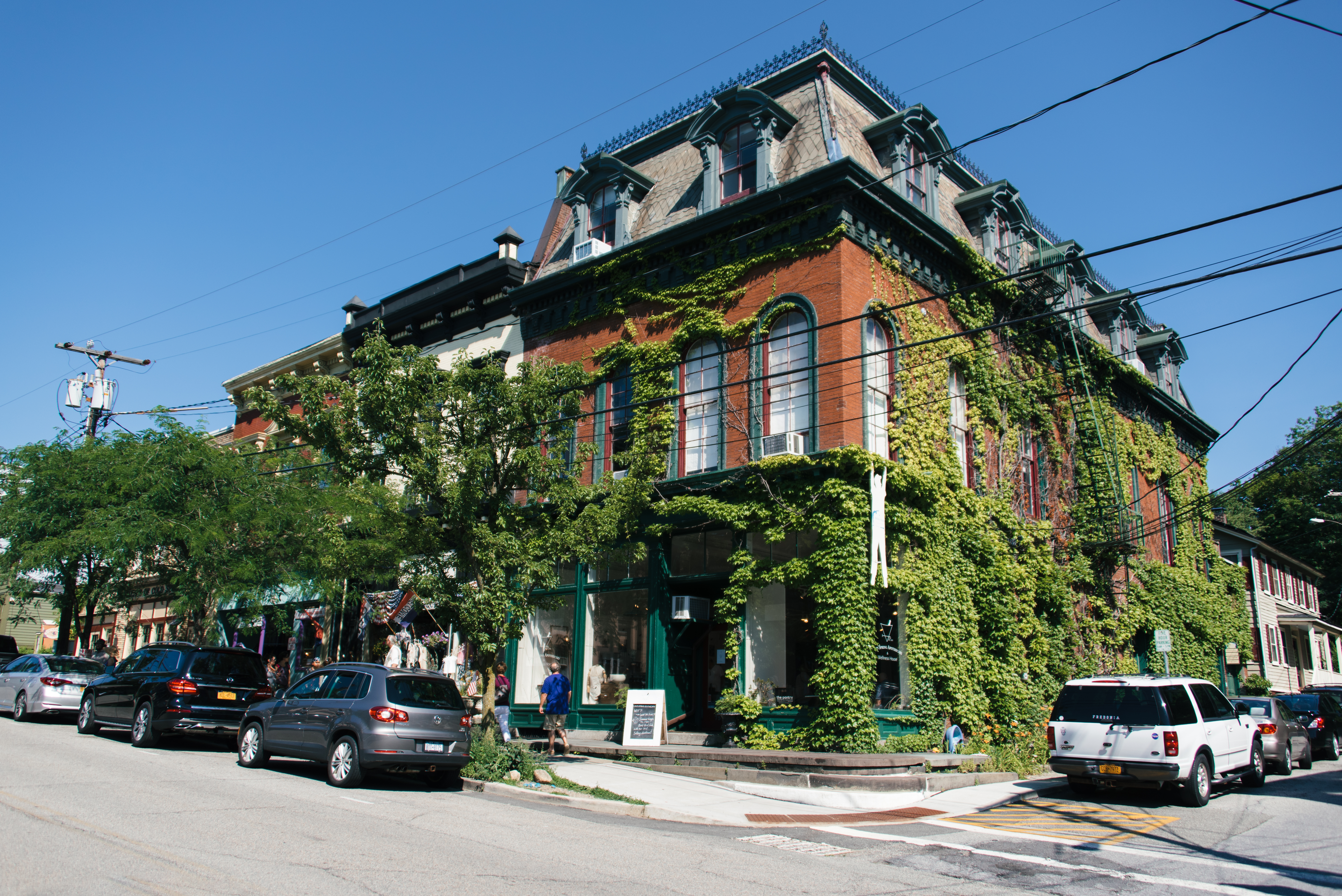
Cold Spring is a small, historic village in Putnam County, New York, perched along the eastern bank of the Hudson River in the heart of the Hudson Highlands. With a population of roughly 2,000 residents, the village has the feel of a 19th-century river town that has been carefully preserved, with row houses, brick storefronts, and antique shop-lined streets that draw weekend visitors from across the region. Best known as one of the most charming gateway villages to the Hudson Highlands and a popular stop for visitors heading to the U.S. Military Academy at West Point, Cold Spring sits about 50 miles north of New York City, an easy journey by car via the Taconic State Parkway or U.S. Route 9, and even easier by Metro-North Railroad, whose Hudson Line stops right in the village center.
Just across the river from Cold Spring, the United States Military Academy at West Point is one of the area's marquee draws. The academy, founded in 1802, sits on a scenic plateau overlooking the Hudson and is open to visitors for guided tours, museum visits, and the famous Cadet Chapel. It is only a short drive or brief walk to the river followed by a shuttle or quick crossing, generally less than 15 minutes from the village.
A few minutes south of Cold Spring, Hudson Highlands State Park encompasses a sweeping stretch of the Hudson River shoreline and the surrounding mountains. The park is a popular destination for hiking, with notable summits such as Breakneck Ridge and Bull Hill offering some of the most photographed vistas in the Hudson Valley. The trailheads are within about a 10-minute drive of the village, making the park a natural extension of a Cold Spring stay for outdoor travelers.
Right in the village, Boscobel House and Gardens is a restored early-19th-century Federal-style mansion set on a bluff above the river. The estate features period interiors, formal gardens, and seasonal events, and it appeals to visitors interested in American history, architecture, and horticulture. A few minutes further south, the expansive Bear Mountain State Park adds a zoo, an ice rink in winter, a lake, and additional hiking trails to the list of nearby options, all within about 15 to 20 minutes of Cold Spring by car.
Cold Spring's combination of walkable historic streets, riverfront scenery, train-accessibility from Manhattan, and proximity to West Point, Hudson Highlands State Park, and the broader Hudson Valley attractions makes it a particularly compelling base for short-term rentals. Travelers can spend a weekend browsing the village's shops and restaurants, hike the Highlands by day, and tour West Point or the region's historic estates without ever straying far from home. The mix of year-round natural beauty and well-trodden tourist circuits gives the village a steady, diversified appeal that suits both short getaways and longer Hudson Valley itineraries.
Want to know if a property in Cold Spring is a good investment?
Enter an address to get instant revenue potential and comps.