
Ely, Nevada
Want to see how Ely compares to other top cities in Nevada? Explore all city regulations in Nevada. →
Ely, NV
Generally Investor Friendly
STR Regulations for Ely, Nevada
Overview: Are Short-Term Rentals Allowed in Ely, NV?
Yes. Short-term rentals (STRs) are allowed in Nevada and, by extension, in Ely, NV. Nevada Revised Statutes (NRS) chapter 268 governs STRs and expressly preempts local bans. State law permits STRs while empowering local authorities to regulate safety and nuisance-related aspects through local ordinances (e.g., quiet hours, occupancy limits, and life-safety code compliance). Because no city- or county-specific STR ordinance for Ely (City of Ely/White Pine County) is provided in the materials, this guide relies on Nevada state statutes and general local-government processes. Investors should verify if White Pine County or the City of Ely has adopted any additional requirements beyond state minimums before listing or operating.
What do Airbnb hosts actually earn in Ely?
Ely hosts earn a median $25,837/year with $126 ADR and 72% occupancy.
Top performers pull in $29,926+ per year.
See the full Ely market breakdownHow to Start a Short-Term Rental Business in Ely, NV
- Verify property eligibility and zoning
- Confirm that the property is in a zoning district that allows the intended residential STR use. If the property is part of a homeowners’ association (HOA), review covenants, conditions, and restrictions (CC&Rs) for STR limitations.
- Choose and register your business entity (Nevada Secretary of State)
- Most STR operators register a Nevada LLC or corporation for liability protection, tax management, and compliance ease.
- Reserve a name, form the entity, appoint a registered agent, and obtain an EIN from the IRS. Keep the Nevada Certificate of Existence (or good standing) and operating agreement/formation documents on file.
- Note: State law does not require a separate “STR license” at the Nevada level; compliance flows through local safety ordinances and state tax obligations.
- Comply with state safety and code minimums
- Fire/life safety standards (as applicable):
- Single-family residences: NFPA 101 (Life Safety Code) and NFPA 1 (Fire Code).
- Multi-unit dwellings: International Fire Code (IFC) and International Building Code (IBC) with NV amendments.
- As of 2023: Carbon monoxide alarms are required in units with fuel-burning appliances or attached garages, and working locks on exterior entry doors.
- Plan reviews and inspections are typically required by the local building/fire department when such standards apply.
- Local permitting and approvals (White Pine County/City of Ely)
- Where state life-safety code requirements apply, plan submittal and inspections are typically handled by the County Building Department and/or the local fire authority. Coordinate early to confirm:
- Required drawings/specifications
- Inspection milestones and certificate of occupancy/compliance
- Specific local adoption status of codes
- Tax setup
- Transient Lodging Tax (TLT) and business tax (gross receipts tax): Nevada requires TLT reporting to the Nevada Department of Taxation (now part of the Nevada Department of Revenue) and local business tax registration/returns. Establish a reliable method to collect and remit TLT, and to file periodic business tax returns.
- Insurance and risk management
- Maintain general liability coverage appropriate for STR operations and consider property, loss-of-rental, and umbrella policies. Note that mortgage-holder approval may be required if the property is financed.
- Listings, guest screening, and operations
- Draft house rules (occupancy limits, quiet hours, parking, smoking, events), obtain written acknowledgments, and ensure guest screening aligns with fair housing requirements.
- Prepare an emergency information packet (exit diagrams, utility shutoffs, local emergency contacts) and ensure compliance with posting requirements (e.g., local occupancy permits, if adopted).
- Ongoing compliance and recordkeeping
- Retain all permits, inspections, approvals, tax filings, and guest communications. Maintain a compliance calendar for renewals, inspections, and filings.
Required Documents, Permits, Licenses, and Guidelines
At the state level
- NRS 268.095 (local authority to regulate STRs; safety and nuisance standards; local STR registration or licensing programs may be implemented).
- NRS 268.096 (update schedule for building/fire codes and adoption by reference).
- Business formation documents (Nevada LLC/corporation): Certificate of Formation/Organization, Operating Agreement, EIN, and Nevada Certificate of Good Standing.
- IRS EIN assignment letter and W-9/W-8BEN documentation as applicable for payment processing.
Local authority (likely White Pine County and/or City of Ely)
- Plan reviews and inspections where state life-safety standards apply:
- IFC/IBC adoption and NV amendments; NFPA 101 and NFPA 1 in single-family units.
- Smoke and CO alarms (CO required where fuel-burning appliances or attached garages exist).
- Approved egress and locking hardware.
- Fire extinguisher and egress signage where required by code.
- STR registration or local licensing (if adopted by County/City): status to be confirmed with local authorities; display requirements may apply.
- Posting requirements: occupancy limits, emergency contacts, and code-compliant signage are common in jurisdictions that regulate STRs.
Tax compliance
- TLT registration and monthly/quarterly filing with Nevada Department of Revenue.
- Business license and gross receipts (business) tax registration with the County or State (as applicable).
- Keep records adequate to substantiate gross receipts and TLT due.
Operational materials (recommended best practice)
- House rules, occupancy/quiet hours policies, parking rules, event restrictions.
- Emergency information card with utility shutoffs, evacuation plans, and local emergency numbers.
- Guest acknowledgment forms and standardized screening criteria.
Specific Regulations: City, County, and State
State (Nevada)
- Allowed activity: STRs are permitted statewide; municipalities and counties may not ban STRs. They may regulate safety and nuisance issues.
- Occupancy and quiet hours: Not set at the state level; local authorities may set reasonable limits to prevent nuisances.
- Life-safety code compliance:
- Single-family: NFPA 101 (Life Safety Code) and NFPA 1 (Fire Code).
- Multi-unit: IFC and IBC with Nevada amendments; CO alarms required in applicable dwellings.
- As of 2023, exterior entry door locks must be working.
- Code updates: Local governments must update building/fire codes periodically (NRS 268.096).
- Taxes: TLT applies to transient lodging; business tax (gross receipts) applies to businesses operating in Nevada.
County/City
- Plan reviews and inspections are triggered where code standards apply; investors should confirm:
- Adoption status of IFC/IBC and related amendments.
- Local fire/life safety plan review process.
- Any local STR registration/licensing program, quiet hours, or occupancy caps that White Pine County or the City of Ely may have adopted.
- City business license (if applicable) and county-level business tax compliance may be required.
Contact Information
Primary state authority (taxes)
- Nevada Department of Revenue (Transient Lodging Tax)
- Website: tax.nv.gov/
- Phone: Not provided in the source materials. Use the Department of Revenue website to find the appropriate TLT unit contact.
County and city contacts (White Pine County/City of Ely)
- White Pine County
- Website: www.whitepinecounty.net/
- Phone: Not provided in the source materials.
City of Ely (City Hall)
- Website: www.elycity.com/
- Phone: Not provided in the source materials.
Fire/life safety and building departments
- Address plan reviews, inspections, and code compliance questions to the White Pine County Building Department and/or the local fire authority. Contact details were not provided in the source materials; consult the County website or call the general County line to be directed to the correct department.
Business formation (optional but common)
- Nevada Secretary of State
- Website: www.nvsos.gov/
- Phone: Not provided in the source materials.
Note: Because no city- or county-specific STR ordinance text or contacts were provided in the source materials, investors should directly confirm with the City of Ely and White Pine County whether any local STR registration, occupancy/quiet-hour rules, or posting requirements apply.
Links to Source Pages
State statutes and legislative documents
- NRS Chapter 268 — Local Governments: www.leg.state.nv.us/NRS/NRS-268.html
- NRS 268.095 — Short-term rentals: local authority to regulate: www.leg.state.nv.us/NRS/NRS-268.html#NRS268Sec095
- Nevada Legislative PDF — Short-Term Rentals (overview/reference): www.leg.state.nv.us/Division/Research/Documents/ShortTermRentals.pdf
Agency portals
- Nevada Department of Revenue: tax.nv.gov/
- Nevada Secretary of State (business formation): www.nvsos.gov/
Local government portals (verify current contacts and ordinances)
- City of Ely: www.elycity.com/
- White Pine County: www.whitepinecounty.net/
Investor takeaway
- Operate within the state’s STR framework while proactively engaging the local building and fire authorities for plan reviews and inspections.
- Maintain rigorous compliance with TLT and business tax obligations.
- Monitor any local (County/City) STR ordinances that may be adopted post-2023 and update operations accordingly.
Next step
Found a property in Ely?
Paste any address and get estimated revenue, cash-on-cash return, and comparable STR performance in under 5 minutes. 3 free analyses per day.
Free brief
Get the free Ely STR Investment Brief
Revenue data, top neighborhoods, seasonal trends, and the key regulations for Ely, Nevada in one email.
Ely
Market Saturation Score
Photos of Ely


Overview of Ely
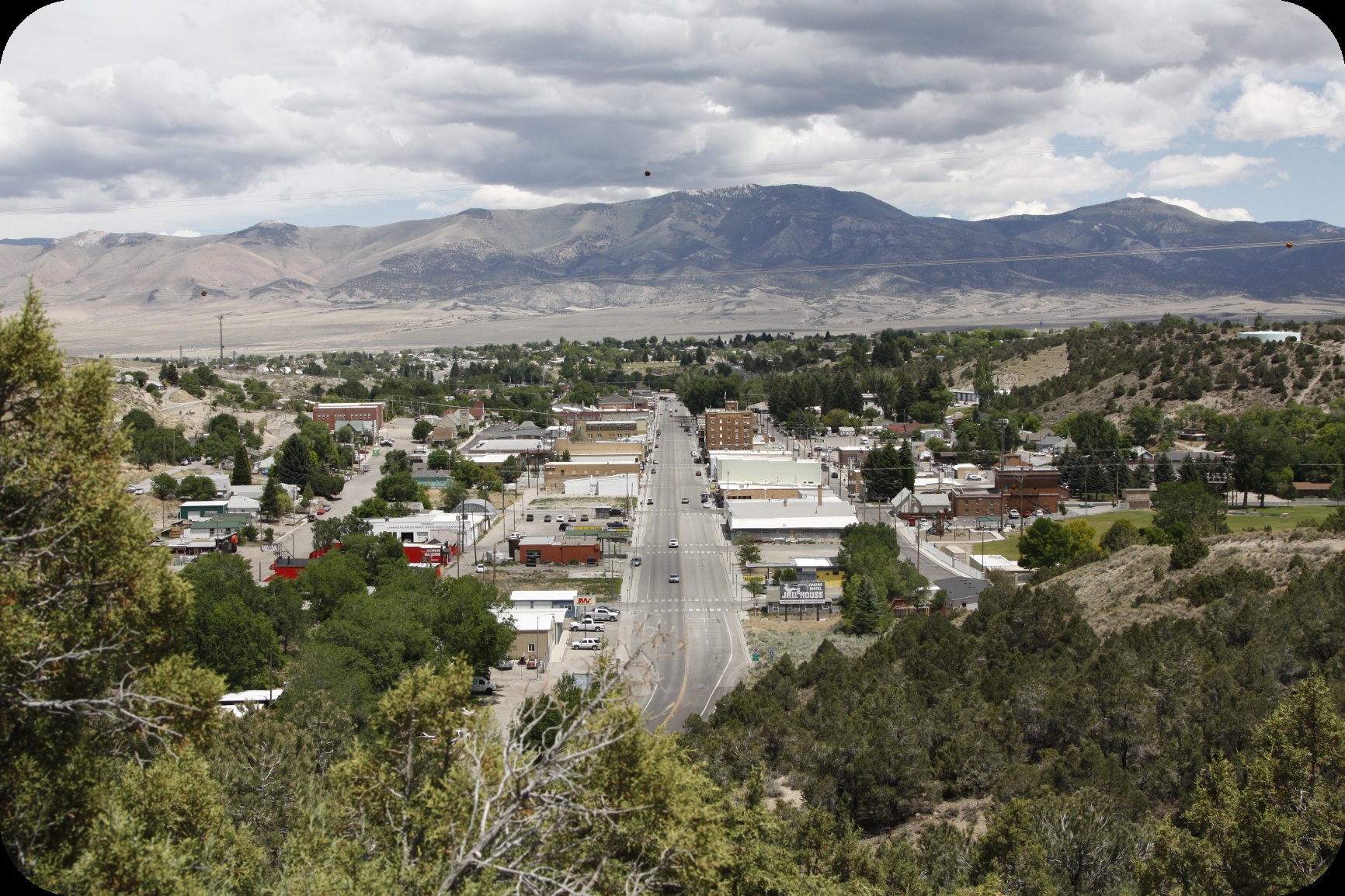
Ely is a small high-desert city in White Pine County in eastern Nevada, with a population of roughly four thousand people. It sits at an elevation of more than six thousand feet along U.S. Route 50, the stretch famously nicknamed the "Loneliest Road in America," and it has a quiet, weathered character shaped by its mining and railroad past. The town is best known as the principal gateway to Great Basin National Park, and it also serves travelers crossing the wide, sparsely populated basin-and-range country of the Great Basin. The nearest major city is Salt Lake City, which lies about 230 miles to the northeast and roughly a four-hour drive away; Las Vegas is much farther, around 280 miles to the southwest.
Just over an hour's drive east of town, Great Basin National Park anchors the region's appeal. The park encompasses Wheeler Peak, where bristlecone pine groves and a small cluster of alpine glaciers sit above the desert, along with the guided limestone passages of Lehman Caves. Its exceptionally dark skies have made it a popular destination for stargazing, and the contrast between the sagebrush flats around Ely and the high-country forest inside the park draws hikers, climbers, and casual sightseers across the seasons.
Right in downtown Ely, the Nevada Northern Railway Museum preserves one of the best-preserved short-line railroads in the country. Visitors can tour the original 1906 engine house and ride a restored steam or diesel train along a stretch of the historic copper-haul line that once connected Ely to the outside world, giving the town a hands-on railroad heritage that few small Western towns can match.
A short drive southeast of Ely, Cave Lake State Park sits in the Schell Creek Range and offers trout fishing, camping, and a popular swim beach in a narrow mountain canyon. The park's cool, pine-shaded setting stands in sharp contrast to the open valley below, and it tends to draw visitors from late spring through the first snowfall. Nearby, the beehive-shaped stone kilns of Ward Charcoal Ovens State Historic Park preserve the remnants of a nineteenth-century charcoal-making operation that once supplied the region's smelters, and they double as a photogenic overnight stop for travelers exploring the back roads south of town.
Ely's combination of historic small-town character, a celebrated national park almost on its doorstep, and its position along one of America's most iconic cross-country drives makes it a natural base for short-term rentals. Guests can spend the day hiking under bristlecone pines or riding a heritage steam train and return in the evening to a quiet, walkable downtown with a clear, star-filled sky overhead, a setting that increasingly appeals to road-trippers, dark-sky tourists, and travelers seeking an off-the-beaten-path Nevada experience.
Want to know if a property in Ely is a good investment?
Enter an address to get instant revenue potential and comps.