
Grand Island, Nebraska
Want to see how Grand Island compares to other top cities in Nebraska? Explore all city regulations in Nebraska. →
Grand Island, NE
Generally Investor Friendly
STR Regulations for Grand Island, Nebraska
Overview: Are Short-Term Rentals Allowed in Grand Island, NE?
Yes, short-term rentals are explicitly allowed in Grand Island, Nebraska. The city has not enacted an outright ban on short-term rentals and operates under a framework that permits STR operations within specific regulatory parameters. Grand Island requires operators to obtain a general business license and comply with applicable zoning regulations, safety standards, and tax obligations. The city takes a relatively permissive approach compared to some Nebraska municipalities, making it an attractive market for STR investors.
Unlike major cities like Omaha and Lincoln that have comprehensive STR ordinances, Grand Island operates under a more streamlined regulatory framework that incorporates short-term rentals into its general business licensing system while maintaining safety and neighborhood protection standards.
What do Airbnb hosts actually earn in Grand Island?
Grand Island hosts earn a median $24,586/year with $139 ADR and 65% occupancy.
Top performers pull in $33,227+ per year.
See the full Grand Island market breakdownHow to Start a Short-Term Rental Business in Grand Island, NE
Phase 1: Pre-Purchase Research and Due Diligence
Property Selection and Zoning Verification Before acquiring any property for STR purposes in Grand Island, investors must verify that short-term rentals are permitted in the specific zoning district. Research the property's zoning classification through the Hall County Assessor's office or Grand Island Planning Department. Focus on properties in commercial zones or higher-density residential areas (R-3 and above) which generally offer more flexibility for STR operations.
Market Analysis and Financial Projections Grand Island's STR market demonstrates strong fundamentals with average occupancy rates of 57% and daily rates averaging $144, generating substantial monthly revenue potential. Key demand drivers include the Nebraska State Fair, Fonner Park events, proximity to Interstate 80, and regional tourism attractions like the Stuhr Museum and Crane Trust Nature Center.
Phase 2: Business Structure and Legal Compliance
Entity Formation and Registration Consider forming a limited liability company (LLC) to protect personal assets and potentially optimize tax treatment. Register your business entity with the Nebraska Secretary of State and obtain an Employer Identification Number (EIN) from the IRS. This structure provides liability protection while facilitating business banking and tax planning.
Sales Tax Registration Register with the Nebraska Department of Revenue to collect and remit state sales tax (5.5%) and any applicable local sales taxes. This registration is mandatory before accepting guests and collecting rental income.
Phase 3: Local Licensing and Operational Setup
Business License Application Apply for a general business license through the Grand Island City Clerk's office. This license specifically covers short-term rental operations and must be obtained before listing your property on any platform.
Property Preparation and Safety Compliance Ensure your property meets all local safety standards including working smoke detectors, carbon monoxide alarms, fire extinguishers, and proper emergency egress routes. Consider scheduling pre-inspections with local fire authorities to identify and address potential compliance issues.
Phase 4: Platform Registration and Launch
Multi-Platform Listing Strategy List your property on major platforms including Airbnb, VRBO, and local regional platforms to maximize exposure and booking potential. Ensure all listings display your business license number prominently as required by local regulations.
Operational Systems Implementation Establish comprehensive operational protocols including check-in procedures, cleaning standards, guest communication systems, and emergency response procedures. Implement property management software to track bookings, guest information, and compliance documentation.
Required Documents, Permits, Licenses, and Guidelines
Essential Licensing Requirements
Grand Island General Business License
- Application Process: Complete application through City Clerk's office
- Required Documentation: Proof of property ownership, floor plans, safety certifications, insurance proof
- Processing Time: Typically 5-10 business days
- Annual Renewal: Required with updated safety inspections
- License Display: Must be prominently displayed in listing and on-premise
Nebraska Sales Tax Permit
- Registration: Nebraska Department of Revenue online portal
- Business Classification: Transient Lodging
- Filing Requirements: Monthly, quarterly, or annual filing based on revenue volume
- Required Records: Detailed booking records, guest information, tax calculations
Safety and Building Compliance Documentation
Fire Safety Certification
- Smoke detector installation certificates
- Carbon monoxide detector compliance (for properties with gas appliances)
- Fire extinguisher inspection records
- Emergency egress route documentation
- Emergency contact information posting
Building Code Compliance
- Certificate of occupancy verification
- Electrical system compliance certificates
- Plumbing system safety documentation
- HVAC system maintenance records
- Structural safety assessments for older properties
Insurance Requirements
Required Coverage Levels
- General liability insurance: Minimum $1,000,000 per occurrence
- Property damage coverage: Full replacement value
- Business interruption insurance: Recommended for revenue protection
- Guest injury protection: Required for commercial operations
Operational Documentation
Guest Management Records
- Guest check-in/check-out logs
- House rules acknowledgment forms
- Emergency contact information for all guests
- Noise and behavioral agreements
- Parking assignment documentation
Financial Record Keeping
- Daily revenue and occupancy tracking
- Tax payment receipts and filings
- Maintenance and improvement expense records
- Professional service provider invoices (cleaning, repairs, management)
Specific Regulations for Short-Term Rentals in Grand Island, NE
City-Level Regulations
Zoning Compliance Requirements Grand Island applies zoning ordinances to short-term rentals in the same manner as other similar residential properties. Single-family residential zones (R-1, R-2) may have limitations on STR operations, while multi-family zones (R-3 and above) and commercial districts typically allow STR activities with standard business licensing requirements.
Operational Standards and Limitations
- Occupancy Limits: Maximum guest counts determined by property size, bedroom count, and parking availability
- Noise Regulations: Standard residential quiet hours apply (typically 10 PM - 7 AM)
- Parking Requirements: Adequate off-street parking must be provided for all guests
- Waste Management: Regular trash collection and recycling compliance required
Business Operation Guidelines
- Local emergency contact must be designated and available 24/7
- Property must maintain residential character and appearance
- Commercial signage is prohibited in residential zones
- Guest behavior must not negatively impact neighborhood quality
County-Level Considerations
Hall County Regulations Hall County does not impose additional STR-specific regulations beyond those required by Grand Island city limits. Properties outside city limits may be subject to different zoning requirements and should be evaluated individually through the Hall County Planning and Zoning Department.
State-Level Regulations
Nebraska State Framework Nebraska takes a localized approach to STR regulation, with minimal statewide oversight beyond basic business and tax requirements. State-level obligations include:
- Sales Tax Collection: 5.5% state sales tax on all STR bookings
- Income Tax Reporting: All STR income subject to state and federal income tax
- Business Registration: Required if operating as formal business entity
- Consumer Protection: Compliance with state consumer protection laws for lodging services
Nebraska Lodging Tax
- State lodging tax: 1% on all transient accommodations
- Local lodging taxes may apply in addition to state requirements
- Quarterly reporting required to Nebraska Department of Revenue
Federal Compliance Requirements
Tax Obligations
- Form 1099 reporting from booking platforms
- Schedule E income reporting for federal taxes
- Self-employment tax considerations for active operators
- Deduction documentation for business expenses
ADA Compliance Considerations While not specifically mandated for STR properties, investors should consider accessibility improvements to expand market appeal and ensure compliance with Americans with Disabilities Act guidelines where applicable.
Contact Information for Local Authority in Charge of STRs
Primary Regulatory Contacts
City of Grand Island - Business Licensing
- Department: City Clerk's Office
- Phone: (308) 389-8200
- Address: 100 E. 1st Street, Grand Island, NE 68801
- Email: [email protected]
- Website: www.grandislandne.gov
- Hours: Monday-Friday, 8:00 AM - 5:00 PM
- Services: Business license applications, renewals, compliance questions
Grand Island Planning and Zoning
- Phone: (308) 389-8230
- Address: 100 E. 1st Street, Grand Island, NE 68801
- Email: [email protected]
- Services: Zoning verification, development compliance, land use questions
State-Level Regulatory Contacts
Nebraska Department of Revenue
- Phone: (402) 471-5729
- Website: revenue.nebraska.gov
- Services: Sales tax registration, lodging tax compliance, filing support
Nebraska Secretary of State - Business Services
- Phone: (402) 471-4079
- Website: sos.nebraska.gov
- Services: Business entity formation, registration
Supporting Authorities
Hall County Assessor
- Phone: (308) 385-5040
- Address: 231 S. Locust Street, Grand Island, NE 68801
- Services: Property classification, tax assessment information
Grand Island Fire Department
- Phone: (308) 389-8400
- Address: 525 N. Sycamore Street, Grand Island, NE 68801
- Services: Safety inspections, fire code compliance, emergency response
Local Property Management and STR Support While not regulatory authorities, several local professionals can provide guidance:
- Grand Island Area Chamber of Commerce: (308) 382-9211
- Local real estate attorneys specializing in rental property law
- Certified public accountants with STR tax expertise
Source Documentation and References
Primary Regulatory Sources
-
City of Grand Island Official Website
- URL: www.grandislandne.gov/
- Content Reference: Business licensing requirements, municipal code sections, contact information for city departments
- Verification Date: Content current as of 2025
-
Nebraska Department of Revenue
- URL: revenue.nebraska.gov/
- Content Reference: State sales tax requirements, lodging tax regulations, online registration portal
- Verification Date: Official state resources accessed 2025
Industry Analysis and Market Data
-
RedAwning Market Analysis
- URL: pm.redawning.com/market-overview/grand-island-nebraska
- Content Reference: Grand Island STR market performance data, occupancy rates, revenue analysis, neighborhood performance
- Data Points: 57% average occupancy, $144 average daily rate, $14,978 monthly revenue potential
-
Checkmate Rentals Regulatory Guide
- URL: www.checkmaterentals.com/blog/nebraska-short-term-rental-regulations
- Content Reference: Comprehensive Nebraska STR regulatory landscape, Grand Island-specific requirements, licensing procedures
- Publication Date: July 22, 2025
-
RedAwning State Regulations
- URL: www.redawning.com/pm/post/nebraska-short-term-rental-laws
- Content Reference: Nebraska-wide STR regulations, tax obligations, local government approaches
- Publication Date: March 11, 2025
Investment and Compliance Resources
-
Summer Vacation Rental Management
- URL: www.gosummer.com/vacation-rental-management/grand-island-nebraska
- Content Reference: Grand Island market overview, seasonality analysis, operational best practices
- Content Focus: Market entry strategies, management recommendations, local market dynamics
-
Jaken Finance Group STR Guide
- URL: www.jakenfinancegroup.com/grand-island-short-term-rental-laws-2026-a-complete-guide
- Content Reference: 2026 regulatory outlook, compliance strategies, investor guidance
- Content Focus: Future regulatory considerations, financing options for STR investments
Verification and Update Protocols
Regulatory Verification Requirements All potential STR investors should verify current regulations through direct contact with city authorities, as municipal codes and requirements can change. The City Clerk's office maintains the most current version of business licensing requirements and can provide definitive guidance on specific property situations.
Professional Consultation Recommendations Given the complexity of STR regulations and potential for future changes, investors should consult with:
- Local real estate attorneys specializing in rental property law
- Certified public accountants with short-term rental tax expertise
- Local real estate professionals with STR market experience
Ongoing Compliance Monitoring Regulatory landscapes continue evolving, making ongoing monitoring essential. Subscribe to city newsletters, join local real estate investor groups, and maintain relationships with local professionals to stay informed about regulatory changes that may affect STR operations.
This guide represents the most current information available as of late 2025, but investors should verify all regulatory requirements directly with local authorities before making investment decisions. The STR regulatory environment in Grand Island, while currently favorable, may continue evolving as the market matures and local officials address emerging issues.
Next step
Found a property in Grand Island?
Paste any address and get estimated revenue, cash-on-cash return, and comparable STR performance in under 5 minutes. 3 free analyses per day.
Free brief
Get the free Grand Island STR Investment Brief
Revenue data, top neighborhoods, seasonal trends, and the key regulations for Grand Island, Nebraska in one email.
Grand Island
Market Saturation Score
Photos of Grand Island



Overview of Grand Island
Grand Island sits in the heart of central Nebraska as the seat of Hall County and the largest city between Lincoln and the Colorado border, with a population of roughly 52,000 residents. Spread across the broad Platte River valley, it carries the feel of a working agricultural and logistics hub that has grown into a regional center for healthcare, manufacturing, and trade. The city is widely known as the home of the Nebraska State Fair and as a popular spring staging ground for visitors flocking to see one of North America's great wildlife migrations. Grand Island is approximately 95 miles west of Lincoln and roughly 150 miles west of Omaha, placing it within an easy half-day drive of either metropolitan area.
One of the city's most distinctive attractions is the Stuhr Museum of the Prairie Pioneer, a sprawling living-history campus on the northern edge of town that recreates a 1890s railroad town, with period buildings, costumed interpreters, and exhibits tracing the lives of settlers and Native peoples across the Great Plains. The museum is a quick drive from almost anywhere in Grand Island, typically less than ten minutes from the downtown core, and is widely regarded as one of the premier heritage sites in the central United States. Visitors can spend a full day wandering its main street replica, prairie fields, and exhibit halls.
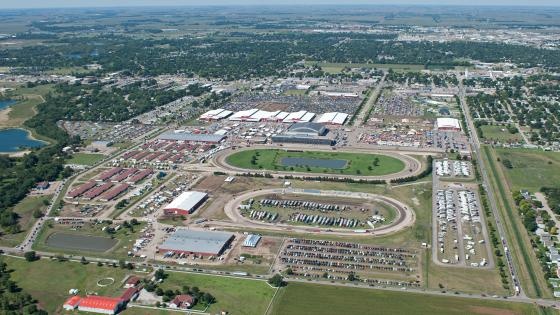
Each August the Nebraska State Fair transforms the Fonner Park complex into an eleven-day celebration of agriculture, livestock shows, midway rides, concerts, and Nebraska-made food, drawing several hundred thousand people to the city. The fairgrounds sit only minutes from the central business district, and outside of fair week the campus hosts trade shows, rodeos, and other large events that keep lodging demand steady throughout the year.
Just a short drive east of Grand Island, the Platte River becomes the stage for the spring sandhill crane migration, when more than half a million cranes gather on the river's shallow sandbars before continuing north. Viewing blinds and nature centers such as the Audubon's Rowe Sanctuary near Kearney, roughly forty miles east of the city, and the Crane Trust Nature & Visitor Center a few miles further along, allow visitors to witness the spectacle at dawn and dusk. The migration is one of the most significant birding events on the continent and fills nearby lodging for several weeks each spring.
Grand Island offers short-term-rental investors a comfortable balance: a sizeable year-round population base supported by industry and agriculture, a busy events calendar anchored by the State Fair, and immediate access to the Platte River's natural wonders, all within a few hours' drive of Nebraska's two largest cities.
Want to know if a property in Grand Island is a good investment?
Enter an address to get instant revenue potential and comps.