
Lillington, North Carolina
Want to see how Lillington compares to other top cities in North Carolina? Explore all city regulations in North Carolina. →
Lillington, NC
Generally Investor Friendly

STR Regulations for Lillington, North Carolina
Explicit Overview: Are Short-Term Rentals Allowed in Lillington, NC?
- Yes. Based on the Town’s Unified Development Ordinance (UDO) and current available sources, short‑term rentals are allowed in Lillington. The UDO permits “Hotel/Motel/Inn” establishments (a lodging use that subsumes many vacation‑rental operations) within commercial zoning districts, and it explicitly recognizes “Bed and Breakfast Establishments” in residential contexts when the owner/manager resides on the property. At the state level, North Carolina regulates “vacation rentals” through the Vacation Rental Act, and Lillington’s current materials do not show a separate city-specific STR ordinance. This creates a permissive environment with minimal local barriers.
- Market indicator: AirROI’s 2025 market analysis labels Lillington’s STR regulation level as “Low,” and no licensed listings were identified among those analyzed, reinforcing that local licensing is not currently a barrier to entry.
- Source: Lillington UDO (Article X Definitions; Article 3 Use Table), North Carolina Vacation Rental Act summary, AirROI Lillington market profile.
What do Airbnb hosts actually earn in Lillington?
Lillington hosts earn a median $26,334/year with $154 ADR and 57% occupancy.
Top performers pull in $32,287+ per year.
See the full Lillington market breakdownHow to Start a Short-Term Rental Business in Lillington
- Select a Compliant Property and Zone
- Confirm zoning allows lodging. “Hotel/Motel/Inn” is typically permitted in commercial zoning districts; verify district specifics with the Town before purchase. “Bed and Breakfast Establishment” is allowed as a residential use provided:
- No more than 8 guest rooms.
- Only breakfast is served, and only to overnight guests.
- The owner/manager resides on the property.
- Use the UDO’s Use Table (Article 3) and confirm your parcel’s zoning with the Town (phone/website below).
- Ensure the Property is Code-Ready
- Certificate of Occupancy: You cannot occupy or use a structure until a Certificate of Occupancy is issued confirming conformity to the UDO and building code.
- Safety and habitability standards apply under state law for vacation rentals (see Statewide Rules below).
- Secure Required Financial and Insurance Setup
- Trust account: North Carolina law requires a trust account in a federally‑insured depository institution (or a trust institution authorized to do business in NC) to deposit rent, security deposits, and other fees.
- Vacation rental agreement: Provide a written, signed agreement to each guest that details fees (daily, processing, cleaning), fund handling, and rights/obligations of both parties.
- Insurance: Maintain short‑term rental insurance with general liability coverage adequate for the risk profile of your property and occupancy level.
- Prepare for Taxes
- Occupancy tax: Typically collected and remitted at county/local rates (around 6–8% combined in NC).
- Sales tax: Short‑term rental services generally attract combined sales tax around 7%.
- Income and property taxes apply as usual; review deductions (depreciation, management, maintenance, etc.) with a tax professional.
- Launch with Market-Ready Operations
- Amenities and standards: Guests in Lillington expect air conditioning, Wi‑Fi, free on‑premises parking, and heating. Competitive properties include refrigerators, hot water, and fire extinguishers. Market indicators suggest 1–2 night minimum stays dominate; consider dynamic pricing during seasonal peaks (July) and lower demand periods (January).
- Source: AirROI Lillington STR metrics (ADR, occupancy, minimum stays, amenities) and North Carolina Vacation Rental Act summary.
Required Documents, Permits, Licenses, and Guidelines
City of Lillington
- No city-specific STR permit or license is identified in the current UDO materials. Zoning compliance for lodging uses is the key control. Hotel/Motel/Inn requires conformance with zoning district standards; Bed and Breakfast is a permitted residential use when owner‑occupied and within the stated conditions.
- Certificate of Occupancy required before any occupancy/use of the structure.
County (Harnett County)
- Business Registration: Contact the Harnett County Tax Administrator/Revenue Department for any business license/registration requirements (phone: 910‑893‑7520; website: www.harnettcountync.gov/departments/board_of_commissioners/tax_administrator).
- Occupancy Tax: Harnett County administers local occupancy tax; confirm the current rate and registration process (also see Contact section below).
State of North Carolina (Vacation Rental Act — Chapter 42A)
- Vacation rental agreement (written and signed).
- Trust account set up in a federally‑insured depository or authorized trust institution.
- Compliance with applicable building/housing codes, elevator safety (if applicable), habitability, smoke detectors, and carbon monoxide alarms (minimum one CO alarm per rental unit per level).
- Compliance with local zoning ordinances.
- Readiness to collect and remit occupancy and sales taxes.
- Document readiness: Property details, owner and local contact information, proof of ownership, and liability insurance as applicable.
Source: Lillington UDO; NC Vacation Rental Act summary.
Specific Regulations for STRs in Lillington (City, County, State)
City (Lillington)
- Allowed lodging uses:
- Hotel/Motel/Inn (commercial lodging) permitted in commercial zoning districts (verify district).
- Bed and Breakfast Establishment permitted as a residential use with:
- No more than 8 guest rooms.
- Only breakfast meal served to overnight guests.
- Owner/manager resides on site.
- Certificate of Occupancy required before use/occupancy.
- No additional city‑specific STR licensing language identified in the UDO (April 2021).
County (Harnett County)
- Occupancy tax applies; hosts must register and remit per county procedures. Contact the Tax Administrator/Revenue Department to confirm rates and filing cadence.
State (North Carolina)
- Vacation Rental Act (Chapter 42A) governs vacation rentals:
- Definition: Residential property rented for vacation/leisure/recreation for fewer than 90 days by a person who has a permanent residence to which they intend to return.
- Written vacation rental agreement required.
- Trust account required.
- Health, safety, and building/housing code compliance, including smoke detectors and CO alarms.
- Habitability and maintenance standards for common areas and major appliances.
- Local zoning compliance required.
- Taxes: Occupancy and sales tax collection/remittance obligations.
Source: Lillington UDO; NC Vacation Rental Act summary.
Taxes for Short-Term Rentals in Lillington
- Occupancy Tax: Administered by Harnett County; typically 6–8% combined. Register, collect from guests, and remit per county requirements.
- Sales Tax: Approximately 7% combined rate (state, county, local) applies to short‑term rental charges.
- Income and Property Taxes: Report STR income for federal/state taxes and pay property taxes at standard municipal rates. Consult a tax professional on deductible expenses (depreciation, management fees, repairs, insurance, utilities, marketing, cleaning, and more).
Sources: North Carolina Vacation Rental Act summary; Harnett County administration.
Contact Information (Local Authority in Charge of STRs)
Town of Lillington — Planning/Zoning
- Address: PO Box 9, Lillington, NC 27546
- Phone: 910‑893‑2164
- Website: lillingtonnc.gov
- Notes: Use this office to confirm zoning compliance for lodging uses and to obtain or verify zoning/district requirements.
Harnett County — Tax Administrator/Revenue Department (for occupancy tax/business registration)
- Phone: 910‑893‑7520
- Website: www.harnettcountync.gov/departments/board_of_commissioners/tax_administrator
- Notes: Confirm current occupancy tax rate and registration procedures for short‑term rentals.
Links to Source Pages (if available)
- AirROI — Lillington, NC STR Market Analysis 2025: www.airroi.com/report/world/united-states/north-carolina/lillington
- Town of Lillington — Unified Development Ordinance (current version 04/22/2021): lillingtonnc.govoffice3.com/vertical/Sites/%7B504591A4-EF99-4519-A0A7-B274920966CA%7D/uploads/ARTICLE_010_LUDO_Current_Version_04.22.2021.pdf
- North Carolina General Statutes — Vacation Rental Act (Chapter 42A): www.ncleg.gov/Laws/GeneralStatuteSections/Chapter42A
- Harnett County — Tax Administrator/Revenue Department: www.harnettcountync.gov/departments/board_of_commissioners/tax_administrator
Practical Notes for Investors
- Start by verifying your target property’s zoning and permitted lodging uses with the Town. Commercial zoning that allows Hotel/Motel/Inn is the most direct path for non‑owner‑occupied STRs; a Bed and Breakfast is a viable option if you will reside on‑site.
- Budget for: (1) code upgrades and a Certificate of Occupancy; (2) liability insurance; (3) tax registrations and remittances; and (4) operations (cleaning, maintenance, and guest services).
- Align listing standards with market expectations: 1–2 night minimum stays are prevalent, amenities should include A/C, Wi‑Fi, parking, and heating, and dynamic pricing should account for Lillington’s seasonality (peak in July; low in January).
- Maintain a written guest agreement and a compliant trust account from day one to meet state requirements.
- Reconfirm county occupancy tax and any business registration annually, as local tax policies can evolve.
Disclaimers
- Local rules evolve; the Town may adopt new STR ordinances or zoning changes. Always confirm current requirements with the Planning/Zoning Department before acquiring or operating a property.
- The information provided here reflects the cited sources and is not legal advice. For transaction‑specific or compliance questions, consult an attorney or licensed tax professional.
Next step
Found a property in Lillington?
Paste any address and get estimated revenue, cash-on-cash return, and comparable STR performance in under 5 minutes. 3 free analyses per day.
Free brief
Get the free Lillington STR Investment Brief
Revenue data, top neighborhoods, seasonal trends, and the key regulations for Lillington, North Carolina in one email.
Lillington
Market Saturation Score
Photos of Lillington
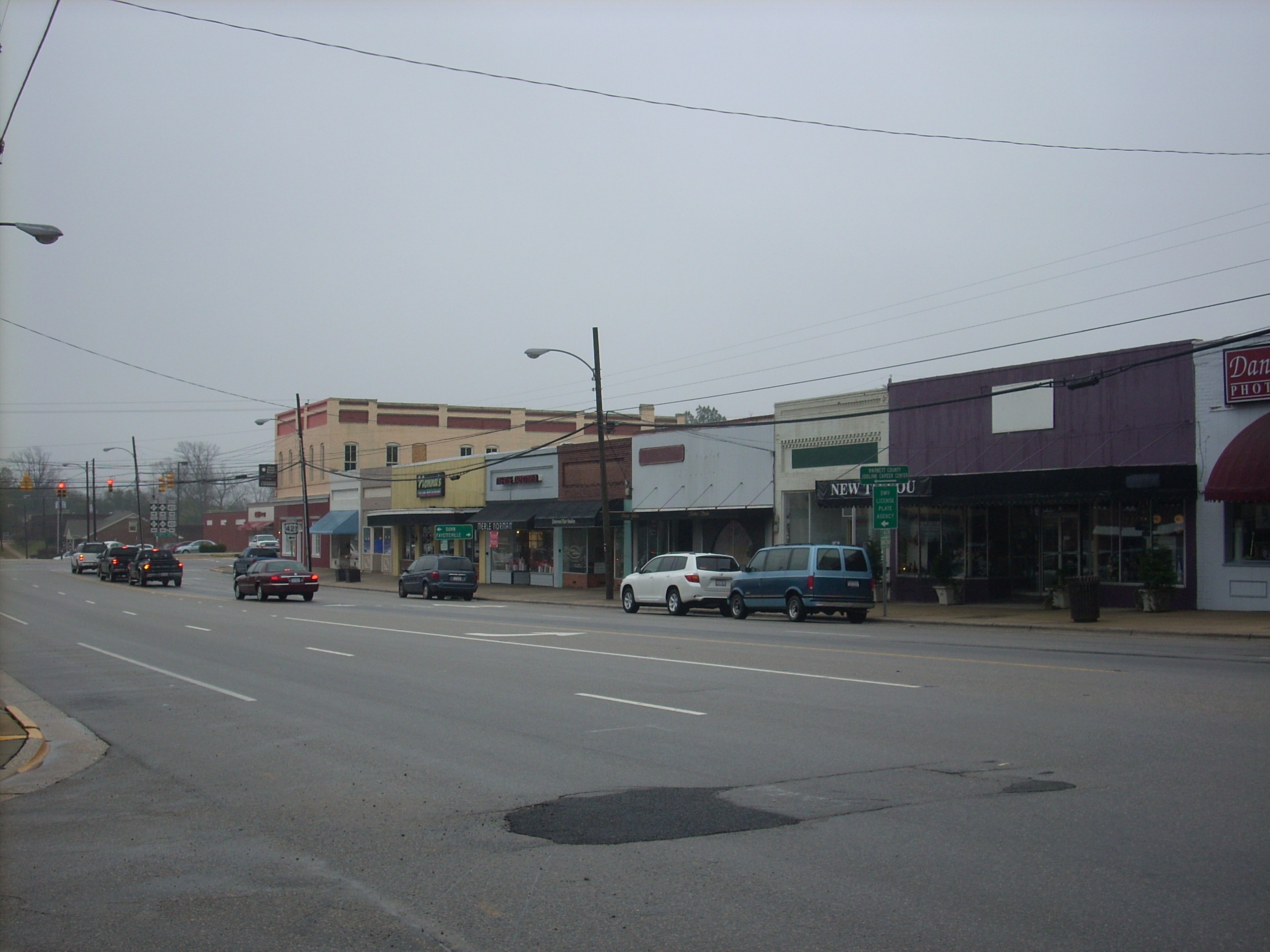
Overview of Lillington
Lillington is a small town of approximately 4,000 residents that serves as the county seat of Harnett County in central North Carolina, sitting along the Cape Fear River near its confluence with the Haw River. About 35 miles south of Raleigh and roughly 25 miles north of Fayetteville, the town carries the unhurried feel of a Piedmont river community and functions as a gateway to some of the region's most appealing outdoor spaces. Its brick storefronts, courthouse square, and riverfront setting give it a quieter, more residential character than the larger cities that bracket it along the I-95 and US-401 corridors.
Just northwest of town, Raven Rock State Park is the marquee natural attraction in the area, where the Cape Fear River cuts a deep, forested gorge that hikers can explore along several miles of bluff-top and riverside trails. The park is roughly a 15-minute drive from downtown Lillington and offers tent and RV camping, a renowned mountain biking loop, and paddling access that draw visitors throughout the year. For travelers who want a few days of hiking, river views, and quiet evenings, Raven Rock anchors most itineraries in the area.
About 10 miles east of Lillington, Campbell University anchors the small community of Buies Creek and brings a steady stream of students, families, and visitors to the region for athletics, commencement, and campus events. The university's schools of law, pharmacy, and business, along with the J.W. Taylor Conference Center, generate lodging demand that extends well beyond traditional seasonal tourism.
To the south, Fayetteville is about a half hour away and is home to the Airborne & Special Operations Museum, a well-known free museum tracing the history of Army airborne forces from World War II to the present. The surrounding region is also shaped by the nearby presence of Fort Liberty, one of the largest military installations in the country, which brings frequent family visits, training graduations, and reunions to towns like Lillington.
Together, these draws make Lillington an appealing base for short-term rental owners. Guests can stay in a quiet small-town setting while remaining within easy reach of state park trails, a university campus, a major military hub, and two sizeable North Carolina cities. The combination of natural beauty, regional events, and steady traffic from visitors to Campbell and Fort Liberty gives the area a balanced, year-round calendar of demand.
Want to know if a property in Lillington is a good investment?
Enter an address to get instant revenue potential and comps.