
Emerald Isle, North Carolina
Want to see how Emerald Isle compares to other top cities in North Carolina? Explore all city regulations in North Carolina. →
Emerald Isle, NC
Very Investor Friendly

STR Regulations for Emerald Isle, North Carolina
Executive Overview
- Short-term rentals (STRs) for fewer than 90 days are allowed in Emerald Isle, North Carolina. There is no city- or county-level permit or registration for STRs as a use. Instead, state law prevents local governments from requiring permits or local licensing of STR operators and property managers. Investors must still comply with state requirements (written vacation rental agreements, trust accounts and disbursement rules, and tax obligations), as well as county occupancy tax and state sales tax. In practice, operating a compliant STR in Emerald Isle typically takes 1–2 weeks to set up for tax registration and basic safety/code verification.
Section 1: Regulatory Landscape and Permitting 1.1 State Law and Local Permitting Limits
- North Carolina Vacation Rental Act (NC Gen. Stat. Chapter 42A) applies to “vacation rentals” (rental of residential property for fewer than 90 days by a person who has a permanent residence elsewhere).
- State law prohibits local governments from requiring STR permits or registrations or pre-approval for operating a STR (this is repeatedly emphasized in practitioner-oriented summaries of NC STR rules).
- Exception: Carteret County does require the operator to file for occupancy tax remittance and remit the local occupancy tax monthly.
1.2 Zoning and Use Compliance
- STRs are generally allowed in Emerald Isle within residential zones and mixed-use/commercial areas as long as the property remains in compliance with zoning standards (residential character, setbacks, density, and occupancy limits based on building code/septic capacity).
- There are no city-imposed density caps or ban zones for STRs. Occupancy limits are typically set by NC building code and the property’s septic permit capacity.
- Vehicle restriction: local authorities can cap the number of occupant vehicles to one per bedroom.
1.3 Local Contact Requirement
- Property managers/authorized agents must be within a 50-mile radius of the STR during guest stays to respond to issues or emergencies.
1.4 Insurance
- While not specified in state statute, best practice and industry norms suggest at least $1,000,000 in general liability coverage.
Section 2: How to Start a Short-Term Rental Business in Emerald Isle Step-by-step pathway:
- Select and inspect the property
- Verify zoning (residential, mixed-use, or commercial), septic capacity, and building code compliance.
- Complete tax registrations
- North Carolina Department of Revenue (NCDOR) for sales tax collection on gross rent.
- Carteret County Finance for occupancy tax remittance.
- Establish written agreements and escrow handling
- Execute NC-compliant vacation rental agreements with the statutory notice and required clauses; use trust accounts and follow disbursement limits.
- Designate a local contact
- Identify a manager/agent within 50 miles or engage a local property manager.
- Implement safety equipment
- Install smoke detectors (battery replacement obligations for landlords and tenants) and CO detectors near fuel-burning appliances. Keep fire extinguishers and clearly marked exits. Ensure the address is visible for emergency responders.
- Structure operations and tax remittance
- Set up monthly occupancy tax filing (due by the 20th of the month following accrual). Verify whether your channel platform (e.g., Airbnb/VRBO) collects/remits sales tax automatically; file monthly NCDOR returns if you collect and remit directly.
- Launch and monitor compliance
- Focus on neighbor relations, quiet hours, parking rules, and waste management to minimize complaints.
Section 3: Required Documents, Permits, Licenses, and Guidelines Core filings and documents:
- NCDOR Sales Tax Registration (for collection/remittance on gross rent; platforms may handle this automatically).
- Carteret County Occupancy Tax Registration and monthly remittance (6% of gross receipts).
- Written Vacation Rental Agreement (required under NC Gen. Stat. §42A-10) with statutory notice and required provisions (funds handling, security deposits, expedited eviction applicability, property transfer obligations, mandatory evacuation refunds, etc.).
- Trust Account setup for advance payments (non-tax funds) at an insured NC bank or savings institution (interest-bearing only by written agreement). Disbursements prior to occupancy limited by statute.
- Safety Compliance Documentation:
- Smoke and CO detectors, fire safety provisions, and battery replacement obligations for landlords and tenants.
- Visitor information on evacuation plans and beach safety (rip currents, sea turtle nesting season).
- Local Contact designation (within 50 miles).
- Insurance policy (general liability ≥$1,000,000 recommended).
- Property Management Agreement (if using a PM firm).
Section 4: Short-Term Rental Regulations – City, County, and State 4.1 State (North Carolina) – Vacation Rental Act Requirements Key statutory obligations for operators:
- Written Agreement Required
- All vacation rentals must have a written vacation rental agreement. Acceptance evidenced by signature, payment after receipt, or taking possession. Nonconforming agreements constitute an unfair trade practice.
- Agreement Contents
- Prominent statutory notice must appear on the face of the agreement.
- Required clauses cover: advance payment handling; deposit and disbursement procedures; administrative fees; rights/obligations of landlord/tenant; expedited eviction applicability; transfer-of-property obligations; mandatory evacuation refund provisions; and other obligations.
- Trust Accounts and Advance Payments
- Advance payments (other than security deposits) must be deposited into a trust account at an insured NC bank/savings institution within three banking days of receipt.
- No more than 50% of total rent may be disbursed prior to occupancy (with permitted disbursements to third-party vendors for tenant benefits if expressly authorized).
- Remaining funds remain in trust until tenancy commences or a qualifying event occurs (material breach/refund/property transfer).
- Security Deposits and Accounting
- Funds not designated as taxes/fees/rent are security deposits and must follow the Residential Tenant Security Deposit Act (G.S. 42-50 et seq.).
- Provide an accounting when requested prior to occupancy and apply/account/refund within 45 days after tenancy ends.
- Property Transfer Obligations
- Purchasers take subject to existing vacation rentals that end ≤180 days after recording; tenants with rentals ending >180 days after recording may not enforce the agreement unless the purchaser agrees in writing. Strict disclosure deadlines and notices apply upon transfer; failure to comply is an unfair trade practice.
- Expedited Eviction for Short-Term Stays
- Tenancies of 30 days or fewer can be expedited-evicted for holdover, material breach, nonpayment, or fraud/misrepresentation.
- Notice requirements and hearing timelines are statutorily prescribed (as short as 12–48 hours in certain circumstances).
- Fit and Habitable Premises
- Landlords must comply with applicable building/housing codes, keep common areas safe, maintain systems/appliances, and provide operable smoke detectors with annual battery replacement for battery-powered detectors. Tenants must keep the property clean/safe, not damage property, and notify about detector issues. These duties cannot be waived.
- Mandatory Evacuations
- Guests must comply with mandatory evacuation orders. Tenants are entitled to prorated refunds for nights they cannot occupy due to an evacuation (with insurance offset rules).
- Prohibited Ex Actions by Brokers
- Executing nonconforming agreements or failing to execute an agreement constitutes an unfair trade practice (G.S. 75-1.1) and removes access to expedited eviction remedies.
4.2 County (Carteret County) – Occupancy Tax
- Rate and scope
- 6% occupancy tax on gross receipts for room, lodging, or accommodation furnished in Carteret County (applies to STR platforms).
- Monthly remittance and deadlines
- Due by the 20th of each month for the prior month’s receipts via the county’s occupancy tax portal or as instructed by the Finance Department.
- Registration
- New establishments should complete the Remitter Information Form and submit to the Finance Department (email or mail).
4.3 City (Emerald Isle) – Zoning and Operational Guidance
- Permissive STR zoning: STRs are generally allowed in residential, mixed-use, and commercial districts provided zoning compliance is maintained (no special use permit is needed at the city level).
- Occupancy and vehicles
- Occupancy limits align with NC building code and septic capacity. Vehicles may be limited to one per bedroom.
- Complaint-based enforcement
- The town enforces primarily through complaints and tax compliance checks rather than proactive permit enforcement.
- Safety/building code
- Properties must meet NC building and housing codes; safety equipment (smoke/CO detectors, clear exits, visible addresses, adequate parking) is expected.
Section 5: Taxes and Filing Obligations
- State Sales Tax
- 6.75% on gross rental receipts. Many platforms collect and remit automatically; if you collect directly, register with NCDOR and file monthly returns.
- Carteret County Occupancy Tax
- 6% on gross receipts. Register with the county and file monthly by the 20th. Exemptions apply for stays ≥90 consecutive days to the same person.
- Safety-net checklist
- Confirm platform-level sales tax handling vs. direct NCDOR filing.
- Set monthly calendar reminders for the 20th county filing and state filings as applicable.
Section 6: Safety and Inspections
- Required: operable smoke detectors in bedrooms and common areas; CO detectors near fuel-burning appliances; clearly marked exits; visible street address; adequate parking.
- Recommended: fire extinguishers, exterior lighting, hurricane evacuation plans, and beach safety information (rip currents, ocean conditions, wildlife/sea turtle guidelines).
- Building and housing codes must be maintained (NC standard).
- Inspections are typically focused on safety code compliance rather than a formal STR permit inspection process.
Section 7: Contact Information (Phone/Email/Website)
- Town of Emerald Isle – Planning & Inspections
- Phone: (252) 354-3424
- Email: planning@emeraldisle-nc.org
- Website: www.emeraldisle-nc.org
- Carteret County – Finance (Occupancy Tax)
- Phone: (252) 728-8585
- Occupancy Tax Portal: www.carteretcountync.gov/843/Occupancy-Tax
- Website: www.carteretcountync.gov
- North Carolina Department of Revenue
- Phone: (877) 252-3052
- Website: www.ncdor.gov
- Crystal Coast Tourism (Visitor Information)
- Phone: (252) 726-8148
- Website: www.crystalcoastnc.org
Section 8: Source Pages and Legal References
- North Carolina Vacation Rental Act (as summarized by Emerald Isle Realty; see statutory excerpts provided): www.emeraldislerealty.com/vacation-rentals/policies-rental-act
- Emerald Isle Realty – Vacation Policies (operational practices and tax collection at check-in/out): www.emeraldislerealty.com/vacation-rentals/policies-vacation-policies
- The Offer Sheet – Emerald Isle NC STR Regulations (investor-oriented overview and local guidance): local.theoffersheet.com/legal/emerald-isle-nc/
Practical Investor Notes
- Timeline: With no local permit hurdles, you can typically be ready to operate in 1–2 weeks (tax registration plus basic safety setup).
- Costs: Expect to remit 12.75% combined taxes on gross receipts for most bookings (6.75% NC sales tax + 6% Carteret County occupancy tax).
- Risk management: Maintain high-quality guest communications, enforce quiet hours/parking/waste rules, and keep your local contact responsive to mitigate complaints and ensure a long-term, compliant operation.
- Scaling: Because local approvals are streamlined and state law is favorable, Emerald Isle is particularly well-suited to multi-property portfolios, especially when paired with a local property manager who can handle tax compliance and guest services.
What do Airbnb hosts actually earn in Emerald Isle?
Emerald Isle hosts earn a median $29,917/year with $231 ADR and 56% occupancy.
Top performers pull in $43,211+ per year.
See the full Emerald Isle market breakdownNext step
Found a property in Emerald Isle?
Paste any address and get estimated revenue, cash-on-cash return, and comparable STR performance in under 5 minutes. 3 free analyses per day.
Free brief
Get the free Emerald Isle STR Investment Brief
Revenue data, top neighborhoods, seasonal trends, and the key regulations for Emerald Isle, North Carolina in one email.
Emerald Isle
Market Saturation Score
Photos of Emerald Isle

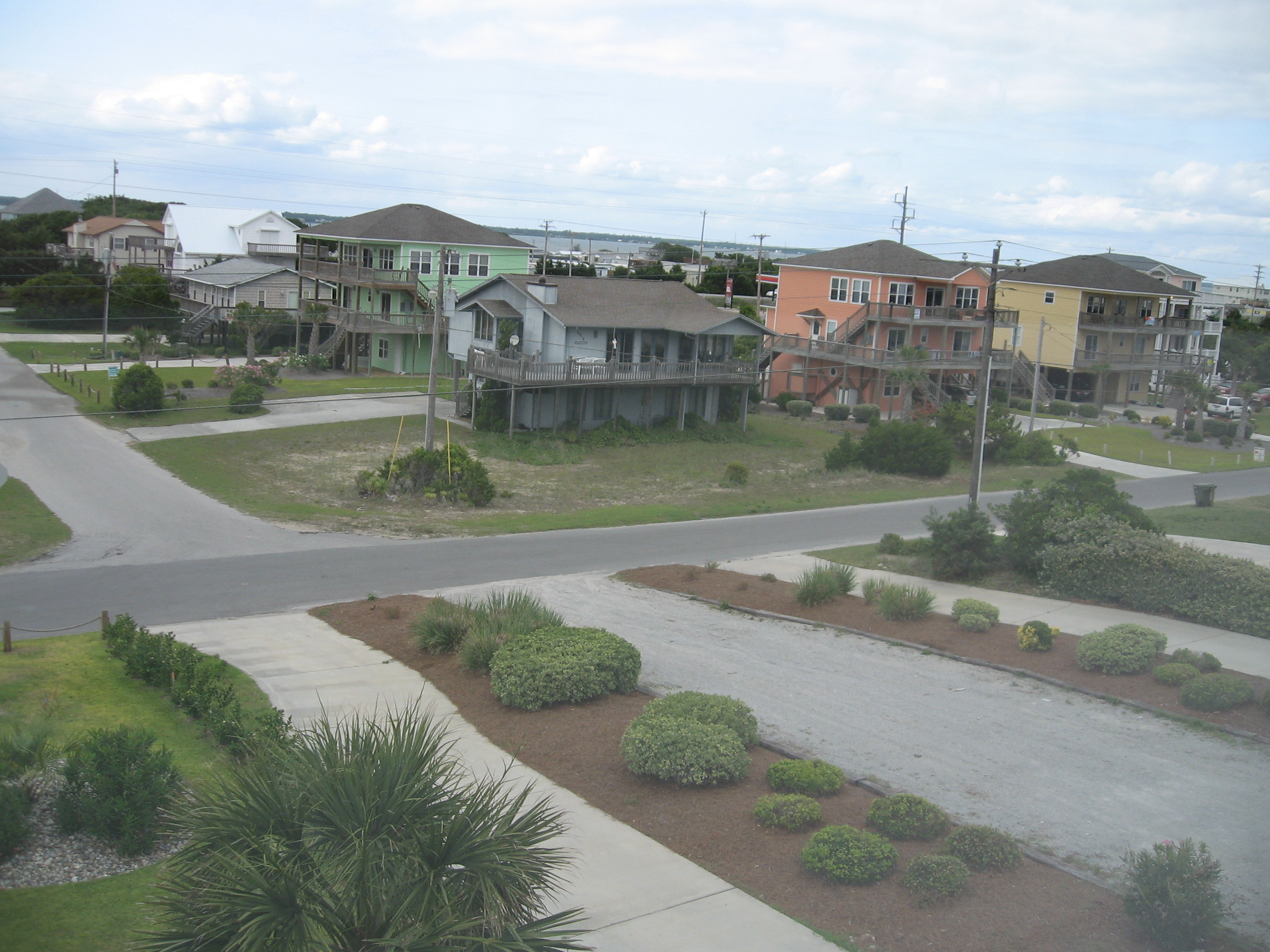
Overview of Emerald Isle
Emerald Isle is a small seaside town on the western end of Bogue Banks, a barrier island off the coast of North Carolina in Carteret County. With a year-round population of roughly 3,700, the community swells during the summer months when visitors arrive for its wide, sandy Atlantic beaches and relaxed island atmosphere. The town is part of the broader Crystal Coast region and serves as a quiet, family-friendly gateway to some of North Carolina's most scenic coastal landscapes. It sits approximately 130 miles southeast of Raleigh and about 45 minutes east of Jacksonville, with the mainland reached via the Emerald Isle Bridge at the western end of the island or the Atlantic Beach Causeway to the east near Morehead City.
Just east of Emerald Isle, about a 20-minute drive along Bogue Banks, Fort Macon State Park anchors the eastern tip of the island near Atlantic Beach. The restored antebellum fort, which saw action during the Civil War, offers guided tours, exhibits on coastal military history, and access to a popular swimming beach, fishing pier, and a network of nature trails through sand dunes and salt marsh.
Continuing east along the island, roughly a 10-minute drive from Emerald Isle, the North Carolina Aquarium at Pine Knoll Shores showcases the marine life of the state's coastal waters. The facility features a large saltwater tank, a river otter habitat, sea turtle displays, and touch tanks, making it a reliable stop for families on both sunny and rainy afternoons.
A short drive across the bridge at the western end of the island leads to Hammocks Beach State Park, known for its undeveloped four-mile stretch of beach on Bear Island. The island is reached by passenger ferry from the park's mainland access near Swansboro, about 30 minutes from Emerald Isle, and offers shelling, swimming, and paddling in a setting that feels much more remote than its location along the heavily developed East Coast.
For travelers willing to venture a bit farther, the Cape Lookout National Seashore lies south of Bogue Banks and is reached by ferry from Harkers Island or Beaufort, roughly an hour's drive from Emerald Isle. The seashore preserves a 56-mile stretch of barrier islands, including the iconic black-and-white diamond-patterned Cape Lookout Lighthouse, and supports activities like beachcombing, surf fishing, and wild horse viewing on Shackleford Banks.
With its uncrowded beaches, mild four-season climate, and proximity to a mix of state parks, aquariums, and one of the East Coast's most intact national seashores, Emerald Isle gives short-term rental owners a steady stream of family vacationers, beachcombers, and outdoor recreationists. The town's low-key island character, combined with the variety of nearby attractions spread across both the island and the mainland, makes it a versatile coastal base for travelers exploring the Crystal Coast.
Want to know if a property in Emerald Isle is a good investment?
Enter an address to get instant revenue potential and comps.