
Columbus, North Carolina
Want to see how Columbus compares to other top cities in North Carolina? Explore all city regulations in North Carolina. →
Columbus, NC
Generally Investor Friendly
STR Regulations for Columbus, North Carolina
Important caveat and disclaimer up front: Based on the sources provided, there are no Columbus, North Carolina–specific STR ordinances or contact details. Therefore, this guide relies on North Carolina state-level rules and general guidance, plus North Carolina city exemplars (Asheville, Wilmington, Charlotte, Raleigh) to illustrate how regulations typically manifest locally. Always verify with local authorities (city and county) before investing or listing.
Overview: Are short-term rentals allowed in Columbus, NC?
- Yes—short-term rentals (STRs) are allowed in North Carolina at the state level. NC does not ban STRs outright.
- Cities and counties retain authority to set zoning, safety, and operational rules (e.g., whether STRs are permitted in residential zones, occupancy limits, safety standards).
- Because Columbus, NC has no city-specific STR law in the provided materials, the state-level framework and typical local requirements discussed below apply. Confirm with the City of Columbus and Polk County before listing.
What do Airbnb hosts actually earn in Columbus?
Columbus hosts earn a median $23,531/year with $153 ADR and 57% occupancy.
Top performers pull in $30,252+ per year.
See the full Columbus market breakdownHow to start a short-term rental business in this market
- Confirm land use and zoning
- Verify whether STRs are permitted at your property’s location (residential, mixed-use, commercial) under Columbus city zoning or Polk County zoning rules if the property is in the county.
- If your property is in an HOA or condo, obtain written confirmation that STRs are permitted; many associations restrict or prohibit them.
- Register for taxes (not a “general STR license,” but a tax registration)
- Register with the North Carolina Department of Revenue to collect and remit state and local sales taxes and occupancy taxes.
- Collect and remit:
- State sales tax
- Local sales tax (varies by jurisdiction)
- Occupancy tax (varies by jurisdiction)
- File returns and remit on schedule (frequency depends on local rules and your volume).
- Implement safety and compliance standards
- Properties must meet local housing, health, and safety standards (buildings/fire codes, smoke/CO detectors, egress, etc.).
- Maintain a local contact person for emergencies and code issues; many North Carolina cities require this.
- Observe occupancy limits (common rules allow up to two guests per bedroom, plus reasonable limits on common areas; see “Exemplar city rules” below).
- Prepare documentation and maintain records
- Keep written rental agreements and guest logs as required by state and local law.
- Maintain records for at least the period specified by state/local tax authorities.
- Display permit/license numbers in listings (if your local jurisdiction issues a registration/permit number)
- Some North Carolina cities (e.g., Charlotte, Raleigh) require hosts to display permit or registration numbers in all listings.
- Ongoing compliance
- Monitor local code changes, renew any local registrations/permits annually, and remit lodging taxes consistently.
- In HOA/condo buildings, continue to comply with association rules (noise, parking, occupancy, amenities).
Required documents, permits, licenses, and guidelines (state-level baseline)
- North Carolina Department of Revenue registration for tax purposes (sales and occupancy taxes).
- Local business tax receipt or zoning permit, if required by your jurisdiction (City of Columbus or Polk County).
- Proof of identity and property ownership or legal right to operate (lease, management agreement).
- Written rental agreement (recommended and often required for STRs under North Carolina law).
- Evidence of safety compliance (buildings/fire codes, smoke/CO detectors; specifics may be set locally).
- Local contact information for emergencies and code enforcement (common requirement in many NC cities).
- Display of local registration/permit number in listings, if your jurisdiction requires it.
Note: North Carolina does not issue a statewide STR license; licensing is handled locally when required.
Specific regulations: Columbus (city/county), North Carolina (state)
City of Columbus, NC (Polk County)
- No city-specific STR ordinance appears in the provided sources.
- Default to North Carolina state-level tax obligations and any county-level rules (Polk County), plus statewide zoning authority.
Polk County
- No county-specific STR rules are detailed in the provided sources.
- Typically, county zoning would govern the use classification and allowable STR activity; verify with the county planning department.
State of North Carolina
- STRs are not banned statewide; local governments retain power to regulate.
- Vacation Rental Act (VRA) defines STRs (generally ≤90 days) and requires written rental agreements.
- Taxes: Hosts must register with the NC Department of Revenue and collect/remit state sales tax, local sales tax, and occupancy tax.
- Zoning and operational limits are largely local—occupancy limits and safety rules often apply (e.g., two guests per bedroom).
- Examples of local rules in North Carolina:
- Asheville: Banned STRs except in resort zoning districts.
- Wilmington: Local rules apply; zoning may limit STRs in residential neighborhoods.
- Charlotte: Requires a zoning permit (annual renewal), registration, permit number on listings, local emergency contact, and compliance with safety standards; hosts collect/remit sales and room occupancy taxes.
- Raleigh: Proposed ordinance requires zoning permit, display of permit numbers in listings, maintenance of guest logs (≥3 years), ban on special events, and limits on STRs in multifamily buildings (e.g., 25% cap).
Local enforcement and penalties
- City or county code enforcement can issue fines or require listing removal for noncompliance.
- Common penalties include daily fines until compliance is achieved and removal of listings from platforms.
Contact information (local authority in charge of STRs)
North Carolina Department of Revenue (state-level tax registration and compliance)
- Phone: 1-877-252-3052
- Website: www.ncdor.gov
- Purpose: Register for tax remittance (sales and occupancy taxes), file returns, and obtain guidance.
City of Columbus (if a separate STR registration or zoning permit is later adopted)
- Phone/email/website not available in the provided sources.
- Recommended initial contact: City Hall or Planning/Zoning Department for zoning confirmation and any future registration requirements.
- Website: Not provided. Check the official City of Columbus site (not included in provided sources) or visit in person.
Polk County (if county-level rules apply)
- Phone/email/website not available in the provided sources.
- Recommended initial contact: Polk County Planning and Zoning or Code Enforcement.
- Website: Not provided. Check the official Polk County site (not included in provided sources) or visit in person.
Source links
- iGMS: Airbnb Regulations by State (North Carolina section) — www.igms.com/airbnb-regulations-by-state/
- Minut: 2024 Short-term rental laws for the top US states (North Carolina section) — www.minut.com/blog/short-term-rental-laws-us
- Proper Insurance: Short-Term Rental Regulations Map (North Carolina entry and city examples) — www.proper.insure/regulations/ (see North Carolina page, e.g., www.proper.insure/north-carolina-airbnb-laws)
- TouchStay: Airbnb Regulations by State (North Carolina mentions) — touchstay.com/blog/airbnb-regulations-by-state
Final note for investors and hosts: Even in the absence of Columbus-specific rules, treat STRs as a regulated lodging activity in North Carolina. Secure tax registration, validate zoning and HOA permissions, meet safety standards, and maintain meticulous records. Because local ordinances can change quickly, confirm requirements with the City of Columbus and Polk County before listing.
Next step
Found a property in Columbus?
Paste any address and get estimated revenue, cash-on-cash return, and comparable STR performance in under 5 minutes. 3 free analyses per day.
Free brief
Get the free Columbus STR Investment Brief
Revenue data, top neighborhoods, seasonal trends, and the key regulations for Columbus, North Carolina in one email.
Columbus
Market Saturation Score
Photos of Columbus

Overview of Columbus
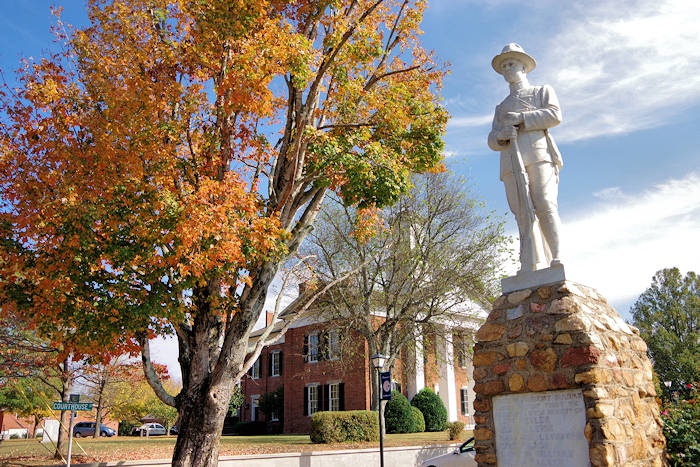
Columbus is a small town that serves as the county seat of Polk County, North Carolina, with a population of roughly 1,000 residents. Tucked into the foothills of the Blue Ridge Mountains near the South Carolina state line, the town has the unhurried character of a rural Appalachian community, with a compact historic district and views of the surrounding ridges. Columbus is best known as a gateway to the thermal belt region of the Carolinas, a mild microclimate that has long supported equestrian estates, vineyards, and orchards. The nearest major city is Charlotte, which sits approximately 90 to 100 miles to the east and is reached by a drive of roughly 1.5 to 2 hours, while Asheville is closer at about 45 miles to the northwest.
Just a few miles south of Columbus, in the community of Mill Spring, the Tryon International Equestrian Center is one of the most prominent equestrian venues in the United States. The center hosts year-round horse shows, including international FEI competitions, and features on-site dining, shopping, and lodging. It is a roughly 10- to 15-minute drive from downtown Columbus, and its event calendar draws visitors from across the country throughout much of the year.
About 25 to 30 minutes northeast of Columbus, Chimney Rock State Park offers some of the most dramatic scenery in the region. The park is anchored by a 315-foot granite monolith called Chimney Rock, which can be reached by a moderate climb or an elevator, and it includes miles of hiking trails with views of Hickory Nut Gorge and the surrounding mountains. It is a popular day trip for visitors staying in the Columbus area and pairs naturally with a visit to the adjacent lake.
Just below the state park, Lake Lure is a long, narrow mountain reservoir framed by forested ridgelines. The lake is well known as a filming location for the 1987 movie "Dirty Dancing," and visitors today can rent boats, swim from sandy beaches, or take in the views from the surrounding gorge. From Columbus, the drive to Lake Lure is approximately 25 to 30 minutes, making it an easy complement to a stay that combines small-town quiet with mountain recreation.
With its central position between Asheville, Charlotte, and the South Carolina foothills, Columbus offers a quieter alternative to the busier mountain towns, and its proximity to one of the country's leading equestrian venues, a striking state park, and a storied mountain lake makes it a natural home base for travelers exploring the western Carolinas.
Want to know if a property in Columbus is a good investment?
Enter an address to get instant revenue potential and comps.