
Bryson City, North Carolina
Want to see how Bryson City compares to other top cities in North Carolina? Explore all city regulations in North Carolina. →
Bryson City, NC
Very Investor Friendly
STR Regulations for Bryson City, North Carolina
Official overview
- Short-term rentals (STRs) are allowed in Bryson City, NC. They are listed as a permitted land use in the Town’s Unified Development Ordinance (UDO) across all zoning districts: Downtown (DT), Residential (R), Commercial (C), Specialty (S), and Industrial (I). There is no city-level STR permit requirement identified in the adopted UDO. You must register for and remit local occupancy taxes and, in many cases, North Carolina sales tax.
- Always verify zoning and HOA restrictions before purchase, and consult local counsel for any updates since publication.
Note: Some secondary sources suggest a town STR permit. The official UDO shows STRs permitted by-right without an STR-specific permit. Treat the UDO as controlling; if the Town introduces a new permitting rule later, it will be reflected in an ordinance update.
Is an STR permit required in Bryson City?
- UDO status: Permitted by-right in all districts where “Short-Term Rentals” is listed as “P” in the Table of Permitted Land Uses (DT, R, C, S, I). This means no conditional use or special use approval is required solely to operate an STR (subject to general use standards).
- City STR permit: The UDO does not establish a separate STR permit or application process. If the Town later enacts an STR permit, that would appear in the UDO and Town Code.
- Tax registration remains mandatory (see Required Documents below). Many hosts also carry liability insurance and basic life-safety equipment.
What do Airbnb hosts actually earn in Bryson City?
Bryson City hosts earn a median $33,985/year with $209 ADR and 53% occupancy.
Top performers pull in $51,758+ per year.
See the full Bryson City market breakdownHow to start a short-term rental business in Bryson City
Step 1 — Confirm zoning eligibility
- Confirm the subject property is within Bryson City limits or its Extraterritorial Jurisdiction (ETJ).
- Check the UDO Table of Permitted Land Uses: STRs are “P” (permitted) in DT, R, C, S, and I districts. If a parcel is on the fringe of town, also verify ETJ.
- Review use standards in the UDO (e.g., accessory uses, setbacks, height, parking, and mixed-use standards) to ensure the property can function as an STR without conflicts.
Step 2 — Check HOA/covenants and neighbor fit
- Many mountain cabin communities have covenants limiting STRs or specifying quiet hours, parking, and trash management. Request a copy of recorded covenants and get written approval if needed.
- Visit the site to understand access, slope, snow/ice risk, and water proximity for safety planning.
Step 3 — Taxes and registration
- Register for Swain County Occupancy Tax collection (6% of gross receipts, monthly filing by the 20th of the following month).
- If you rent 15+ days per calendar year, register with the NC Department of Revenue to collect and remit NC sales tax on lodging (state sales tax 6.75%–7.5% depending on location; some localities add a local option sales tax).
- If you use a platform (Airbnb/VRBO), it often collects/remits sales and occupancy taxes. Confirm that you remain compliant if your platform does not collect everything you owe.
- Keep detailed records of all lodging transactions, taxes collected, and remittances.
Step 4 — Life-safety and readiness
- Install/maintain smoke detectors on each level and in each bedroom; carbon monoxide detectors near fuel-burning appliances/fireplaces; fire extinguishers on each level (kitchen area recommended).
- Post emergency egress information and make the civic address visible for responders.
- For mountain properties: plan for winter access and snow removal; secure trash (e.g., bear-proof storage where applicable); maintain any fireplaces/wood stoves per manufacturer and local codes; post water safety signage for river-adjacent properties.
Step 5 — Neighbor relations and operations
- Establish local contact information and clear house rules (quiet hours, occupancy limits, parking, trash/recycling).
- Monitor complaints quickly; provide a guest guide highlighting seasonal activities (Deep Creek tubing, Great Smoky Mountains Railroad/Polar Express, hiking, whitewater) and emergency info.
Step 6 — Ongoing compliance
- Renew county occupancy tax registration annually as required.
- File taxes monthly (occupancy by the 20th; sales tax per NC schedule).
- Keep documentation accessible (digital and physical) and re-verify zoning with the Town if any UDO updates occur.
Required documents, permits, and guidelines
- Swain County Occupancy Tax Registration and monthly filing (6% of gross lodging receipts; due by the 20th of the following month).
- North Carolina Sales Tax Registration (required if renting 15+ days per year) for lodging sales tax compliance (6.75%–7.5% state rate plus any local option).
- Written lodging agreement with guests (best practice; aligns with NC standards and protects both parties).
- Proof of hazard/liability insurance (recommended minimum $1,000,000).
- Life-safety documentation (smoke/CO detectors, fire extinguishers) and posted emergency information.
- HOA/CC&Rs compliance documentation (if applicable).
- STR zoning confirmation: Bryson City UDO Table of Permitted Land Uses shows “Short-Term Rentals” as permitted by-right in DT, R, C, S, and I districts.
- Local contact information posted for guests and neighbors.
Notes:
- The UDO does not show an STR-specific permit. If the Town adopts one later, it will be codified and posted.
- Building and fire code compliance applies as with any dwelling; confirm any inspections with the Swain County Building Inspections office.
Specific regulations: city, county, and state
City-level (Bryson City)
- Zoning: STRs are permitted (P) by-right in Downtown (DT), Residential (R), Commercial (C), Specialty (S), and Industrial (I) districts per the UDO Table of Permitted Land Uses.
- No separate STR permit is required in the UDO. Standard dimensional and use standards apply (setbacks, height, lot coverage, off-street parking, and any district-specific provisions).
- ETJ: UDO jurisdiction includes the Town’s ETJ. If the property is in the ETJ, the UDO governs zoning and use; confirm any ETJ-specific procedures.
County-level (Swain County)
- Occupancy Tax: 6% of gross receipts derived from room/lodging rentals in the county. Monthly filing is required; returns due by the 20th of the following month. Obtain a county registration/ account for remittance. Many short-term rental platforms collect and remit this tax on the operator’s behalf; confirm your setup and remain responsible for compliance.
- Building inspections: For safety equipment and any alterations, contact Swain County Building Inspections.
State-level (North Carolina)
- State sales tax on lodging: 6.75%–7.5% depending on location; applies when renting lodging 15+ days per year. Register with the NC Department of Revenue if you will collect/remit sales tax.
- NC law: Some North Carolina municipalities historically pursued permits/registration for rental properties. Since July 1, 2023, Session Law 2023-58 (H 121) limits local governments’ ability to require owners/operators to obtain permits/permissions/registrations to offer “short‑term rentals” as defined in the statute, subject to certain exceptions (historic districts, zoning enforcement, fire/safety inspections, taxation, HOA covenants, and adult use/zoning categories). Your STR remains subject to zoning (UDO) and tax obligations, but a separate STR permit may not be permissible under the state framework unless falling under an exception. Verify any new local enactments.
Important: The state framework and the UDO are evolving topics. Always verify with the Town and local counsel for the latest.
Enforcement and common violations
- Bryson City uses complaint-driven enforcement for neighborhood issues (noise, parking, trash). Violations typically begin with a warning; repeated or serious non-compliance may result in fines, suspension of business operations, or revocation of business registration if one is required for general business licensing.
- Most frequent issues:
- Operating without proper county/state tax registrations.
- Failing to collect/remit occupancy and sales taxes.
- Exceeding occupancy limits or hosting unauthorized events.
- Noise/nuisance and improper waste management.
- Parking violations in residential areas.
Compliance best practices:
- Maintain documentation on-site (guest rules, occupancy limits, emergency info, tax registrations).
- Provide your local contact and respond quickly to neighbor concerns.
- File taxes on time; retain evidence of remittance.
Contact information
Town of Bryson City (Planning/Zoning/Administration)
- Phone: (828) 488‑3335
- Address: 45 Everett Street, Bryson City, NC 28713
- Website: brysoncitync.gov
- Hours: Monday–Friday, 8:00 AM – 5:00 PM
Swain County Administration
- Phone: (828) 488‑9273
- Address: 50 Main Street, Suite 301, Bryson City, NC 28713
- Website: swaincountync.gov
- Hours: Monday–Friday, 8:00 AM – 5:00 PM
Swain County Building Inspections (life-safety/building compliance)
- Phone: (828) 488‑9134, ext. 2211
- Website: swaincountync.gov
North Carolina Department of Revenue (state sales tax registration)
- Phone: (877) 252‑3052
- Website: ncdor.gov
Bryson City–Swain County Chamber of Commerce (tourism resources)
- Phone: (800) 867‑9246
- Website: greatsmokies.com
Sources and official links
-
Town of Bryson City Unified Development Ordinance (UDO) — Permitted uses, districts, procedures, definitions: www.brysoncitync.gov/vertical/sites/%7B6B5DAB32-DB97-47F4-AC1D-AE9ECE9A837C%7D/uploads/Bryson_City_Adoption_Ready_UDO.pdf
-
The Offer Sheet — Bryson City STR regulatory overview and investor guidance: local.theoffersheet.com/legal/bryson-city-nc/
-
BuildYourBNB — Bryson City STR regulation overview (2021 data): www.buildyourbnb.com/us-airbnb-and-short-term-rental-regulations/bryson-city
-
Town of Bryson City official website: www.brysoncitync.gov
-
Swain County official website: www.swaincountync.gov
-
North Carolina Department of Revenue (state tax registration and lodging tax guidance): www.ncdor.gov
-
Bryson City–Swain County Chamber of Commerce: www.greatsmokies.com
Disclaimers
- This guide summarizes publicly available information as of publication. Regulations and local policies can change. Always confirm current requirements with the Town of Bryson City and Swain County, and consult legal/tax professionals for advice tailored to your property and business model.
Next step
Found a property in Bryson City?
Paste any address and get estimated revenue, cash-on-cash return, and comparable STR performance in under 5 minutes. 3 free analyses per day.
Free brief
Get the free Bryson City STR Investment Brief
Revenue data, top neighborhoods, seasonal trends, and the key regulations for Bryson City, North Carolina in one email.
Bryson City
Market Saturation Score
Photos of Bryson City


Overview of Bryson City
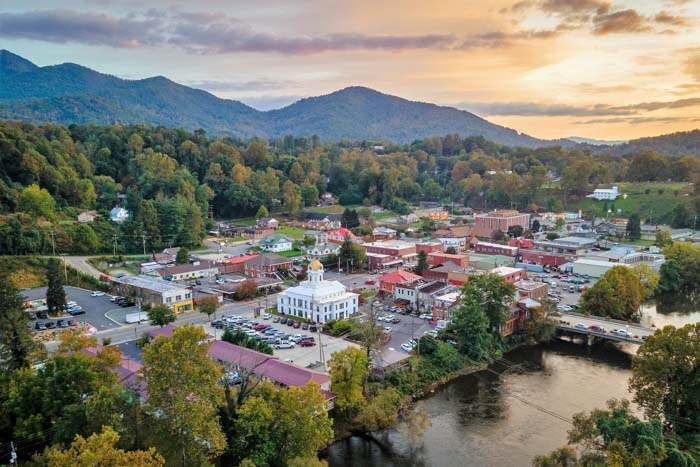
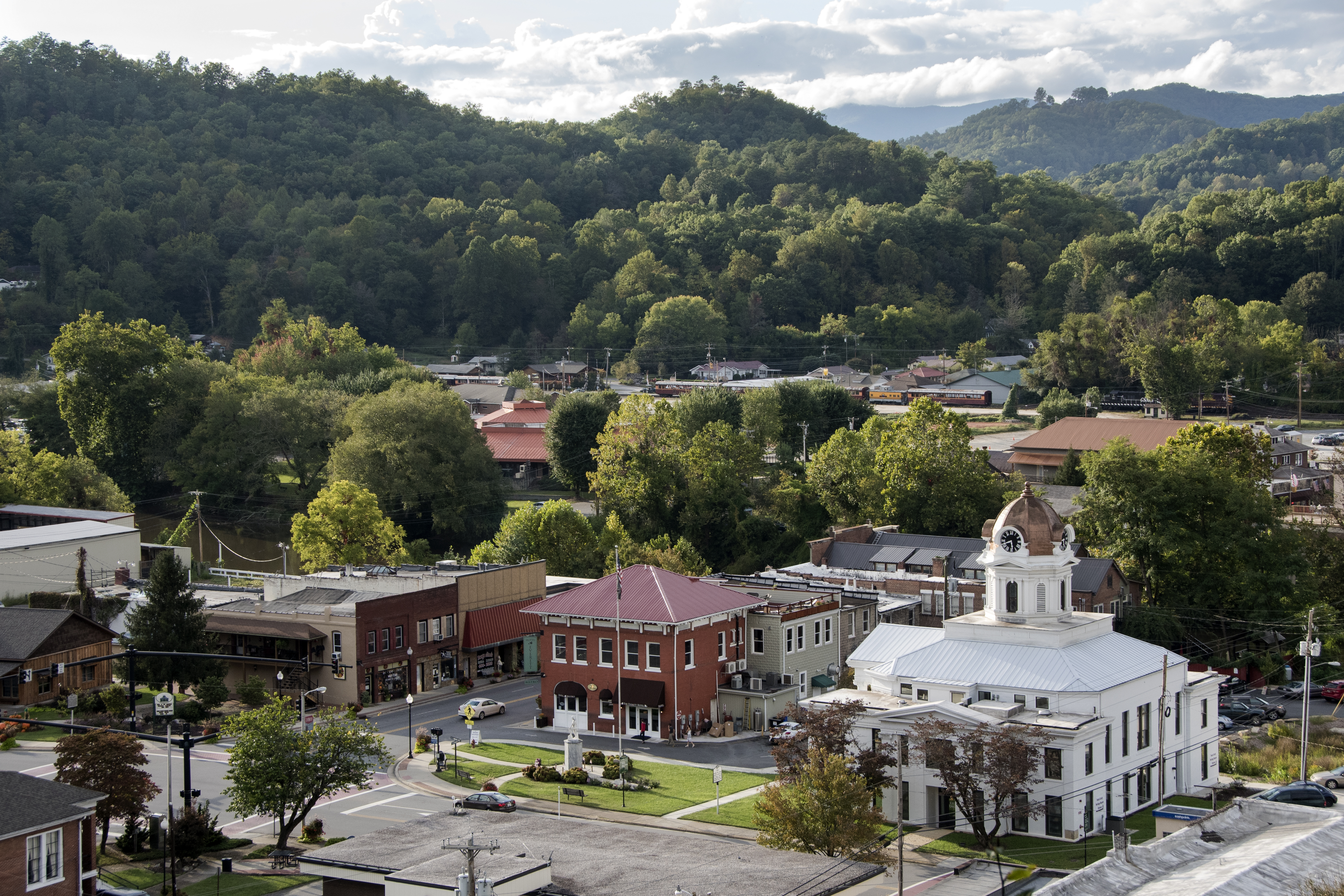
Bryson City is a small mountain town in Swain County, North Carolina, in the western part of the state. With a population of approximately 1,500, it serves as the county seat and has long functioned as one of the southern gateways into the Great Smoky Mountains. The town sits along the Tuckaseigee River and carries a relaxed, outdoors-oriented character shaped by its location on the edge of national parklands and Appalachian wilderness. It lies roughly 60 miles west of Asheville, the nearest sizable city, and about 60 miles southeast of Knoxville, Tennessee, putting it within easy reach of both the Blue Ridge and Tennessee Valley travel corridors.
The biggest draw in the area is the Great Smoky Mountains National Park, the most visited national park in the United States. The park's southwestern North Carolina entrance, just outside the adjacent town of Cherokee, is only about 10 miles from Bryson City, and popular trailheads such as those in the Deep Creek area can be reached in well under 20 minutes by car. Visitors come year-round for hiking, wildlife watching, and scenic drives along Newfound Gap Road, while seasonal highlights like synchronous fireflies and fall foliage draw additional crowds in late spring and autumn.
Another signature experience is the Great Smoky Mountains Railroad, a heritage railway that departs from a depot right in downtown Bryson City. The train runs excursion routes along the Tuckaseigee River and into the Nantahala Gorge, with seasonal themed trips that appeal to families and rail enthusiasts alike. Because the depot is within walking distance of much of the town's lodging and restaurants, it tends to anchor a significant share of visitor itineraries and gives the town a recognizable, walkable core.
To the south, the Nantahala Gorge and the Nantahala River offer some of the Southeast's most popular whitewater rafting, with multiple outfitters running guided trips on a river regulated for continuous releases throughout the rafting season. The river corridor is also home to the Nantahala Outdoor Center, a long-established outfitter founded here in 1972, and the nearby stretch of the Appalachian Trail crosses through the gorge. Most rafting put-ins and trail access points sit within a 20- to 30-minute drive of Bryson City.
Just to the southwest of town, Fontana Lake stretches for more than 30 miles along the southern boundary of the national park. Created in the 1940s by Fontana Dam, the lake is a hub for boating, fishing, and lakeside camping, and it provides a quieter, water-based counterpoint to the busier river and trail attractions. The dam itself, among the tallest in the eastern United States, is a popular stop for visitors driving the scenic loop through the southwestern Smokies.
Together, these features make Bryson City a natural base for short-term rentals. The town offers small-town walkability, a scenic railroad anchor attraction, and quick access to two national park gateways, a major rafting corridor, and a sizable mountain reservoir. That mix of marquee outdoor draws and a slower, less-developed feel than nearby Gatlinburg or Cherokee tends to appeal to travelers looking for a quieter Smokies stay, which in turn supports steady demand for well-located vacation rentals throughout the year.
Want to know if a property in Bryson City is a good investment?
Enter an address to get instant revenue potential and comps.