
Malta, Montana
Want to see how Malta compares to other top cities in Montana? Explore all city regulations in Montana. →
Malta, MT
Generally Investor Friendly
STR Regulations for Malta, Montana
Executive overview: Short‑term rentals are explicitly allowed in Malta, but only if you obtain a Holiday Premises Licence from the Malta Tourism Authority (MTA). Properties let for tourist stays (less than 90 days) are classified as “holiday premises” and must be licensed under the Travel and Tourism Services Act (Cap. 409) and the Holiday Premises Regulations (SL 409.11). Operating without a licence is non‑compliant and can lead to penalties and licence refusal. Tourist‑furnished short lets are distinct from short private residential leases (SPRL) governed by Malta’s rent reforms (see below). Investors should plan for licensing, planning compliance, VAT and environmental contribution (ECO tax), and ongoing record‑keeping and inspections.
Important note for investors: The MTA licence governs tourist‑oriented, furnished accommodation (Airbnb‑type listings). If your property is leased as a standard residence—rather than as tourist accommodation—it may fall under Malta’s private residential lease regime (long or short), which has different rules and no MTA licence requirement. Choose the correct pathway based on your intended use and property classification.
Allowed Status: Tourist STRs vs Residential Leases
- Tourist short lets (holiday premises) are allowed in Malta and require a Holiday Premises Licence (MTA).
- Private residential leases are regulated under separate legislation and do not require an MTA licence; however, they are constrained by rent reform rules and must be registered with the Housing Authority.
- Tourist‑oriented furnished rentals are typically for stays under 90 days; private residential short leases (SPRL) can be for up to six months for specific categories (see SPRL section). Distinguish these two regimes clearly when planning your business model and legal obligations.
What do Airbnb hosts actually earn in Malta?
Malta hosts earn a median $25,827/year with $162 ADR and 52% occupancy.
Top performers pull in $30,464+ per year.
See the full Malta market breakdownHow to Start a Short‑Term Rental Business in Malta
- Confirm zoning/planning: Ensure the property has the appropriate planning permission for the intended use (e.g., residential use acceptable for tourist accommodation).
- Prepare to apply for a Holiday Premises Licence with the Malta Tourism Authority (MTA) Licensing Directorate.
- Register for tax obligations:
- VAT number and VAT returns (monthly/quarterly depending on turnover).
- Environmental Contribution (ECO tax) registration; amounts vary by establishment type and season.
- Purchase or verify third‑party liability insurance with a minimum coverage of €250,000.
- Set up bookkeeping, invoicing, and compliance processes for VAT returns, ECO tax collection/remittance, and record‑keeping.
- Submit the licence application and supporting documents; after approval, list and operate the property as a licensed holiday premises.
- Consider that Malta’s rent reforms do not directly regulate tourist holiday lets licensed by MTA; however, they do regulate residential leases (long/short) including room sharing. Align your business model and property use accordingly.
Required Documents, Permits, Licences, and Guidelines
Core licensing documents (MTA Holiday Premises Licence):
- Completed Holiday Premises Application Form (Parts A–D covering applicant details, property classification, lease info if not owner, declarations).
- Application fee (exact fee amount is referenced in Legal Notice 409.05; pay via the MTA Licensing Management System).
- Identification:
- Scanned copy of applicant’s ID card (both sides).
- If the applicant is a company: Full Memorandum & Articles of Association; Board Resolution appointing an Official Representative.
- If applying as a partnership: Deed of Partnership; Partnership Resolution appointing an Official Representative.
- If an Operator (third‑party manager) is involved: Operator’s ID; company documents and resolution if the operator is a company.
- Planning permission:
- Copy of approved PA Development Permit including Site Plan and Drawings showing the establishment in RED; or
- For properties built pre‑1967: Architect’s Declaration and Architect’s Layout Plans (Declaration must state that the property was built pre‑1967, that no planning documents could be traced, and that the property complies with sanitary regulations and is fit for habitation).
- Property ownership proof (e.g., contract of purchase; non‑Maltese nationals must provide the purchase contract).
- Third‑party liability insurance for a minimum of €250,000.
- VAT number details (register or verify prior to operation; needed for VAT returns and ECO tax registration).
- Digital copies: Provide both hard copy and soft copy (USB/CD) of all documents as required by MTA.
Regulatory framework references:
- Travel and Tourism Services Act (Cap. 409): primary legislation.
- Holiday Premises Regulations (SL 409.11): detailed licensing and operational requirements.
- Legal Notice 409.05: applicable licence fees (payment via MTA Licensing Management System).
Private residential lease registration (if leasing as residence rather than tourism):
- Register with the Housing Authority via the official portal (within 10 days of lease commencement); include property details, rent, deposit, duration, renewal terms, and inventory.
- Contracts must meet content requirements; failure to register can make contracts null.
Malta‑Specific STR Regulations (Licensing, Fees, Process, Obligations)
- Scope of “Holiday Premises” (SL 409.11): Any building, however described (but not a hotel/guest house/hostel or the owner’s/tenant’s ordinary residence) providing accommodation, ancillary services (including self‑catering), and amenities to tourists; includes apartments, villas, farmhouses, studios, maisonettes, terraced houses.
- Licence required: Anyone offering short‑term tourist accommodation must obtain a Holiday Premises Licence (applies to individuals, companies, owners, leaseholders, or operators).
- Who may apply: Owners or leaseholders; or a licensed operator acting on behalf of the owner (company or partnership representations required).
- Application process:
- Complete Holiday Premises Application Form (Parts A–D).
- Submit documents (both hard and digital copies).
- Submit via MTA Licensing Directorate (Smart City, Kalkara) or Gozo Office (Victoria).
- Timeframes:
- Vetting: 5 days (then the applicant may need to supply further documents).
- Inspection/Assessment: dependent on applicant readiness; if standards are not met, applicants are asked to rectify and the process pauses.
- Approval: 10 days after inspection.
- Payment: Online via the Licensing Management System (LMS).
- Ongoing obligations (licensed hosts):
- Maintain accurate financial records, issue fiscal receipts or invoices.
- Submit VAT returns (monthly/quarterly).
- Collect and remit ECO tax (Environmental Contribution).
- Maintain minimum third‑party liability insurance (€250,000).
- Notify MTA of changes (ownership, use, contact details).
- Appeals: If aggrieved by an MTA decision, applicants may appeal to the Tourism Appeals Board within 15 days, subject to a prescribed fee; see official appeals board site.
Private Residential Lease Rules (SPRL/LPRL/LSRS) vs STR:
- Long Private Residential Lease (LPRL): minimum 12 months; automatic renewal unless landlord terminates with at least three months’ notice by registered post. Tenant early termination limited to specific minimum periods and notice.
- Short Private Residential Lease (SPRL): maximum six months for defined categories:
- Non‑resident workers on assignments ≤ 6 months.
- Non‑resident students enrolled ≤ 6 months.
- Residents needing an alternative primary residence ≤ 6 months.
- Non‑residents intending to stay ≤ 6 months without establishing residence.
- Must identify category in the contract and provide supporting documents; otherwise, the contract is deemed an LPRL. Any SPRL exceeding six months becomes an LPRL.
- Letting of Shared Residential Space (LSRS): room or part of a residence with shared amenities; duration ≤ 6 months; tenant may terminate with one week’s notice; no renewal.
- Rent increases: Once per year, capped at 5% and aligned to the Property Price Index published by the NSO.
- Registration: Mandatory via Housing Authority portal within 10 days of lease start (landlord registers or tenant may register and recover fee). Failure can render contracts null.
- Forbidden clauses: The law prohibits certain clauses (e.g., automatic early termination, rent reduction without benefit reduction, additional dues beyond rent/deposit/insurance/common parts maintenance, fixed utility charges not based on actual consumption).
- Inspections and penalties: Authorities may enter properties; landlords failing to register leases or making false declarations face fines (€2,500–€10,000). Illegal evictions are criminal offences (fines €1,500–€4,000).
Key distinction for STR investors: Tourist holiday lets licensed by MTA (typically < 90 days) are outside the rent reform regime; residential leases fall under the rent reform and require registration, but no MTA licence. Investors must structure their business with the correct regulatory pathway.
Operational Expectations for Licensed Hosts
- Fiscal responsibility: Register for VAT, file returns, and account for ECO tax; issue compliant invoices/receipts.
- Insurance: Maintain third‑party liability coverage at or above €250,000.
- Record‑keeping: Keep books and supporting documentation; be ready for inspections and compliance checks.
- Communication: Respond promptly to MTA requests for additional information or corrective actions.
- Change management: Notify MTA of any changes (ownership, contact information, property use).
Contact Information (Local Authority)
- Malta Tourism Authority (MTA) Licensing Directorate
- Address: SCM 01 Level 3, Smart City, Kalkara, SCM 1001
- Gozo Office: 17 Independence Square, Victoria, Gozo
- Phone: +356 2291 5000
- Email: licensing.mta@visitmalta.com
- Online application portal for Holiday Premises: see References below
- Tourism Appeals Board
- Website: see References below (appeals within 15 days; fees apply)
- Housing Authority (Private Residential Leases Registration)
- Portal: see References below (register leases within 10 days)
Source Links (IMPORTANT)
- Equitas Advisory: Effective guide – How to get licensed for a short let in Malta equitas.com.mt/short-let-in-malta/
- Malta Tourism Authority (MTA): Holiday Furnished Premises Application www.mta.com.mt/en/applicationhfp
- Malta Legislation: Holiday Premises Regulations (SL 409.11) legislation.mt/eli/sl/409.11/eng
- Malta Legislation: Travel and Tourism Services Act (Cap. 409) legislation.mt/eli/cap/409/eng
- Government Service Portal: Holiday Premises Licence Application (WEB142) servizz.gov.mt/en/Pages/Culture-and-Leisure/Leisure/Tourism/WEB142/default.aspx
- QuickLets Blog: Important laws and regulations all landlords must know about www.quicklets.com.mt/blog/280/the-important-laws-and-regulations-all-landlords-must-know-about
- Frank Salt Real Estate: Malta’s new regulations covering property rentals franksalt.com.mt/rental-investments/new-property-rentals-regulations/
- Tourism Appeals Board (Appeals, contact and procedures) tourismappealsboard.gov.mt
- Malta Tourism Authority (LMS): Online payment of licensing fees licence.mta.com.mt/
- Housing Authority: Private Residential Lease Registration Portal portal.rentregistration.mt/
- Malta Tourism Authority: VAT & ECO tax guidance for hosts (reference guide) equitas.com.mt/vat-on-accommodation-and-short-lets-in-malta/
- Equitas Advisory: Bookkeeping & Compliance Services (reference) equitas.com.mt/bookkeeping/
- Malta Tourism Authority: Home www.mta.com.mt/en/home
If you are targeting the tourist market, follow the MTA licensing route and associated tax and compliance obligations. If you plan to lease residential units as homes rather than tourist accommodation, ensure full compliance with Malta’s rent reforms and Housing Authority registration requirements.
Next step
Found a property in Malta?
Paste any address and get estimated revenue, cash-on-cash return, and comparable STR performance in under 5 minutes. 3 free analyses per day.
Free brief
Get the free Malta STR Investment Brief
Revenue data, top neighborhoods, seasonal trends, and the key regulations for Malta, Montana in one email.
Malta
Market Saturation Score
Photos of Malta


Overview of Malta
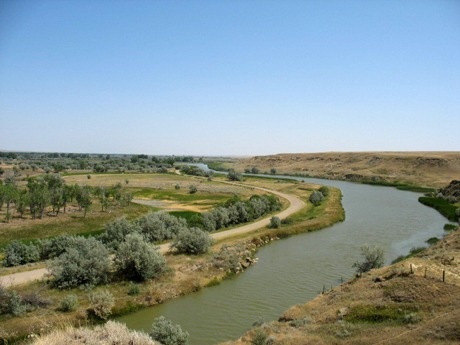
Malta is a small rural city in north-central Montana and serves as the county seat of Phillips County, with a population of roughly 1,900 residents. Sitting along the Milk River in the wide-open ranch country of the Hi-Line region, it has the feel of a classic Western small town — quiet, friendly, and framed by big skies. Malta is best known as a stopping point for travelers exploring the Missouri River Breaks and the surrounding prairies, as well as for its proximity to several wildlife refuges and paleontological sites. The nearest major city is Great Falls, which lies about 200 miles to the southwest and serves as the regional hub for air travel, shopping, and services.
Just a short drive north of town, Bowdoin National Wildlife Refuge protects a stretch of prairie wetlands along the Milk River and is one of the most important migratory bird habitats in the northern plains. Visitors can drive a short auto tour loop, walk short nature trails, and view pelicans, herons, and waterfowl from viewing platforms. The refuge is roughly fifteen to twenty minutes from downtown Malta and offers a peaceful, low-effort way to experience the area's natural setting.
To the south of Malta, the Little Rocky Mountains rise unexpectedly from the surrounding plains, creating one of the most scenic backdrops in the region. The range is home to the town of Zortman and the Fort Belknap Indian Reservation, and the area offers hiking, wildlife viewing, and a glimpse of Montana's gold mining history. Depending on the route, the Little Rockies are roughly an hour and a half to two hours south of Malta, making them a feasible day trip for visitors based in town.
The region around Malta has also produced significant dinosaur fossil discoveries, and the area's paleontology heritage is celebrated locally. Several museums and field sites in central Montana highlight the dinosaurs of the Hell Creek and Judith River formations, and travelers passing through Malta will find it positioned conveniently for those interested in exploring this lesser-known but genuinely fascinating chapter of natural history. Together, these attributes give Malta the character of an off-the-beaten-path base for guests who want wide-open landscapes, wildlife, and a strong sense of the northern Great Plains.
Malta's appeal for short-term rentals lies in its combination of small-town hospitality, genuine Western character, and access to some of Montana's most underrated natural and historical attractions. Visitors who choose to stay here tend to be road-trippers, birders, hunters, and travelers seeking an authentic slice of big-sky country rather than a busy resort experience. For owners, that mix of seasonal travelers and a peaceful setting makes Malta a quietly compelling place to host guests.
Want to know if a property in Malta is a good investment?
Enter an address to get instant revenue potential and comps.