
Hibbing, Minnesota
Want to see how Hibbing compares to other top cities in Minnesota? Explore all city regulations in Minnesota. →
Hibbing, MN
Generally Investor Friendly
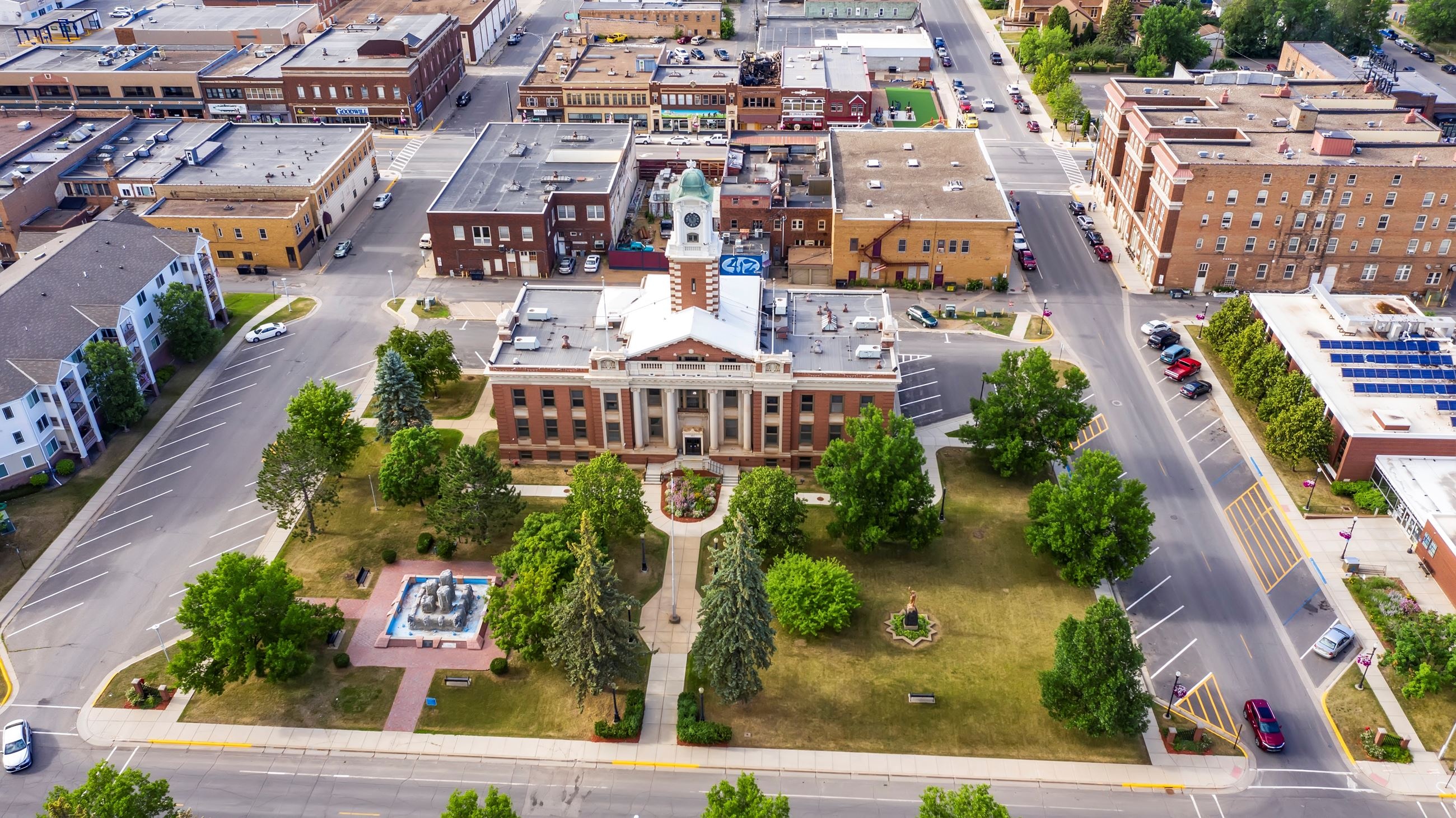
STR Regulations for Hibbing, Minnesota
Overview: Are short-term rentals allowed in Hibbing?
Yes—short-term rentals are allowed in Hibbing, MN. Hibbing administers its own zoning and permitting, and St. Louis County’s short‑term rental ordinance does not apply inside city limits. The county’s STR regulations apply only in organized and unorganized townships where the county administers zoning; Hibbing is explicitly excluded from county enforcement. As a result, your compliance pathway for an STR in Hibbing is driven primarily by city zoning/use rules, state lodging and tax requirements, and local utility/public health considerations.
Key takeaway: If your STR is inside the City of Hibbing, follow city zoning and state licensing/tax requirements; do not follow St. Louis County’s STR permit process. If your property is outside Hibbing city limits (i.e., in a township where the county administers zoning), you must follow county STR requirements.
Source: Hibbing City Ordinances (City administers local zoning); St. Louis County STR pages (county ordinance does not apply to cities, including Hibbing).
What do Airbnb hosts actually earn in Hibbing?
Hibbing hosts earn a median $27,880/year with $130 ADR and 68% occupancy.
Top performers pull in $33,077+ per year.
See the full Hibbing market breakdownHow to start a short-term rental business in Hibbing
- Confirm zoning and permitted use
- Identify your property’s zoning district (e.g., residential, commercial, planned development) using Hibbing’s zoning map or by contacting Hibbing Planning & Zoning.
- Determine whether “dwelling unit rental” or “bed and breakfast” is a permitted or conditional use in your district. Hibbing has a specific Bed and Breakfast Facility provision in Chapter 11 (Section 11.62) and a general “Other Business Regulations & Licensing” chapter (Chapter 6). If you plan to offer breakfast, expect bed-and-breakfast-style requirements and possible city licensing under Chapter 6 (business licensing). Always verify whether your proposed use is permitted by right or requires a Conditional Use Permit (CUP) or other land use approval.
- Secure state lodging licensing
- Minnesota Department of Health (MDH) Lodging License: Any lodging operation offering sleeping accommodations to the public for compensation for fewer than 30 days is considered a “lodging” activity under Minnesota rules and typically requires an MDH lodging license and inspection.
- Scope: Inspections typically review drinking water, sanitation facilities, egress/safety, and related health and safety standards. Fees range approximately $175–$300.
- Bed and breakfasts: If you intend to provide meals on site, you may also need appropriate food licensure from MDH.
- Address wastewater and environmental compliance
- Verify septic compliance and onsite wastewater requirements. Within city limits, Hibbing’s Public Utilities Commission (HPUC) may provide sewer; if not, the property must meet St. Louis County Onsite Wastewater (SSTS) standards (Ordinance 61) and Technical Standards. Confirm whether compliance inspections or upgrades are needed; fees vary by contractor, and a County compliance review/processing fee is approximately $30.
- Solid waste: Comply with St. Louis County Solid Waste Ordinance (Ordinance 45) for disposal and related standards.
- Utility and public safety coordination
- Utility connections: Confirm water/sewer service availability and any HPUC requirements (taps, meters, discharge). If on well/septic, complete health and SSTS compliance.
- Emergency readiness: Post emergency contacts for police, fire, hospital, septic pumper (if applicable), and property operator/manager. Provide clear property line demarcation to guests to avoid trespassing.
- Insurance and liability
- Maintain general liability insurance covering the property and operations. While Hibbing’s ordinances do not specify a minimum coverage amount, industry best practice is to align with lender/hosting platform requirements and consult your broker for adequate limits.
- Taxes and registrations
- State taxes: Register with the Minnesota Department of Revenue for state sales tax, lodging tax (if applicable), and income/revenue reporting requirements. Obtain a Minnesota tax ID as needed.
- City lodging tax: Hibbing has a Lodging Tax ordinance (Chapter 14). Short‑term rentals generally meet the definition of “lodging,” so expect collection/remittance obligations under the city’s lodging tax regime. Coordinate registration and filings through the City Clerk’s office.
- Property classification: Depending on usage intensity, the property may be reclassified by the county assessor for property tax purposes. If the primary use is short‑term rental, it may be assessed as 3a Commercial. Speak with the St. Louis County Assessor if classification changes are anticipated.
- Day‑to‑day operations and guest communications
- Guest materials: Provide AIS prevention guidance (for lake properties), quiet hours (if applicable), parking plans, and house rules to minimize nuisances.
- Onsite postings: Post required emergency contacts and any informational materials (e.g., AIS, septic smart) near guest areas. This aligns with best practices noted in county standards and is well‑received by local communities.
Required documents (what you should prepare)
- Zoning confirmation from Hibbing Planning & Zoning (indicating allowed use; CUP/Bed & Breakfast approval if applicable).
- MDH Lodging License (and any relevant food service licenses).
- MDH inspection report(s) demonstrating compliance with health standards.
- Proof of wastewater compliance (HPUC sewer connection approval or SSTS compliance under Ordinance 61/Technical Standards).
- Solid waste plan (disposal/collection compliance with Ordinance 45).
- General liability insurance binder or certificate.
- Guest emergency contact worksheet and informational postings (e.g., AIS, septic smart).
- Minnesota tax ID and registration with the Minnesota Department of Revenue.
- City lodging tax registration and filings under Hibbing Chapter 14.
- Property boundary demarcation for guest use (sketch or map).
- Property management plan, including parking, lighting, and quiet hours (if needed by CUP conditions).
- Fire safety and egress documentation (e.g., detector placement, emergency egress information).
Specific regulations: Hibbing (city), St. Louis County (county), and Minnesota (state)
City of Hibbing (local)
- Zoning administered locally: Hibbing administers its own zoning; short‑term rentals inside city limits are subject to Hibbing zoning and land use provisions (Chapter 11). A Bed and Breakfast provision exists (Section 11.62), and other lodging-related licensing may be addressed in Chapter 6 (“Other Business Regulations & Licensing”).
- Lodging tax: Chapter 14 establishes a city lodging tax and administrative framework. STRs typically qualify as lodging operations and must comply.
- Building and housing codes: Chapter 4 contains building code adoptions, permit requirements, and housing standards. Ensure any changes to structures meet code.
- Noise and nuisances: Chapter 10 addresses public protection and nuisance-related standards (e.g., noise control). Respect quiet hours and neighbor relations to avoid violations.
- Utilities: Hibbing Public Utilities Commission (HPUC) administers municipal water/sewer service areas within city limits. Confirm service status and connection requirements.
- Notes: No explicit short‑term rental licensing or permitting provision was identified in the publicly accessible city ordinances portal; compliance centers on zoning/use approvals, health and safety licensing, and tax registration. Always verify with the city whether a CUP or other use permit is required for your specific property and operation.
St. Louis County (county — applies only outside cities that administer zoning)
- County STR ordinance (effective Feb 25, 2020) regulates short‑term rentals in organized and unorganized townships where the county administers zoning. It does not apply within the City of Hibbing or other cities that administer their own zoning (e.g., Duluth, Ely, Virginia, etc.).
- Definitions and thresholds: A short‑term rental dwelling unit is defined as any home, cabin, condominium, or similar building offered to the public for sleeping accommodations on a nightly or weekly basis for less than 30 days for compensation.
- Permits:
- Performance Standard Permit (over-the-counter when standards are met) in many zones (e.g., FAM, MU, SMU, RES, LSO, LCO).
- Conditional Use Permit (CUP) in certain zones (e.g., COM, SENS) or when standards cannot be met.
- Fees: Historically $370 (Performance Standard) and $630 (CUP) as reflected in county fact sheet references; confirm current fee schedule via St. Louis County’s Permit Fees document.
- General standards:
- Post emergency contacts (police, fire, hospital, septic pumper if applicable, and operator).
- Maintain current contact information for the responsible property manager.
- Post Aquatic Invasive Species (AIS) prevention guidelines.
- Provide visual demarcation of property lines for guests.
- Obtain and maintain an applicable MDH Lodging License and other licenses.
- Maintain general liability insurance.
- Comply with wastewater (Ordinance 61 and Technical Standards) and solid waste (Ordinance 45) rules.
- Provide on‑site parking sufficient for occupants; no street parking for camping/lodging.
- Residential zone additional standards:
- 300‑foot buffer between short‑term rentals (measured property line to property line) unless waived via CUP.
- Licensed land surveyor or written agreement with adjacent property owner to define property lines in residential zones.
- Vegetative screening from shorelines and adjacent residences; additional fencing may be required if screening is insufficient.
- Enforcement and transfers:
- Permits are not transferable upon sale; a new permit and fee are required upon property transfer.
- Violations can result in permit revocation; re‑application and fee may be required to restart operations.
- Contact and applications: Applications (Performance Standard and CUP), Emergency Contact Worksheet, and Fact Sheet are available from the county’s Planning & Zoning division.
Minnesota (state)
- MDH Lodging License and inspections: Lodging operations offering accommodations for fewer than 30 days must obtain a state lodging license and pass inspection. Fees typically range $175–$300.
- Food service: Providing meals triggers additional MDH food licensing and inspection.
- Taxes: Register with the Minnesota Department of Revenue for sales and lodging tax obligations. Local lodging taxes may also apply (e.g., Hibbing Chapter 14).
- Property tax classification: Depending on primary use, properties may be classified as 3a Commercial for assessment purposes. Confirm with the County Assessor if classification changes are anticipated.
Contact information
Local authority (City of Hibbing)
- Hibbing City Hall / Administration: 401 East 21st Street, Hibbing, MN 55746
- Phone: 218‑262‑3486
- Planning & Zoning/Planning Commission: 218‑262‑3486 (ask for Planning & Zoning)
- Hibbing Public Utilities Commission (HPUC) for water/sewer service matters: see City directory or website
- City Ordinances portal: www.hibbingmn.gov/177/City-Ordinances
County authority (St. Louis County — for county‑zoned areas outside cities)
- Duluth Office: Government Services Center, 320 W 2nd St, Duluth, MN 55802 — 218‑471‑7103
- Virginia Office: Government Services Center, 201 S 3rd Ave W, Virginia, MN 55792 — 218‑471‑7103
- Land Use Questions (email): LandUseInfo@stlouiscountymn.gov
- STR application portal: crm.stlouiscountymn.gov/Permits/Home.aspx?microapp=pmlanduse
- County STR page (includes application links and standards): www.stlouiscountymn.gov/departments-a-z/planning-zoning/land-use/short-term-rentals
- County permit fee schedule (confirm current): www.stlouiscountymn.gov/LinkClick.aspx?fileticket=EgBJfu6FznI%3D&tabid=57&portalid=0
State agencies (Minnesota)
- Minnesota Department of Health (MDH): 651‑201‑5000 — Lodging and food service licensing and inspections
- Minnesota Department of Revenue (MNDOR): 651‑282‑5125 — Tax registration, sales, and lodging tax
Links to source pages (if available)
- Hibbing City Ordinances portal: www.hibbingmn.gov/177/City-Ordinances
- Hibbing Lodging Tax
Next step
Found a property in Hibbing?
Paste any address and get estimated revenue, cash-on-cash return, and comparable STR performance in under 5 minutes. 3 free analyses per day.
Free brief
Get the free Hibbing STR Investment Brief
Revenue data, top neighborhoods, seasonal trends, and the key regulations for Hibbing, Minnesota in one email.
Hibbing
Market Saturation Score
Photos of Hibbing


Overview of Hibbing
Hibbing, Minnesota is a community of roughly 16,000 people in St. Louis County, situated in the heart of the state's historic Iron Range region in the northeastern part of the state. Once one of the largest iron-producing centers in the United States, the town has a blue-collar, working-class character layered with a surprising cultural legacy: it is best known as the hometown of musician Bob Dylan and as the home of one of the largest open-pit iron mines in the world. Hibbing sits about 75 miles north-northwest of Duluth, the nearest major city, and serves as a natural gateway for travelers exploring the Iron Range, the Superior National Forest, and the lakes and wilderness of the Arrowhead region.
The centerpiece of any visit to Hibbing is the Hull–Rust–Mahoning Mine View, a National Historic Landmark perched on the edge of an enormous open-pit iron mine that has operated for more than a century. From the overlook, located just a few minutes' drive from downtown, visitors can take in the sheer scale of the pit, which is several miles long and more than 500 feet deep. The site is free to visit and includes interpretive displays about the mining history that shaped the town and the region.
Music fans are drawn to Hibbing by its Bob Dylan connections. Dylan lived in Hibbing from 1947 until he left for Minneapolis and then New York in 1959, and the town has embraced its famous son with a series of sites including a Dylan statue, painted guitar art installations, and a permanent exhibit of Dylan memorabilia at the Hibbing Public Library. His former high school, Hibbing High School, is itself a landmark, and the surrounding streets are dotted with the modest Midwestern homes and landmarks of his youth.
Outdoor recreation is close at hand. The Mesabi Trail, a paved rail-trail that stretches roughly 150 miles across the Iron Range, passes through Hibbing and is a year-round draw for cyclists, walkers, snowmobilers, and cross-country skiers. To the north, within a couple of hours' drive, lie the Boundary Waters Canoe Area Wilderness, Voyageurs National Park, and the Boundary Waters border country, while Lake Superior and the North Shore are accessible to the southeast via Duluth.
For short-term rental owners, Hibbing offers a compelling mix of small-town affordability, distinct heritage attractions, and proximity to some of the most iconic natural areas in the Upper Midwest. Its year-round event calendar, including mining and ethnic heritage festivals, combined with steady interest from Iron Range visitors, North Shore road-trippers, and snowmobile and ATV riders, give the town a diverse and resilient visitor base well suited to a vacation rental investment.
Want to know if a property in Hibbing is a good investment?
Enter an address to get instant revenue potential and comps.