
Faribault, Minnesota
Want to see how Faribault compares to other top cities in Minnesota? Explore all city regulations in Minnesota. →
Faribault, MN
Generally Investor Friendly
STR Regulations for Faribault, Minnesota
Overview: Are STRs Allowed in Faribault, MN?
- Yes. Short-term rentals (commonly operated via Airbnb and VRBO) are currently allowed in Faribault and are treated as “rental dwellings” under the City’s Code of Ordinances. As of the latest city discussion (September 2025), the City Council is moving to create a dedicated short-term rental registration and regulation program, but operators can continue operating and must comply with existing rental licensing and property maintenance requirements until a new STR ordinance is adopted.
- Under current law, any residential property let for occupancy is a “rental dwelling” and requires a rental dwelling license. Hotels, motels, owner-occupied units, and certain other categories are explicitly exempt from that licensing regime.
- In short: STRs are permitted today if you obtain a standard rental dwelling license and meet all applicable codes; additional STR-specific rules are anticipated later this year.
What do Airbnb hosts actually earn in Faribault?
Faribault hosts earn a median $32,826/year with $180 ADR and 57% occupancy.
Top performers pull in $42,407+ per year.
See the full Faribault market breakdownHow to Start an STR Business in Faribault, MN
Follow these steps to launch and operate a compliant STR in Faribault. The city’s process mirrors its rental licensing program, with the anticipation of a dedicated STR registration program being introduced by year-end.
- Confirm Property Eligibility and Zoning
- Confirm that the property is located in a zoning district that allows residential rental uses. STRs must comply with the City’s zoning code and the Property Maintenance Code. Operating without the proper zoning classification can jeopardize licensing and enforcement.
- Understand occupancy limits. Faribault applies a general standard of up to two times the number of legal bedrooms plus one, excluding children under two years of age (subject to all other codes).
- Secure Life Safety and Property Maintenance Compliance
- Treat the initial preparation like a life safety inspection. The City Administrator has indicated that STR inspections will likely mirror those for standard rental properties. Expect verification of:
- Functional smoke detectors; the City’s rental program typically requires hardwired, properly placed detectors.
- Carbon monoxide detection where applicable.
- Safe egress, structural integrity, and general sanitation under the Property Maintenance Code.
- Address any deficiencies prior to applying for a license to avoid delays or provisional licensing.
- Obtain a Rental Dwelling License (Required Today)
- If you already operate a long-term rental on the same property, your existing license likely covers short-term use. Otherwise, apply for a new rental dwelling license before listing the STR.
- License term: two years. You must pass an inspection before issuance and at renewal.
- Fees: license and inspection fees are set by city council resolution. Late renewals incur a delinquency penalty. Reinspection fees may apply if you miss a scheduled inspection or fail to correct violations.
- Provisional license: available for up to 180 days when violations do not prevent occupancy but require corrections; nontransferable and nonrefundable fees apply.
- Designate a Local Agent (If Applicable)
- If the owner does not reside in any of these Minnesota counties—Blue Earth, Carver, Dakota, Dodge, Faribault, Freeborn, Goodhue, Hennepin, Le Sueur, Mower, Nicollet, Olmsted, Ramsey, Rice, Scott, Sibley, Steele, Wabasha, Waseca, Washington—you must appoint a local agent who resides in one of these counties. The local agent must be empowered to receive service and orders and to remedy violations on your behalf. Notify the City in writing of any agent change.
- Maintain Records and Postings
- Posting: For buildings with four or more units, conspicuously post the current rental license certificate in the main entryway or another visible location. Produce the license upon request to tenants, prospective tenants, police, or the City.
- Occupancy register: Maintain a register for each dwelling unit that includes the unit address; bedrooms and maximum occupants; legal names and DOBs of adult occupants; counts of minors; dates of occupancy/vacancy; and a chronological list of tenant complaints and corrective actions. Make the register available to the City at reasonable times.
- Owner identification: If the owner is a partnership, corporation, LLC, or other entity, the City may require disclosure of partners, shareholders, or interest holders, including sworn affidavits upon request.
- Prepare for Taxes and Tourism Remittances
- Lodging tax (“hotel/motel tax”) is typically collected by cities with existing tourism contracts (often remitted to the local Chamber of Commerce). Confirm whether the City will collect lodging tax directly, whether you must register and report, and what the current rate and reporting cadence are. Do this before you accept bookings.
- Income reporting: Short-term rental income is taxable for Minnesota income tax purposes. If you participate in a formal lodging program, you may have additional state-level obligations (see Minnesota section below).
- Insurance and Legal Exposure
- Carry appropriate property and liability coverage for a short-term rental. Although not codified in the provided materials as a strict licensing requirement for STRs, city staff have indicated that proper insurance is a typical expectation in registration proposals. Standard rental practices call for adequate liability limits and property coverage; consider an endorsement for short-term occupancy exposures.
- Crime-free/drug-free requirements: Faribault mandates a Crime-Free Multi-Housing program for rental dwellings, including training, a crime-free/drug-free lease addendum, and tenant background checks. The applicability of these specific provisions to transient occupancy (“hotel-like” STRs) should be confirmed with the City as STR-specific rules are drafted. Regardless, you must prevent disorderly conduct (see “Regulations” below).
- Prepare for City Inspections and Ongoing Compliance
- The City conducts annual inspections and may inspect when there are reasonable grounds to believe violations exist. Inspections include common areas, utility/mechanical rooms, accessory structures, unit interiors, exterior structures, and exterior property areas.
- Provide reasonable notice to tenants if an inspection is scheduled. If access is denied, the City may seek a court order to conduct the inspection.
- Monitor for STR-Specific Ordinance Adoption
- The City Council has directed staff to return with a draft STR ordinance before the end of 2025. Expect a registration process with an application, inspection, insurance verification, and lodging tax collection. Plan to transition from the standard rental license framework to an STR-specific license/registration once adopted.
Required Documents, Permits, Licenses, and Guidelines
City (Faribault) Requirements (Current Framework)
- Rental Dwelling License Application (owner or agent must apply)
- License and inspection fees (set by council resolution)
- Occupancy register (kept current and available to City)
- Local agent designation (if owner not resident in the specified counties)
- Owner/entity disclosure (partners, shareholders, or interest holders, if requested)
- Proof of compliance with:
- Property Maintenance Code (Faribault Code §7-21)
- Zoning compliance (Unified Development Ordinance)
- Life safety inspection standards (smoke detectors, egress, sanitation, etc.)
- Posting of license certificate (buildings with four or more units)
- Access for inspections (annual and as needed)
- Nontransferable, nonrefundable license fees and late/ delinquency penalties
- Provisional license (up to 180 days) for correctable violations that do not prevent occupancy
City (Faribault) Requirements (Anticipated STR Program)
- STR registration application and fee
- Safety inspection tailored to transient occupancy
- Proof of insurance (recommended/expected)
- Local agent (if applicable, same as above)
- Lodging tax registration and remittance
- Designated contact and 24/7 response plan (typical in comparable cities)
- Posting requirements (STR permit number, contact info, quiet hours, occupancy limits)
- Complaint response and enforcement procedures
- Additional fire/life safety measures based on occupancy and use patterns
State of Minnesota Obligations (Applies Regardless of City Rules)
- Minnesota lodging license (if you provide lodging to the public; see Minnesota Statutes Chapter 157)
- Statewide lodging tax (also called “hotel/motel tax”) administration and remittance
- Sales and use tax obligations for short-term rental transactions
- Compliance with Minnesota’s Residential Tenancies Act when applicable (e.g., for longer stays or tenant-like arrangements)
- Adherence to statewide life safety codes (e.g., smoke and CO detection, egress standards)
Note: Exact state lodging tax rates, forms, and reporting cadence are not provided in the materials. Verify these with the Minnesota Department of Revenue and the City Finance office.
Specific Regulations for STRs: City, County, and State
City of Faribault (Current Rental Dwelling Rules; STRs Treated as Rental Dwellings)
- License required to “operate” (let/rent) a rental dwelling; STRs are considered rentals under the Code.
- License term: two years. Annual inspections; reinspection fees for missed appointments or uncorrected violations.
- License nontransferable; no refunds upon revocation, modification, or withdrawal.
- Minimum licensing standards:
- Complete and accurate application on file
- All fees paid
- Current on all city utilities, taxes, assessments, fines, and other claims on the licensed premises and any other city rentals owned by the applicant
- Compliance with federal, state, and local laws, including the Property Maintenance Code and zoning
- Local agent: required if the owner does not live in one of the listed Minnesota counties (Blue Earth, Carver, Dakota, Dodge, Faribault, Freeborn, Goodhue, Hennepin, Le Sueur, Mower, Nicollet, Olmsted, Ramsey, Rice, Scott, Sibley, Steele, Wabasha, Waseca, Washington).
- Posting and production of license: required at the premises (4+ units) and upon request.
- Occupancy register: required for each dwelling unit; must be current and available for inspection.
- Disorderly conduct prohibited: licensees must prevent disorderly conduct by tenants, household members, and guests. Enforcement escalates across three incidents within a rolling twelve months for the same tenancy:
- First instance: mailed notice; licensee must notify tenants and take corrective steps.
- Second instance: mailed notice; licensee must file a written report with police within ten days and notify tenants.
- Third instance: license may be suspended, revoked, or not renewed; licensee must notify tenants and proceed with termination of the tenancy.
- Good-faith exception: no penalties if the licensee pursued termination in good faith but was unsuccessful due to reasons beyond reasonable control.
- Emergency call exceptions: certain police/emergency assistance calls are not counted as disorderly conduct (domestic violence victims; tenants seeking assistance; opiate overdose aid).
- Crime-Free Housing Program:
- Attend an eight-hour certified crime-free housing course (charged if attended in Faribault)
- Use a lease with the crime-free/drug-free housing lease addendum
- Conduct criminal background checks on all prospective tenants 18+
- Actively pursue eviction for violations of the lease/addendum
- Training deadlines: two years from license issuance (existing licensees had prior deadlines)
- Enforcement and inspections: compliance official authorized to inspect annually and with cause; official orders for violations with timelines to correct; action may include citation, prosecution, suspension, revocation, or nonrenewal. Matters may be heard by the City Council.
Note on STR-Specific Rules:
- The City Council is drafting an STR-specific ordinance expected before year-end 2025. Until then, STRs must comply with the rental dwelling licensing framework, the Property Maintenance Code, zoning, and all disorderly conduct enforcement provisions.
Rice County (No STR-Specific Rules Provided)
- The provided materials do not include Rice County STR-specific regulations. If future county-level rules are enacted (e.g., for the unincorporated areas), investors should verify any additional requirements with Rice County.
State of Minnesota (General Laws Affecting STRs)
- Lodging establishments: Minnesota Statutes Chapter 157 requires a state lodging license for operators offering lodging to the public. STRs typically fall within this definition.
- Statewide lodging tax: Minnesota imposes a lodging tax administered by the Minnesota Department of Revenue; registration and remittance are required.
- Sales and use tax: STR income and associated charges may be subject to sales/use tax depending on the nature of the transaction and marketplace participation.
- Residential Tenancies Act: Certain provisions may apply when occupancy resembles a tenancy (e.g., longer stays, exclusive possession).
- Life safety: STRs must meet statewide building and fire safety standards. The City’s Property Maintenance Code and inspection standards are aligned with these baseline requirements.
Contact Information
- Faribault City Hall
- Phone: 507-333-3400
- Website: www.ci.faribault.mn.us
- Address: City of Faribault, 208 1st Ave NW, Faribault, MN 55021
- Department: City Administrator’s Office (licensing administration)
- Police Department (disorderly conduct enforcement and crime-free program verification):
- Phone: 507-333-3131
- Website: www.ci.faribault.mn.us/190/Police
- Building/Inspections (inspections, property maintenance):
- Phone: 507-333-3415 (typical building inspections line; verify current)
- Website: www.ci.faribault.mn.us
- Minnesota Department of Revenue (lodging tax, sales/use tax, lodging license questions)
- Phone: 651-296-3781
- Website: www.revenue.state.mn.us
Source Pages
- City of Faribault Code of Ordinances — Rental Dwelling Licenses (Article V)
- Faribault Daily News — “Faribault begins discussion on short-term rental property regulation”
Practical Compliance Checklist for STR Investors
- Confirm zoning allows STR use on your property.
- Prepare for a life safety inspection (smoke/CO detectors, egress, sanitation).
- Apply for and obtain a rental dwelling license; plan for a two-year license cycle.
- Designate a local agent if you do not live in the specified Minnesota counties.
- Set up lodging tax collection and remittance; verify reporting requirements.
- Maintain an occupancy register and post the license as required.
- Establish guest screening and house rules to prevent disorderly conduct.
- Track complaints and corrective actions; respond promptly to City notices.
- Monitor City communications for the STR-specific ordinance and transition requirements.
- Carry appropriate property and liability insurance; consider STR-specific endorsements.
- Retain counsel and tax advisors familiar with Minnesota lodging and transient occupancy tax rules.
This guide reflects current City code and publicly reported City intentions as of September 2025. Given the pending STR ordinance, investors should confirm final registration, fee, and enforcement details with the City Administrator’s Office before listing.
Next step
Found a property in Faribault?
Paste any address and get estimated revenue, cash-on-cash return, and comparable STR performance in under 5 minutes. 3 free analyses per day.
Free brief
Get the free Faribault STR Investment Brief
Revenue data, top neighborhoods, seasonal trends, and the key regulations for Faribault, Minnesota in one email.
Faribault
Market Saturation Score
Photos of Faribault



Overview of Faribault
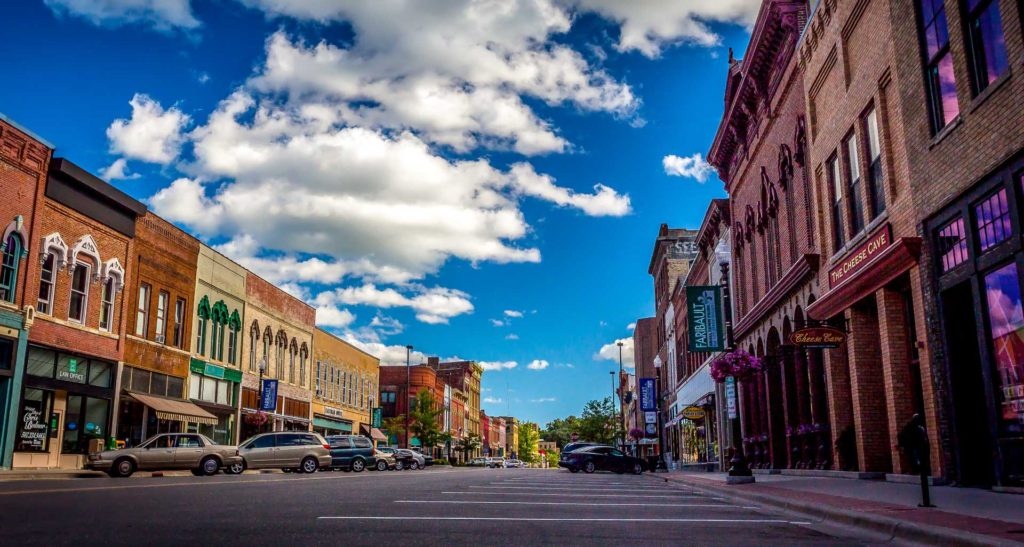
Faribault sits in Rice County in southern Minnesota, a small city of roughly 24,000 residents located about 50 miles south of the Minneapolis–Saint Paul metropolitan area. Set along the Cannon River, the city has the character of a historic river town, with a walkable downtown, a celebrated industrial heritage, and a strong sense of regional identity. It is best known for its long-running woolen mill, an architecturally significant 19th-century cathedral, and as a gateway to the surrounding lakes, woods, and small college towns of the southern Minnesota countryside.
One of the city's most recognizable institutions is the Faribault Woolen Mill, which has been producing blankets, throws, and scarves in the heart of downtown since 1865. The mill survived a major fire in 2014 and reopened with a flagship retail store, factory tours, and a heritage room, making it a popular stop for visitors interested in Minnesota-made goods and industrial history.
A few blocks from the river, the Cathedral of Our Merciful Saviour is a stone Episcopal cathedral completed in the 1860s and designed in part by Richard Upjohn, one of the most influential American church architects of the 19th century. The cathedral remains in active use and is open for tours by appointment, drawing visitors interested in the city's deep religious and architectural history.
About 12 miles west of town lies Nerstrand Big Woods State Park, a roughly 3,000-acre park protecting a remnant of the Big Woods hardwood forest that once covered much of south-central Minnesota. The park is known for its hiking trails, picnic areas, and the cascading Hidden Falls, and it draws visitors year-round for cross-country skiing, snowshoeing, and spring wildflower walks.
Closer to town, the River Bend Nature Center offers paved and natural-surface trails through prairie, wetland, and hardwood habitat, with an outdoor classroom, a natural playscape, and rotating exhibits on local ecology. The Cannon River itself, which winds through the heart of Faribault, provides paddling and tubing in summer and trout fishing in the spring-fed stretches upstream. Just north of the city, Northfield is home to the campuses of Carleton and St. Olaf colleges, while Owatonna, with the village of Catawba-era Heritage Hjemkomst-style architecture and nearby state parks, lies a short drive to the south.
Faribault's appeal as a base for short-term rentals comes from its balance of small-town character, historic landmarks, and easy access to both the Twin Cities and the southern Minnesota lake country. Visitors can spend a day exploring downtown and the woolen mill, drive west to Nerstrand for hiking, or take a short trip north to Northfield or south to Owatonna, making the city a comfortable and distinctive home base for travelers exploring the region.
Want to know if a property in Faribault is a good investment?
Enter an address to get instant revenue potential and comps.